How Does a Solar Farm Connect to the Grid?
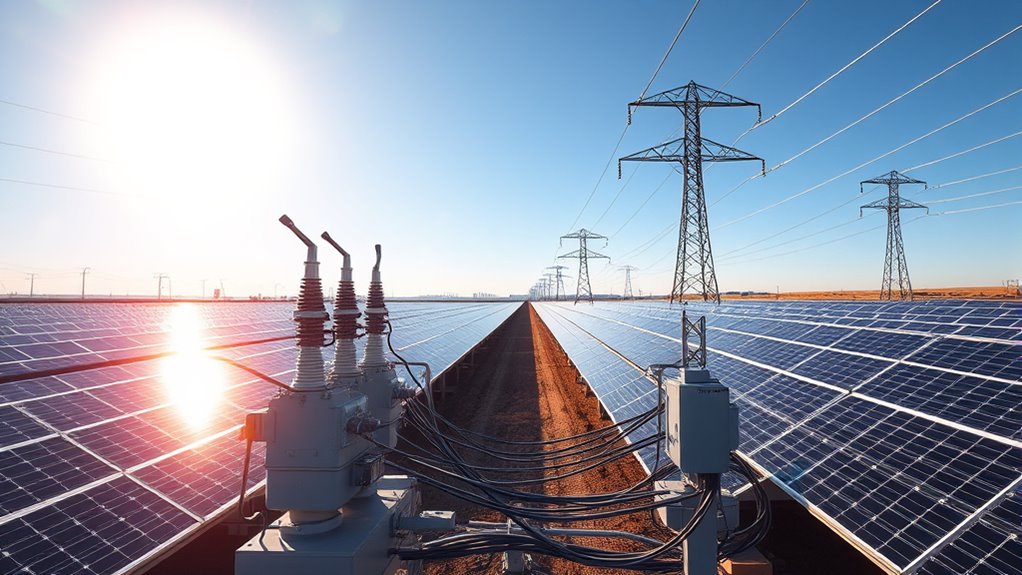
To connect a solar farm to the grid, you start by capturing sunlight and converting it into DC electricity using solar panels.
Then, inverters come into play to change that DC power into AC power, which is compatible with the grid.
Transformers step in next to adjust the voltage levels as needed for efficient transmission.
Protective devices are essential too—they help manage faults and surges to keep everything safe.
You also need to coordinate closely with the utility company to ensure all regulations and standards are met.
Testing the system is a key step to verify that everything is working properly before full operation.
Control systems play a big role in maintaining stability and smooth performance while the solar farm runs.
If you’re curious about the detailed steps and specific equipment involved, there’s definitely more to explore on how these components work together.
Key Takeaways
- Solar panels generate DC electricity, which is converted to AC by inverters for grid compatibility. Transformers then adjust voltage levels to match grid requirements and stabilize power flow.
- Protective devices are there to keep things safe. They disconnect panels during faults and help prevent electrical hazards.
- Installing a solar farm means securing permits and interconnection agreements. You also need to make sure everything complies with local regulations.
- Before going live, testing and inspection take place. Coordination with grid operators ensures the system is ready and integrates smoothly with the grid.
How Solar Farms Generate Power for Grid Connection
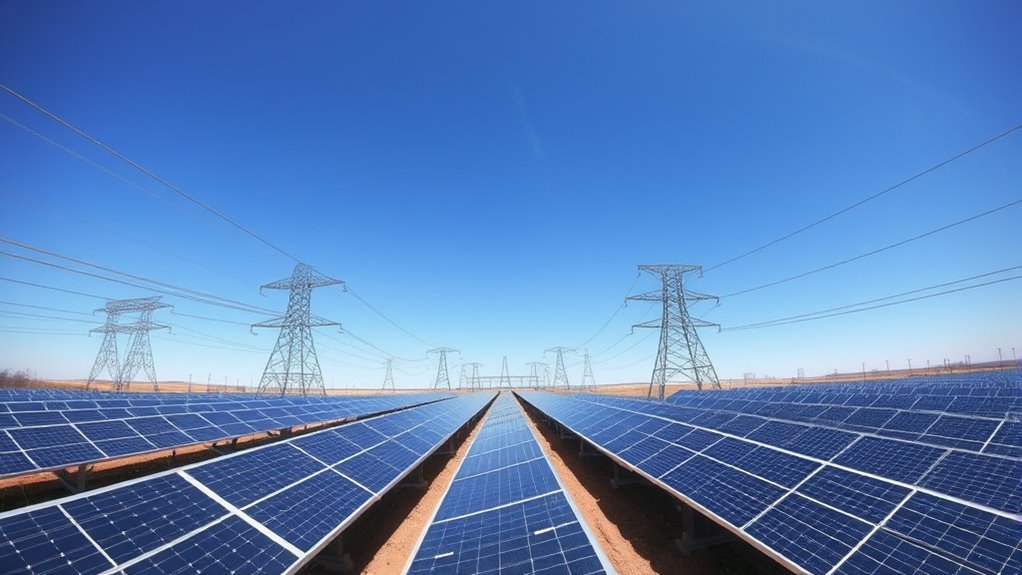
How exactly do solar farms generate power that feeds into the grid? You start by capturing sunlight with thousands of solar panels spread over a large area. Each panel contains photovoltaic (PV) cells, which convert sunlight directly into direct current (DC) electricity.
As sunlight hits these cells, it excites electrons, creating an electrical flow. The combined output from all panels produces a significant amount of DC power. This electricity then travels through wiring systems within the solar farm, ready to be processed further for grid compatibility.
How Inverters Connect Solar Farms to the Grid
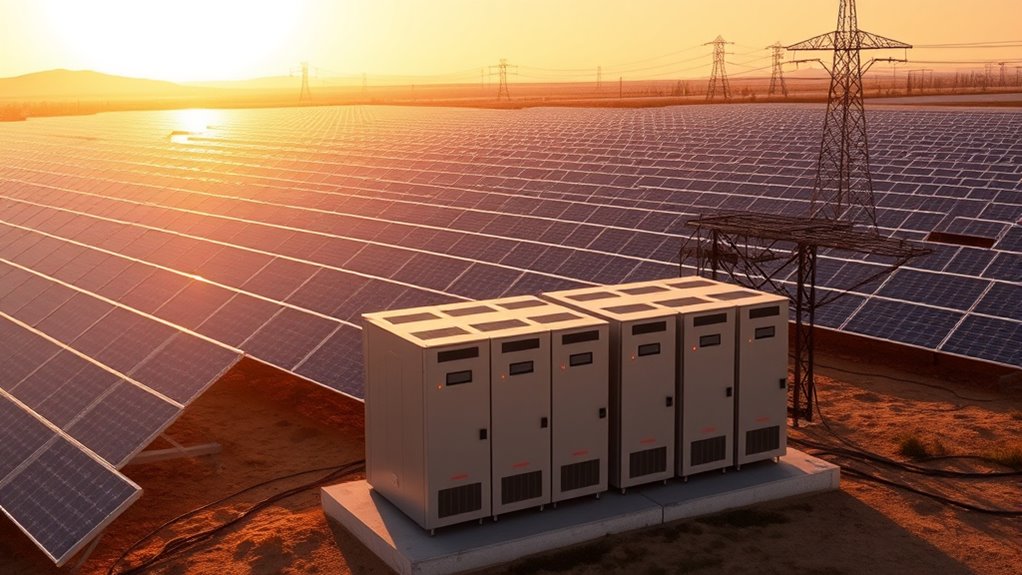
Why is an inverter crucial for connecting a solar farm to the grid? Because it converts the direct current (DC) electricity generated by solar panels into alternating current (AC) electricity, which the grid uses. Without inverters, the power produced wouldn’t be compatible with the grid’s requirements.
An inverter converts solar panel DC electricity into AC power compatible with the grid’s requirements.
Inverters also guarantee the electricity meets the grid’s voltage and frequency standards, making integration seamless. They play a critical role in optimizing energy output and protecting the system.
Here’s what inverters do for you:
- Synchronize solar power output with grid frequency and voltage
- Maximize energy efficiency through real-time monitoring and adjustment
- Provide safety features like islanding protection to prevent backfeeding during outages
Inverters are the essential link transforming solar energy into usable grid power.
Why Transformers Are Essential for Solar Farm Grid Connection
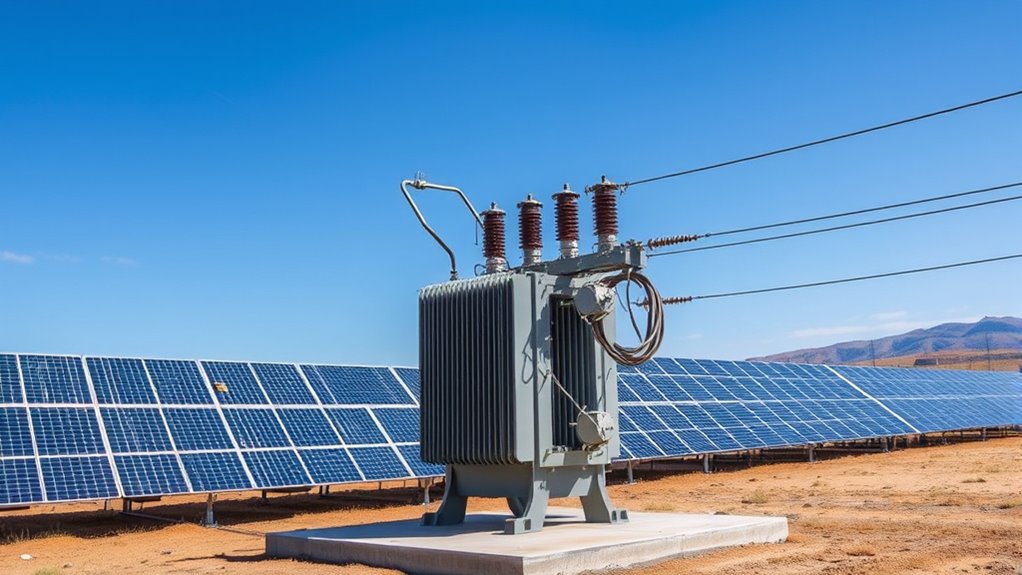
You rely on transformers to regulate voltage and guarantee your solar farm’s output matches the grid’s requirements. Their efficiency minimizes energy loss, making your system more cost-effective.
Without transformers, your solar farm wouldn’t be compatible with the grid’s standards. So, they’re pretty much essential for getting everything to work smoothly together.
Voltage Regulation Importance
Where does the electricity from a solar farm get its stable voltage before entering the grid? It’s the transformers that handle this essential task. Without proper voltage regulation, the power generated could fluctuate, causing instability and potential damage to the grid and connected equipment.
Transformers adjust the voltage to match grid requirements, guaranteeing smooth integration. You rely on voltage regulation to maintain consistent voltage levels despite changes in solar output.
It also protects grid infrastructure from voltage spikes or drops. Plus, it ensures safety and reliability for both producers and consumers.
Transformer Efficiency Benefits
How do transformers maintain such high efficiency while managing vast amounts of electricity from solar farms? They use advanced core materials and precise winding techniques to minimize energy losses during voltage conversion.
When you rely on transformers, you guarantee that the solar-generated power reaches the grid with minimal waste, which maximizes the overall system performance. Efficient transformers reduce heat generation, lowering cooling needs and maintenance costs.
This means you get a more reliable connection and longer equipment lifespan. Plus, high-efficiency transformers support consistent power delivery, helping you meet demand without interruptions.
Grid Compatibility Role
Although solar farms generate clean energy, transformers play a crucial role in making that power compatible with the grid’s voltage and frequency standards. Without transformers, the electricity produced wouldn’t match the grid’s requirements, causing inefficiencies or even damage.
When you connect a solar farm to the grid, transformers adjust the voltage to the necessary level and ensure the electricity’s frequency aligns perfectly. It’s kind of like a translator making sure everything speaks the same language.
Here’s why transformers are essential for grid compatibility:
- They step up the solar farm’s voltage to match transmission line standards, minimizing energy loss.
- They stabilize voltage fluctuations, protecting both the grid and solar equipment.
- They isolate the solar system from the grid, enhancing safety and reliability.
How Protective Devices Keep Solar Farms and the Grid Safe
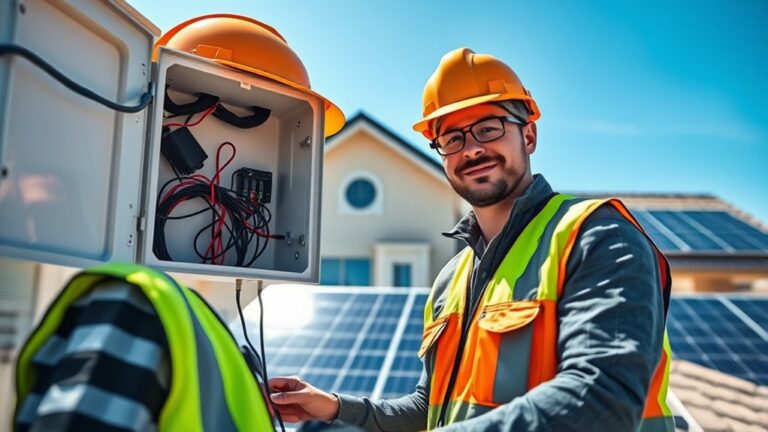
Because solar farms inject large amounts of electricity into the grid, protective devices play an essential role in preventing damage and ensuring safety. You rely on circuit breakers and fuses to quickly disconnect solar panels if a fault occurs, stopping potential fires or equipment damage.
Relays detect abnormal conditions like overcurrent or voltage spikes and trigger these breakers. Additionally, surge protectors shield the system from lightning strikes or sudden power surges.
Ground fault detectors spot unintended current paths that could harm people or equipment, allowing you to isolate the issue promptly. Together, these devices create a safety net that protects both the solar farm and the wider grid.
This setup ensures reliable operation and minimizes risks linked to high-voltage electricity flow. It’s all about keeping everything running smoothly and safely.
How Control Systems Manage Solar Farm Grid Connection
You rely on control systems to regulate the solar farm’s power output in real time, ensuring it matches grid demands. These systems also coordinate with the grid to maintain overall stability and prevent disruptions.
Understanding how they manage this balance is key to grasping the solar farm’s smooth connection. It’s all about keeping everything running without a hitch.
Real-Time Power Regulation
Control systems play a crucial role in managing how a solar farm connects to the grid by continuously adjusting power output in real time. You’ll find these systems monitor solar irradiance, temperature, and grid demand to fine-tune energy delivery instantly.
This guarantees the solar farm adapts smoothly to fluctuations, preventing disruptions.
Here’s how real-time power regulation works:
- Dynamic Output Adjustment: The system modulates inverter output to match grid requirements and solar conditions.
- Rapid Response to Changes: It reacts within seconds to shifts in sunlight or grid load to maintain balance.
- Communication with Grid Operators: Continuous data exchange helps coordinate power flow and avoid overloads.
Grid Stability Coordination
Although solar farms generate clean energy, maintaining grid stability requires careful coordination. When you connect a solar farm to the grid, control systems constantly monitor voltage, frequency, and power flows.
These systems adjust the solar farm’s output in real time to prevent fluctuations that could disrupt the grid. You’ll see advanced inverters manage reactive power and support grid voltage, helping balance supply and demand.
If sudden changes occur—like cloud cover reducing solar output—control systems quickly respond to stabilize the connection. You rely on communication protocols to sync the solar farm with the grid’s operating conditions.
This coordination guarantees your solar farm contributes reliably without causing instability. It allows the grid to maintain consistent power delivery while integrating renewable energy smoothly.
Step-by-Step Process for Connecting a Solar Farm to the Grid
Before a solar farm can supply power, it needs to be properly connected to the electrical grid through a series of well-defined steps. You’ll begin by obtaining necessary permits and approvals from local authorities and utility companies.
Next, you’ll install the required infrastructure, including transformers, inverters, and protection devices to ensure safe and efficient energy flow.
Finally, you’ll coordinate with the grid operator for testing and commissioning to verify everything works seamlessly.
Here’s a quick overview of the process:
- Secure permits and interconnection agreements
- Install electrical equipment and connect the farm to the grid
- Perform testing, inspection, and commissioning with the utility
Following these steps ensures your solar farm integrates smoothly and contributes reliable power to the grid.
Frequently Asked Questions
What Environmental Impacts Do Solar Farms Have on Local Wildlife?
You might disrupt local wildlife habitats and migration paths when installing solar farms, but you can minimize harm by choosing careful locations and adding wildlife corridors.
This way, you help protect animals while generating clean energy efficiently. It’s all about finding the right balance.
How Is Land Selected for Building a Solar Farm?
You’ll seek sun-soaked, spacious spots, steering clear of steep slopes or sensitive species.
You’ll consider soil stability, shading, and nearby substations to streamline setup.
Smart site selection secures sustainable, successful solar solutions.
What Are the Typical Maintenance Requirements for a Solar Farm?
You’ll regularly clean panels, inspect wiring, and check inverters to keep everything running smoothly.
You’ll also monitor system performance and trim nearby vegetation to prevent shading. Routine preventive maintenance helps maximize your solar farm’s efficiency.
How Do Solar Farms Affect Local Property Values?
Wondering if solar farms will hurt your property value? They usually don’t.
In fact, they can boost nearby values by promoting clean energy and open space. You’ll likely see more benefits than drawbacks in your neighborhood.
What Incentives Are Available for Investing in Solar Farms?
You can benefit from tax credits, grants, and rebates when investing in solar farms. Many states offer incentives like property tax exemptions and performance-based incentives, helping you reduce upfront costs and increase your project’s profitability.
It’s pretty great how these incentives can really lower your initial investment. Plus, they make the whole project a lot more appealing financially. So, if you’re thinking about going solar, definitely look into what’s available in your area!
Conclusion
You connect a solar farm to the grid by generating power, converting it with inverters, and stepping up voltage through transformers. Then, you protect the system with safety devices and manage everything with control systems.
This process guarantees seamless integration, reliable energy flow, and grid safety. By following each step carefully, you not only power homes but also support a sustainable future.
Connecting a solar farm isn’t just technical—it’s a commitment to clean, efficient, and smart energy. It means working with advanced technology to ensure smooth grid connection and promote renewable energy. Ultimately, integrating solar farms into the grid helps reduce carbon footprints, enhances energy reliability, and drives the transition to a greener, more sustainable power system.