Does Location Play a Role in Solar Energy Efficiency?
Yes, your location plays a big role in solar energy efficiency. Sunlight availability, climate, and seasonal sun angles all affect how much energy your solar system produces.
Places near the equator get more direct sunlight, while higher latitudes see less intense rays.
Weather patterns like cloud cover, temperature, and local environmental factors also impact performance.
Knowing your location helps you optimize panel placement and get the best return on your investment.
There’s a lot to take into account when planning your solar setup.
So, it really pays to understand how your specific area’s conditions can boost or limit your solar energy output.
Getting these details right can make a huge difference in the long run!
Key Takeaways
- Solar energy efficiency varies with latitude because of differences in the sun’s angle and how long daylight lasts throughout the year.
- The climate and weather in a region, like cloud cover and rain, also have a big impact on how much energy solar panels can produce.
- Being closer to the equator usually means more direct sunlight, which helps solar panels generate more power compared to places farther away.
- Local factors such as dust, pollution, and snow buildup can lower the performance of solar systems.
- Since the sun’s position changes daily and seasonally, solar energy availability and efficiency can fluctuate depending on where you are.
How Solar Sunlight Availability Affects Energy Efficiency
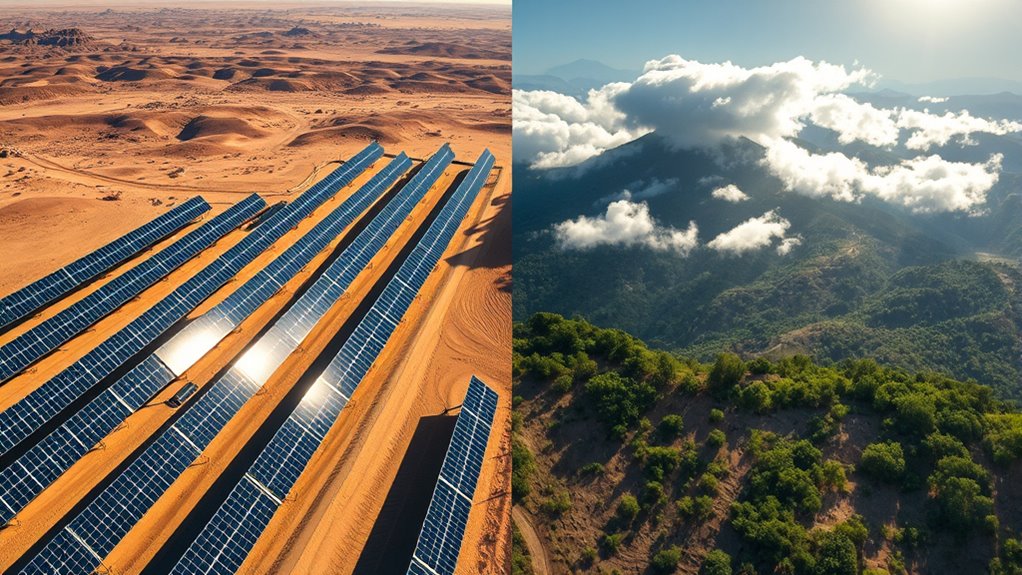
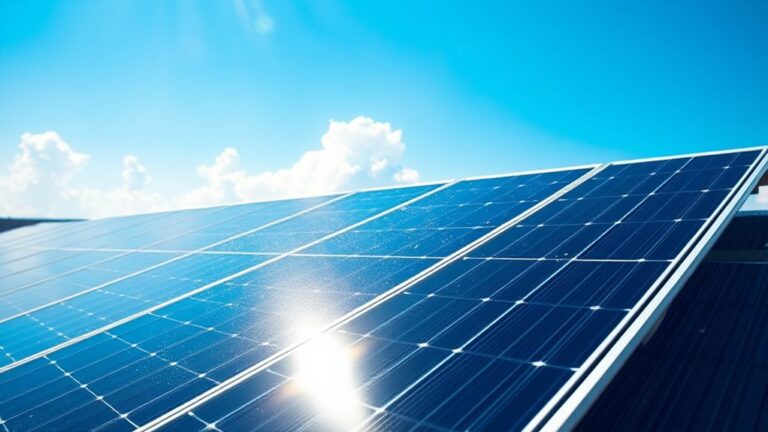
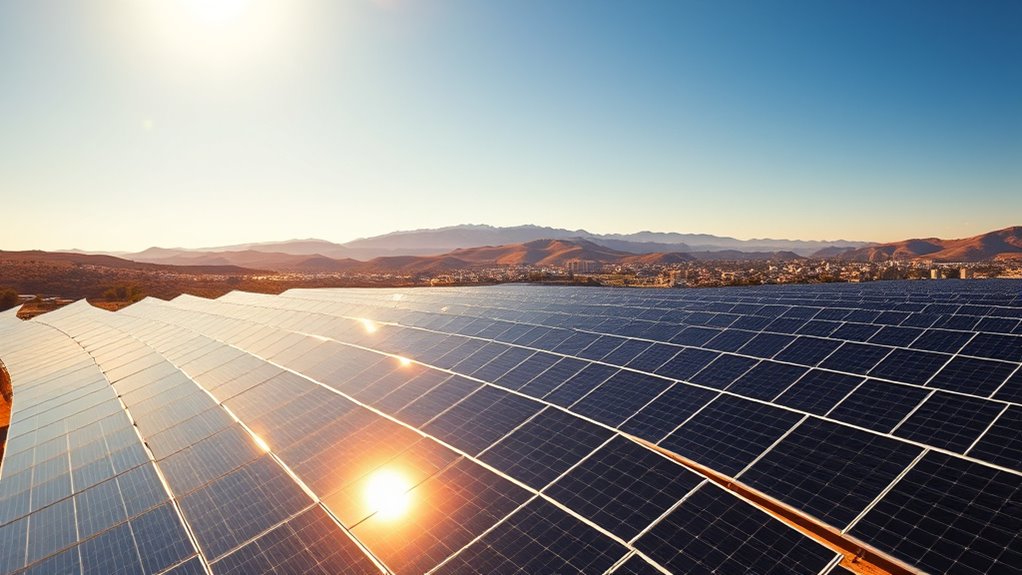
How much sunlight your location receives directly impacts your solar energy system’s efficiency. When you install solar panels where sunlight is abundant, you’ll generate more electricity throughout the day.
If you’re in a region with long, sunny days, your system will perform at its best, capturing more energy and reducing your reliance on the grid. Conversely, places with limited sunlight hours or frequent shading will lower your system’s output.
You’ll want to consider the angle and orientation of your panels to maximize exposure to direct sunlight. Even small differences in sunlight can greatly affect your system’s performance.
How Climate and Weather Patterns Affect Solar Output
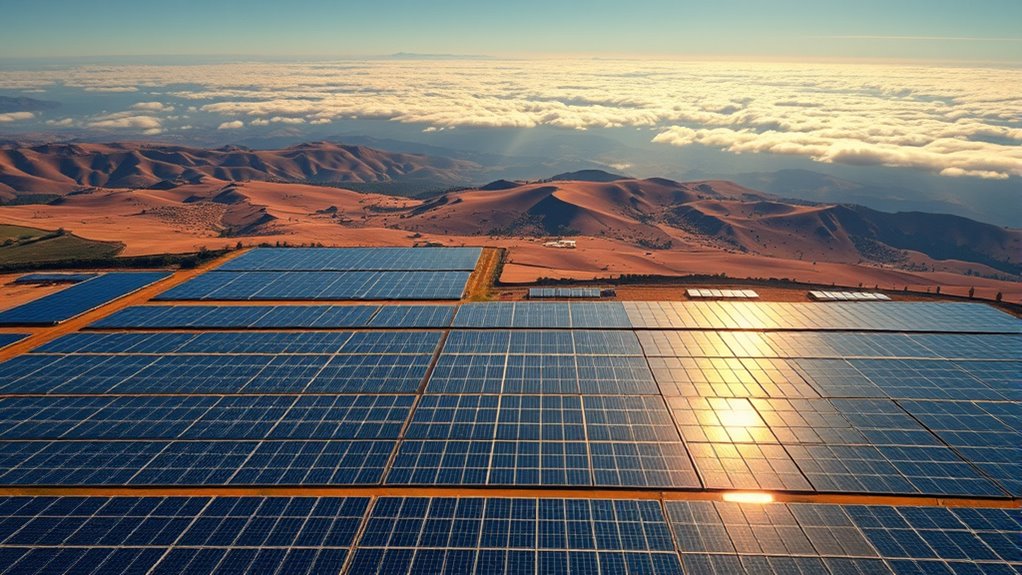
Beyond sunlight availability, climate and weather patterns play a big role in how much energy your solar system puts out. You’ll notice that consistent sunny days really boost performance. On the flip side, cloudy or rainy weather tends to bring it down.
Temperature matters too. When it gets extremely hot, your panels can actually become less efficient. And don’t forget about seasonal changes — they affect how much solar energy you can capture each day.
Here are some things to keep in mind that impact your solar output:
- Thick clouds dim your panels, cutting power generation.
- Frequent rain might clean your panels but also means less sunshine.
- Cold, bright days often help your panels work better than hot, sunny ones.
- Wind can cool your panels, which stops them from overheating and keeps output steady.
How the Sun’s Angle Changes Solar Energy Production
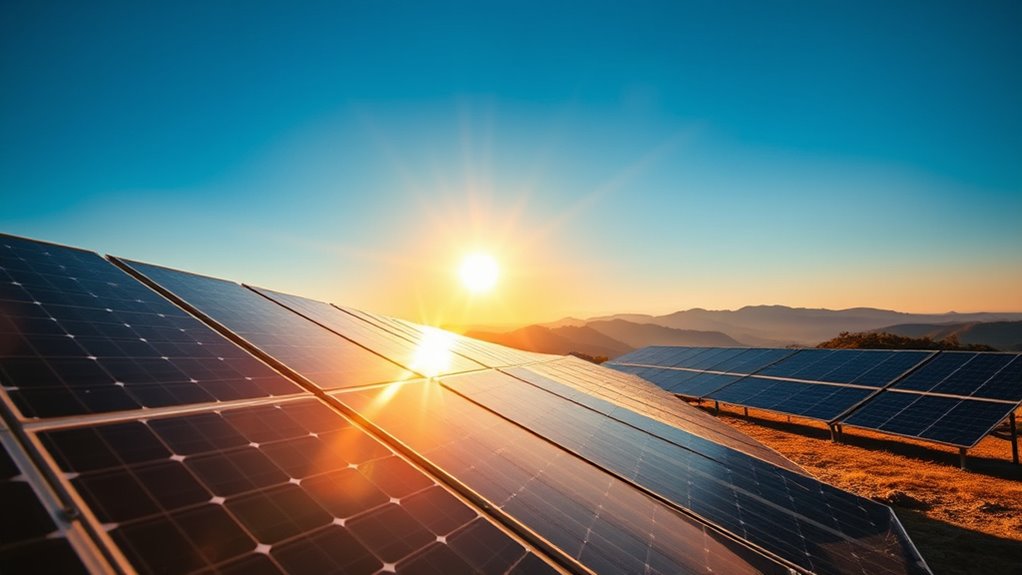
You’ll notice that the sun’s angle changes throughout the year, affecting how much solar energy you can capture. Seasonal shifts alter the intensity and direction of sunlight, especially depending on your latitude.
Understanding these variations helps you optimize solar energy production no matter where you are. It’s pretty cool how just the tilt of the Earth can make such a big difference!
Sun Angle Variation
Because the sun’s angle shifts throughout the day and year, solar energy production varies considerably depending on when and where you capture sunlight. When the sun sits high, its rays hit panels more directly, boosting efficiency.
Early mornings and late afternoons, with the sun lower on the horizon, produce less energy as light strikes panels at a slant. You need to take into account this angle change to optimize your solar setup. Visualize it like this:
- At noon, sunlight beams straight down, maximizing power.
- Sunrise and sunset cast long shadows, reducing output.
- Panels tilted to match your location’s sun angle capture more energy.
- The sun’s path arcs differently depending on your latitude, shifting where you get peak power.
Understanding these variations helps you get the most from your solar system.
Seasonal Solar Intensity
How does the changing sun angle throughout the year impact your solar energy production? As the sun shifts higher in summer and lower in winter, the intensity of sunlight hitting your panels fluctuates.
When the sun is higher, its rays strike your panels more directly, boosting energy generation. In contrast, a lower sun angle means sunlight hits your panels at a slant, reducing the effective energy they capture.
This seasonal shift affects how much power your system produces daily. You’ll notice higher output in months when the sun is more overhead and less during months with a shallow sun angle.
Understanding these changes helps you set realistic expectations for your solar setup’s performance throughout the year. It’s all about knowing what to expect as the seasons change.
Latitude Impact on Rays
Although the sun’s angle changes throughout the year, your location’s latitude plays a crucial role in determining how direct sunlight hits your solar panels. The closer you are to the equator, the more directly the sun’s rays strike your panels, maximizing energy production.
As you move toward the poles, the sun’s rays become more oblique, spreading energy over a larger surface and reducing efficiency. This angle affects how much solar power you can generate daily and seasonally.
Imagine solar panels basking under a steep midday sun near the equator. Then think about gently slanting rays grazing panels in mid-latitude cities.
Picture long, low-angle sunlight during winter months at higher latitudes. Or shadows stretching as the sun dips lower in the sky further from the equator.
Basically, your latitude shapes the solar energy your panels can harness.
How to Choose the Best Solar Installation Location
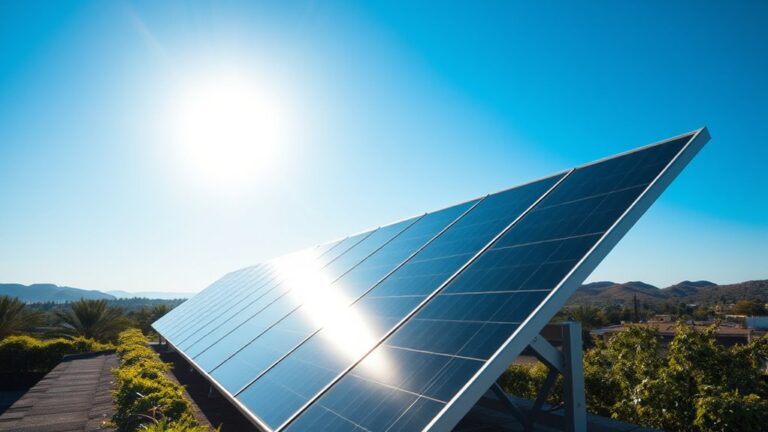
When selecting a spot for your solar installation, you’ll want to prioritize areas that receive the most direct sunlight throughout the day. Look for rooftops or open spaces free from shade caused by trees, buildings, or other obstructions.
South-facing locations typically capture the most sunlight in the northern hemisphere, while north-facing spots work best in the southern hemisphere. Make sure the surface is sturdy and accessible for maintenance.
Avoid placing panels where dust, debris, or snow can easily accumulate. You should also consider the angle of the surface; a tilt that matches your latitude usually maximizes energy capture.
How Local Conditions Influence Solar Panel Performance
Local weather and environmental factors play a crucial role in determining your solar panels’ efficiency. You’ll notice that sunlight intensity, temperature, and atmospheric conditions directly affect how much energy your panels can produce.
Local weather and environmental conditions directly impact the efficiency and energy output of your solar panels.
For example, too much heat can reduce panel efficiency, while clear skies boost performance. Dust, pollution, or snow buildup can block sunlight, limiting output.
Consider these local conditions that influence your solar panel performance:
- Bright, unobstructed sunlight during peak hours
- High temperatures causing slight efficiency drops
- Accumulation of dust or debris on panel surfaces
- Snow or frost covering panels in colder climates
How Location Impacts Solar Investment Returns
You’ll notice that the number of sunlight hours you get each day directly affects how quickly your solar investment pays off.
Regional weather patterns also play a big role, since cloudy or rainy areas can reduce energy production.
Understanding these factors helps you make smarter decisions about where to install your panels for the best returns.
Sunlight Hours Variation
Although solar panels can work in many environments, the number of sunlight hours you receive directly influences how much energy you’ll generate and the returns on your investment. Locations closer to the equator enjoy longer, more consistent daylight year-round, boosting solar efficiency.
In contrast, places farther north or south experience shorter days in winter, reducing energy output during those months. When considering solar power, think about:
- Bright summer mornings stretching into long evenings
- Short, dim winter days with limited sunlight
- Seasonal shifts that alter daily sunlight hours
- Latitude’s role in daily light exposure
Regional Weather Patterns
Sunlight hours set the stage, but weather patterns play a big role in how much solar energy you can actually capture. If your area often faces cloudy skies, fog, or heavy rain, your solar panels won’t perform at their peak, cutting into your returns.
Even if you live somewhere sunny, frequent storms or dust storms can reduce panel efficiency by blocking sunlight or causing damage. Seasonal variations matter too—long, clear summer days boost energy production, while shorter, overcast winters limit it.
When considering solar investment, check local weather trends carefully. You want to confirm consistent sunlight exposure throughout the year to maximize your savings and payback period. Understanding regional weather helps you make smarter decisions about solar panel placement and system size.
Frequently Asked Questions
What Types of Solar Panels Are Best for Different Locations?
You’ll want monocrystalline panels for limited space and high efficiency. Polycrystalline panels work great for sunny, budget-friendly areas.
And if you have shaded spots or need something flexible, thin-film panels are the way to go. Just make sure to match your solar panels to your location’s sunlight and climate conditions.
How Does Shading From Nearby Trees Affect Solar Panel Efficiency?
Shading from nearby trees markedly reduces your solar panels’ efficiency by blocking sunlight. Even partial shade can cause power drops.
Can Solar Energy Systems Work Well in Urban Environments?
Yes, solar energy systems can work well in urban environments. You just need to optimize panel placement, avoid shading, and consider space constraints.
With the right setup, you’ll still generate plenty of clean energy in the city. It’s definitely doable, even with all the buildings around.
What Maintenance Is Required to Optimize Solar Panel Performance?
Oh sure, just ignore your solar panels and watch them magically clean themselves!
But if you want actual power, you’ll regularly clean dust, check for shading, inspect wiring, and guarantee no debris blocks sunlight to keep them efficient.
Are There Government Incentives Based on Location for Solar Installation?
Yes, you’ll find government incentives vary by location, including tax credits, rebates, and grants.
It’s a good idea to check local, state, and federal programs to maximize savings when installing solar panels in your specific area.
These incentives can make a big difference, so don’t miss out!
Conclusion
You might think solar panels work the same everywhere—after all, the sun shines, right? But ironically, where you place your panels can make all the difference between a bright idea and a dim investment.
So, before you jump in, remember: location isn’t just a backdrop; it’s the star of your solar show. Different places get varying amounts of sunlight, which directly impacts how efficient your solar energy system will be.
Choosing the right location means you maximize sunlight exposure, boosting your panels’ performance and saving you money in the long run. Don’t overlook this crucial factor—solar energy efficiency depends a lot on where you live. Choose wisely, or you might end up paying for sunlight that barely shines on you!