How Solar Panels Work – Step-by-Step Diagram Guide
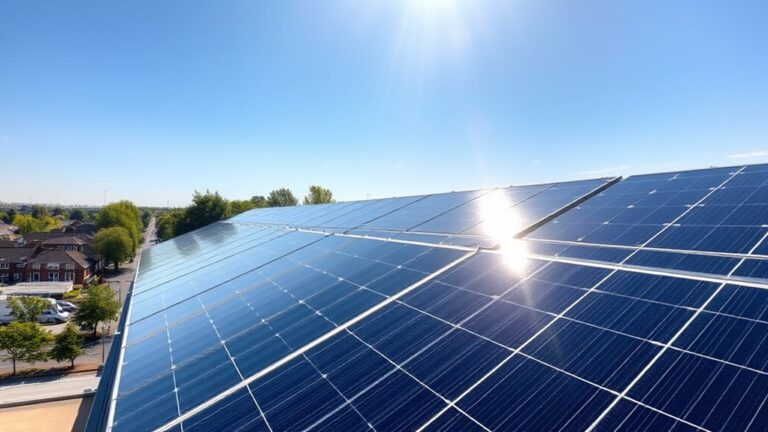
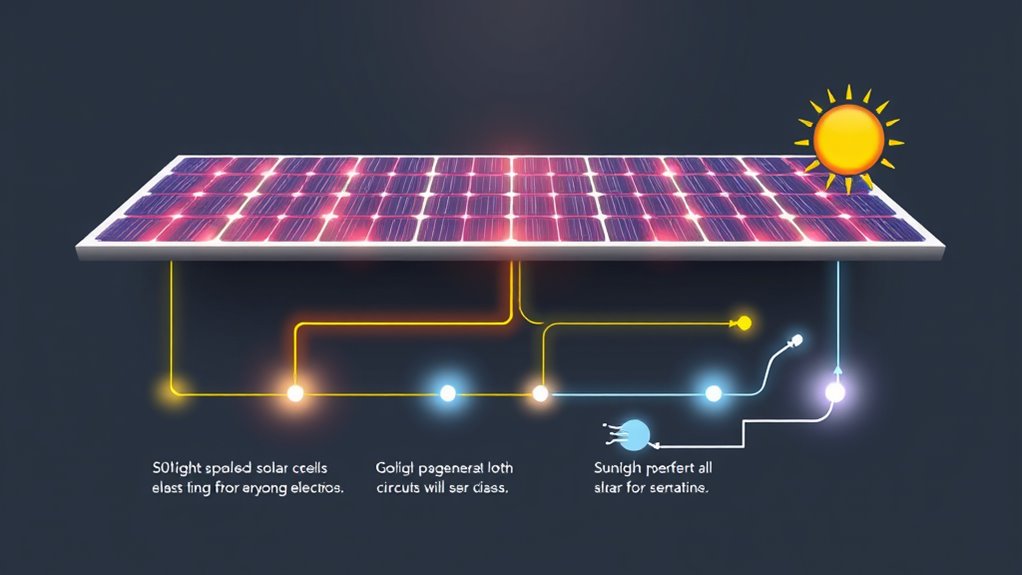
You’ll see solar panels soak up sunlight with angled cells that convert photons into electricity by exciting electrons inside. These electrons move through layers, creating direct current (DC) power. This process is the heart of how solar panels work, turning sunlight into usable energy for your home or business.
An inverter then changes DC into alternating current (AC), which powers your appliances and devices.
Excess energy can store in batteries or send back to the grid, earning you credits and reducing your electricity bill.
Proper installation, regular cleaning, and monitoring keep your system efficient and safe. Keep going to understand every step clearly and learn how to maximize your solar setup’s performance and benefits.
Key Takeaways
- Solar panels absorb sunlight through angled semiconductor cells, converting photons into direct current (DC) electricity. It’s pretty cool how these cells work together to capture the sun’s energy efficiently.
- Photons excite electrons in the semiconductor, creating electron-hole pairs and generating electric potential inside the cell. This process is what kickstarts the flow of electricity.
- Electric fields within the cell separate charges, driving electrons through metal contacts to produce usable electric current. Basically, this is how the energy starts moving where we need it.
- An inverter converts DC electricity into alternating current (AC) for household use, integrating safely with the home’s electrical system. This step is essential because most homes run on AC power.
- Excess energy is stored in batteries or sent to the grid, with monitoring and regular maintenance ensuring optimal system performance. Keeping an eye on the system helps you get the most out of your solar setup.
How Solar Panels Capture and Use Sunlight
Although solar panels might seem complex, they work by capturing sunlight and converting it into electricity you can use. When sunlight hits the panel’s surface, the solar cells absorb the light energy.
These cells are designed to maximize sunlight exposure, so they’re often angled toward the sun to catch as much light as possible throughout the day. You’ll find panels made up of many small cells working together to gather sunlight efficiently.
The energy captured from the sun then flows through the panel’s wiring, moving toward an inverter that prepares it for your home. By placing panels where sunlight is abundant, you guarantee they gather enough energy to power your devices and reduce your reliance on traditional electricity sources.
What Happens Inside a Solar Cell to Make Electricity
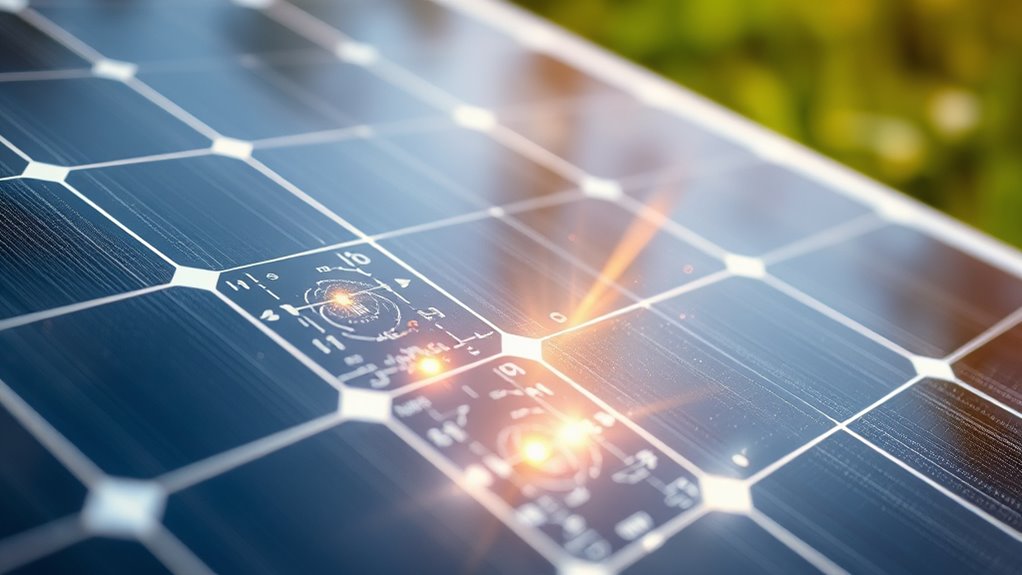
When sunlight hits a solar cell, photons get absorbed and excite electrons inside the material. You’ll see how this excitation creates a flow of electrons, generating electric current.
Understanding this process helps you grasp how solar cells turn sunlight into usable electricity. It’s pretty cool how light can be changed into power like that!
Photon Absorption Process
Because solar cells rely on sunlight, understanding the photon absorption process is key to seeing how they generate electricity. When sunlight hits the solar cell, it’s made up of tiny particles called photons.
These photons carry energy, and when they strike the semiconductor material inside the cell, such as silicon, the cell absorbs that energy. This absorption transfers the photon’s energy to the atoms in the semiconductor.
The energy excites the material’s electrons, setting the stage for electricity generation. The efficiency of this process depends on how well the solar cell material captures photons across different light wavelengths.
If photons don’t get absorbed, their energy is lost, reducing the cell’s power output. So, the photon absorption process directly influences how much electricity your solar panel can produce.
Electron Excitation Mechanism
Once the photons transfer their energy, the electrons inside the solar cell get excited and begin to move. When these electrons absorb enough energy, they jump from their normal position in the atom’s outer shell into a higher energy level, becoming free carriers.
This process creates what’s called an electron-hole pair—electrons carry a negative charge, while holes act like positive charges where electrons used to be. You can think of holes as empty spaces that allow current to flow.
This excitation is essential because it turns sunlight into usable electrical energy. Without it, the electrons would stay fixed, and no electricity would be generated.
This mechanism is what makes solar cells unique, harnessing light energy and transforming it into electrical potential inside the semiconductor material.
Current Generation Pathway
The excited electrons and holes don’t just sit still—they start moving through the solar cell to create an electric current. When sunlight energizes electrons, they jump to a higher energy state, leaving behind holes.
These charged particles then travel through different layers inside the cell, driven by an internal electric field.
| Step | Action |
|---|---|
| 1. Electron Excitation | Electrons absorb sunlight energy |
| 2. Electron-Hole Creation | Electron leaves behind a hole |
| 3. Separation | Electric field pushes charges apart |
| 4. Charge Movement | Electrons move toward the front contact |
| 5. Current Flow | Electrons travel through the external circuit |
This flow generates usable electricity for your home or device.
Pretty cool, right? This is how sunlight turns into power you can actually use!
How Solar Panels Turn Sunlight Into Usable Power
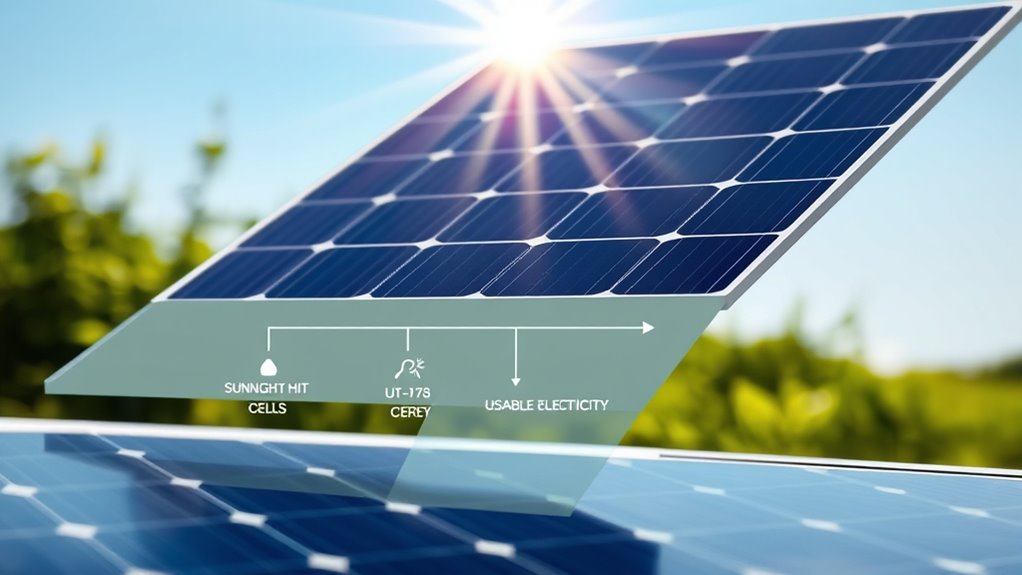
You’ll see how each photovoltaic cell captures sunlight and converts it into electrical energy. Then, you’ll learn how that energy flows through the system and gets stored for use when you need it.
Understanding these steps helps you grasp how solar panels provide reliable power every day. It’s pretty cool once you see how everything works together!
Photovoltaic Cell Function
How exactly do photovoltaic cells convert sunlight into electricity? When sunlight hits the cell, it excites electrons within the semiconductor material, usually silicon. This excitement causes the electrons to flow, creating an electric current.
The cell’s layered structure—p-type and n-type semiconductors—forms an electric field that directs this flow. This setup lets you harness energy efficiently.
| Layer | Role | Material |
|---|---|---|
| Top Contact | Collects electrons | Metal grid |
| Anti-Reflective | Maximizes light intake | Silicon nitride |
| N-type Layer | Provides free electrons | Phosphorus-doped |
| P-type Layer | Creates holes | Boron-doped |
| Back Contact | Completes circuit | Metal sheet |
Energy Conversion Process
Ever wondered what happens after sunlight excites electrons in a photovoltaic cell? Those energized electrons create an electric current as they flow through the cell’s semiconductor material.
This current, known as direct current (DC), carries the solar energy generated by the panel. You’ll find metal contacts on the cell’s surface that collect these electrons and channel the current into wires.
From there, the DC electricity travels to an inverter, which converts it into alternating current (AC) — the type of electricity your home or business uses. This seamless energy conversion process allows you to power your devices directly from sunlight.
Understanding this flow from photon to usable electricity helps you grasp how solar panels efficiently turn solar energy into everyday power.
Power Storage Methods
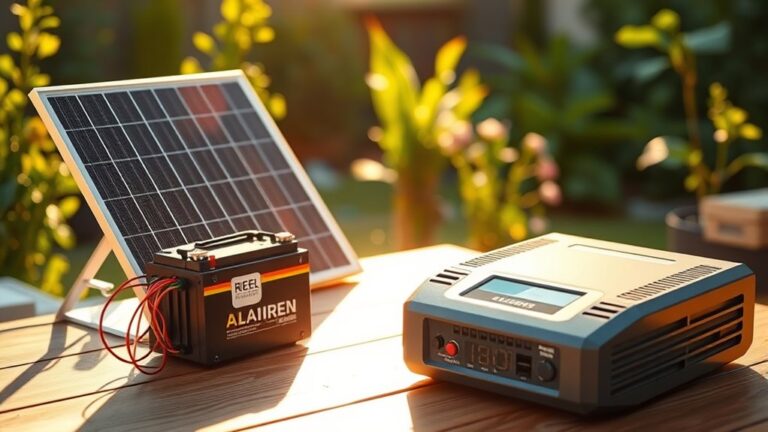
Where does all that electricity go once it’s generated by your solar panels? It needs to be stored or used immediately. Since sunlight isn’t constant, you’ll rely on power storage methods like batteries to keep your home powered when the sun’s down.
Batteries store excess electricity for later, ensuring a steady energy supply. Here’s a quick comparison of common storage options:
| Storage Type | Capacity | Ideal Use |
|---|---|---|
| Lithium-ion | High | Residential & portable systems |
| Lead-acid | Moderate | Budget-friendly, short-term use |
| Flow Batteries | Very high | Large-scale, long-duration storage |
Choosing the right storage depends on your energy needs and budget. Batteries help make solar power reliable around the clock.
Factors That Affect Solar Panel Efficiency
Although solar panels have become more efficient over the years, several factors can still impact how much energy they produce. First, the amount of sunlight your panels receive is essential—shadows from trees, buildings, or even dirt buildup can reduce their output.
Temperature also plays a role; solar panels work best in cooler conditions, so excessive heat can lower efficiency. The angle and orientation of your panels affect how directly sunlight hits them, so proper positioning matters.
Additionally, the quality of the solar cells and the type of panel you choose influence performance. Finally, aging and wear can gradually decrease efficiency over time.
Connecting Solar Panels to Your Home’s Power System
How do you integrate solar panels with your home’s existing electrical system? First, the solar panels connect to an inverter, which converts the direct current (DC) they produce into alternating current (AC) used by your home.
Next, the inverter links to your electrical panel, allowing solar energy to power your appliances. A bi-directional meter tracks energy flow, measuring how much electricity you use versus how much your panels generate.
The inverter connects to your electrical panel, enabling solar power use and tracking energy flow with a bi-directional meter.
If your system produces excess energy, it can feed back into the grid, potentially earning you credits. Proper wiring, safety disconnects, and grounding are vital to protect your system and comply with local codes.
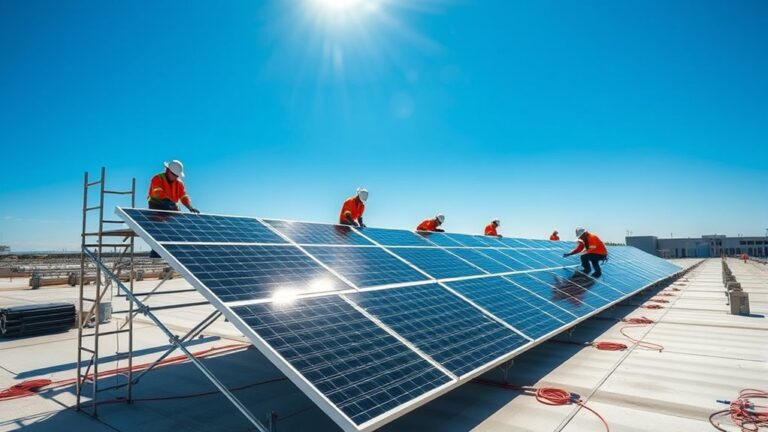
Usually, a professional installs and inspects these components to guarantee seamless, safe integration with your home’s power system. It might seem like a lot, but having an expert handle it ensures everything works smoothly and safely.
Tips for Maintaining and Troubleshooting Solar Panels
To keep your solar panels running efficiently, you need to perform regular maintenance and address issues promptly. Neglecting your panels can reduce their energy output and lifespan.
Here are three essential tips for maintaining and troubleshooting your system:
- Clean your panels regularly: Dust, dirt, and debris can block sunlight. Use a soft cloth or sponge with water to gently clean them, avoiding harsh chemicals.
- Inspect for damage: Check for cracks, loose wiring, or shading from new tree growth. If you spot any problems, deal with them right away to prevent energy loss.
- Monitor system performance: Use your inverter’s display or a monitoring app to track output. If you notice sudden drops, it might be a sign that a professional needs to take a look.
Frequently Asked Questions
How Much Do Solar Panels Typically Cost to Install?
You’ll typically pay between $15,000 and $25,000 to install solar panels on your home, depending on system size, location, and incentives.
Costs can vary, but tax credits often help lower your upfront investment considerably. So, it’s worth looking into what incentives you might qualify for!
Are There Government Incentives for Installing Solar Panels?
You’re catching a golden wave—yes, many governments offer incentives like tax credits and rebates to ease solar panel installation costs. These perks can considerably lower your upfront expenses and brighten your savings over time.
It’s pretty great because these incentives make going solar more affordable than ever. So, you’re not just helping the planet but also your wallet.
What Is the Average Lifespan of a Solar Panel System?
You can expect your solar panel system to last about 25 to 30 years.
With proper maintenance, it might even perform efficiently beyond that.
This means you could enjoy long-term savings and clean energy for decades.
Can Solar Panels Work During Power Outages?
Sure, your solar panels won’t magically power your home during outages unless you’ve got a battery backup.
Without it, they shut off to avoid shocking utility workers—so, no superhero energy-saving powers during blackouts.
How Do Solar Panels Impact Home Resale Value?
You’ll boost your home’s resale value by installing solar panels because buyers love energy savings and eco-friendly features. They see solar as a smart investment, so your property often sells faster and at a higher price.
Plus, who doesn’t want lower energy bills? It’s a win-win for everyone involved. Solar panels make your home stand out in the market, which is always a good thing.
Conclusion
You might think solar panels just soak up sunlight, but they actually transform tiny particles into powerful electricity for your home. While the sun’s energy is free and abundant, the technology inside your panels works hard to convert it efficiently.
By understanding how solar cells function and maintaining your system well, you can harness this contrast—turning natural light into reliable power, day after day. Plus, solar panels keep producing energy even when the sun isn’t shining bright, making them a dependable source of clean electricity for your home.