How Much Electricity Does One Solar Panel Produce?
You can expect one solar panel to produce between 250 and 400 watts under ideal sunlight, generating about 1 to 1.6 kilowatt-hours daily.
How much electricity does one solar panel produce? Well, it depends on a few things like sunlight intensity, panel size, efficiency, and temperature.
Proper placement and weather conditions also play a big role in performance. So, where you put your panel and the kind of weather you get can make a noticeable difference.
While a single panel suits small devices or limited energy needs, understanding how these factors influence output helps you maximize its potential.
Keep exploring to see how it all works together.
Key Takeaways
- A typical solar panel produces between 250 and 400 watts under ideal sunlight conditions. This means on a really sunny day, you can expect a decent amount of power from just one panel.
- Daily energy output is approximately 1 to 1.6 kWh, depending on sunlight hours and panel efficiency. So, how much energy you get really depends on where you live and how good your panel is.
- Annual energy generation ranges from 300 to 600 kWh, assuming consistent sunlight and optimal placement. Keep in mind, this is an estimate based on perfect conditions.
- Energy production varies with sunlight intensity, orientation, tilt, temperature, and seasonal changes. All these factors can make a big difference in how much electricity your panel actually produces.
- Higher efficiency and larger panels generate more electricity, but small panels suffice for powering minor devices. So, it all comes down to what you need your solar panel to do.
How Much Electricity Does One Solar Panel Produce?
While the exact output varies, a typical solar panel produces between 250 and 400 watts of electricity under ideal conditions. You can expect a single panel to generate around 1 to 1.6 kilowatt-hours (kWh) per day, depending on sunlight exposure.
A typical solar panel produces 250–400 watts, generating 1 to 1.6 kWh daily under ideal sunlight.
Over a year, that adds up to roughly 300 to 600 kWh. This means one panel can power small appliances or contribute considerably to your overall energy needs if combined with others.
Keep in mind, these figures assume consistent sunlight and perfect placement. If you’re planning a solar setup, understanding this baseline helps you estimate how many panels you’ll need.
It also gives you a clear idea of how much energy one panel can realistically add to your home or business’s power supply.
Key Factors That Affect Solar Panel Electricity Output
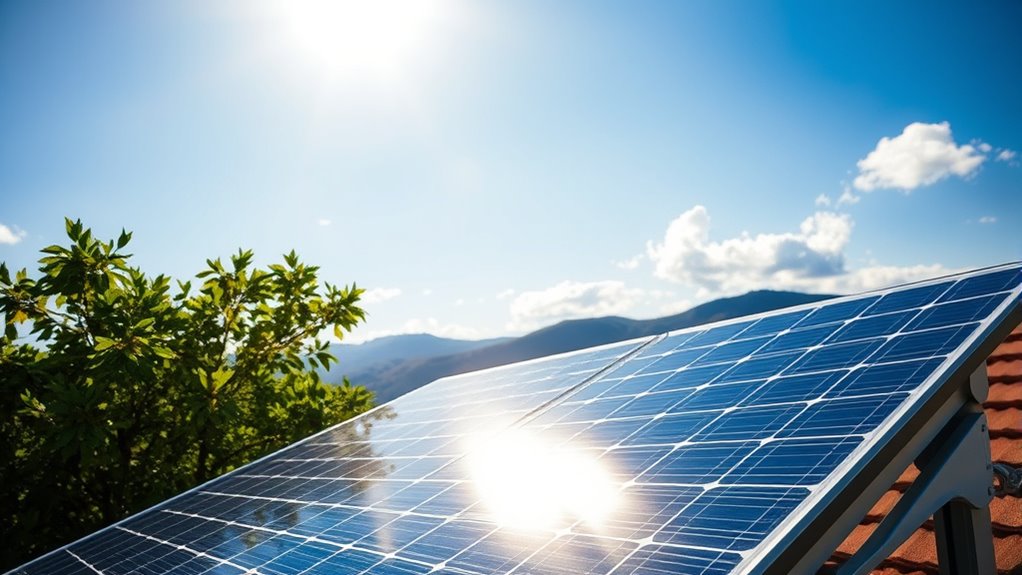
You’ll get different electricity output depending on how much sunlight hits your panels, so sunlight intensity matters a lot. The way you position and tilt your panels also plays a big role in capturing maximum energy.
Plus, temperature can affect how efficient your panels are, so it’s important to take into account all these factors. It’s kind of like making sure everything lines up just right to get the best performance.
Sunlight Intensity Variations
How does sunlight intensity affect the electricity your solar panels produce? The brighter the sunlight hitting your panels, the more electricity they generate. When the sun’s rays are strong and direct, your panels operate at peak capacity.
However, factors like cloud cover, air pollution, and time of day reduce sunlight intensity, cutting your panel’s output. For example, on overcast days, your panels might produce only a fraction of their usual power.
Seasonal changes also play a role—shorter days and lower sun angles in winter decrease sunlight intensity. Understanding these variations helps you set realistic expectations for your solar system’s performance and plan energy use accordingly.
Keep in mind, even small changes in sunlight intensity can considerably impact your solar panel’s electricity output. So, it’s good to stay aware of these shifts to get the most from your system.
Panel Orientation And Tilt
Sunlight intensity isn’t the only factor that shapes your solar panel’s electricity output—how you position and angle your panels matters just as much. To maximize energy production, you want your panels facing true south in the Northern Hemisphere or true north in the Southern Hemisphere. This orientation captures the most direct sunlight throughout the day.
The tilt angle should roughly match your location’s latitude to optimize year-round performance. However, you might adjust this tilt slightly depending on seasonal energy needs; steeper angles favor winter sun, while flatter angles capture more summer rays.
Proper orientation and tilt ensure your panels absorb sunlight efficiently, boosting the electricity they produce. Neglecting these factors can considerably reduce your system’s output, no matter how strong the sunlight is.
Temperature Effects On Efficiency
Although solar panels rely on sunlight to generate electricity, high temperatures can actually reduce their efficiency. When the temperature rises above 25°C (77°F), the panels’ ability to convert sunlight into electricity decreases.
You’ll notice that solar cells produce less voltage as they get hotter, which directly lowers their power output. This means on scorching summer days, your panels might not perform as well as you’d expect despite abundant sunshine.
To maximize efficiency, consider installing panels with good ventilation or using materials designed to withstand heat better. Also, be mindful of your local climate—hotter regions might see more significant drops in solar panel performance.
Understanding how temperature affects your system helps you set realistic expectations and optimize your solar energy production. It’s all about knowing what to expect and planning accordingly.
How Solar Panel Size and Efficiency Influence Power
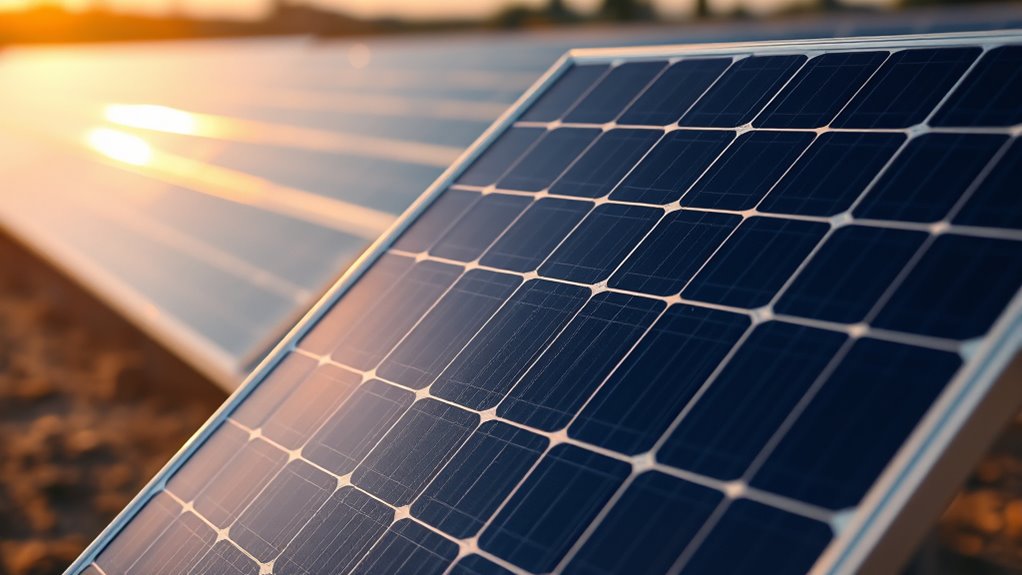
What determines the amount of electricity your solar panels generate? Two key factors: size and efficiency. The size directly impacts the surface area exposed to sunlight, while efficiency measures how well your panel converts sunlight into electricity.
Here’s what you should focus on:
- Panel Size: Larger panels capture more sunlight, producing more power.
- Efficiency Rating: Higher efficiency means more electricity from the same sunlight.
- Combined Effect: A smaller, highly efficient panel can sometimes outperform a larger, less efficient one.
How Sunlight Conditions Impact Solar Panel Performance
You’ll notice solar panel output varies with sunlight intensity, so brighter days boost power production.
Weather conditions like clouds, rain, or snow can reduce how much electricity your panels generate. It’s pretty normal for the output to dip when the sun isn’t shining as strong.
Understanding these factors helps you predict and optimize your solar energy. Knowing what to expect makes it easier to get the most out of your panels.
Sunlight Intensity Effects
How does sunlight intensity influence the electricity your solar panels generate? The stronger the sunlight, the more energy your panels produce. But it’s not just about brightness—intensity affects performance in specific ways:
- Direct sunlight delivers peak energy output, maximizing your panel’s efficiency.
- Diffuse sunlight (cloudy or hazy conditions) lowers intensity, reducing electricity generation.
- Angle of incidence changes how much sunlight hits your panels directly, impacting intensity and output.
You’ll notice that even small shifts in sunlight intensity can considerably alter your solar panel’s electricity production throughout the day. So, optimizing panel placement to capture the most intense sunlight hours is key to maximizing your energy yield.
Understanding how sunlight intensity works lets you make smarter decisions for your solar setup.
Weather Impact on Output
Although sunlight intensity plays a crucial role in solar panel performance, weather conditions like clouds, rain, and snow can considerably affect how much electricity your panels generate. When clouds cover the sky, they block direct sunlight, reducing your panels’ output by up to 25-50%, depending on cloud thickness.
Rain might lower efficiency temporarily, but it also helps clean dirt off the panels, which can improve performance afterward. Snow can block sunlight entirely if it accumulates on your panels, halting energy production until it melts or is cleared away.
Even on overcast days, your solar panels still produce some electricity, just less than on sunny days. Understanding these weather impacts helps you set realistic expectations for your solar system’s output throughout the year.
Estimating Daily and Annual Energy From One Solar Panel
When estimating the daily and annual energy output of a single solar panel, you need to take into account factors like its wattage rating, sunlight hours, and efficiency. Here’s how you can break it down:
- Wattage Rating: Check the panel’s wattage (e.g., 300W). This is the maximum power it can produce under ideal conditions.
- Sunlight Hours: Determine your location’s average peak sunlight hours per day (usually between 4-6 hours).
- Efficiency and Losses: Factor in system losses due to shading, temperature, and inverter efficiency, typically around 80-90% overall efficiency.
Multiply the wattage by sunlight hours and efficiency to estimate daily energy (in watt-hours), then multiply by 365 for the annual output. This method gives you a practical estimate of one solar panel’s energy production.
Using One Solar Panel to Power Your Home or Devices
If you want to power small devices or essential appliances, one solar panel can be a practical solution. You can run items like LED lights, phone chargers, or a small fan without relying on the grid.
To do this effectively, you’ll need a charge controller and a battery to store energy for use when the sun isn’t shining. Keep in mind, one panel typically produces 250-400 watts, which limits what you can power simultaneously.
For larger appliances or your whole home, you’d need multiple panels and a more complex setup. However, starting with one panel helps you understand solar power basics and reduces your electricity bills for specific needs.
It’s a smart, manageable step into renewable energy. Taking it slow like this makes the whole process less overwhelming and more budget-friendly too.
Frequently Asked Questions
How Long Do Solar Panels Typically Last?
Solar panels typically last about 25 to 30 years, but they can keep producing electricity beyond that.
You’ll notice a gradual efficiency drop, so regular maintenance helps you get the most out of them over time. It’s kind of like giving your panels a little tune-up now and then to keep things running smoothly.
What Maintenance Do Solar Panels Require?
You’ll want to wipe away dirt and debris regularly, watch for wear, and weatherproof wiring.
Checking connections quarterly keeps your panels performing perfectly. It helps prevent problems and prolongs their powerful, productive lifespan without pricey professional help.
Are Solar Panels Recyclable?
Yes, solar panels are recyclable! You can send them to specialized facilities where materials like glass, aluminum, and silicon get recovered.
Recycling helps reduce waste and supports a greener environment, so don’t hesitate to recycle your old panels. It’s a simple step that makes a big difference!
How Do Weather Conditions Affect Solar Panel Lifespan?
You’ll find that solar panels prefer friendly weather; extreme heat, hail, or heavy snow can gently challenge their durability.
Still, with proper care, they’ll keep shining and serving you well for many years.
Can Solar Panels Work During a Power Outage?
You can’t use solar panels during a power outage unless you have a battery backup or an off-grid system. Without stored energy, the grid’s safety protocols shut down your solar inverter automatically.
It’s all about keeping things safe for utility workers. So, unless your system is designed to work independently, your solar panels won’t be able to power your home during an outage.
Conclusion
So, you want one solar panel to power your whole castle? Dream on—unless your castle is a tiny shoebox basking in perfect sunlight. Solar panels are like that one friend who tries really hard but can’t carry the whole party alone.
They produce decent juice, sure, but expect more like a steady trickle than a roaring river. Want real power? Think bigger, sunnier, and maybe invite a few panel pals to the party.
In reality, one solar panel produces a limited amount of electricity, usually enough for small devices or supplemental power. To truly power your home or castle, you’ll need multiple solar panels working together, soaking up sunlight efficiently. So, when considering how much electricity one solar panel produces, remember it’s just a piece of the puzzle. For reliable and sufficient solar energy, scaling up your system is key.