How Much Solar Do I Need for My RV?
To figure out how much solar you need for your RV, start by listing all your devices and their daily watt-hour use. This is the foundation for sizing your solar setup.
Next, consider your average sunlight hours—if you get fewer hours, you’ll need bigger panels to make up for it.
Choose a battery bank that’s big enough to store your energy, keeping in mind discharge limits and efficiency.
Your solar panels should be matched to recharge your battery within about 4-6 hours of sunlight.
This balance between panels and battery keeps you powered and confident while on the road.
Keep going, and you’ll uncover handy tips for sizing and upgrading your system to fit your RV lifestyle perfectly.
Key Takeaways
- Calculate your daily energy use by adding up the watt-hours of all your electrical devices. Just multiply each device’s wattage by the number of hours you use it daily.
- Next, figure out the size of the solar panel you need. You do this by dividing your total daily watt-hour needs by the average number of sunlight hours you get.
- When it comes to your battery bank, size it so it can store enough energy for the number of days you want to go off-grid. Don’t forget to think about your battery type and any efficiency losses.
- Pick solar panels that fit nicely on your RV roof. Make sure they match your energy needs and avoid covering vents or antennas.
- Finally, match the solar panel output with your battery capacity. This helps ensure your batteries can fully recharge within 4 to 6 hours of sunlight and keeps your system from overloading.
How to Calculate Your RV’s Daily Power Needs
Before setting up your solar system, you need to figure out how much power your RV uses each day. Start by listing every electrical device you plan to use, like lights, fans, fridge, and charging devices.
Begin by listing all electrical devices you’ll use daily to estimate your RV’s power needs accurately.
Next, note each item’s wattage—usually found on a label or in the manual. Then, estimate how many hours per day you’ll use each device.
Multiply the wattage by the hours used to get watt-hours for each device. After that, add up all these watt-hours to find your total daily power consumption.
This total tells you how much energy your solar setup must generate daily. Being precise here helps avoid overspending on panels or running out of power unexpectedly.
Keep this number handy for choosing the right solar components. It’ll make your setup much smoother and more efficient.
How Sunlight Hours Impact Your Solar Panel Requirements
Since the amount of sunlight your RV receives directly affects how much energy your solar panels can produce, understanding sunlight hours is essential when sizing your system. Sunlight hours refer to the average number of peak sun hours you get each day, which varies by location, season, and weather.
If you’re camping in areas with fewer sunlight hours, you’ll need more solar panel capacity to meet your energy needs. Conversely, more sun means you can rely on fewer panels.
To calculate the right size, multiply your daily power consumption by the inverse of your average sunlight hours. This guarantees your panels generate enough energy even on less sunny days.
Keep in mind that maximizing sunlight exposure by parking in open areas also helps optimize your system’s performance. It’s a simple step that can make a big difference!
Choosing the Right Battery Bank Size for Your RV Solar System
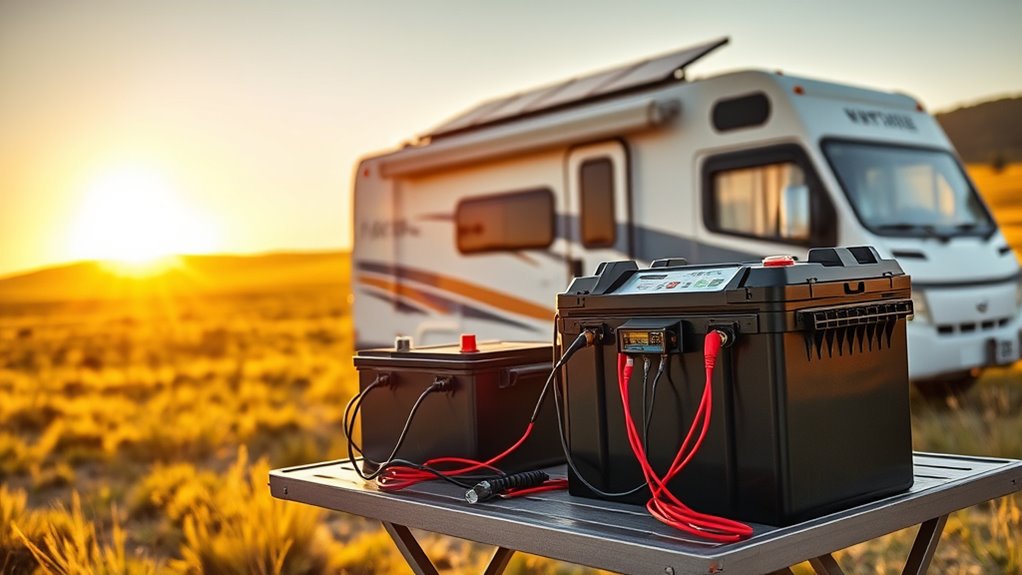
When sizing your RV’s battery bank, you need to match its capacity to your energy consumption and how long you want to run off-grid. Start by calculating your daily watt-hour usage from all devices.
Multiply that by the number of days you plan to go without recharging to find your total energy storage needs. Remember to take into account the battery’s depth of discharge—most lead-acid batteries recommend using only 50% of their capacity to prolong lifespan, while lithium batteries allow deeper discharges.
Also, factor in inefficiencies and temperature effects that can reduce usable capacity. Choosing a battery bank that meets or slightly exceeds your calculated needs ensures you won’t run out of power unexpectedly.
That way, you get more freedom and confidence during your travels.
Picking Solar Panels That Fit Your RV and Battery Setup
Now that you’ve figured out the right size for your battery bank, it’s time to pick solar panels that will recharge those batteries efficiently and keep your RV powered.
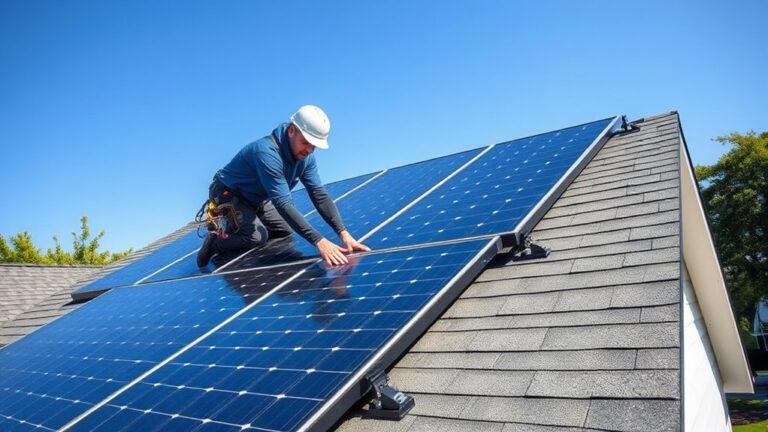
First, take a good look at the space on your RV’s roof. Measure carefully so your panels fit nicely without blocking vents or antennas.
Choose panels with a wattage rating that matches your battery capacity and energy needs. Flexible panels are great if your roof is curved, while rigid panels tend to be more durable and efficient.
Also, don’t forget about weight—heavier panels might throw off your RV’s balance a bit. It’s smart to go for panels that come with solid warranties and good user reviews, so you know they’ll hold up on the road.
How to Match Solar Panel Output With Your Battery Capacity
Although choosing the right solar panels is essential, you also need to make sure their output matches your battery capacity. This helps avoid undercharging or overloading.
First, find out your battery bank’s amp-hour (Ah) rating and voltage. Then, multiply Ah by voltage to get your battery’s total watt-hour (Wh) capacity.
Next, pick solar panels that produce enough wattage to replenish this capacity within your available sunlight hours. Usually, that’s about 4-6 hours daily.
Also, don’t install panels that exceed your battery’s charge controller limits. Doing so can cause damage to your system.
Make sure to use a charge controller rated for your setup to regulate power flow and protect your batteries. Matching the output like this ensures efficient charging, prolongs battery life, and keeps your RV powered reliably.
Plus, it helps avoid wasting energy or risking system failure.
Tips for Expanding and Upgrading Your RV Solar System Over Time
To expand your RV solar system, start by evaluating your current energy needs to identify any gaps. Make sure to choose solar components that are compatible with your existing setup.
Also, plan ahead for future upgrades to keep your system flexible and efficient. This way, you won’t have to redo everything when you want to add more power later on. It’s all about staying prepared and making smart choices as you go.
Assess Current Energy Needs
Before expanding or upgrading your RV solar system, you should carefully evaluate your current energy needs. Start by listing all the devices and appliances you regularly use, noting their wattage and how many hours you run them daily.
Calculate your total daily energy consumption in watt-hours to understand how much power you need. Pay attention to any new devices you plan to add, as they’ll increase your demand.
Also, consider seasonal changes; you might use more heating or cooling at certain times of the year. Knowing your exact energy needs ensures you don’t overspend on unnecessary equipment or end up with a system that can’t keep up.
This assessment forms the foundation of a smart, efficient solar upgrade tailored specifically to your RV lifestyle.
Choose Compatible Solar Components
When expanding your RV solar system, you’ll want to select components that work seamlessly with your existing setup to avoid compatibility issues and maximize efficiency. Start by matching your new solar panels’ voltage and wattage to those already installed to guarantee consistent power output.
Choose a charge controller compatible with both your current system and the additional panels; MPPT controllers offer better efficiency and flexibility. Also, pick batteries that align with your existing bank’s chemistry—mixing lithium with lead-acid, for example, can cause problems.
Don’t forget wiring and connectors: use the right gauge and compatible connectors to handle the increased load safely. By carefully selecting compatible components, you’ll guarantee your upgraded system runs smoothly and meets your growing energy needs without costly setbacks.
Plan for Future Expansion
Although expanding your RV solar system might seem straightforward at first, planning ahead is essential to guarantee smooth upgrades and avoid costly mistakes. Start by selecting a charge controller and inverter that can handle more capacity than you initially need.
This way, you won’t have to replace them when adding panels or batteries later. Use wiring and connectors rated for higher loads to accommodate future expansions.
Leave space on your roof and inside your battery compartment for extra panels and batteries. Keep documentation of your system’s specs and layout for easy troubleshooting and upgrades.
Frequently Asked Questions
Can I Install Solar Panels on My RV Roof Myself?
Yes, you can install solar panels on your RV roof yourself. Just make sure you understand wiring, mounting, and sealing to prevent leaks.
With the right tools and a bit of patience, it’s a doable and rewarding project. You’ll feel great knowing you did it on your own!
How Do Weather Conditions Affect RV Solar Panel Efficiency?
Weather conditions can reduce your RV solar panels’ efficiency—cloudy skies, rain, and snow block sunlight. Plus, extreme heat can lower your panels’ output.
You’ll get the best performance on clear, cool, sunny days. So, it’s a good idea to adjust your expectations and plans accordingly.
What Maintenance Is Required for RV Solar Panels?
You’ll want to clean your RV solar panels regularly to remove dirt and debris. This helps them work efficiently and soak up as much sun as possible.
Also, check for any damage or loose connections to keep everything running smoothly. Make sure the wiring is secure so there are no surprises later on.
After storms, take a moment to inspect your panels for any issues. And don’t forget to trim nearby branches—they can cast shadows and reduce your panels’ performance.
Are Portable Solar Panels Effective for RV Use?
Yes, portable solar panels are effective for RV use. They’re easy to set up and flexible for different spots. Plus, they’re super convenient to store.
You can use them to charge batteries and power devices. This means you can stay off-grid wherever you go. It’s a great way to keep your RV running smoothly.
Can Solar Power Run Air Conditioning in an RV?
You can run air conditioning in an RV with solar power, but it needs a large solar setup and battery bank. High power draw demands lots of panels and storage, so plan carefully to avoid running out of energy.
It’s definitely possible, but you’ll want to make sure your system is up to the task. Think about how much power your AC unit uses and match that with enough solar panels and batteries. That way, you can stay cool without worrying about draining your power supply.
Conclusion
Now that you know how to size your solar setup, you’re ready to harness the sun like a pro. Remember, your RV’s power needs are the heartbeat of your system, and matching panels and batteries is the key to smooth sailing.
With a little planning, your solar system will grow with you, turning your RV into a self-sufficient oasis on wheels. So, go ahead—let the sun fuel your adventures and keep your journey bright!
Choosing the right amount of solar for your RV means you can enjoy reliable power wherever the road takes you. Whether it’s running appliances, charging devices, or lighting up the night, a well-sized solar setup keeps everything running smoothly.
By investing in quality solar panels and batteries that fit your energy needs, you’re creating freedom from hookups and noisy generators. Your RV becomes a mobile, eco-friendly home powered by clean energy. Embrace solar power, and watch your RV adventures shine brighter than ever!