How to Power Your House With a Solar Generator
To power your house with a solar generator, start by choosing one that matches your appliances’ wattage. You’ll also want a battery type that lasts, like lithium-ion, for longer life and better performance. Picking the right solar generator is key to keeping your home running smoothly.
Next, set up your solar panels in a sunny spot with no shade. Ideally, tilt them to match your latitude for maximum sun exposure. Make sure everything is connected securely to your generator so you get the most out of your solar power system.
Managing your energy use is important too. Prioritize essential devices and keep an eye on battery levels to avoid overloads.
With the right setup and a bit of care, you can enjoy reliable, clean energy. Explore ways to optimize your system for the best results and keep your house powered by the sun!
Key Takeaways
– Assess your total power needs and select a solar generator with adequate battery capacity and compatible output ports.
This way, you’ll make sure your generator can handle everything you want to power.
– Install solar panels in optimal sunlight locations, avoiding shade, and tilt them at the latitude angle for maximum efficiency.
Choosing the right spot helps your panels soak up as much sun as possible.
– Connect solar panels securely to the generator using appropriate cables, ensuring voltage compatibility and weatherproof connections.
This keeps your setup safe and working smoothly, even in bad weather.
– Prioritize essential and energy-efficient appliances to prevent overload and extend battery life.
Focusing on what really matters means your power lasts longer.
– Regularly maintain panels and connections, monitor battery levels, and clean panels to ensure reliable, continuous power supply.
A little upkeep goes a long way in keeping your system running without interruptions.
Choosing the Right Solar Generator for Your Home
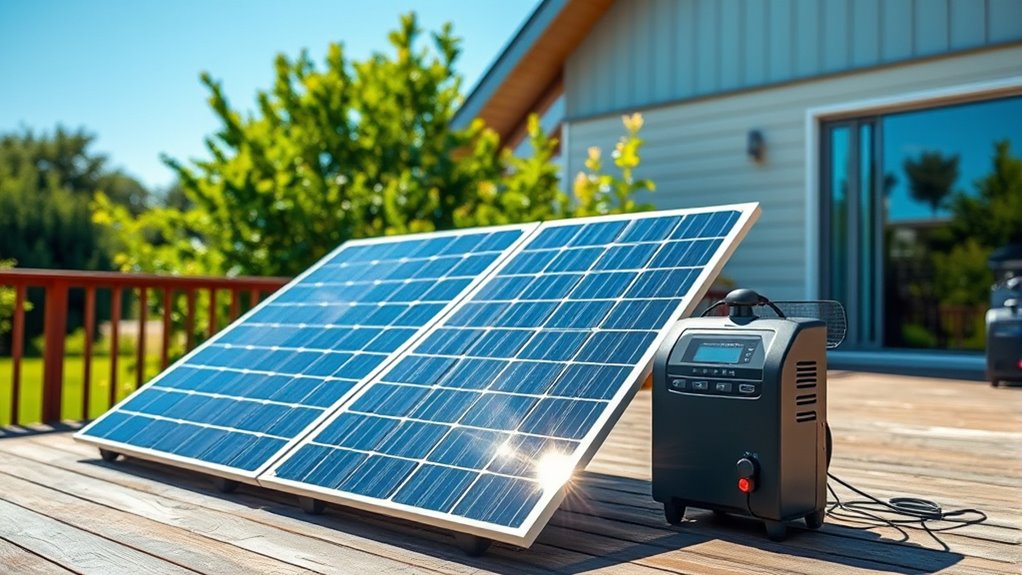
How do you choose the right solar generator for your home? Start by evaluating your power needs—list the essential appliances and their wattage. This helps you pick a generator with enough capacity.
Next, consider the battery size and type; lithium-ion batteries last longer and weigh less than lead-acid ones. Look at the generator’s output ports to ensure they match your devices.
Portability might matter if you plan to move it around. Don’t overlook the recharge time, as faster charging means less downtime.
Finally, check the durability and warranty to secure a reliable investment. By focusing on these factors, you’ll find a solar generator that fits your lifestyle and keeps your home powered efficiently.
Setting Up Solar Panels and Connecting Your Solar Generator
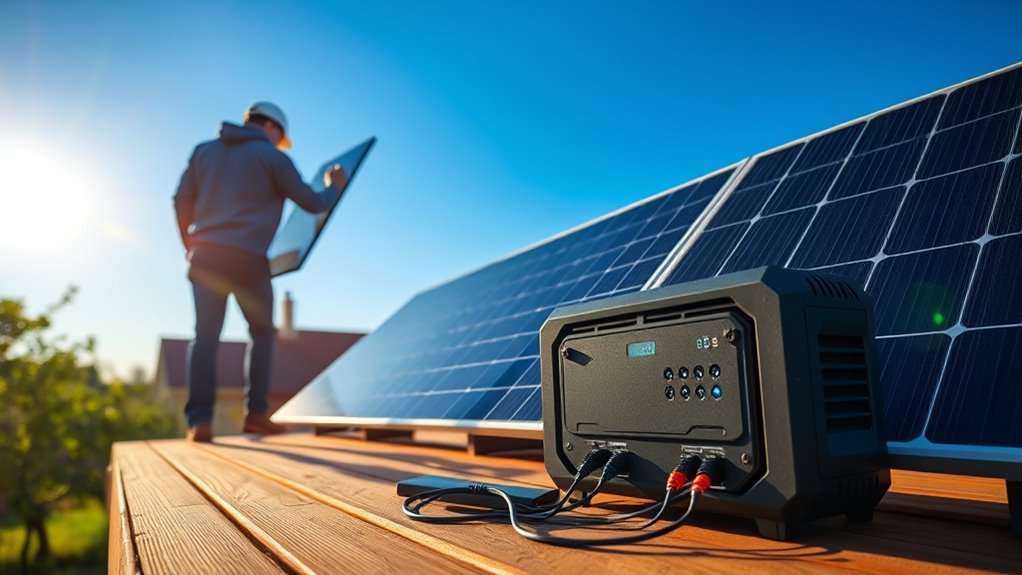
Now that you’ve picked your solar generator, it’s time to choose the right solar panels for your setup. You’ll want to find the best spot to place your panels where they’ll catch maximum sunlight throughout the day.
Once you’ve got the perfect spot, you’ll connect your panels to the generator. This way, you can start capturing and storing solar energy efficiently. It’s pretty straightforward and super rewarding!
Choosing Solar Panel Types
Before setting up your solar generator, you’ll need to choose the right type of solar panels to match your energy needs and budget. The three main types are monocrystalline, polycrystalline, and thin-film panels.
Monocrystalline panels offer high efficiency and durability but tend to be pricier. Polycrystalline panels are more affordable with moderate efficiency. Thin-film panels are lightweight and flexible but have lower efficiency and shorter lifespan.
Think about your space and power requirements when deciding.
| Panel Type | Efficiency | Cost |
|---|---|---|
| Monocrystalline | High (15-20%) | High |
| Polycrystalline | Medium (13-16%) | Moderate |
| Thin-film | Low (10-12%) | Low |
Choose wisely to get the best performance from your solar generator setup.
Optimal Panel Placement
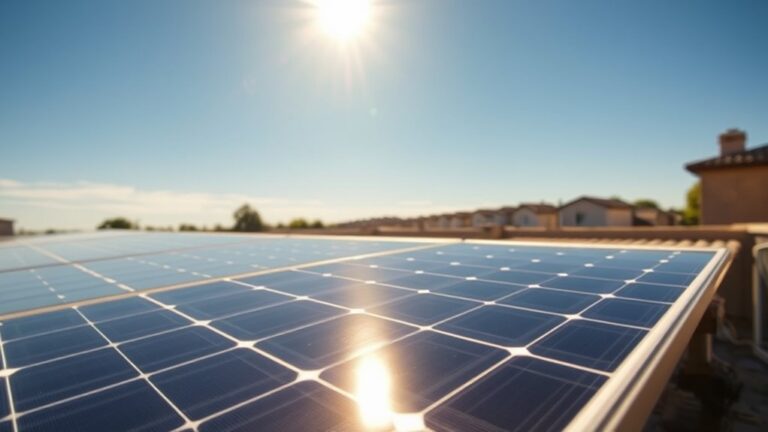
Where should you place your solar panels to get the most sunlight and power? Aim for a location with direct, unshaded sunlight for most of the day.
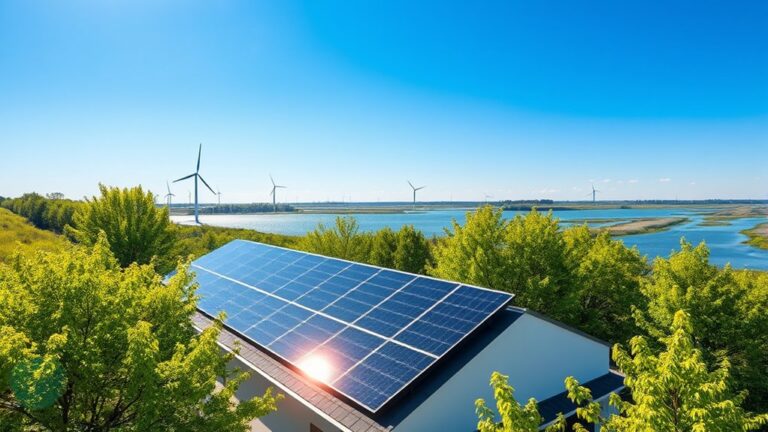
Rooftops facing south (in the Northern Hemisphere) or north (in the Southern Hemisphere) usually capture the most sun. Tilt your panels at an angle matching your latitude to maximize exposure year-round.
Avoid placing panels near trees, chimneys, or other objects that cast shadows. Even small shadows can drastically reduce output.
If rooftop space is limited, consider ground mounts in open areas. Make sure panels are secure and stable to withstand wind and weather.
Proper placement guarantees your solar generator gets the energy it needs. This boosts efficiency and helps you power your home reliably.
Connecting Panels To Generator
Once you’ve positioned your solar panels correctly, it’s time to connect them to your solar generator. Start by checking the panel’s output voltage and make sure it matches your generator’s input specs.
Use the right cables—usually MC4 connectors—to link the panels. You can connect them in series or parallel, depending on your power needs. Series connections boost voltage, while parallel connections increase current.
After wiring up the panels, connect the whole array to your solar generator’s input port. Be sure all connections are secure and weatherproof, especially if you’re setting this up outdoors.
Finally, turn on your solar generator and keep an eye on the input to confirm it’s getting power. Following these steps will help you efficiently transfer solar energy from your panels to your generator, powering your house sustainably.
How Solar Generators Power Your Home
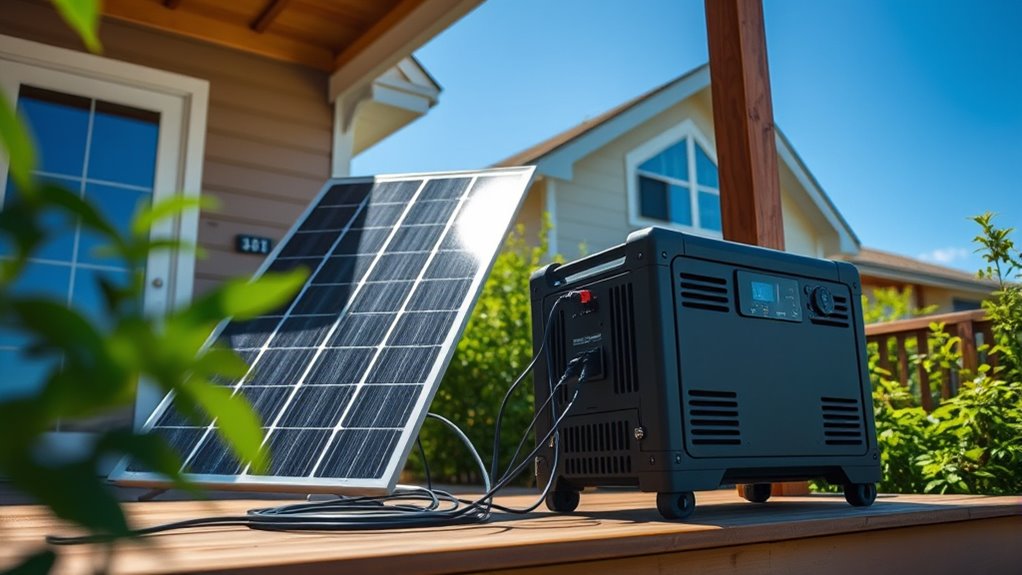
Now that your solar generator is set up, you’ll want to understand its key components and how it stores energy for your home. Knowing how the battery holds power and what appliances it can run helps you use it efficiently.
Let’s explore how your solar generator keeps your household powered. It’s pretty cool once you see how everything works together!
Solar Generator Components
How exactly does a solar generator power your home? It all starts with a few key components working together seamlessly. First, solar panels capture sunlight and convert it into direct current (DC) electricity.
Then, this energy flows to the solar generator’s inverter, which changes DC into alternating current (AC) that your home appliances can use. Finally, the system includes a charge controller to regulate the flow of electricity and protect the components.
Here are the main components you’ll find in a solar generator:
- Solar Panels: Capture sunlight to produce electricity
- Inverter: Converts DC electricity to usable AC power
- Charge Controller: Manages power flow and prevents damage
Knowing these parts helps you understand how solar generators keep your home powered efficiently. It’s pretty neat how everything works together, right?
Energy Storage Mechanism
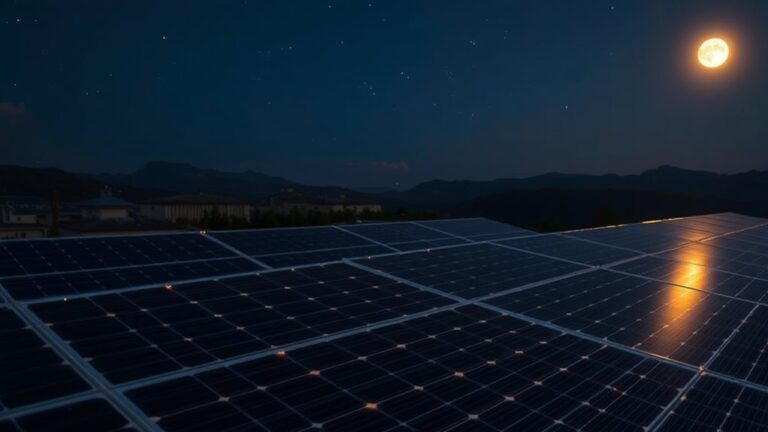
Although solar panels generate electricity during the day, you’ll need a reliable way to store that energy for use when the sun isn’t shining. That’s where the energy storage mechanism comes in, typically a battery bank built into your solar generator.
These batteries store the excess electricity your panels produce, so you can access power at night or during cloudy days. Most solar generators use lithium-ion batteries because they offer high energy density, longer lifespan, and faster charging times compared to older options like lead-acid batteries.
Your generator’s charge controller manages the flow of electricity, preventing overcharging and ensuring battery health. By efficiently storing energy, your solar generator provides a steady power supply, keeping your home running smoothly regardless of sunlight availability.
Home Appliance Compatibility
With your solar generator storing energy efficiently, the next step is understanding which home appliances it can power. Not every device in your home will work seamlessly with a solar generator, so knowing their power requirements helps you plan better.
Generally, solar generators handle small to medium loads well, but high-demand appliances may need additional power or alternative solutions.
Here are common appliances compatible with most solar generators:
- LED lights and small fans: These use minimal energy, making them perfect for solar power.
- Laptops and smartphones: Charging electronics is straightforward and efficient.
- Refrigerators (energy-efficient models): They require moderate power and can run for hours on a good solar setup.
Managing Battery Life and Power Storage
To get the most from your solar generator, you need to manage battery life and power storage carefully. Start by regularly checking your battery’s charge levels to avoid overcharging or deep discharging. Both of these can shorten its lifespan.
Try to use energy-efficient appliances and prioritize charging essential devices first to make the best use of your storage. When you can, store excess solar energy during peak sunlight hours. That way, you’ll have power ready for nighttime or cloudy days.
Keep your battery clean and make sure there’s proper ventilation to prevent overheating. It’s also a good idea to use a battery management system (BMS). This helps monitor performance and protects against faults.
Running Home Appliances Safely on Solar Power
Properly managing your battery guarantees your solar generator has enough power, but you also need to know how to run your home appliances safely on solar energy. Start by checking each appliance’s wattage to assure your generator can handle the load.
Ensure your generator supports each appliance’s wattage for safe and efficient solar power use.
Avoid running multiple high-power devices simultaneously to prevent overloads. Also, use surge protectors to safeguard sensitive electronics from power spikes.
Here are three key tips for safe operation:
- Prioritize essential appliances to optimize power use.
- Use energy-efficient appliances to reduce strain on your system.
- Regularly inspect connections and cords for damage or wear.
Troubleshooting Common Solar Generator Issues
Although solar generators are reliable, you might encounter issues like power drops, charging delays, or unexpected shutdowns. First, check your solar panels for dirt or shade blocking sunlight—clean panels improve efficiency.
If charging is slow, confirm your connections are secure and cables aren’t damaged. Power drops often happen when you overload the system, so make sure your appliances don’t exceed the generator’s capacity.
If the unit shuts down unexpectedly, inspect the battery level and avoid draining it completely, as this can trigger automatic shutdowns to protect the battery. Also, verify the inverter settings match your appliance requirements.
Regular maintenance and monitoring will help you quickly identify and fix problems, keeping your solar generator running smoothly and your home powered reliably. It’s all about staying on top of things to avoid surprises!
Frequently Asked Questions
Can Solar Generators Work During Extended Cloudy or Rainy Periods?
Solar generators can work during cloudy or rainy periods, but their efficiency drops since they rely on sunlight.
You’ll need a larger battery or backup power source to guarantee your house stays powered during extended bad weather.
What Are the Environmental Benefits of Using Solar Generators?
You’ll reduce carbon emissions, decrease air pollution, and cut reliance on fossil fuels by using solar generators. They harness clean, renewable energy, helping protect the environment and combat climate change.
Plus, they save you money on power bills. It’s a win-win for both your wallet and the planet!
Are Solar Generators Noisy Compared to Traditional Generators?
No, solar generators aren’t noisy like traditional ones. You won’t hear loud engines or fuel combustion sounds.
They operate quietly, making them perfect for home use. Especially if you want to avoid disturbing your neighbors or family.
How Do Weather Conditions Affect Solar Generator Efficiency?
Imagine trying to charge your phone in a dark room—solar generators struggle without sunlight. Cloudy, rainy, or snowy days reduce efficiency considerably, sometimes by 25–50%.
Can Solar Generators Be Integrated With Existing Home Energy Systems?
Yes, you can integrate solar generators with your existing home energy systems. You’ll need compatible inverters and proper wiring to guarantee seamless power flow.
This lets you maximize renewable energy without disrupting your current setup. It’s a smart way to boost your energy efficiency and reduce reliance on the grid.
Conclusion
Powering your place with a solar generator is a smart, sustainable solution. By choosing carefully, setting up securely, and managing your materials mindfully, you’ll maximize your energy’s efficiency.
Watch your watts work wonders while running appliances responsibly and resolving roadblocks quickly. Solar power lets you live lightly on the land, lighting your life with limitless, clean energy.
Embrace this eco-friendly energy evolution and enjoy the freedom of fresh, faultless power every day. Using a solar generator not only reduces your carbon footprint but also offers reliable energy independence.
With proper setup and maintenance, you can power your home sustainably and save on electricity bills. So, get ready to harness the sun’s energy and make your home a beacon of green living!