
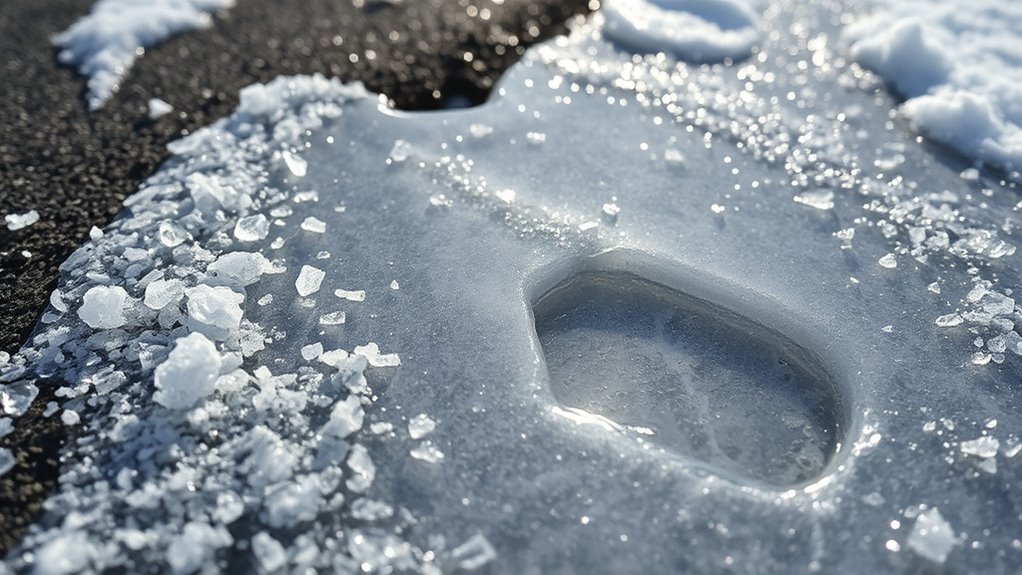
Does Solar Salt Melt Ice?
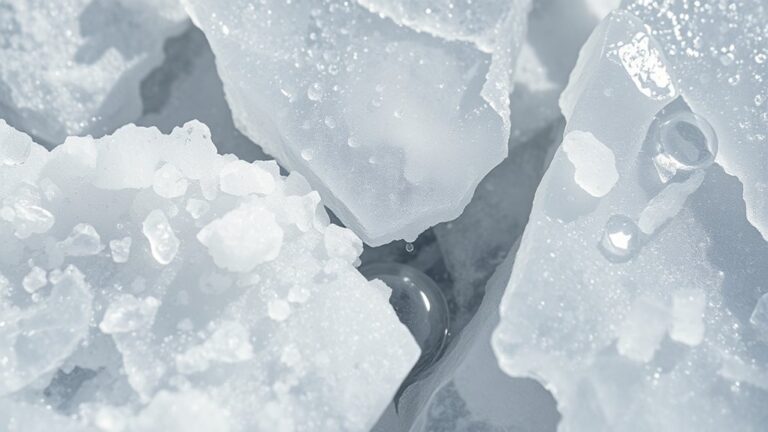
Yes, you can use solar salt to melt ice because it dissolves into a thin water layer, lowering the freezing point and breaking up the ice.
Solar salt is a popular choice for ice melting because it works effectively in moderate cold above 20°F (-6°C). It’s more refined than rock salt, which means it melts ice quickly and evenly.
Plus, solar salt is environmentally friendly and safer for plants and concrete.
If you’re wondering when solar salt is your best choice and how to use it safely, keep exploring. You’ll find it’s a smart and eco-friendly solution to icy conditions!
Key Takeaways
- Solar salt melts ice by lowering water’s freezing point, turning ice into liquid water for easier removal. It dissolves into a thin water layer on ice, creating a salty solution that prevents quick refreezing.
- Solar salt works best above 20°F (-6°C), but it’s not as effective in extreme cold or on really thick ice. So, it’s great for most winter days but might struggle in the harshest conditions.
- Because it’s super pure, solar salt dissolves quickly and evenly. That means it gets to work faster, melting ice more efficiently.
- Plus, solar salt is environmentally friendly. It’s harvested through natural seawater evaporation using renewable solar energy, which makes it a green choice for melting ice.
How Does Solar Salt Work to Melt Ice?
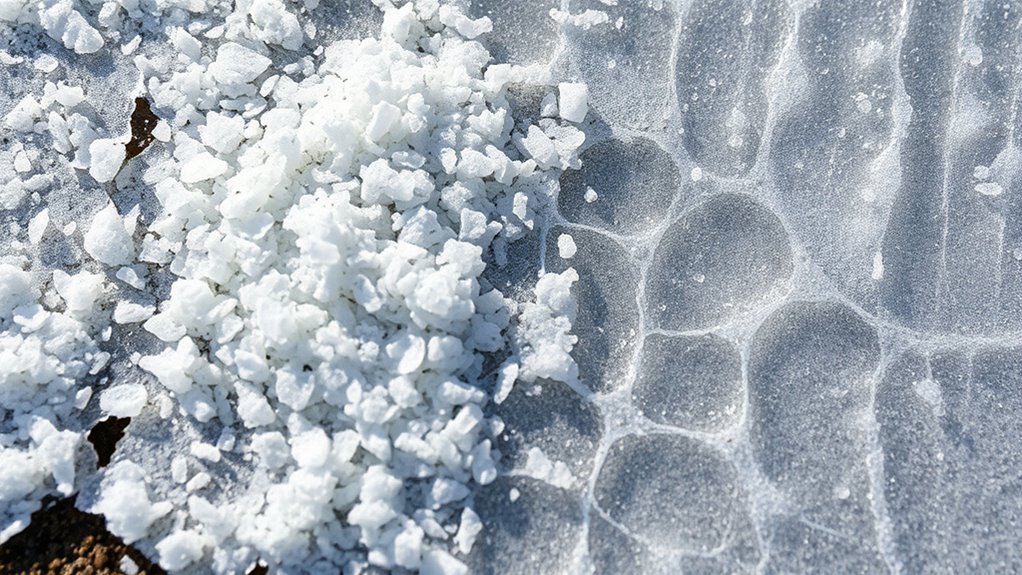
Although you might think all salts melt ice the same way, solar salt works by lowering the freezing point of water. When you spread solar salt on icy surfaces, it dissolves into the thin layer of water on top of the ice.
This salty water freezes at a lower temperature than pure water, so the ice melts even when it’s colder outside. You’ll notice the ice begins to break up as the salt solution prevents the water from refreezing quickly.
Because solar salt is primarily made of sodium chloride, it’s effective in disrupting the ice’s structure. This process helps you clear walkways, driveways, and roads safely by turning solid ice into liquid water, making it easier to remove or walk on.
How Effective Is Solar Salt Compared to Rock Salt for Melting Ice?
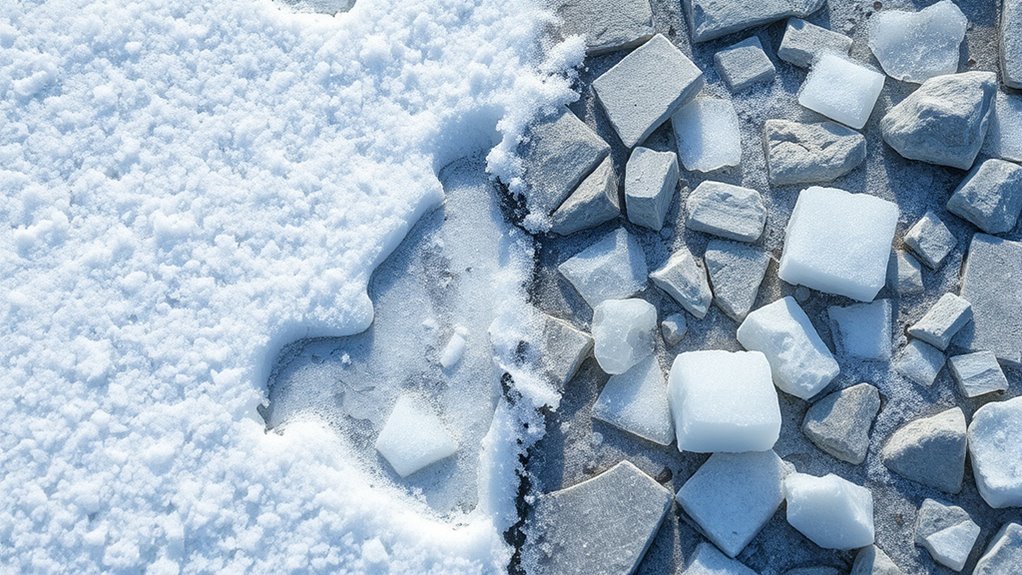
When you compare solar salt to rock salt for melting ice, you’ll find that both are effective but differ in purity and cost. Solar salt, produced through the evaporation of seawater, tends to be more refined and consistent in crystal size, which allows it to dissolve quickly and evenly.
Rock salt, mined from underground deposits, often contains impurities that can slow melting and leave residue. If you’re looking for faster ice melting, solar salt’s higher purity gives it a slight edge.
However, rock salt is usually cheaper and more widely available, making it a practical choice for large areas. Ultimately, the effectiveness depends on your specific needs—solar salt offers efficiency, while rock salt provides affordability without sacrificing too much performance.
What Are the Environmental Benefits of Using Solar Salt?
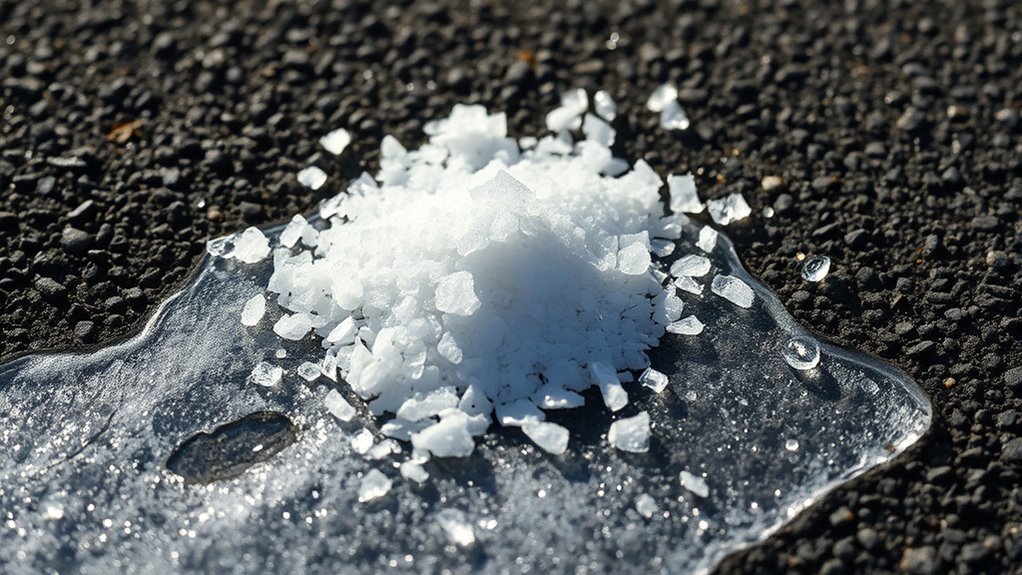
Because solar salt is harvested through natural evaporation of seawater, it has a lower environmental impact compared to mined alternatives. You’re using a product that relies on renewable energy from the sun rather than energy-intensive mining processes.
This means fewer greenhouse gas emissions and less habitat disruption. Solar salt production also minimizes the use of chemicals, reducing the risk of harmful runoff affecting local ecosystems.
When you choose solar salt, you support sustainable practices that help preserve marine environments and freshwater resources. Plus, since solar salt is often less processed, it requires less energy overall.
What Are the Limitations of Solar Salt for Melting Ice?
Even though solar salt offers many benefits, it has some limitations you should consider before relying on it to melt ice. Solar salt works best at temperatures above 20°F (-6°C); below that, its effectiveness sharply decreases. If you face extreme cold, it won’t melt ice efficiently.
Also, solar salt can be less effective on thick ice or heavy snow buildup, requiring more product or additional methods. You should know that solar salt can cause corrosion on metals and concrete over time, so use it cautiously near vehicles or structures.
Finally, it dissolves slowly, so it might take longer to clear ice compared to some chemical deicers. Keep these factors in mind to decide if solar salt fits your ice-melting needs.
When Should You Choose Solar Salt Over Chemical Deicers?
Solar salt’s limitations don’t mean it’s not worth considering for ice melting. You should choose solar salt over chemical deicers when you prioritize environmental impact and cost-effectiveness.
Solar salt is less harmful to plants, pets, and concrete compared to harsher chemical alternatives, making it a smart choice if you want to protect your surroundings. It’s also more budget-friendly, especially if you need to treat large areas regularly.
If you’re dealing with moderate ice conditions and temperatures above 20°F (-6°C), solar salt works well enough without the risks associated with stronger chemicals. However, if you need quick melting in extremely low temperatures, chemical deicers might outperform solar salt.
Ultimately, pick solar salt when you balance safety, affordability, and moderate ice control. It’s all about finding what works best for your needs.
How to Use Solar Salt Safely and Effectively
When you want to melt ice effectively with solar salt, applying it correctly is key to maximizing its benefits while minimizing any potential damage. Start by spreading a thin, even layer over icy areas—too much salt won’t melt ice faster and can harm nearby plants or concrete.
Use a spreader or your hand for control. Avoid applying solar salt just before heavy snow, as it may get buried and be less effective.
After the ice melts, sweep up any excess salt to prevent buildup and environmental harm. Always wear gloves to protect your skin, and store salt in a dry place to prevent clumping.
Frequently Asked Questions
Can Solar Salt Be Used for Water Softening?
Yes, you can use solar salt for water softening. It effectively regenerates water softener resin by removing hardness minerals.
Just make sure the solar salt is clean and pure for the best performance in your system. That way, your water softener will work smoothly and last longer.
Is Solar Salt Edible or Safe for Cooking?
You shouldn’t treat solar salt like a kitchen treasure; it’s not safe for cooking. Unlike table salt, solar salt often carries impurities that can spoil your dish and health.
How Is Solar Salt Produced or Harvested?
You produce solar salt by evaporating seawater in shallow ponds under the sun. As the water evaporates, salt crystals form.
Then, you harvest those crystals, rinse them off, and dry them to get pure, natural solar salt. It’s a pretty straightforward process when you think about it.
What Is the Shelf Life of Solar Salt?
You can store solar salt indefinitely if you keep it dry and sealed. Moisture causes clumping, but the salt itself doesn’t spoil or lose effectiveness over time.
Does Solar Salt Have Uses Beyond Deicing?
Yes, you can use solar salt for water softening, agriculture, and even in certain food processing applications.
It’s versatile, so don’t limit yourself to just deicing; it’s useful in many other ways too.
Conclusion
Solar salt melts ice like a gentle sunbeam breaking through a winter chill—effective, eco-friendly, but with limits. You’ll find it works well for moderate ice but might struggle in extreme cold compared to rock salt.
Choosing solar salt means prioritizing the environment while still keeping your paths clear. Use it wisely, and you’ll get the best balance of safety and strength.
Remember, it’s a smart, natural choice—not a miracle fix. Solar salt is great for melting ice in typical winter conditions, providing an eco-friendly alternative to harsher chemicals. However, if you face extreme cold or heavy ice buildup, it might not be as powerful as rock salt.
In short, solar salt melts ice effectively under the right conditions and supports greener living. With proper use, it keeps walkways safe and helps protect the environment, making it a solid choice for winter ice management.




One Comment