Are Commercial Solar Panels Worth It: Calculating ROI
You’ll find commercial solar panels worth it when you balance upfront costs, ongoing maintenance, and energy savings against available incentives.
Installing panels involves a significant initial investment, but federal and local rebates can reduce expenses and speed up your payback. Your ROI depends on your energy use, location, and system efficiency.
With rising energy prices and long-term property use, solar can boost your bottom line while promoting sustainability. It’s all about weighing the savings against the costs and understanding how incentives fit into the picture.
Keep exploring to understand all factors affecting your solar investment’s success.
Key Takeaways
- Upfront costs and ongoing maintenance significantly impact the payback period and overall ROI of commercial solar panel investments.
- Federal, state, and local incentives reduce initial expenses and accelerate the financial returns of solar installations.
- Accurate calculation of energy savings requires analyzing current usage, utility rates, and expected system energy output.
- ROI depends on factors like installation quality, property suitability, energy consumption patterns, and long-term occupancy.
- Solar investments make the most sense with high electricity rates, strong sunlight exposure, available incentives, and long-term property use.
Commercial Solar Panel Upfront Costs
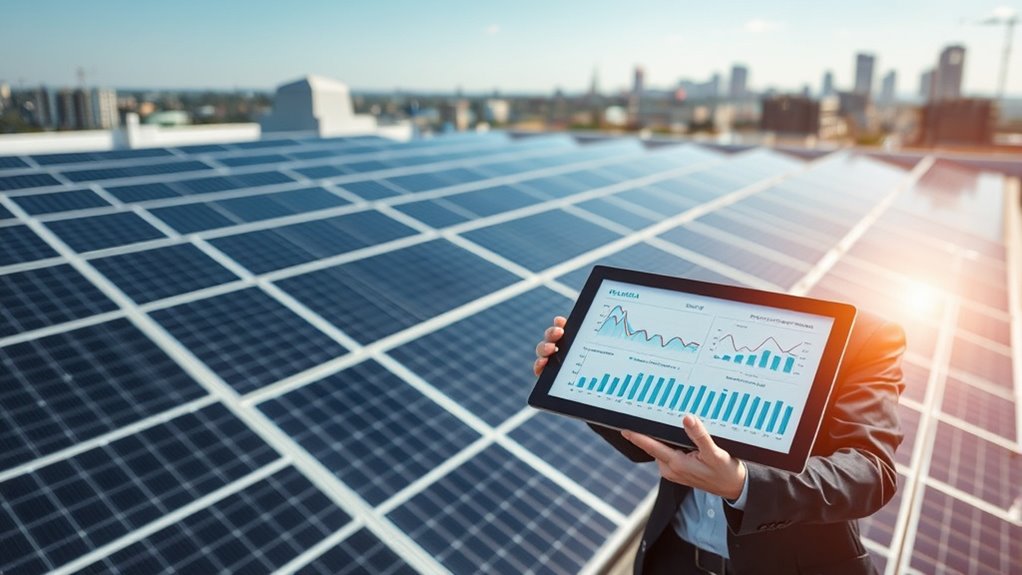
Installing commercial solar panels requires a significant upfront investment. You’ll need to cover the cost of the panels themselves, which vary depending on quality and capacity.
Additionally, you’ll pay for inverters, mounting hardware, and wiring. Don’t forget installation fees; professional labor is essential to guarantee safety and efficiency.
Site preparation might also add to your expenses, especially if your roof needs reinforcement or there are shading issues. Permits and inspections are necessary, and those costs can differ by location.
While these initial expenses might seem intimidating, they set the foundation for long-term savings. Understanding these upfront costs helps you evaluate if solar panels align with your business’s financial goals before factoring in future benefits.
Government Incentives Boosting Commercial Solar ROI
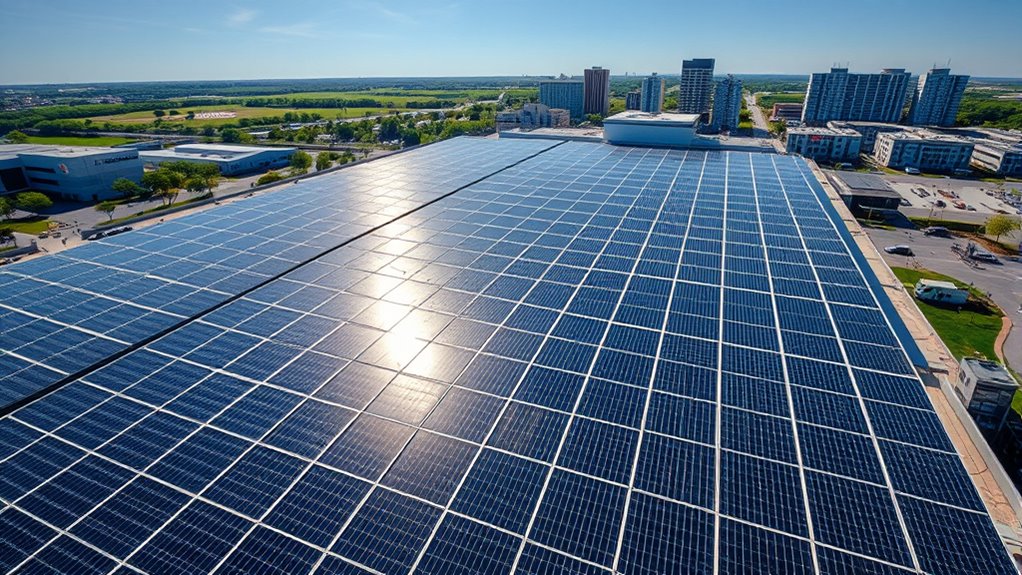
While the upfront costs of commercial solar panels can be considerable, government incentives can make a big difference in your overall return on investment. You can tap into federal tax credits, like the Investment Tax Credit (ITC), which allows you to deduct a substantial portion of your solar installation costs from your taxes.
Government incentives like the Investment Tax Credit significantly boost your commercial solar investment returns.
Many states and local governments also offer rebates, grants, or property tax exemptions to encourage solar adoption. These incentives effectively lower your initial expenses and shorten your payback period.
Additionally, some programs provide performance-based incentives, rewarding you for the clean energy your system generates. By leveraging these opportunities, you can markedly improve your project’s financial viability.
All in all, this makes commercial solar a smarter investment for your business’s long-term energy strategy.
Calculating Energy Savings From Commercial Solar Panels
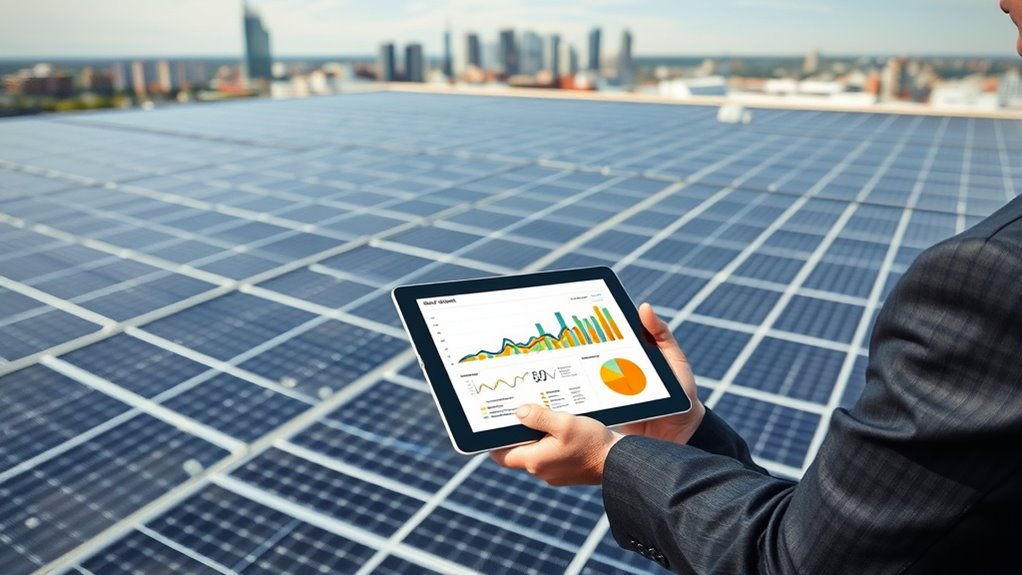
Because energy costs can vary widely, calculating your savings from commercial solar panels starts with understanding your current electricity usage and rates. First, review your monthly energy bills to determine your average kilowatt-hour (kWh) consumption.
Next, check your utility’s rate structure—whether it’s flat, tiered, or time-of-use pricing—as this impacts how much you’ll save per kWh generated by solar.
Then, estimate the solar system’s expected energy output based on your location, panel efficiency, and system size. Multiply this output by your electricity rate to find your annual savings.
Maintenance Costs Affecting Long-Term Solar ROI
You’ll need to factor in routine inspection expenses to keep your system running smoothly. Repair and replacement costs can also impact your overall savings.
Plus, cleaning and upkeep fees are essential for maintaining peak performance over time. It’s all part of making sure your solar investment pays off in the long run.
Routine Inspection Expenses
How often should you budget for routine inspections when calculating the long-term ROI of your commercial solar panels? Regular inspections keep your system running efficiently. They also help you avoid costly surprises.
Typically, you should plan for inspections:
- Annually – Most experts recommend a full system check once a year. This helps catch early wear and tear.
- After Severe Weather – Storms or heavy winds can damage panels or connections. So, schedule an inspection promptly after such events.
- Midway Through Warranty Periods – Checking performance mid-warranty ensures your system meets expected output. It also helps detect potential issues covered under warranty.
Factoring these routine inspection expenses into your budget helps maintain optimal energy production. Plus, it protects your ROI over time. Skipping inspections might save money short-term, but it can reduce your system’s lifespan and efficiency.
Repair And Replacement Costs
Several factors can influence your repair and replacement costs when maintaining commercial solar panels, directly impacting your long-term ROI. Components like inverters and wiring may need replacement sooner than the panels themselves.
Unexpected damage from weather or wear can also add costs. Planning for these expenses helps you avoid surprises and better estimate your investment’s profitability.
| Component | Typical Replacement Cycle |
|---|---|
| Solar Panels | 25-30 years |
| Inverters | 10-15 years |
| Wiring & Connectors | 10-20 years |
| Mounting Hardware | 20-25 years |
Cleaning And Upkeep Fees
Why does regular cleaning matter for your commercial solar panels? Dirt, dust, and debris can considerably reduce their efficiency, cutting into your ROI.
Neglecting upkeep leads to lower energy production and potentially costly repairs down the road. To keep your panels performing at their best, consider these maintenance costs:
- Routine Cleaning: Expect to spend on professional cleaning services or invest time if you do it yourself, typically every 6-12 months.
- Inspection Fees: Regular inspections help identify minor issues before they escalate, preserving your system’s longevity.
- Minor Repairs: Small fixes, like replacing worn seals or tightening mounts, prevent bigger problems and maintain panel efficiency.
Key Factors That Determine ROI for Commercial Solar Panels
You’ll want to focus on a few key factors that shape your solar panel ROI. These include the initial installation costs, the potential energy savings, and any available incentives or rebates.
Understanding these will help you make smarter decisions for your commercial solar investment. It’s really about knowing where your money goes and what you get back in return.
Initial Installation Costs
Understanding the initial installation costs is essential when calculating the ROI for commercial solar panels. These upfront expenses directly impact how quickly you’ll recoup your investment.
You’ll want to take into account a few key factors:
- Equipment Costs – This includes the price of solar panels, inverters, mounting hardware, and wiring. Quality and technology can vary, which affects the total cost.
- Labor and Installation Fees – Professional installation ensures safety and efficiency. However, skilled labor can be costly depending on your location and project complexity.
- Permitting and Inspection Charges – Obtaining permits and passing inspections are mandatory steps. These come with fees and can sometimes extend your project timeline.
Energy Savings Potential
How much can you actually save on energy with commercial solar panels? Your savings depend largely on your current electricity usage and rates. The more energy your business consumes, the greater the potential savings from generating your own power.
Solar panels reduce your reliance on the grid, cutting monthly utility bills. Location matters too—sunny regions yield higher energy output, boosting savings. System size and efficiency also play key roles; a well-designed setup maximizes production and trims costs.
Keep in mind, your business’s operating hours affect energy use patterns and solar alignment. By accurately estimating your energy needs and solar potential, you can better predict how much you’ll save. This considerably influences your return on investment with commercial solar panels.
Incentives And Rebates
Beyond cutting energy costs, commercial solar panels can considerably boost your ROI through various incentives and rebates. These financial benefits often make the difference between a good investment and a great one.
When you’re calculating your ROI, consider these key incentives:
- Federal Investment Tax Credit (ITC) – This allows you to deduct a significant percentage of your solar installation costs from your federal taxes. It directly lowers your upfront expense.
- State and Local Rebates – Many states and municipalities offer cash rebates that reduce your initial outlay. This makes solar more affordable.
- Performance-Based Incentives (PBIs) – These pay you based on the actual energy your system produces. So, you get ongoing returns beyond just energy savings.
Leveraging these incentives guarantees your commercial solar investment pays off faster and more efficiently. It’s definitely worth taking advantage of them!
When Does Investing in Commercial Solar Panels Make Financial Sense?
Several factors determine when investing in commercial solar panels makes financial sense for your business. First, consider your current electricity costs—higher rates mean quicker savings. Your location matters too; abundant sunlight increases energy production and shortens payback periods.
Also, take into account available incentives and rebates, which can considerably reduce upfront expenses. Evaluate your energy usage patterns and whether your roof or property supports panel installation.
If you plan to stay in the same location for several years, the investment is more likely to pay off. Finally, factor in maintenance costs and potential increases in energy prices over time.
When these elements align, switching to solar not only cuts expenses but also boosts your business’s sustainability and long-term financial health. It’s a smart move that can really pay off down the road.
Frequently Asked Questions
How Do Solar Panels Impact My Commercial Property’s Insurance?
Solar panels can increase your commercial property’s insurance costs because of the added equipment. But, they might also qualify you for discounts or incentives.
It’s a good idea to check with your insurer to understand any changes in coverage. Plus, you can find out about potential savings.
Can Commercial Solar Panels Increase My Property Value?
Think of solar panels like a fresh coat of paint that boosts curb appeal; you can increase your property value by up to 4.1%. Installing them makes your commercial space more attractive to eco-conscious buyers or tenants.
It’s a smart move that pays off both financially and environmentally. Plus, who doesn’t want a property that’s energy-efficient and future-ready?
What Happens to Solar Panels During Extreme Weather?
Solar panels are built to withstand extreme weather like hail, wind, and heavy rain. You might experience minor damage, but most systems include warranties and durable materials to keep your panels functioning through storms.
Are There Financing Options Specifically for Commercial Solar Installations?
You’ll find plenty of financing options for commercial solar, like leases, loans, and power purchase agreements (PPAs).
In fact, 60% of businesses use these to reduce upfront costs and start saving on energy immediately. It’s a smart way to get started without a huge initial investment.
How Do Solar Panels Affect My Business’s Carbon Footprint?
Solar panels considerably reduce your business’s carbon footprint by cutting reliance on fossil fuels. You’ll lower greenhouse gas emissions and showcase environmental responsibility.
Plus, you’re contributing to a cleaner planet. And who knows? You might even attract eco-conscious customers and partners along the way.
Conclusion
So, you’re thinking about commercial solar panels? Sure, why not throw a chunk of cash upfront, juggle government incentives like a circus act, and pray the sun shines just right while you dodge maintenance surprises?
If you enjoy a financial rollercoaster with a hopeful ROI finish, go for it! But if you prefer steady savings without the drama, maybe stick to regular energy bills.
After all, who doesn’t love a good gamble with their business budget? When calculating the ROI of commercial solar panels, it’s important to weigh the upfront costs against long-term energy savings and available incentives.
For many businesses, commercial solar panels can lead to significant savings and a positive return on investment over time. So, are commercial solar panels worth it? They can be—especially if you’re ready to invest smartly and plan for the future of your business energy needs.