How Long Does It Take to Install Commercial Solar Panels?
Installing commercial solar panels usually takes a few weeks to several months, depending on your project size, site readiness, and permit approvals. These factors play a big role in the overall timeline, so it’s good to know what to expect from the start.
You’ll spend about one to two weeks on site assessment and design.
Then, several days are needed for mounting and electrical work.
After that, there’s additional time for inspections and commissioning.
Delays often come from paperwork or scheduling inspections. If you want to understand how each step affects your timeline and how to keep things moving smoothly, there’s more to explore ahead.
Key Takeaways
- Commercial solar panel installation typically takes several weeks to a few months, depending on project size and complexity.
- Initial site assessment and system design usually require 1-2 weeks before physical installation begins.
- Physical installation, including mounting and electrical connections, generally spans 3 days to 2 weeks.
- Permitting, inspections, and final system commissioning can extend timelines due to local regulations and scheduling.
- Delays often arise from paperwork issues, permit approvals, weather, and coordination with authorities.
Sometimes, these things just take a bit longer than expected. But with good planning, most projects stay on track!
Typical Timeline for Commercial Solar Panel Installation
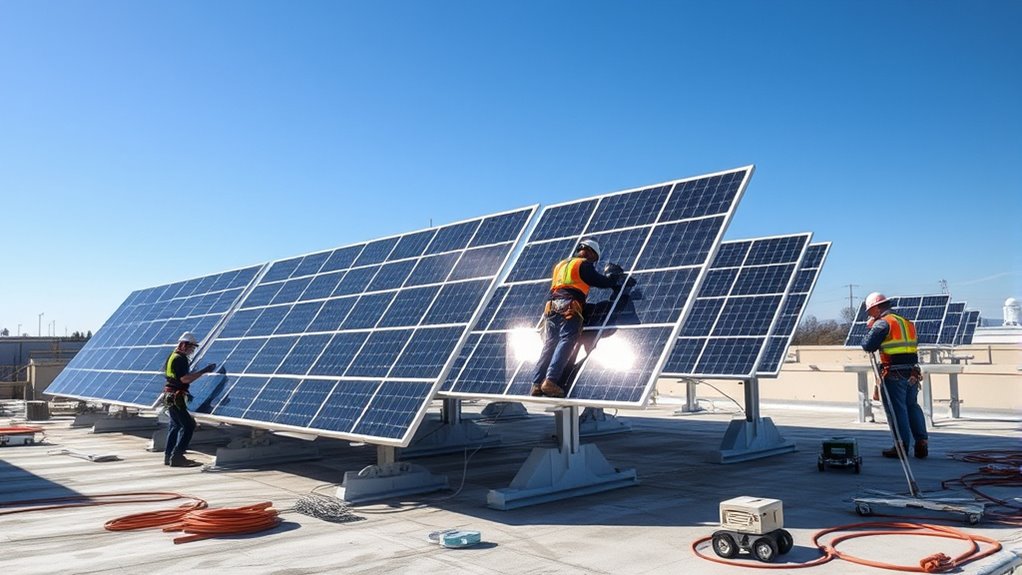
Although commercial solar panel installation timelines can vary, you can generally expect the process to take between several weeks to a few months. First, your project begins with an initial site assessment and system design, which usually takes a week or two.
Commercial solar panel installation typically takes several weeks to a few months, starting with site assessment and system design.
Once plans are finalized, you’ll move on to obtaining permits and approvals. This step might add several weeks, depending on local regulations.
After permits are secured, the physical installation of panels and electrical components typically lasts from a few days to a couple of weeks, depending on the system size.
Finally, once everything is installed, inspections and system commissioning guarantee safety and functionality. Throughout, your installer will coordinate these stages to keep your project moving efficiently toward completion.
Key Factors That Affect Commercial Solar Panel Installation Time
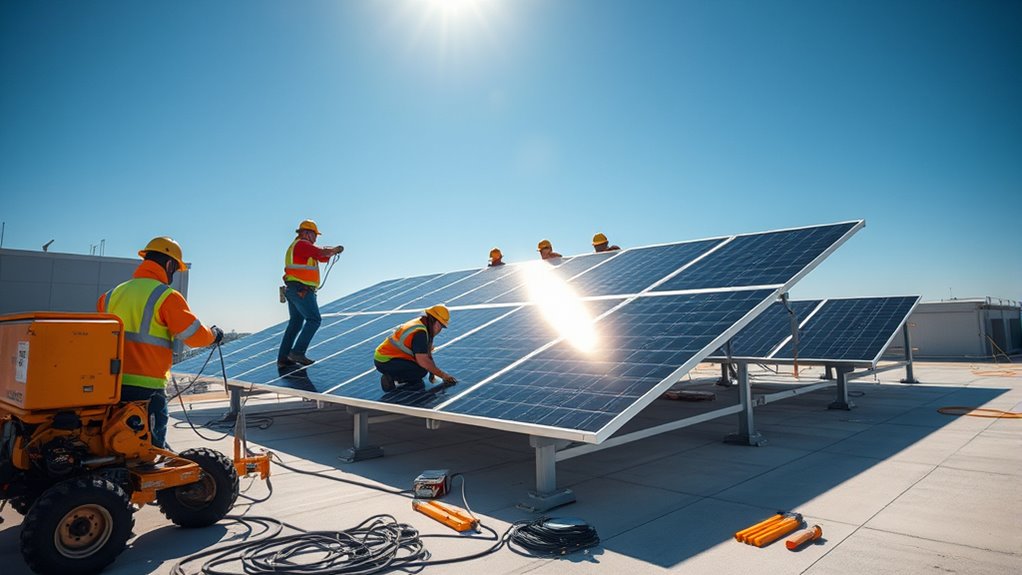
The size of your commercial solar project plays a big role in how long installation takes, with larger systems needing more time.
You’ll also need to factor in the time required to get permits and approvals from local authorities. These steps can considerably impact your overall timeline, so it’s important to plan accordingly.
Keep in mind, getting everything lined up before starting can save you a lot of headaches down the road.
Project Size Impact
How does the size of your solar panel project affect the installation timeline? Larger projects naturally take more time since they involve more panels, wiring, and mounting equipment.
If you’re installing hundreds of panels across a big commercial roof or multiple sites, expect the process to stretch over several weeks rather than days. Smaller projects, like those on a single building, can often be completed faster due to simpler logistics and less material handling.
Keep in mind that bigger projects might require more coordination among your installation team, which can add time. However, experienced installers use efficient workflows to minimize delays.
Ultimately, the bigger your system, the longer the physical installation will take, so plan your schedule accordingly to avoid surprises.
Permitting And Approvals
Larger solar projects not only require more time to physically install but also often face longer permitting and approval processes. When you’re installing commercial solar panels, securing permits from local authorities can take weeks or even months, depending on your location and project complexity.
You’ll need to submit detailed plans and comply with building codes, zoning laws, and utility interconnection requirements. Delays often happen if paperwork isn’t complete or if inspections uncover issues.
To speed things up, you should work closely with experienced contractors who understand local regulations and can handle submissions efficiently. Staying proactive and communicating regularly with permitting agencies helps prevent surprises.
Typical Duration of Each Installation Phase
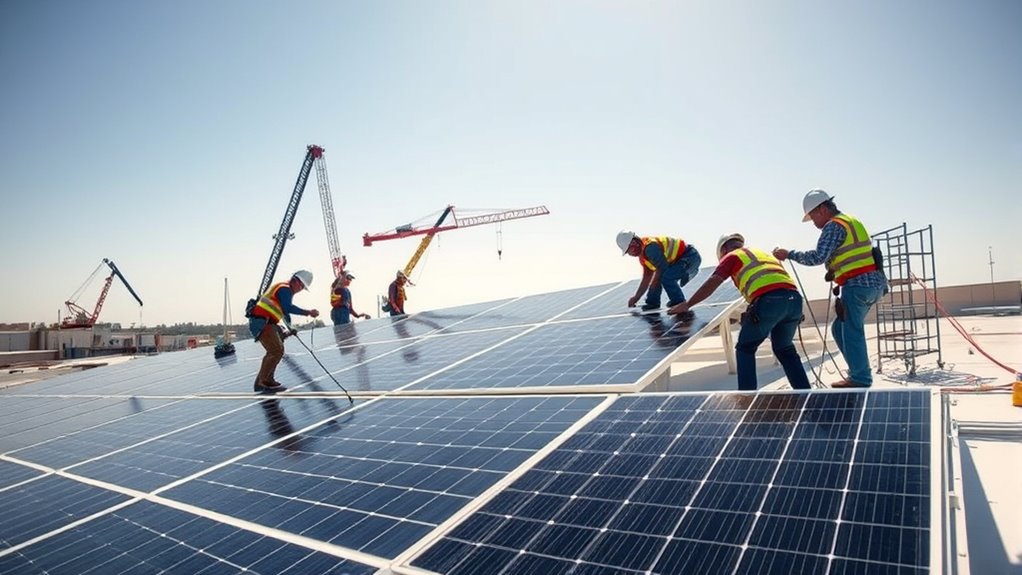
When you start your solar project, the site assessment usually takes a few hours to a day.
Mounting the panels can take one to three days, depending on your system size. It really just depends on how big your setup is.
Finally, the electrical connections typically wrap up in a day or two to get everything up and running. This is the last step before you can start enjoying your solar power.
Site Assessment Timeline
Although the site assessment phase might seem straightforward, it plays an essential role in guaranteeing your solar panel installation goes smoothly. Typically, this stage takes one to three days, depending on your property’s size and complexity.
During this time, the installer evaluates your roof’s condition, measures available space, and checks shading issues. They also review your electrical system to ensure compatibility with the new panels.
You can expect a detailed report outlining the best panel placement and any necessary structural adjustments. The site assessment helps avoid surprises later, saving time and money.
Once completed, you’ll have a clear plan to move forward confidently. This phase sets the foundation for the entire project, so it’s worth the investment in time and attention to detail.
Panel Mounting Process
With a solid site assessment complete, the next step focuses on mounting the solar panels securely to your roof. This phase usually takes one to three days, depending on your system size and roof complexity.
First, your installer prepares the mounting points by attaching brackets or rails, making sure they line up perfectly with your roof structure. Then, they carefully secure these mounts so they can handle weather and weight loads without any issues.
Finally, the solar panels get lifted and fastened onto the mounts. It’s a careful process to make sure everything is stable and safe.
Here’s what you can expect during the panel mounting process:
- Mount Preparation: Positioning and securing mounting hardware (4-8 hours)
- Weatherproofing: Sealing penetrations to prevent leaks (2-4 hours)
- Panel Installation: Attaching and aligning solar panels (6-12 hours)
This phase really sets a strong foundation for the rest of your solar setup. It’s all about making sure everything is solid and ready to go.
Electrical Connection Duration
Since proper electrical connections guarantee your solar system operates safely and efficiently, this phase typically takes one to two days to complete. During this time, your installer will connect the solar panels to the inverter and then to your building’s electrical system.
They’ll carefully wire each panel in series or parallel, depending on your system design, ensuring all connections are secure and meet local electrical codes. The team will also install safety devices like circuit breakers and grounding equipment to protect your system and property.
Once wiring is complete, they’ll conduct thorough testing to confirm everything functions correctly. While this step requires precision and expertise, experienced professionals can complete it swiftly without compromising safety or performance.
What Happens During On-Site Installation
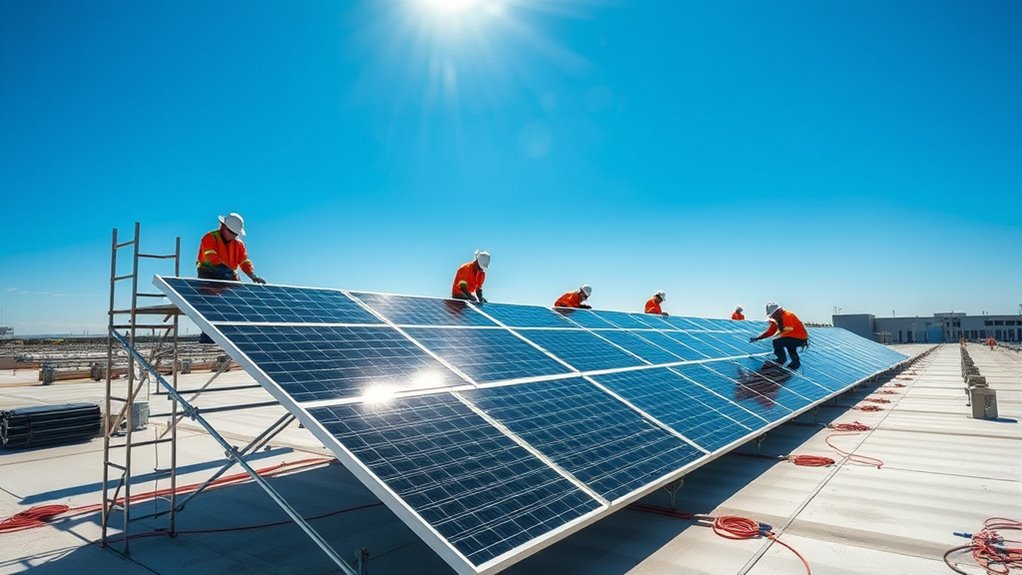
Before your solar panels start capturing sunlight, the installation team will arrive to prepare your roof and set up all the necessary equipment. They’ll begin by inspecting the roof’s condition to make sure it’s ready for the panels.
Next, they’ll install mounting hardware securely to support the solar arrays. Once the mounts are in place, the team will carefully position and fasten the panels themselves.
During this process, you can expect the installation of wiring and electrical connections between panels. They’ll also set up inverters to convert solar energy into usable power.
Finally, the team will test the system to confirm everything works safely and efficiently. This on-site installation usually takes a few days, depending on your system’s size and how complex your roof is.
How to Prepare Your Business to Speed Up Installation
Once the installation team completes their preparations and begins setting up your solar panels, you can help speed up the process by getting your business ready in advance. Clear access routes to your roof and electrical panels to avoid delays.
Make sure to inform your staff about the installation schedule so they can minimize disruptions. It’s also important to secure necessary permissions from building management if needed, and verify all utility notifications are handled promptly.
Don’t forget to remove any obstacles or equipment that might block the installation area. Confirm that your electrical system is up to code to prevent last-minute fixes.
Common Permitting and Inspection Delays to Watch For
Although solar panel installation often moves smoothly, permitting and inspection delays can catch you off guard and extend your timeline. These delays usually stem from unexpected paperwork issues or scheduling conflicts with local authorities.
To help you avoid setbacks, watch for these common hurdles:
- Incomplete or incorrect permit applications: Missing information can send your application back, costing precious days.
- Backlogs at municipal offices: High demand or limited staff can slow down reviews and approvals.
- Inspection scheduling delays: Inspectors may have tight calendars, making it hard to secure timely site visits.
Frequently Asked Questions
What Are the Long-Term Maintenance Requirements for Commercial Solar Panels?
You’ll need to clean the panels regularly, inspect for damage, and check electrical connections. It’s also important to monitor their performance consistently.
Maintenance is minimal but essential to guarantee efficiency and longevity. Usually, this means getting professional checks once or twice a year.
How Do Commercial Solar Panels Impact Energy Bills?
Commercial solar panels cut your energy bills by generating free electricity from sunlight. You’ll rely less on the grid, saving money monthly.
Over time, those savings can substantially reduce your overall operating costs. It’s a smart way to keep more cash in your business.
Are There Financing Options Available for Commercial Solar Panel Installations?
Yes, you’ll find various financing options for commercial solar panels, including loans, leases, and power purchase agreements. These options help you manage upfront costs and make going solar more affordable and accessible for your business.
It’s pretty great how many choices there are, right? This way, you can pick what works best for your budget and needs.
What Incentives or Tax Credits Exist for Commercial Solar Energy?
You can take advantage of the federal Investment Tax Credit (ITC), which covers 30% of your system cost. Plus, many states offer additional incentives, rebates, and accelerated depreciation benefits.
These extras can really boost your commercial solar savings. It’s worth checking what’s available in your area to maximize your benefits.
How Does Solar Panel Efficiency Vary by Brand or Technology?
You’d think all solar panels soak up the sun equally, but efficiency varies a lot by brand and tech. Some use cutting-edge materials, squeezing more power from sunlight, while others lag, leaving you chasing shadows and lost savings.
It’s kind of like comparing different phones—some have better batteries and processors, so they perform way better. The same goes for solar panels; the technology inside really makes a difference in how much energy you get. So, choosing the right one can save you a bunch in the long run.
Conclusion
Installing commercial solar panels doesn’t have to feel like waiting for the Pony Express. By understanding the typical timeline and key factors affecting installation, you can prepare your business to keep things moving smoothly.
From permitting to on-site work, staying organized helps speed up the process. With some foresight and patience, you’ll soon harness the power of the sun.
Cutting costs and boosting sustainability with commercial solar panels can happen faster than you’d expect. Being proactive about the installation steps ensures your project stays on track and maximizes energy savings.
In the end, a well-planned commercial solar panel installation not only benefits your bottom line but also supports your business’s commitment to renewable energy. So, get ready to enjoy the financial and environmental perks of solar power without unnecessary delays.