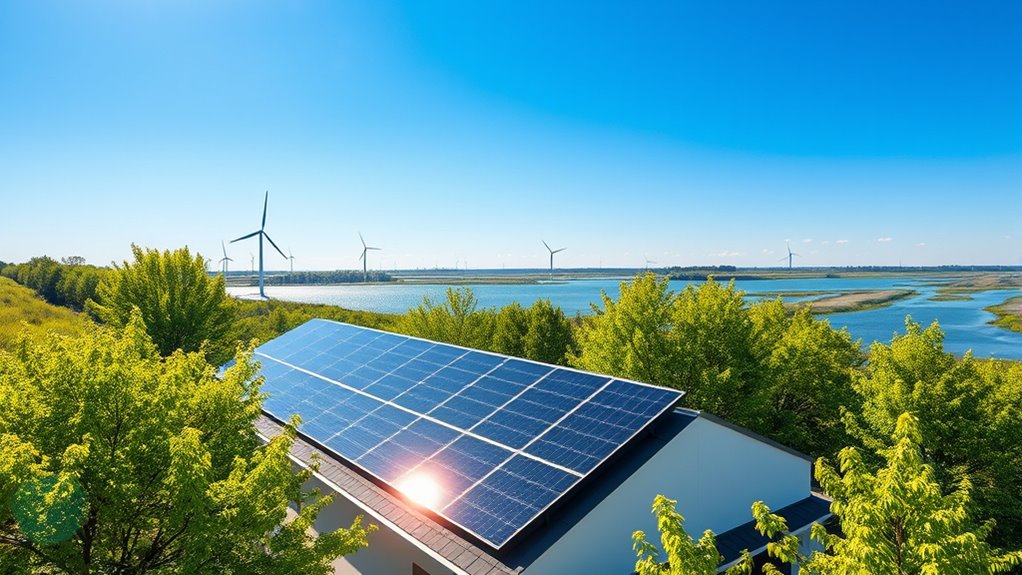
5 Ways Solar Panels Help the Environment
You can help the environment by using solar panels, which cut greenhouse gas emissions since they don’t burn fossil fuels. This means less pollution in the air we breathe.
Plus, they reduce air and water pollution by avoiding harmful chemicals.
Solar panels save water and mineral resources because they don’t need water to produce energy or rely on mining. That’s a big win for our planet’s precious resources.
By replacing fossil fuels, they lower carbon footprints and support a cleaner planet.
They even make smart use of land, preserving habitats while producing energy. It’s pretty amazing how solar panels do all this while helping us power our lives.
Keep exploring to discover how these benefits work.
Key Takeaways
- Solar panels reduce greenhouse gas emissions by generating electricity without burning fossil fuels. They’re a great way to cut down on pollution and help fight climate change.
- They also cut air and water pollution by producing clean energy without harmful chemical releases. This means cleaner air to breathe and safer water for everyone.
- Solar power conserves water resources because it doesn’t need water to generate electricity. That’s a big plus, especially in areas where water is scarce.
- Using solar energy lowers our reliance on fossil fuels, which helps reduce carbon dioxide levels. This is key for slowing down global warming.
- Plus, solar installations support sustainable land use. They make good use of rooftops, degraded lands, and even spaces with dual purposes. It’s smart and eco-friendly!
How Solar Panels Cut Greenhouse Gas Emissions
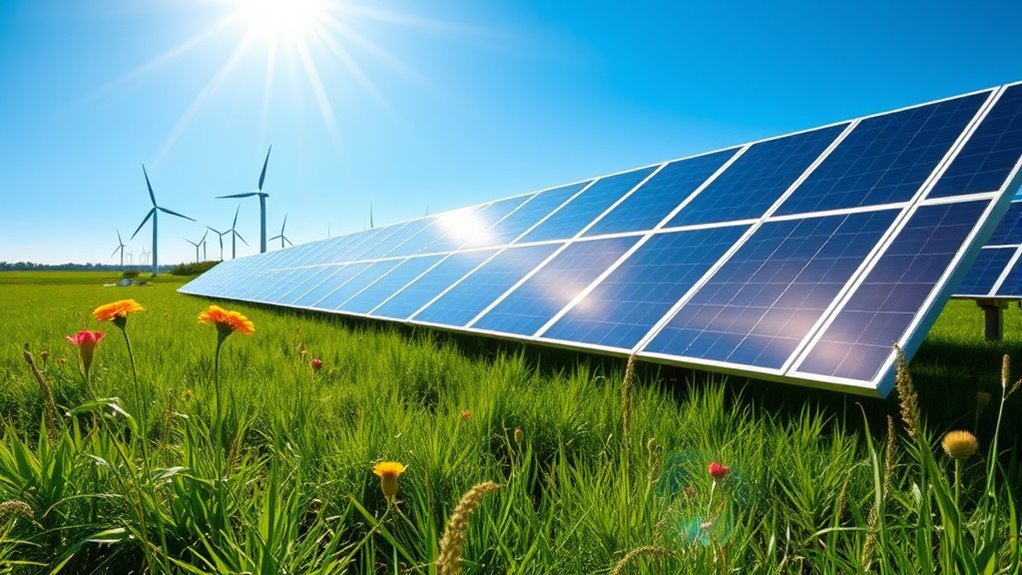
Reducing greenhouse gas emissions, solar panels offer a clean way to generate electricity without burning fossil fuels. When you install solar panels, you’re tapping into the sun’s energy, which doesn’t release carbon dioxide or other harmful gases.
Unlike coal or natural gas plants, solar energy doesn’t contribute to the greenhouse effect that traps heat in the atmosphere. This means you’re directly lowering your carbon footprint every time your solar system powers your home or business.
Plus, the energy produced is renewable and abundant, so you won’t run out or rely on polluting resources. By choosing solar, you help reduce demand for fossil fuels, which slows down climate change and supports a healthier planet for future generations.
You’re making a smart, eco-friendly choice.
How Solar Panels Reduce Air and Water Pollution
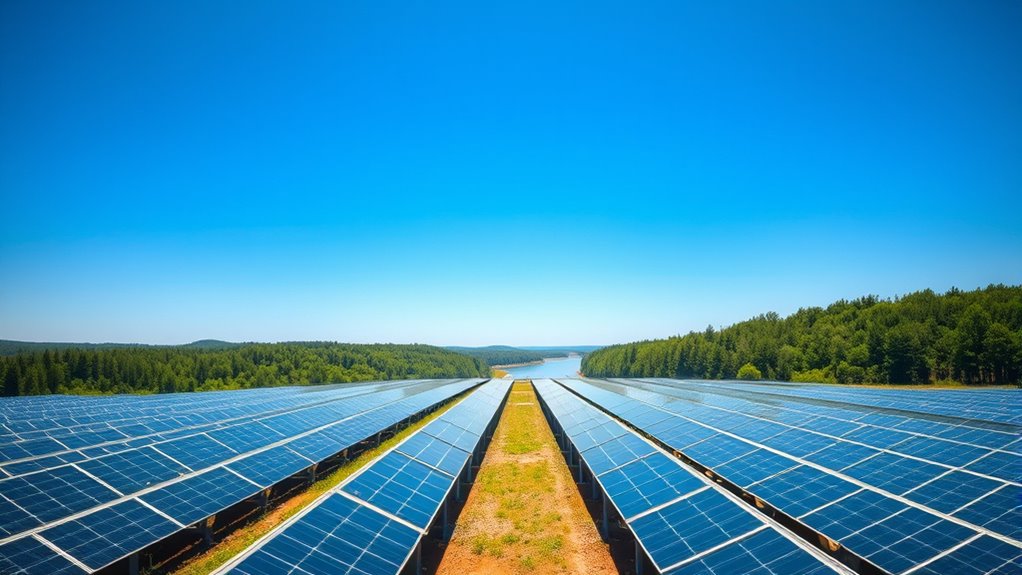
While many energy sources contribute to harmful emissions, solar panels generate power without releasing pollutants into the air or water. When you switch to solar energy, you reduce reliance on fossil fuels that emit sulfur dioxide, nitrogen oxides, and particulate matter—main culprits of smog, acid rain, and respiratory issues.
Solar panels produce clean electricity silently and without combustion, so they don’t spew harmful chemicals that degrade air quality. Plus, solar energy systems don’t discharge toxic substances into waterways, unlike some traditional power plants that risk contaminating rivers and lakes during fuel extraction or waste disposal.
How Solar Panels Save Water and Mineral Resources
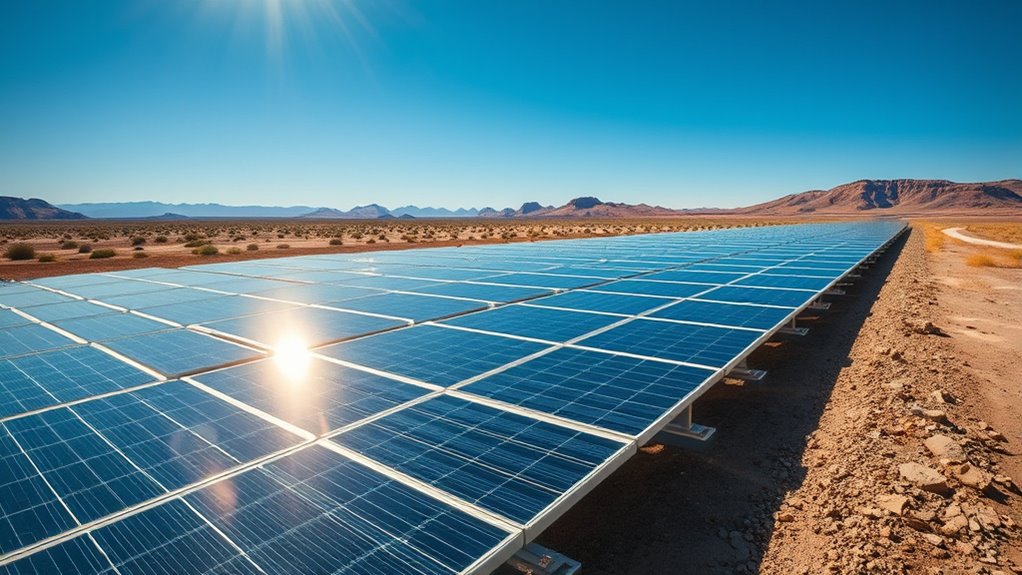
How exactly do solar panels help conserve water and minerals? Unlike traditional power plants, solar panels don’t need water to generate electricity, so they drastically cut water consumption.
When you choose solar, you reduce the strain on freshwater sources that other energy methods rely on. This helps protect ecosystems and maintain water availability.
Additionally, solar panels require fewer mineral resources over time compared to fossil fuel extraction, which involves intensive mining and drilling. By investing in solar energy, you limit the demand for these minerals, preserving natural landscapes and reducing environmental damage.
You also avoid the water pollution often linked to mining activities. Ultimately, solar panels help you use resources more responsibly, supporting a healthier planet while meeting your energy needs efficiently.
How Solar Panels Reduce Fossil Fuel Use
By choosing solar panels, you not only conserve water and minerals but also cut down on the burning of fossil fuels. Solar energy directly replaces electricity that would otherwise come from coal, oil, or natural gas power plants.
When you rely on solar power, you reduce demand for these fossil fuels, which are major sources of greenhouse gas emissions and air pollution. This shift helps decrease carbon dioxide levels in the atmosphere, slowing climate change.
Plus, solar panels generate clean energy without harmful byproducts, unlike fossil fuel combustion. By installing solar panels, you actively participate in reducing fossil fuel dependence, promoting a cleaner, healthier environment for everyone.
Your choice encourages a changeover to renewable energy sources that benefit both you and the planet. It’s a simple step that makes a big difference!
How Solar Panels Support Sustainable Land Use
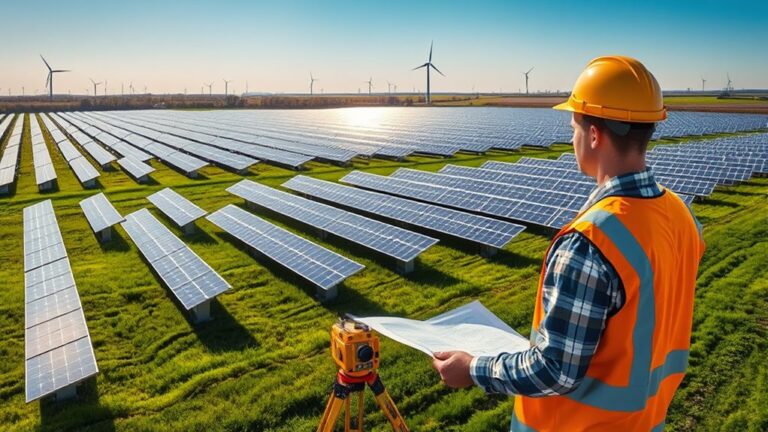
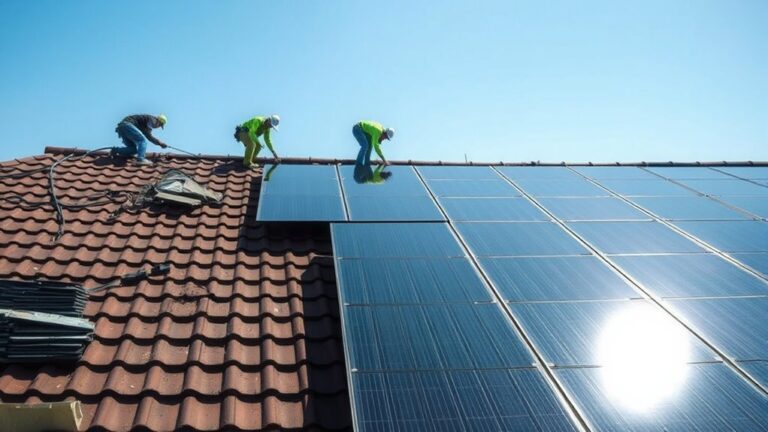
Even though land resources are limited, solar panels let you use space efficiently while generating clean energy. You can install them on rooftops, parking lots, or even degraded lands. This helps preserve natural habitats and agricultural areas.
Solar panels maximize space use, enabling clean energy generation without sacrificing natural habitats or farmland.
Here’s how solar panels support sustainable land use:
- Maximize Existing Spaces: You don’t need extra land when you place panels on buildings or over parking areas.
- Dual Land Use: Solar panels can coexist with farming or grazing. That means you can produce energy and food at the same time.
- Rehabilitate Degraded Lands: You can turn unusable, contaminated, or barren land into productive energy sites. And you do this without disrupting ecosystems.
Frequently Asked Questions
How Long Do Solar Panels Typically Last?
Solar panels typically last around 25 to 30 years. You’ll find they gradually lose efficiency over time, but with proper maintenance, they can keep producing clean energy well beyond their warranty period.
That means they can save you money for a long time. So, even after the warranty ends, your panels are likely still working hard for you. Just a little upkeep goes a long way!
What Maintenance Do Solar Panels Require?
You won’t need a rocket scientist to maintain solar panels! You just clean them a couple of times a year, check for debris, and guarantee connections are tight.
That’s it—simple and almost effortless upkeep!
Are Solar Panels Effective in Cloudy Weather?
Yes, solar panels still work in cloudy weather, but they produce less energy since sunlight is diffused.
You’ll get reduced efficiency, but they’ll keep generating power, especially if you have a quality system installed.
How Much Do Solar Panels Cost to Install?
Solar panel installation typically costs between $15,000 and $25,000 before incentives. You’ll save more with tax credits and rebates, which can substantially lower your upfront expense and make solar more affordable over time.
It’s pretty great how these incentives work, right? They really help bring down the initial cost and make going solar a smart choice for your wallet.
Can Solar Panels Increase Home Property Value?
You might think adding solar panels is just extra cost, but they actually boost your home’s property value.
Buyers love energy savings, so installing them can make your home more attractive and increase its market price.
Conclusion
You might not realize it, but every time you choose solar panels, you’re cutting greenhouse gases, reducing pollution, saving precious water, and using less fossil fuel—all at once.
It’s amazing how one simple action can protect our air, water, and land simultaneously.
By going solar, you’re not just making a smart choice for yourself—you’re making a powerful difference for the planet we all share, right when it needs it most. Solar energy helps reduce carbon emissions and fight climate change, which is crucial for a healthier environment.
Switching to solar panels is an easy way to support clean energy and promote sustainability. When we use solar power, we conserve natural resources and contribute to a greener future.
So, choosing solar panels means you’re directly helping the environment by lowering pollution and preserving water. It’s a win-win for your home and the Earth!