Blog

  • What Happens If I Stop Paying My Solar Lease

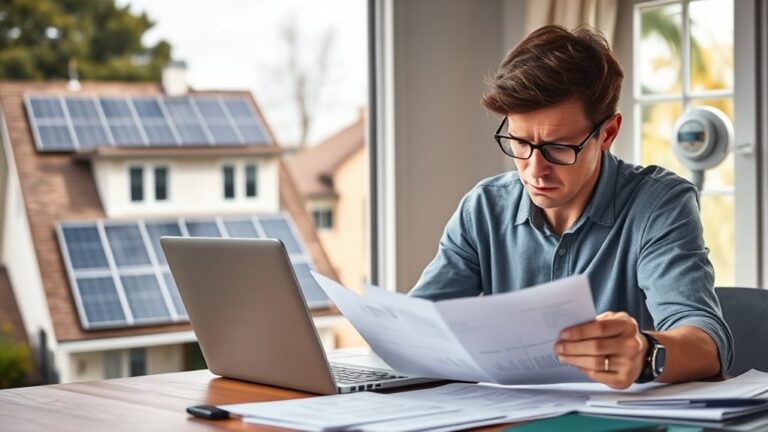
    If you stop paying your solar lease, the company will notify you quickly and may add late fees. Missed payments can eventually hurt your credit and trigger system repossession, cutting off your solar energy and increasing your electricity bills.

    Your home’s value might drop, and selling it could get complicated if payments remain unpaid. Acting early and communicating with the leasing company can help avoid these issues.

    Keep exploring to understand the full impact and your options. Don’t wait until things get worse—reach out and find a solution that works for you.
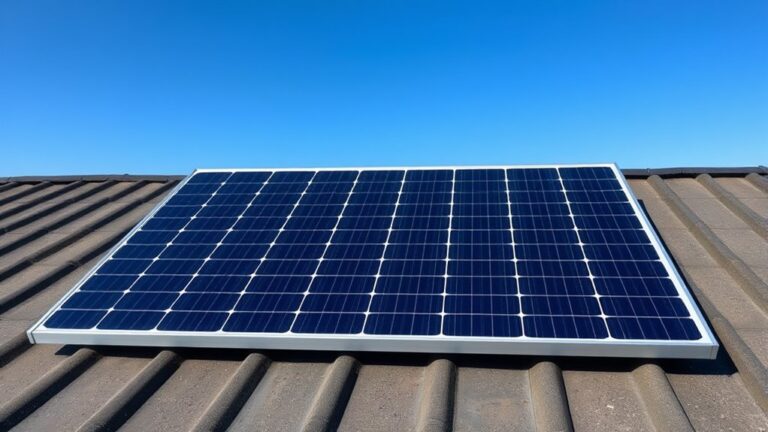
  • What Can a 100 Watt Solar Panel Run?

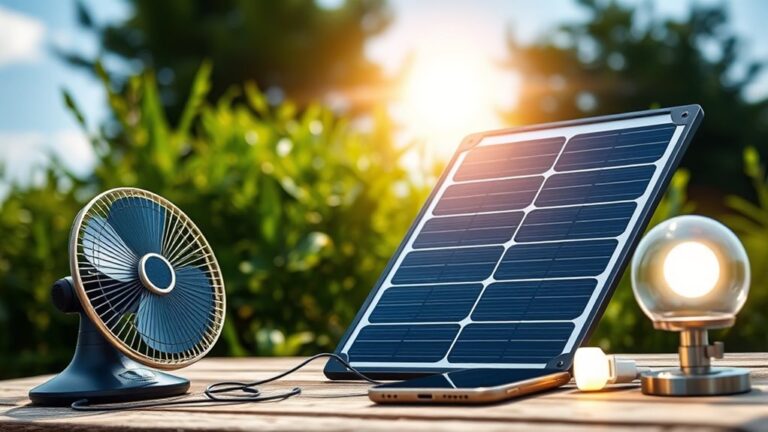
    You can power essential small devices like LED lights, smartphones, radios, and laptops with a 100 watt solar panel. It’s perfect for charging low-power electronics and running small appliances such as fans or mini-fridges, especially in off-grid or remote settings.

    While it won’t handle large household appliances, pairing it with the right battery and inverter boosts performance. Keep its placement sunny and optimized, and you’ll get the most out of your panel—explore how to maximize and use it best for your needs.

  • What Are the Standard Dimensions of a Solar Panel?

    Standard residential solar panels usually measure about 65 by 39 inches and weigh between 40 to 50 pounds. They’re typically 1.5 to 2 inches thick, designed to fit neatly on your roof for both function and looks.

    Sizes can vary slightly depending on whether you choose monocrystalline or polycrystalline panels. Efficiency and wattage also affect dimensions.

    If you want to understand how these differences impact your installation and energy needs, there’s more to explore.

  • Is Solar Worth It in Wisconsin?

    Yes, solar is worth it in Wisconsin. Your panels will actually perform well in cooler temperatures, and federal plus state incentives help lower upfront costs considerably.

    While shorter winter days and snow can reduce output, proper system design and local installer expertise ensure your setup stays efficient year-round. Maintenance is low, and you can save on energy bills.

    If you want to understand costs, panel choices, and maximizing savings, there’s more to explore.

  • How to Test Solar Panel Output in 7 Easy Steps

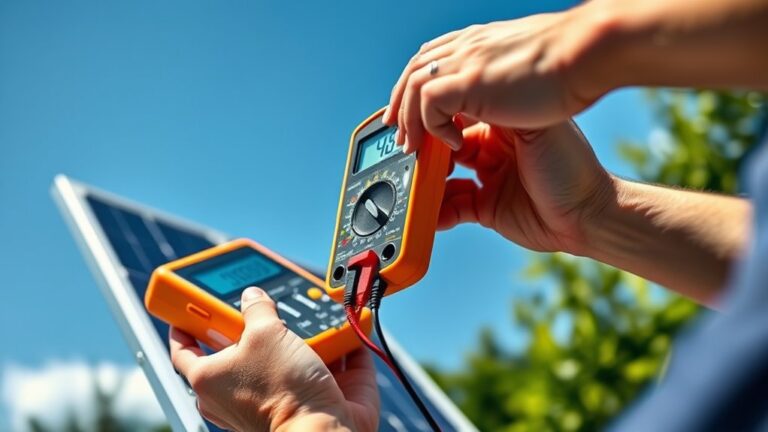
    To test your solar panel output in seven easy steps, start by gathering your multimeter, safety gloves, and a ladder. Clean your panels to remove dirt and debris.

    Then, measure the open-circuit voltage (Voc) and short-circuit current (Isc) under direct sunlight. Next, check the operating voltage and current using your multimeter.

    Calculate the power by multiplying voltage and current, then troubleshoot any performance issues. Keep following to uncover tips for maintaining and optimizing your solar setup.

  • How Can I Tell If My Solar Panels Are Working?

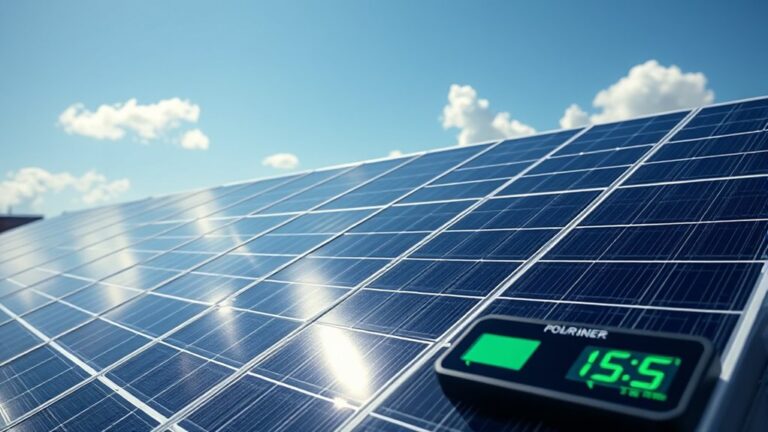
    You can tell your solar panels are working by checking your inverter’s display or app for real-time energy output and looking for blinking lights that show normal operation.

    Also, inspect your panels for dirt, damage, or shading that might block sunlight. Notice if your electricity meter spins backward on sunny days, indicating power generation.

    Comparing your solar output to energy bills helps confirm savings. Keep an eye out for issues, and you’ll discover more ways to guarantee your system runs efficiently.

  • How to Start a Solar Company in 7 Essential Steps

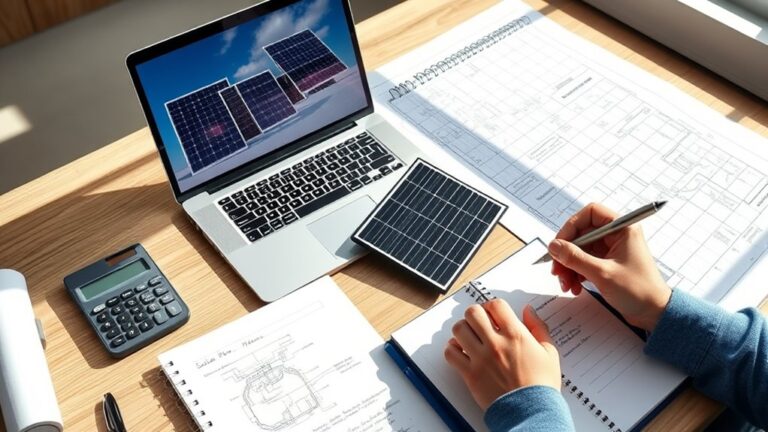
    To start a solar company in seven essential steps, first assess the market demand and industry trends to find your niche. Choose a business model and service offerings that fit your goals.

    Handle all legal requirements and licensing promptly. It’s important to get these out of the way early on.

    Develop a solid business plan and secure funding. This will give you a clear roadmap and the resources you need.

    Build a skilled team and reliable supplier base. Having the right people and partners makes all the difference.

    Craft a marketing strategy to attract clients. Getting your name out there is key.

    Finally, manage your growth carefully to guarantee long-term success. Keep exploring, and you’ll uncover even more valuable strategies.

  • How to Remove Solar Panels in 3 Easy Steps

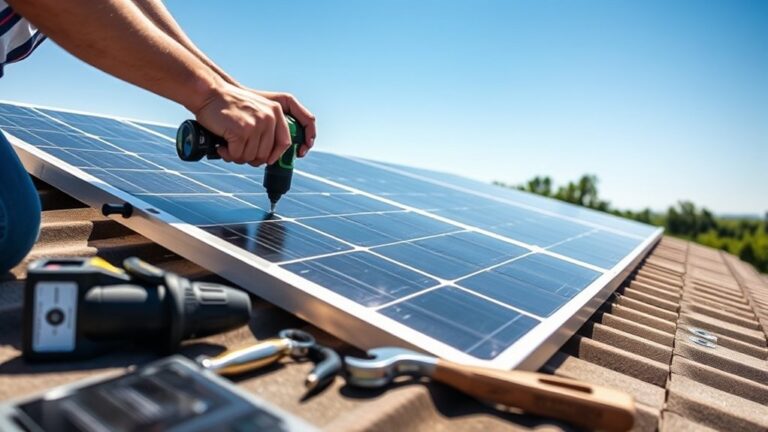
    To remove solar panels safely, first gather your tools and safety gear like insulated gloves, safety goggles, and a sturdy ladder. Next, fully power down the system.

    Then, carefully disconnect electrical connectors and remove mounting bolts. Work methodically and lift the panels with help.

    Finally, handle panels by the frame and store them flat with padding. Make sure to protect them from damage.

    Keep going to uncover detailed tips for a smooth, secure removal process.

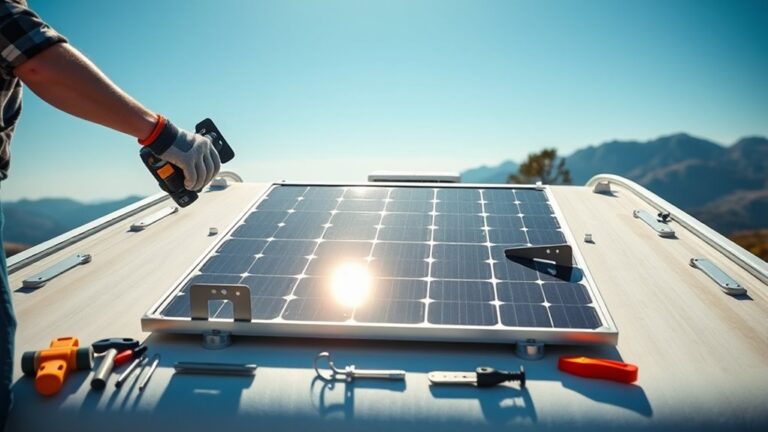
  • How to Mount Solar Panels on Your RV in 7 Easy Steps

    To mount solar panels on your RV in 7 easy steps, first choose panels that fit your power needs and roof size. Find the sunniest spot on your roof, then clean and prep the surface.

    Next, secure mounting brackets firmly. Attach the panels, and connect the wiring carefully to your charge controller.

    Test the system to guarantee it works properly and troubleshoot any issues. Keep following along to uncover tips for hassle-free installation and maintenance.

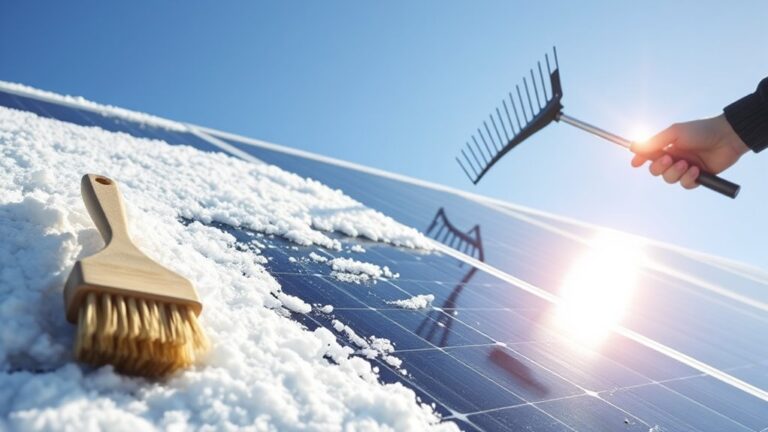
  • 3 Tips to Keep Snow Off Solar Panels

    You can keep snow off your solar panels by safely clearing buildup using a long-handled roof rake while standing on the ground. This helps you avoid damage or injury.

    Installing heating systems or snow guards helps melt snow gently and prevent dangerous slides. Plus, it reduces the amount of manual work you have to do.

    Finally, setting your panels at a steeper angle between 30 and 45 degrees lets snow shed naturally. This also improves energy production.

    If you want to uncover more ways to protect and optimize your panels in winter, keep exploring these strategies. There’s always something new to learn!