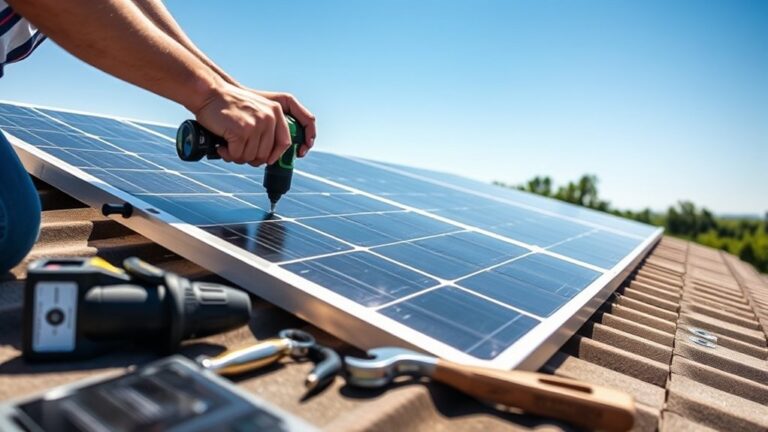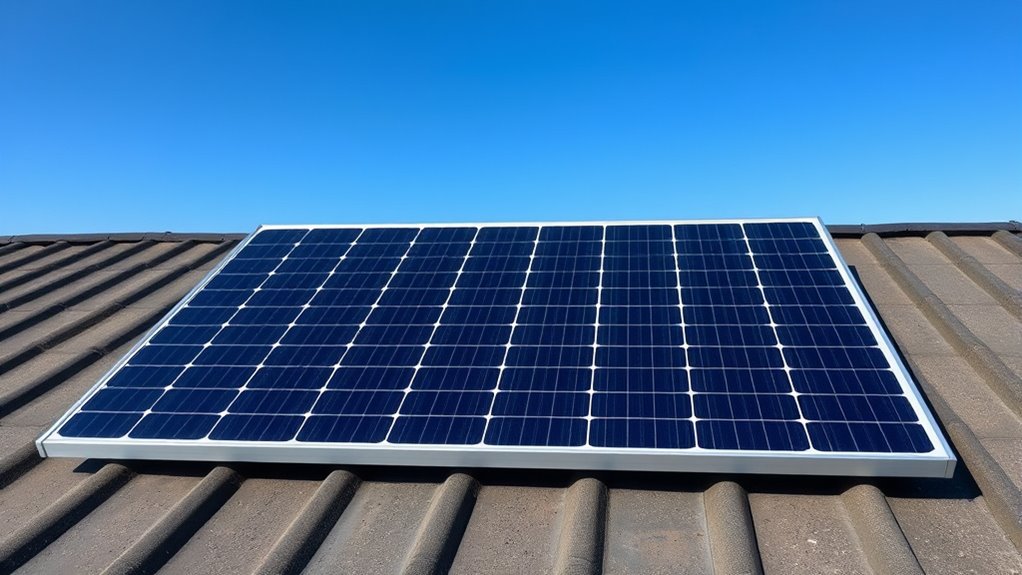
What Are the Standard Dimensions of a Solar Panel?
Standard residential solar panels usually measure about 65 by 39 inches and weigh between 40 to 50 pounds. They’re typically 1.5 to 2 inches thick, designed to fit neatly on your roof for both function and looks.
Sizes can vary slightly depending on whether you choose monocrystalline or polycrystalline panels.
Efficiency and wattage also play a role in affecting the panel dimensions.
If you want to understand how these differences impact your installation and energy needs, there’s more to explore.
It’s pretty interesting once you dig into the details!
Key Takeaways
- Standard residential solar panels typically measure about 65 inches by 39 inches.
- Commercial panels often share similar dimensions but vary with wattage and cell count.
- Residential panels usually have a thickness of 1.5 to 2 inches for close roof mounting.
- Panel weight generally ranges from 40 to 50 pounds, impacting installation requirements.
- Exact panel sizes vary by manufacturer and specific model specifications.
So, while these are the common numbers, it’s always good to check the details for the particular panel you’re interested in.
What Are the Typical Dimensions of Residential Solar Panels?
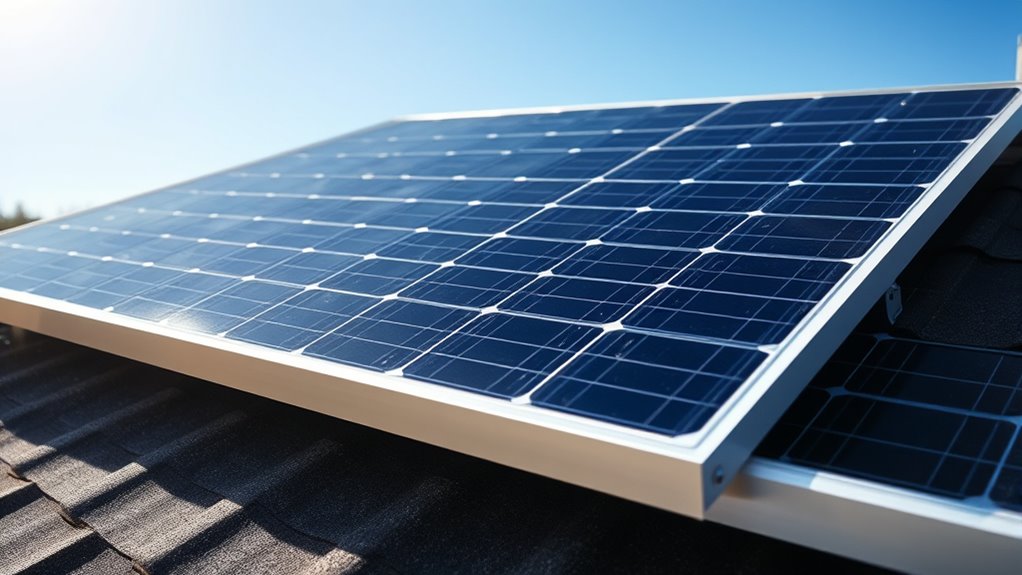
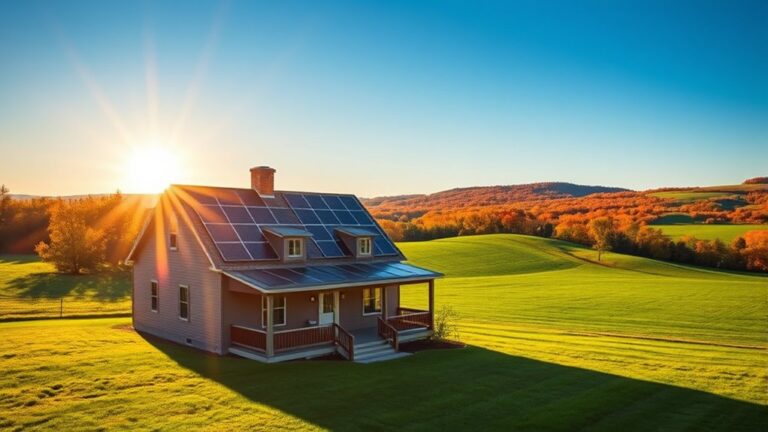
Residential solar panels typically measure around 65 inches by 39 inches, making them compact enough to fit most rooftops without overwhelming the space. When you install these panels, you’ll find they usually weigh between 40 to 50 pounds, so handling them during setup is manageable.
Their slim profile, generally about 1.5 to 2 inches thick, allows them to sit close to your roof, preserving your home’s aesthetic. Most residential panels come in a rectangular shape, designed to maximize sunlight capture while fitting neatly in rows.
Knowing these standard dimensions helps you plan your installation efficiently, ensuring you can cover enough roof area to meet your energy needs without surprises during installation. This size balance makes solar panels practical for everyday homeowners.
Size Differences: Monocrystalline vs. Polycrystalline Panels
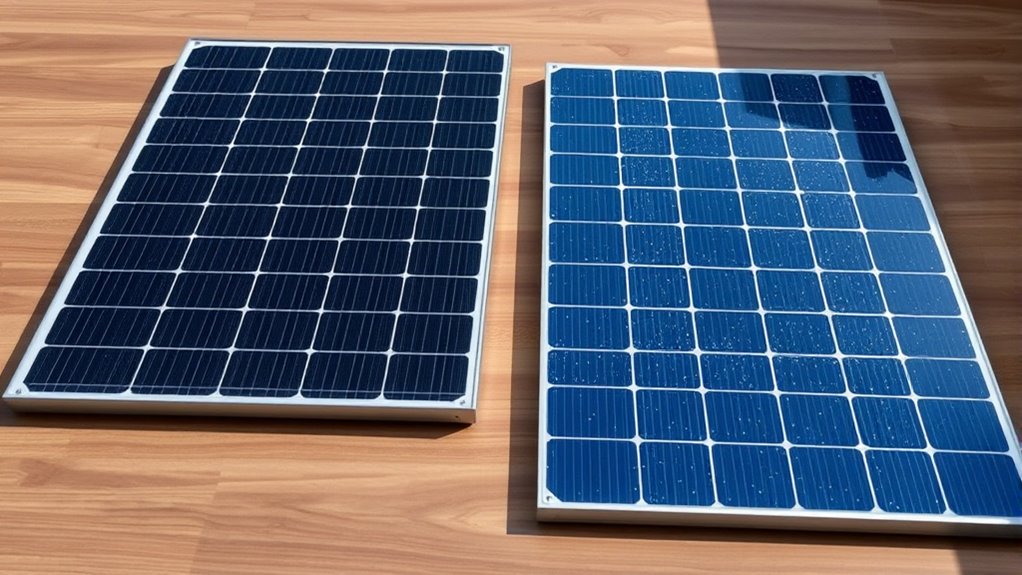
When choosing between monocrystalline and polycrystalline panels, you’ll notice they often differ in shape and size. Monocrystalline panels tend to be more efficient, so they might take up less space for the same power output.
Understanding these differences helps you plan the installation area more effectively. It’s pretty handy to know what you’re working with before you start.
Panel Shape Variations
Although both monocrystalline and polycrystalline solar panels serve the same purpose, you’ll notice distinct differences in their shapes and sizes. Monocrystalline panels typically have uniform, square-shaped cells with rounded edges, giving them a sleek, consistent look.
Polycrystalline panels, on the other hand, often feature a more fragmented, crystalline appearance with cells that are less uniform and sometimes rectangular or irregularly shaped. These shape variations affect how the panels fit together on your roof or installation site.
Monocrystalline panels usually come in slightly smaller, more compact dimensions, which might be easier to arrange in tight spaces. Polycrystalline panels tend to be a bit larger due to their cell layout.
Understanding these differences helps you pick the right panel shape for your specific installation needs. It’s all about finding what works best for your space and setup.
Efficiency And Size
Since efficiency directly impacts the size of the solar panels you’ll need, understanding the differences between monocrystalline and polycrystalline panels is essential. Monocrystalline panels, made from a single crystal structure, typically offer higher efficiency rates—around 15-20%.
This means you can generate more power from a smaller surface area. Polycrystalline panels, on the other hand, are less efficient, usually between 13-16%, so they require a larger area to produce the same amount of electricity.
If you have limited roof space, monocrystalline panels are often the better choice because their compact size delivers more output. However, polycrystalline panels might be more cost-effective if you have ample space and want to save upfront.
Knowing these efficiency and size differences helps you make smarter decisions about your solar setup.
Installation Space Needs
Understanding the efficiency differences between monocrystalline and polycrystalline panels directly influences the space you’ll need for installation. Monocrystalline panels are generally more efficient, meaning you’ll require fewer panels to generate the same power compared to polycrystalline ones.
This efficiency translates into less roof or ground space used. When planning your installation, consider these factors:
- Monocrystalline panels produce more power per square foot.
- Polycrystalline panels are less efficient, so you need more panels.
- More panels mean larger installation space requirements.
- Roof size and shape may limit your choice between panel types.
How Solar Panel Size Affects Installation and Space Planning
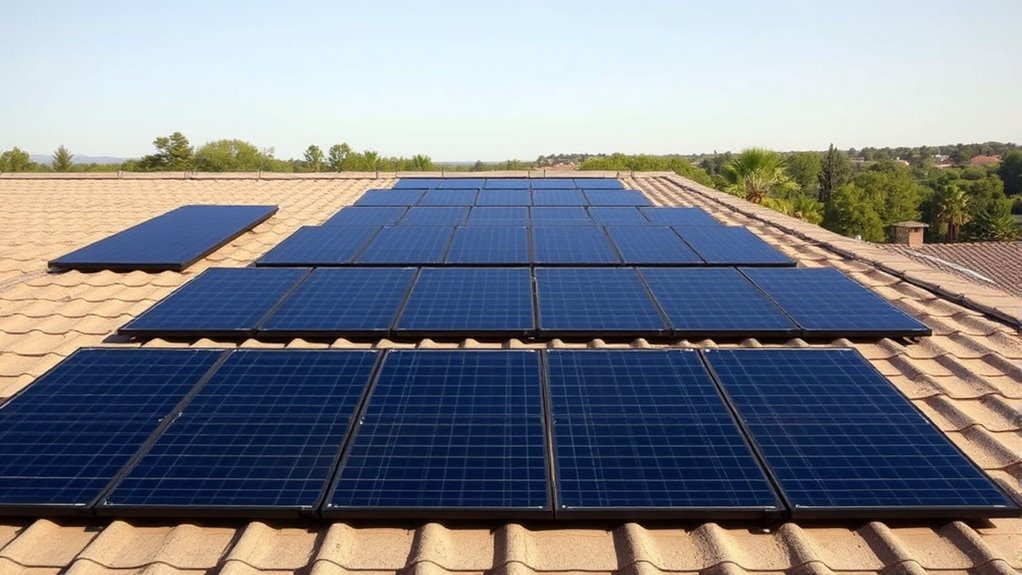
You’ll need to take into account your available roof space carefully when choosing solar panels, as larger panels require more room for installation. Make sure the mounting system you select is compatible with the panel size to ensure a secure fit.
Proper planning helps you maximize efficiency without overcrowding your roof. It’s all about finding the right balance so your solar setup works well and looks good too.
Roof Space Requirements
When planning your solar installation, you’ll need to carefully measure your roof space to guarantee the panels fit properly. The size of each solar panel directly impacts how many you can install and where they’ll be positioned.
Keep these points in mind:
- Calculate the total usable roof area free from obstructions like chimneys or vents.
- Account for panel dimensions—standard panels are about 65 by 39 inches, so space accordingly.
- Leave room for access pathways and maintenance around the panels.
- Consider your energy goals to determine how many panels you’ll need and if your roof can accommodate them.
Mounting System Compatibility
After measuring your roof and figuring out how many panels fit, the next step is to make sure your mounting system can handle their size and weight. Solar panels come in different dimensions, so you’ll need a mounting system that matches the size you choose.
If your panels are bigger or heavier than usual, you might need reinforced racks or extra supports to keep everything stable. Also, think about the spacing between panels for airflow and easy maintenance—this will affect how you plan your layout.
Using a mounting system that doesn’t fit your panel size can cause installation headaches, lower efficiency, or even damage over time. Picking the right mounting system means a secure fit, better use of your roof space, and a longer life for your solar setup.
Standard Dimensions for Commercial and Utility-Scale Solar Panels
Commercial and utility-scale solar panels typically measure around 65 inches by 39 inches, but exact dimensions can vary depending on the manufacturer and panel wattage. When selecting panels for a large project, you’ll want to keep the following in mind:
- Size variation: Panels can range from 60 to 72 cells, affecting their height and width. So, it’s good to check the cell count because it changes the size quite a bit.
- Weight considerations: Larger panels weigh more, which impacts the mounting system requirements. Make sure your supports can handle the extra weight.
- Frame design: Different frames may add to overall dimensions, influencing installation space. Don’t forget to account for the frame when planning your layout.
- Wattage correlation: Higher wattage panels tend to be bigger, so check specs carefully. It’s not just about power output; size matters too!
How Solar Panel Size Relates to Energy Output and Efficiency
Understanding the size of your solar panels gives you a good starting point. But it’s the relationship between panel size, energy output, and efficiency that really shapes what you’ll get from your system.
Larger panels generally produce more energy, but efficiency depends on the technology and quality. Smaller, high-efficiency panels might actually outperform bigger, less efficient ones.
| Panel Size (sq. ft.) | Energy Output (Watts) | Efficiency (%) |
|---|---|---|
| 17 | 320 | 18 |
| 22 | 400 | 20 |
| 25 | 450 | 22 |
Tips for Measuring and Choosing the Right Solar Panel Size
When you’re choosing the right solar panel size, start by accurately measuring the available installation space to guarantee a perfect fit.
Next, consider your energy needs to select panels that provide sufficient power. Keep these tips in mind:
Consider your energy needs carefully to choose solar panels that deliver adequate power for your home.
- Measure length and width of your roof or installation area precisely.
- Account for obstructions like vents or chimneys that reduce usable space.
- Calculate your household’s average energy consumption to match panel output.
- Check panel dimensions and efficiency ratings before purchasing.
Frequently Asked Questions
How Long Do Solar Panels Typically Last?
You can expect solar panels to last around 25 to 30 years. They gradually lose efficiency over time, but with proper maintenance, they’ll keep generating clean energy reliably for decades to come.
It’s pretty impressive, right? With just a little care, your panels can keep working hard for a long time.
What Maintenance Do Solar Panels Require?
You’ll need to clean your solar panels regularly to remove dirt and debris. It’s also important to check for shading or any damage that might affect performance.
Don’t forget to make sure the wiring stays intact. Performing annual inspections helps keep your panels efficient and can really prolong their lifespan.
Are Solar Panels Recyclable?
Just like a phoenix rising, solar panels are recyclable—you can recover valuable materials like silicon and glass.
When you recycle them, you help reduce waste and support a greener future. It’s all about turning old panels into new energy solutions.
How Does Weather Affect Solar Panel Performance?
You’ll see solar panels perform best in direct sunlight but can struggle in cloudy or rainy weather.
Extreme heat might reduce efficiency, while snow or dirt can block sunlight.
Can Solar Panels Be Installed on Any Roof Type?
You can slap solar panels on almost any roof type—shingles, metal, tile—no problem! With the right mounts and pros, even tricky roofs transform into sun-harvesting machines.
Just expect some custom tweaks to fit perfectly. It’s all about making sure everything sits right and works efficiently.
Conclusion
So, you think all solar panels are the same size? Think again! If you want to power your home without turning your roof into a solar jungle gym, understanding those standard dimensions is key.
Monocrystalline or polycrystalline, residential or commercial—you’ve got options. Just remember, bigger isn’t always better unless you’re aiming to fuel a spaceship.
Measure wisely, or you might end up with panels that fit like a clown shoe on your roof! Knowing the standard dimensions of a solar panel helps ensure you get the right fit and maximum efficiency for your energy needs. Whether you’re planning a small home setup or a large commercial installation, choosing the right size makes all the difference in performance and aesthetics. So, before you buy, take time to learn about panel sizes and how they impact your solar power system.