How to Charge a Solar Panel Using a Light Bulb
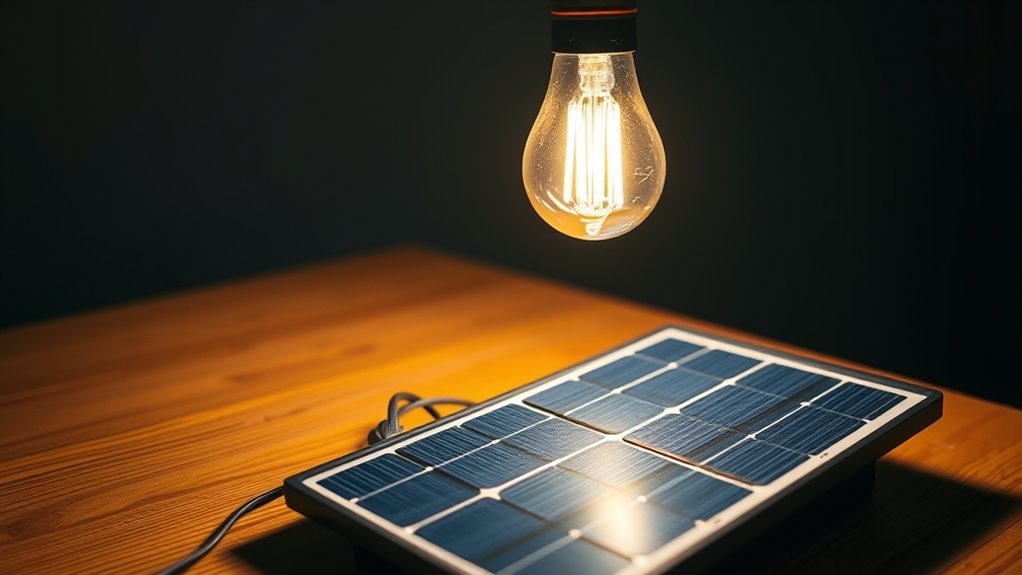
You can charge a solar panel using a light bulb by choosing a bright bulb—preferably 800 lumens or more with a suitable spectrum.
Placing it close, about 12 to 24 inches away, helps maximize light exposure and boost charging efficiency.
This method is handy when sunlight isn’t available but you still want to test or charge your solar panel indoors.
Make sure the panel and bulb are stable and wired correctly with insulated connections.
Keeping the panel clean is also key for the best results.
It’s a simple setup, but small details matter!
Monitoring voltage and current as you go helps you track progress and understand how well the panel is charging.
Stick with it, and you’ll soon discover easy ways to boost efficiency and troubleshoot common issues.
Key Takeaways
- Use a bright, high-wattage bulb (800+ lumens) positioned 12-24 inches from the solar panel for effective charging. This distance helps the panel get enough light without overheating.
- Make sure the light bulb emits a spectrum compatible with the panel, ideally daylight or LED bulbs with blue/red wavelengths. These colors match what solar panels absorb best, so it really helps with charging.
- Connect the panel with insulated wires, keeping an eye on the correct polarity. It’s a good idea to use a multimeter to monitor the voltage and current to see how well it’s charging.
- Don’t forget to clean the solar panel regularly. Shadows or anything blocking the light can really cut down on how much energy it gathers.
- Keep all the electrical connections secure and make sure your setup is stable. This helps prevent overheating and keeps the charging process safe and continuous.
Can You Charge a Solar Panel With a Light Bulb? How It Works
Although solar panels are designed to convert sunlight into electricity, you can charge them using a light bulb, but there are some important limitations. Light bulbs emit artificial light, which is generally less intense and has a different spectrum compared to sunlight.
This means your solar panel will generate electricity, but at a much lower rate. The efficiency of charging depends on the type of bulb, its brightness, and how close it is to the panel. Incandescent and LED bulbs emit varying light qualities, affecting the panel’s performance.
While this method can work for small, low-power solar panels, it won’t replace direct sunlight for larger or more demanding setups. So, it’s good to understand these factors to manage your expectations when charging solar panels with a light bulb.
Setting up to Charge Your Solar Panel With a Light Bulb Safely
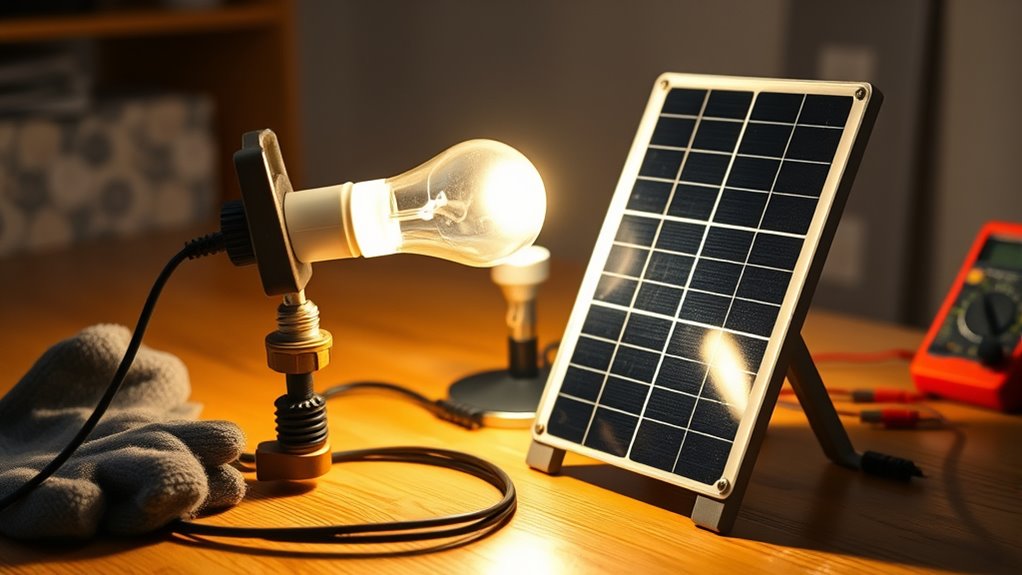
Before you start charging your solar panel with a light bulb, you need to set up your equipment carefully to guarantee safety and maximize efficiency. Place the solar panel and light bulb securely on a stable surface, making sure they’re at a proper distance to avoid overheating.
Use insulated wires and connectors to prevent electrical hazards. Always check your setup for loose connections and keep the area dry to reduce the risk of electric shock.
| Step | Action | Safety Tip |
|---|---|---|
| 1 | Position solar panel & bulb | Maintain safe distance |
| 2 | Connect wires securely | Use insulated connectors |
| 3 | Power on the light bulb | Avoid touching live wires |
| 4 | Monitor setup during charging | Keep area dry and ventilated |
How to Choose the Right Light Bulb for Charging Your Solar Panel
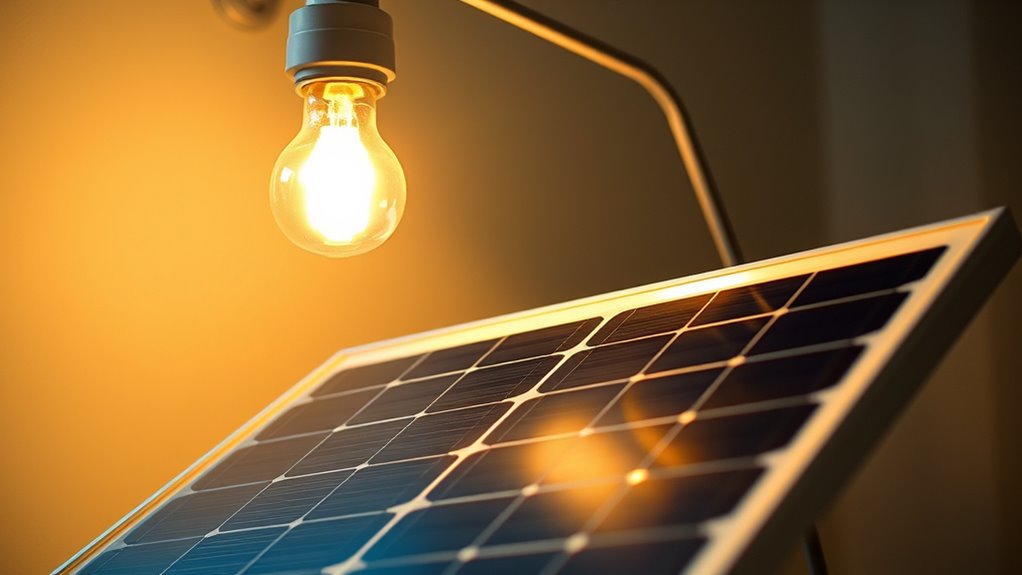
You’ll want to pick a light bulb with enough brightness and intensity to generate a steady charge for your solar panel. The bulb’s light spectrum also matters since solar panels respond best to specific wavelengths.
Choosing the right combination guarantees you get the most efficient charging possible. So, it’s worth taking a moment to find the perfect bulb for your setup.
Bulb Brightness And Intensity
How bright should your light bulb be to effectively charge a solar panel? You’ll want a bulb that emits enough light intensity to generate a worthwhile charge. Brightness directly impacts how much energy your panel can convert.
Aim for bulbs with high lumen output to maximize charging efficiency.
Keep these points in mind when choosing your bulb’s brightness and intensity:
- Use bulbs with at least 800 lumens for noticeable charging results
- Avoid dim bulbs under 400 lumens, as they produce insufficient energy
- Position the bulb close to your panel to compensate for lower brightness
- Remember, higher wattage bulbs usually provide greater brightness but increase power consumption
With the right brightness, you’ll optimize your solar panel’s output from a simple light source. It’s all about finding that balance between brightness and efficiency!
Light Spectrum Compatibility
Why does the light spectrum matter when charging your solar panel with a bulb? Your solar panel works best when exposed to light wavelengths it can absorb efficiently.
Most panels respond strongly to visible light, especially in the blue and red ranges. Choosing a bulb that emits light within this spectrum boosts charging performance.
Incandescent bulbs emit a broad spectrum but waste energy as heat, making them less efficient. LED bulbs, on the other hand, can be selected for specific color temperatures, matching your panel’s ideal absorption range.
For best results, pick a bulb labeled “full spectrum” or with a color temperature between 5000K and 6500K. This way, you’ll maximize energy conversion and charge your solar panel faster.
Charging a Solar Panel With a Light Bulb: Step-By-Step
Now that you know which light bulb works best, it’s time to set up the connections properly to start charging your solar panel. You’ll want to understand how different bulb types affect the process and guarantee everything is safely connected.
Finally, keep an eye on the charging progress to make sure your panel is absorbing energy efficiently. It’s a good idea to check regularly so you can adjust if needed. This way, you’ll get the best results from your setup.
Understanding Light Bulb Types
Although it might seem straightforward, choosing the right light bulb is essential when charging a solar panel with artificial light. Different bulbs emit varying light intensities and spectrums, which directly affect how efficiently your solar panel charges.
You’ll want to take into account these common types:
- Incandescent bulbs: Produce warm light but waste a lot of energy as heat, making them less effective for charging.
- Fluorescent bulbs: More energy-efficient and emit a broader light spectrum, improving solar panel response.
- LED bulbs: Highly efficient, emit bright and focused light, ideal for charging solar panels.
- Halogen bulbs: Brighter than incandescent with a slightly better energy profile but still generate heat.
Picking the right bulb ensures your solar panel gets the most usable light, speeding up the charging process. So, it really pays off to choose wisely!
Setting Up Connections
Once you’ve selected the right light bulb, you’ll need to connect it properly to your solar panel to guarantee efficient charging. Start by positioning the light bulb at an ideal distance—usually 12 to 24 inches—from the solar panel to maximize light exposure.
Use insulated wires with alligator clips to attach the bulb’s power source to the solar panel’s terminals, ensuring correct polarity: positive to positive, negative to negative. Secure the connections to avoid loose contacts.
| Step | Action |
|---|---|
| 1 | Position light bulb 12-24 inches away |
| 2 | Identify positive and negative terminals |
| 3 | Attach insulated wires to bulb power source |
| 4 | Connect wires to solar panel terminals (match polarity) |
| 5 | Secure all connections firmly |
This setup guarantees your solar panel charges effectively using the light bulb. Just follow these steps, and you’ll be good to go!
Monitoring Charging Progress
After setting up your light bulb and solar panel connections properly, you’ll want to keep an eye on how well the panel is charging. Monitoring progress guarantees your setup is working efficiently and helps prevent overcharging.
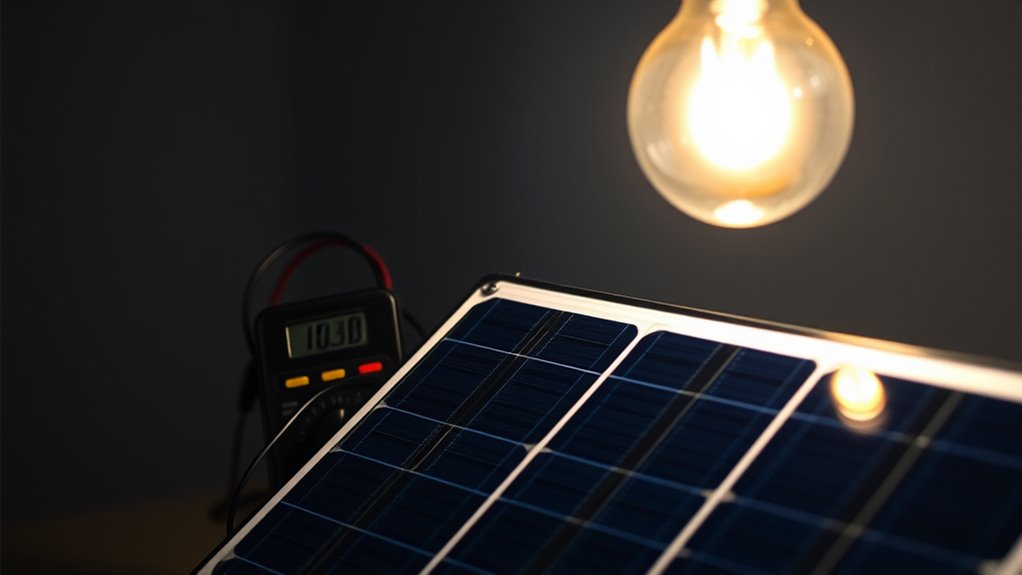
Here’s what you should do: use a multimeter to measure the voltage output from the panel regularly. Also, check the current flowing into the battery or storage device to confirm charging.
Keep an eye on any changes in the brightness of the light bulb. If it starts dimming, that might mean less energy is reaching the panel.
Lastly, inspect the connections to make sure wires stay secure and there’s no overheating. It’s simple but important to keep everything running smoothly.
How to Measure and Monitor Your Solar Panel’s Charging Progress
To effectively measure and monitor your solar panel’s charging progress, you’ll need the right tools and a clear understanding of the key metrics to track.
Use a multimeter to measure voltage and current output from the panel. Keep an eye on voltage to guarantee the panel is producing power. Current indicates how much charge is flowing.
Monitoring accumulated charge in the battery tells you the overall progress.
| Metric | Tool | Ideal Range |
|---|---|---|
| Voltage (V) | Multimeter | 12-18 V (depends on panel) |
| Current (A) | Multimeter | 0.5-3 A |
| Battery Charge (%) | Charge Controller | 80-100% for full charge |
| Charging Time (h) | Timer | Varies by setup |
| Light Intensity (lux) | Light Meter | Brighter is better |
Regular checks help optimize your setup and understand charging efficiency. Just keep an eye on these numbers and adjust as needed!
Troubleshooting Common Issues and Tips to Boost Indoor Charging Efficiency
Keeping track of your solar panel’s charging metrics helps you spot when things aren’t working right. If your panel isn’t charging as expected, check these common issues:
- Confirm the light bulb is bright enough and close enough to the panel.
- Confirm the panel’s connections are secure and free from damage.
- Avoid shadows or obstructions blocking the light from reaching the panel.
- Make sure the panel is clean; dust and dirt reduce efficiency.
To boost indoor charging, try using a higher wattage bulb with a daylight spectrum or position the bulb at an ideal angle for maximum light exposure. Also, minimize ambient light interference by dimming surrounding lights.
Frequently Asked Questions
Can Charging With a Light Bulb Damage My Solar Panel?
No, charging your solar panel with a light bulb won’t damage it, but it won’t be effective either.
Light bulbs don’t provide enough energy, so your panel won’t charge properly or produce significant power.
Basically, it’s not worth trying because the light just isn’t strong enough to make a difference.
How Long Can a Solar Panel Store Energy Once Charged?
Your solar panel itself doesn’t store energy; instead, your battery does. How long energy lasts depends on your battery’s capacity and usage.
Typically, batteries can hold charge from hours to several days without significant loss. So, it really varies based on what kind of battery you have and how you’re using the stored energy.
Are There Specific Light Bulb Brands Recommended for Charging?
You won’t find specific light bulb brands officially recommended for charging solar panels, but LED bulbs with high lumens work best.
You’ll want bulbs producing over 800 lumens to maximize energy absorption efficiently. It’s all about getting enough brightness to make the most of your setup.
Can Fluorescent or LED Bulbs Charge Solar Panels Effectively?
You can use fluorescent or LED bulbs to charge solar panels, but they’re less effective than sunlight. Their lower light intensity means charging will be slower.
Is It Cost-Effective to Charge Solar Panels Using Indoor Lighting?
Do you really think indoor lights can match sunlight’s power? You won’t find it cost-effective since indoor lighting provides minimal energy, making the charging process slow and inefficient.
Save your money and use natural sunlight instead. It’s just way more effective and faster that way.
Conclusion
Charging your solar panel with a light bulb isn’t as far-fetched as it might seem, even if it feels like using a telegraph in the age of smartphones. By choosing the right bulb, setting up safely, and monitoring progress closely, you can harness indoor light effectively.
Keep troubleshooting common issues, and you’ll boost efficiency. With a bit of patience and care, your panel will soak up energy indoors just as reliably as it does under the sun.
So, whether you’re experimenting or need a backup charging method, using a light bulb to charge your solar panel can work well. Just remember, the key to success lies in picking the proper bulb type, ensuring a safe setup, and regularly checking your solar panel’s performance. Indoor solar charging might not replace the sun, but it’s a handy solution when outdoor sunlight isn’t available.