Do Solar Panels Emit Any Radiation?
You don’t need to worry—solar panels don’t emit harmful radiation. They produce only very low levels of safe, non-ionizing electromagnetic energy, far below international safety limits.
This means the radiation they give off is nothing like the dangerous kind you might have heard about.
In fact, this radiation is much weaker than what everyday devices like phones or microwaves give off.
Solar panels operate safely without posing risks to you, your pets, or the environment.
So, if you’re curious about how solar panels work and how their radiation compares to other electronics, keep reading.
There’s more useful info ahead!
Key Takeaways
- Solar panels do not emit harmful ionizing radiation like X-rays or gamma rays. They produce only very low-level non-ionizing radiation.
- The primary radiation from solar panels is absorbed visible and infrared sunlight. There are negligible emissions back into the environment.
- Inverters and electronics may emit minimal electromagnetic fields (EMFs). But these emissions are far below international safety limits.
- Solar panel radiation levels are much lower than common household devices such as cell phones and microwaves.
- Safety regulations and standards make sure solar panels pose no significant radiation risk to people or the environment.
Do Solar Panels Emit Harmful Radiation to Humans or Pets?
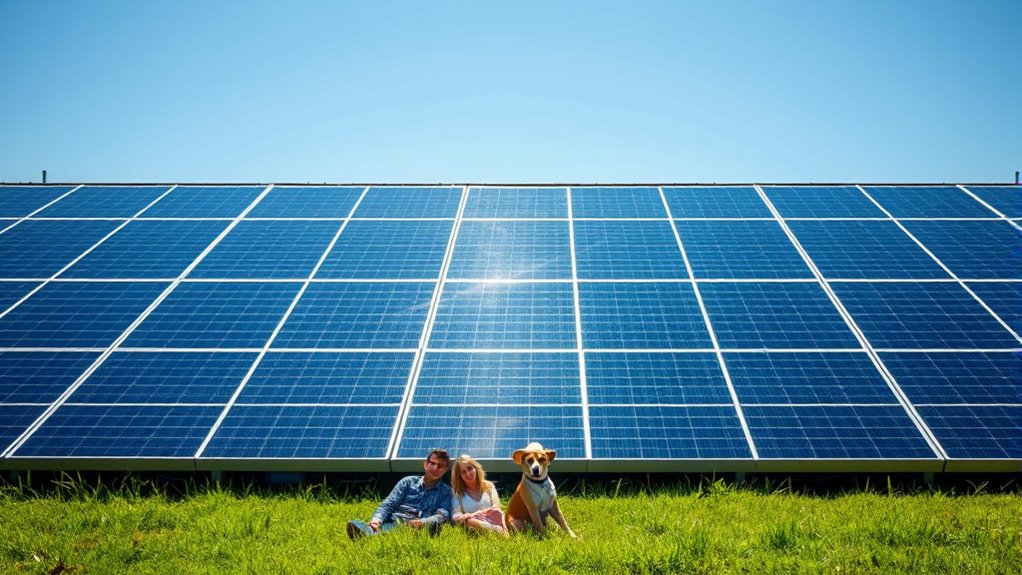
Although solar panels harness the sun’s energy, they don’t emit harmful radiation that can affect you or your pets. When you install solar panels on your roof or property, you’re simply capturing sunlight and converting it into electricity without releasing any dangerous rays.
You don’t need to worry about exposure to radiation like X-rays or gamma rays, as solar panels don’t produce them. Your family and pets can safely be around solar panels without any health risks.
The technology behind solar panels focuses on clean energy generation, so it’s designed to be safe and environmentally friendly. In short, you can enjoy the benefits of solar power without fearing radiation hazards to yourself or animals at home.
What Types of Radiation Do Solar Panels Emit?
You might wonder what kinds of radiation solar panels give off. Understanding electromagnetic radiation and the difference between ionizing and non-ionizing types can help clear that up.
Let’s explore which ones solar panels actually emit. It’s pretty interesting once you get into it!
Electromagnetic Radiation Overview
How much electromagnetic radiation do solar panels actually emit? You’ll find that solar panels primarily produce very low levels of electromagnetic radiation, mainly in the form of weak radio frequency (RF) emissions due to their electrical components and wiring.
These emissions are far below the limits set by international safety standards. The panels themselves absorb sunlight—visible and infrared radiation—to generate electricity but don’t emit significant radiation back.
Inverters and other electronics connected to the system can emit small amounts of electromagnetic fields (EMFs), but these are minimal and rapidly decrease with distance. Overall, the electromagnetic radiation from solar panels is negligible and poses no health risk.
Ionizing vs Non-Ionizing
What types of radiation do solar panels actually emit? Solar panels primarily produce non-ionizing radiation, which includes visible light and infrared energy. This type of radiation doesn’t carry enough energy to remove tightly bound electrons from atoms or molecules, so it’s generally considered safe.
Ionizing radiation, like X-rays or gamma rays, can damage cells and DNA, but solar panels don’t emit these harmful forms. Instead, they convert sunlight into electricity using semiconductor materials without generating dangerous radiation.
When you’re around solar panels, the radiation you’re exposed to is similar to everyday light and heat. So, you don’t have to worry about ionizing radiation risks from solar panels—they’re designed to be safe and environmentally friendly energy sources.
How Do Solar Panels Generate Electricity?
Although solar panels might seem complex, they generate electricity by converting sunlight directly into electrical energy using photovoltaic cells. These cells are made from semiconductor materials, usually silicon, which absorb sunlight.
When photons from sunlight hit the cells, they knock electrons loose from atoms, creating an electric current. You’ll find metal contacts on the top and bottom of the cells that capture this current and send it through wires.
This flow of electrons is what we call electricity. The panels are designed to maximize sunlight absorption and efficiently convert it into usable power for your home or business.
How Does Solar Panel Radiation Compare to Other Devices in Your Home?
You might wonder how the radiation from your solar panels stacks up against other devices in your home. Comparing the levels emitted by common household electronics helps put things into perspective.
Plus, understanding safety standards guarantees you know what’s considered safe for daily exposure. It’s always good to be informed, right?
Radiation Levels Comparison
How much radiation do solar panels actually emit compared to everyday devices in your home? The truth is, solar panels emit negligible radiation. Unlike devices that use electricity or wireless signals, solar panels primarily convert sunlight into energy without producing significant electromagnetic fields (EMF) or ionizing radiation.
Here’s a quick comparison of typical radiation levels:
| Device | Radiation Level (mG) |
|---|---|
| Solar Panels | < 0.1 |
| Cell Phones | 0.5 – 2 |
| Microwave Oven | 5 – 20 |
| Wi-Fi Router | 0.1 – 0.5 |
| Laptop Computer | 0.2 – 0.5 |
You can see solar panels emit far less radiation than common household electronics. So, when it comes to radiation exposure, they’re really safe.
Common Household Device Emissions
When comparing radiation emissions from common household devices, solar panels stand out for their minimal output. Unlike your microwave, Wi-Fi router, or cordless phone, solar panels don’t emit significant electromagnetic radiation during operation.
Devices like microwaves generate non-ionizing radiation to heat food, while routers and phones use radiofrequency waves to communicate. Solar panels, however, simply convert sunlight into electricity without producing these waves.
You won’t find any harmful radiation leaking from your rooftop panels, making them much safer in this regard. So, while everyday gadgets around your home continuously emit low levels of radiation, solar panels remain virtually radiation-free.
This difference highlights why solar panels are considered a safe and eco-friendly energy source for your household.
Safety Standards and Guidelines
Wondering how solar panel radiation stacks up against other devices in your home? Solar panels emit extremely low levels of electromagnetic radiation, far below safety limits set by organizations like the International Commission on Non-Ionizing Radiation Protection (ICNIRP). These standards ensure that any radiation from solar panels stays well within safe boundaries.
In comparison, everyday electronics such as Wi-Fi routers, cell phones, and microwave ovens produce more measurable radiation, yet they’re still considered safe when used properly. So, when you install solar panels, you’re not introducing any unusual or unsafe radiation into your environment.
Are There Environmental Radiation Concerns From Solar Panels?
Although solar panels harness energy from the sun, they don’t emit harmful radiation that affects the environment or your health. When you install solar panels, you’re not adding any radioactive materials or dangerous emissions to your surroundings.
Instead, they convert sunlight into electricity without producing ionizing radiation, which is the type that could cause harm. You might worry about low-level electromagnetic fields, but these are minimal and don’t pose environmental risks.
Plus, solar panels don’t release pollutants or greenhouse gases during operation, making them a clean energy source. So, if you’re concerned about radiation impacting wildlife or ecosystems, rest assured that solar panels operate safely without contributing to environmental radiation concerns.
Safety Standards for Radiation From Solar Panels
Since solar panels interact with sunlight and electrical currents, safety standards guarantee they don’t expose you or the environment to harmful radiation. Regulatory bodies like the International Electrotechnical Commission (IEC) set strict limits on electromagnetic emissions from solar panels.
These standards ensure that any radiation stays well below harmful levels, protecting both installers and users. Manufacturers must test panels rigorously to meet these guidelines before they reach the market.
Additionally, local and national agencies may impose further regulations to monitor radiation exposure on a community level. So, by adhering to these safety standards, you can confidently use solar panels knowing they pose no significant radiation risk.
In other words, you really don’t have to worry about radiation when installing or operating solar panels at your home or business. They’re designed to be safe for everyone.
Frequently Asked Questions
Can Solar Panels Interfere With Wi-Fi or Bluetooth Signals?
No, solar panels won’t interfere with your Wi-Fi or Bluetooth signals. They don’t emit the kind of radio frequency interference that disrupts wireless communication, so your devices should work just fine around them.
Basically, you can use your gadgets without worrying about any signal issues caused by solar panels. So, feel free to enjoy your wireless connections as usual!
Do Solar Panels Affect Nearby Electronic Devices?
You won’t find solar panels affecting nearby electronic devices because they don’t emit interfering signals. They just convert sunlight to electricity without causing disruptions.
How Long Do Solar Panels Last Before Needing Replacement?
You’ll find solar panels typically last about 25 to 30 years before needing replacement, coincidentally matching the lifespan of many home appliances.
Regular maintenance can help you maximize their efficiency throughout those decades. It’s kind of like giving your panels a little TLC to keep them running smoothly.
Are Solar Panels Recyclable After Their Lifespan?
Yes, you can recycle solar panels after their lifespan. Many materials like glass, aluminum, and silicon are recoverable.
Recycling helps reduce waste and supports sustainable energy practices, so make sure to recycle them properly when they’re no longer useful. It’s a smart way to give those materials a second life!
What Maintenance Is Required to Keep Solar Panels Efficient?
You’ll need to clean your solar panels regularly to remove dirt and debris. This helps keep them working at their best.
Also, check for shading or any damage that might affect performance. Make sure all connections are secure too.
Routine inspections really make a difference. They help keep your panels efficient and maximize energy output over time.
Conclusion
You might imagine solar panels as quiet guardians soaking up sunlight, not silent emitters of harmful radiation. In reality, they give off only minimal electromagnetic waves—far less than your phone or microwave.
So, when you install solar panels, you’re choosing clean energy without inviting invisible dangers into your home or garden.
Think of them as gentle sun-catchers, powering your life safely while letting you breathe easy. Solar panels emit very low levels of radiation, making them a safe and eco-friendly option for renewable energy.
By going solar, you’re embracing a technology that supports your well-being and the environment, without worrying about radiation exposure. It’s a smart way to enjoy clean energy and peace of mind every day.