What Size Solar Generator Do I Need
You need to size your solar generator based on the devices you want to power and their daily energy use. This means looking at each device’s wattage and figuring out how long you’ll use it every day.
By doing this, you can calculate the total watt-hours you’ll need to keep everything running smoothly.
Start by listing each device’s wattage and how long you’ll use it daily to calculate total watt-hours needed.
Choose a battery capacity that matches or exceeds this, factoring in surge power for startup loads.
Pair it with solar panels sized to recharge the battery within your available sunlight hours.
Understanding these basics will help you find the perfect balance between portability and power.
It’s all about making sure your solar generator fits your lifestyle and energy needs without carrying extra weight or running out of power.
Key Takeaways
– List all devices and their wattages to determine total power requirements accurately.
This way, you know exactly what you need to power.
– Calculate daily watt-hour consumption by multiplying each device’s wattage by usage hours.
It helps to get a clear picture of your daily energy use.
– Choose a battery capacity that supports your total daily energy needs with some margin.
Having a buffer is always a good idea, just in case.
– Select solar panels sized to fully recharge the battery based on average sunlight hours.
You want to make sure your panels can keep up with your energy demands.
– Balance portability with power capacity, ensuring the generator handles surge and continuous loads.
It’s all about finding the right mix for your needs and lifestyle.
Identify Devices and Appliances to Power With Your Solar Generator
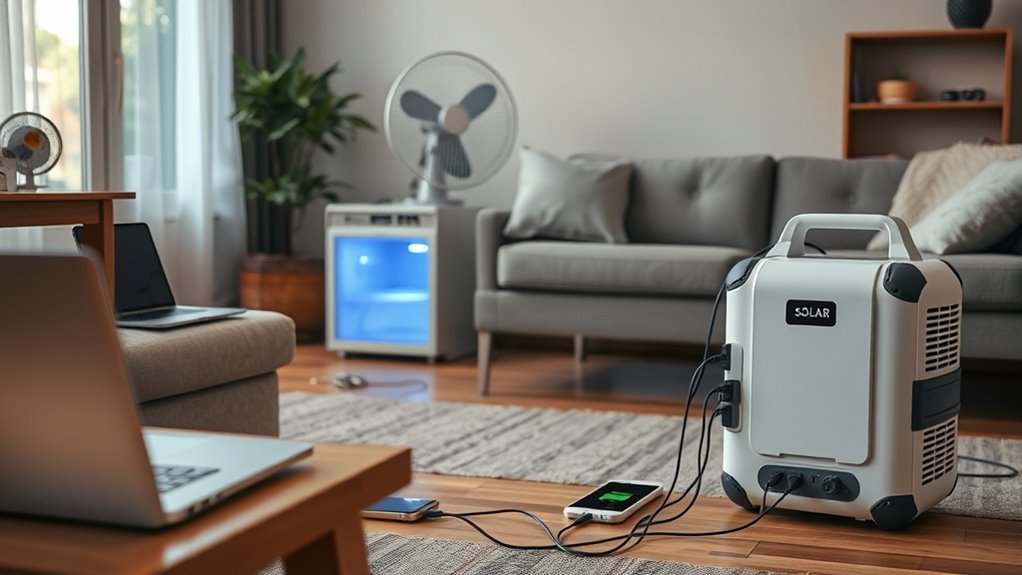
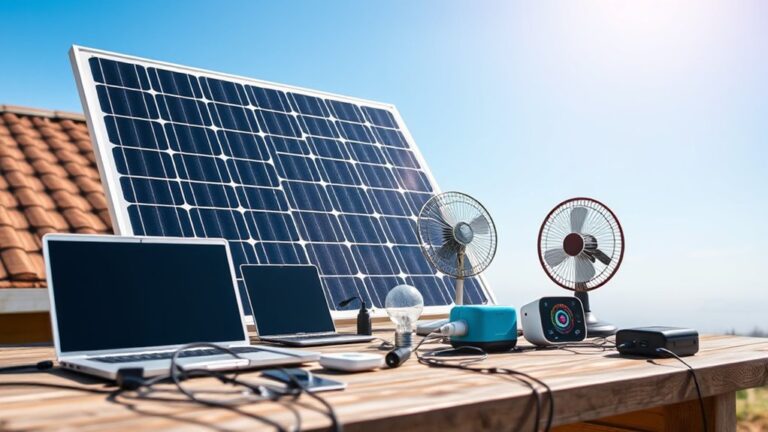
Before choosing a solar generator, you need to list all the devices and appliances you want to power. Think about everything essential, from your smartphone and laptop to larger items like a mini fridge or medical equipment.
Start by listing all devices and appliances you want to power, from smartphones to medical equipment.
Don’t forget smaller gadgets such as LED lights or fans. Identify each device’s wattage or power rating, which is usually found on the label or in the manual. This step helps you understand your daily energy needs clearly.
Also, consider how long you plan to run each device. By knowing exactly what you want to power, you’ll avoid underestimating your generator’s capacity.
This preparation guarantees your solar generator matches your lifestyle and keeps your essential devices running smoothly when you need them most.
How to Calculate Your Solar Generator Power Needs
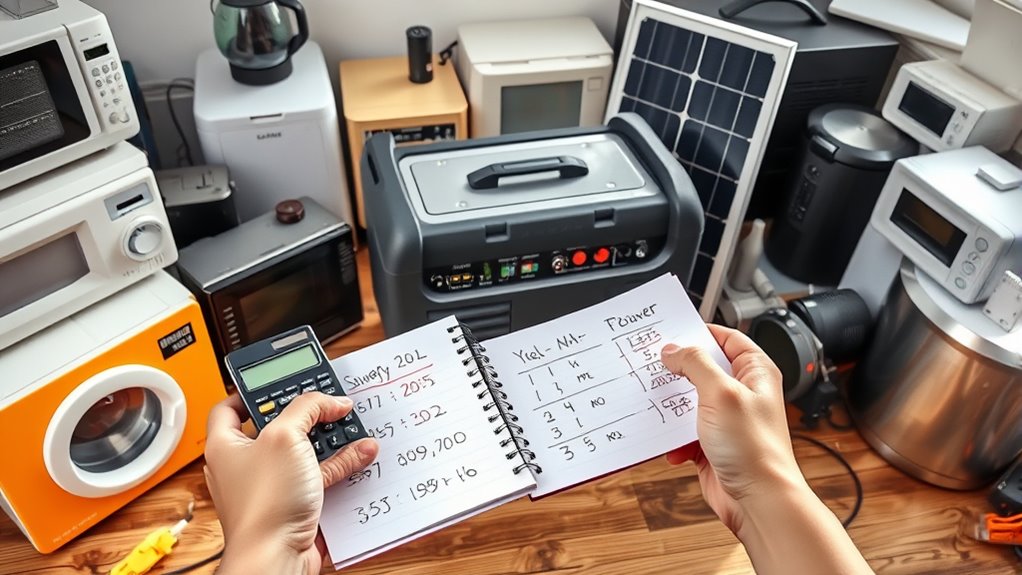
Once you’ve identified your devices and their power ratings, calculating your solar generator’s power needs becomes straightforward. Start by listing each device’s wattage and how many hours you plan to use it daily.
Multiply the wattage by the hours of use to get the daily watt-hour consumption for each device. Then, add these values together to find your total daily energy requirement.
Next, think about the generator’s surge capacity—that’s the extra power it can deliver momentarily to handle devices that need a higher startup wattage.
Make sure your generator’s continuous wattage rating meets or exceeds your highest simultaneous power draw. By accurately calculating these figures, you’ll ensure your solar generator can reliably power your devices without overloading or underperforming.
What Battery Capacity Means for Solar Generator Runtime
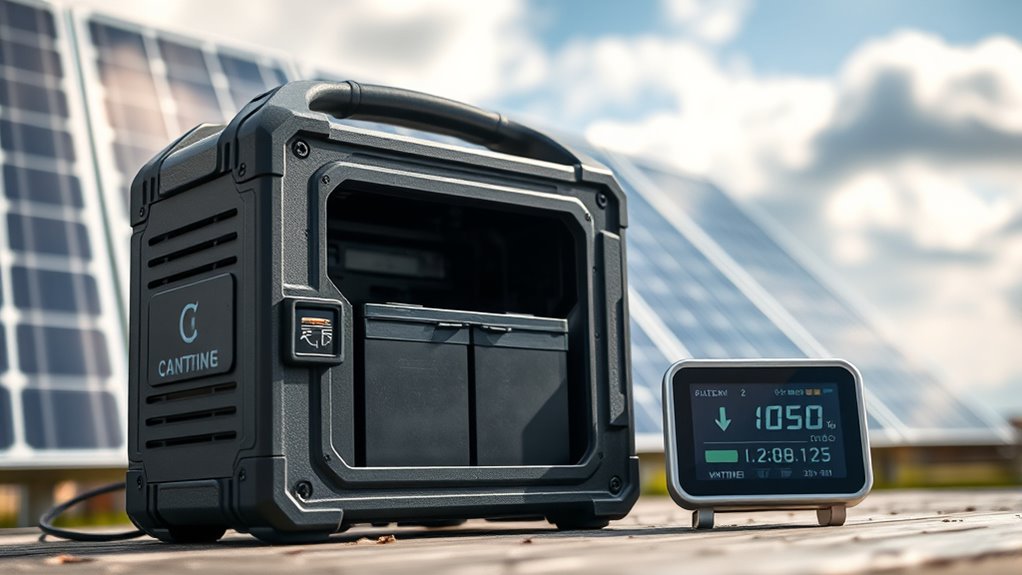
Although you’ve calculated your power needs, understanding battery capacity is key to knowing how long your solar generator can run. Battery capacity is measured in watt-hours (Wh), indicating the total energy the battery stores.
The higher the capacity, the longer your generator can power your devices without recharging. For example, a 500Wh battery can theoretically supply 50 watts for 10 hours.
Keep in mind, real-world conditions like inverter efficiency and battery health affect actual runtime. You should also consider the depth of discharge—how much of the battery’s capacity you safely use—to avoid shortening its lifespan.
Matching Solar Panels to Your Solar Generator Size
To get the most out of your solar generator, you need to pair it with solar panels that can adequately recharge its battery within your desired timeframe. Start by checking your generator’s battery capacity and determine how many watt-hours you need to replenish daily.
Then, choose solar panels with enough wattage to meet that target based on average sunlight hours in your area. For example, if your battery holds 500Wh and you get 5 hours of sun, a 100W panel can fully recharge it in about 5 hours.
Keep in mind, inefficient conditions like shade or clouds reduce output, so slightly oversizing your panels ensures consistent charging. By matching your solar panels’ wattage with your generator’s battery size and sunlight availability, you optimize energy harvest and keep your system running smoothly.
Should You Prioritize Portability or Power?
When choosing a solar generator, you’ll need to decide whether portability or power matters more for your needs. If you’re often on the move—camping, tailgating, or facing frequent power outages—a lightweight, compact generator will serve you best. It’s easier to carry and set up but usually offers less power.
On the other hand, if you want to run multiple appliances or larger devices simultaneously, you’ll need a more powerful unit. These tend to be heavier and less portable but deliver the energy output required for extended use.
Think about your lifestyle and typical power demands carefully. Balancing portability with power guarantees you get a solar generator that fits your daily routine without sacrificing convenience or capability.
How to Avoid Buying a Solar Generator Too Small or Too Big
If you don’t accurately assess your power needs, you risk buying a solar generator that’s either undersized or oversized. Start by listing all the devices you want to power and note their wattage and how long you’ll use them daily.
Calculate your total watt-hours to understand your actual energy demand. Avoid choosing a generator with too little capacity—it won’t keep your devices running when you need them.
Conversely, don’t buy one that’s too large; it’ll cost more upfront and might be heavier or less portable than necessary. Consider future needs but keep your current usage realistic.
Finally, check the generator’s surge capacity to handle startup power spikes. Being precise in your calculations helps you pick a solar generator that fits your lifestyle perfectly.
Frequently Asked Questions
How Long Do Solar Generators Typically Last?
Solar generators typically last 5 to 15 years, depending on battery type and usage. You’ll get more life from lithium batteries than lead-acid ones.
Regular maintenance and proper charging help extend your generator’s lifespan. So, taking good care of it really makes a difference.
Can Solar Generators Be Used Indoors Safely?
Of course, you can safely use solar generators indoors—unless you enjoy unexpected smoke shows and fire alarms.
Seriously, they’re clean, quiet, and safe indoors, so just plug in and power up without fearing a living-room bonfire.
What Maintenance Is Required for Solar Generators?
You’ll need to keep the solar panels clean, check connections regularly, and make sure the battery stays charged.
Also, store the generator in a cool, dry place to prolong its life and avoid damage from extreme conditions. It really helps to keep everything running smoothly.
Are Solar Generators Affected by Weather Conditions?
Yes, solar generators are affected by weather. Cloudy or rainy days reduce sunlight, limiting power generation.
But don’t worry, they still store energy from previous sunny days. So, you’ll get some power even when the weather isn’t ideal.
Can I Connect Multiple Solar Generators Together?
Think of connecting solar generators like linking puzzle pieces; yes, you can connect multiple units to increase power output.
Just make sure they’re compatible and properly synchronized to avoid damage and maximize efficiency in your setup.
Conclusion
Choosing the right solar generator size boils down to knowing your power needs and balancing portability with capacity. Don’t bite off more than you can chew by buying a unit that’s too big or too small.
Instead, match your devices’ energy demands with the battery and panel specs carefully. When you get this right, your solar generator will be a bright spot in your energy setup—reliable, efficient, and ready to keep you powered wherever you go.
Finding the perfect size solar generator means thinking about what you want to power and how long you need it to last. A well-matched solar generator ensures you have enough energy without carrying extra weight or spending more than necessary.
In short, understanding your energy needs and choosing the right size solar generator will keep you powered up on the go. It’s all about making your solar setup efficient, portable, and dependable whenever and wherever you need it.