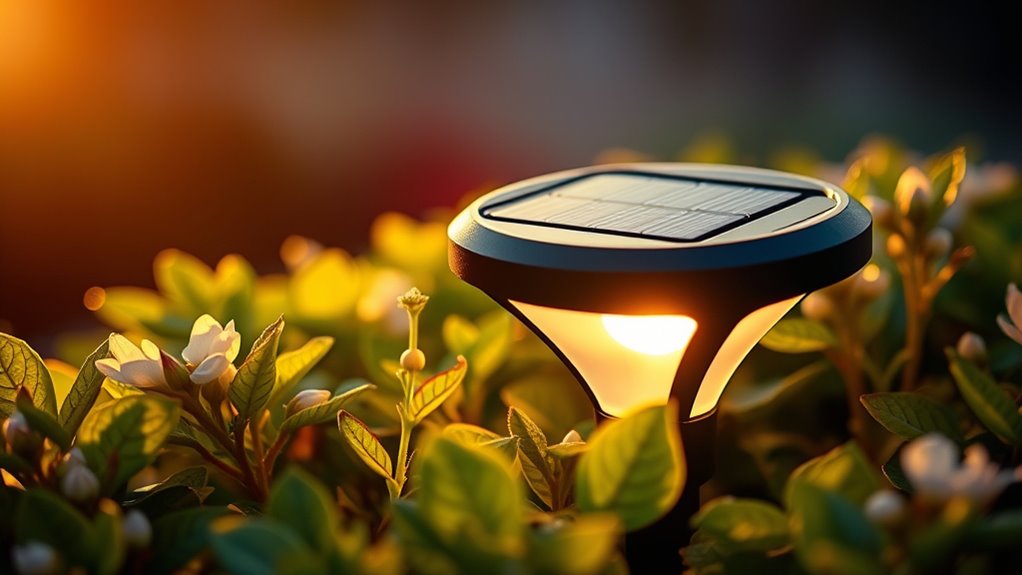
Do Solar Lights Need Batteries to Work?
Yes, you need batteries for solar lights to work properly. Solar lights rely on solar panels to convert sunlight into electricity, but it’s the batteries that store that energy.
This storage is essential so the lights can shine after dark.
Without batteries, solar lights would only work during the day when the sun is out. Rechargeable batteries are specially designed to handle repeated charging cycles.
They help keep your lights bright for longer periods, even after the sun goes down.
If you’re curious about how these batteries charge, which types are best to use, and how to maintain them for optimal performance, keep reading.
There’s plenty more to learn about making your solar lights work efficiently and last longer.
Key Takeaways
- Solar lights need batteries to store energy for nighttime illumination. Without batteries, solar lights only work during daylight hours.
- Batteries ensure consistent lighting after dark by powering LEDs. They basically act like a little energy bank for your lights.
- Rechargeable batteries store electricity generated by solar panels during the day. This stored energy is what keeps your lights shining when it’s dark outside.
- If the battery fails, you’ll notice your solar lights become dim or might not work at all at night. So, keeping the batteries in good shape is pretty important!
Do Solar Lights Need Batteries to Work?
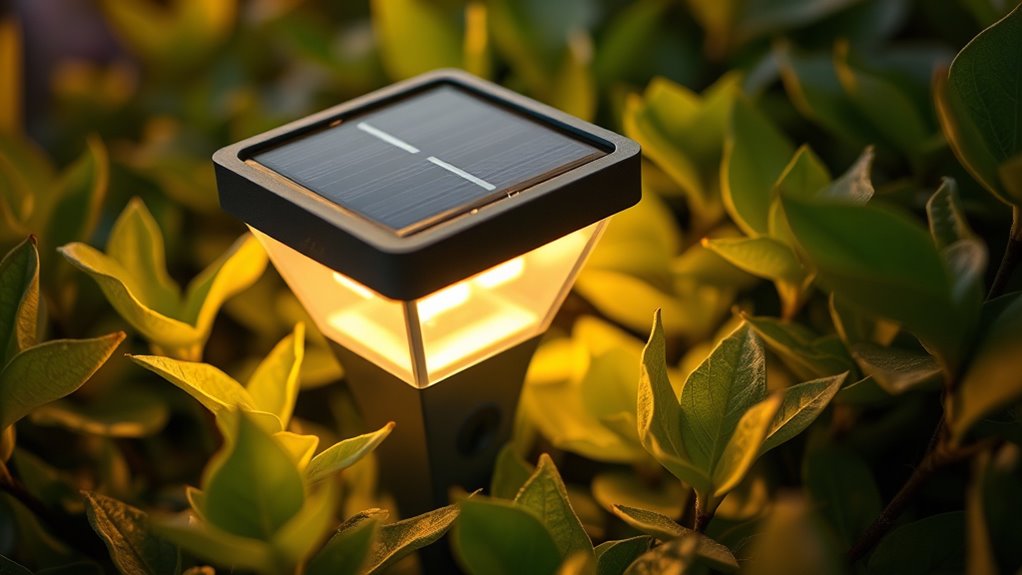
Although solar lights rely on the sun to generate power, they do need batteries to work effectively. You see, solar panels convert sunlight into electricity, but that energy isn’t always available, especially at night or on cloudy days.
The batteries store this electricity so your solar lights can stay on when the sun isn’t shining. Without batteries, the lights would only function during daylight, which defeats their purpose.
So, if you want consistent illumination after dark, batteries are vital. They guarantee your solar lights perform reliably by holding the energy until you need it.
In short, batteries act as the bridge between sunlight and your light’s operation, making them an indispensable component of any solar lighting system.
How Solar Lights Charge and Store Energy
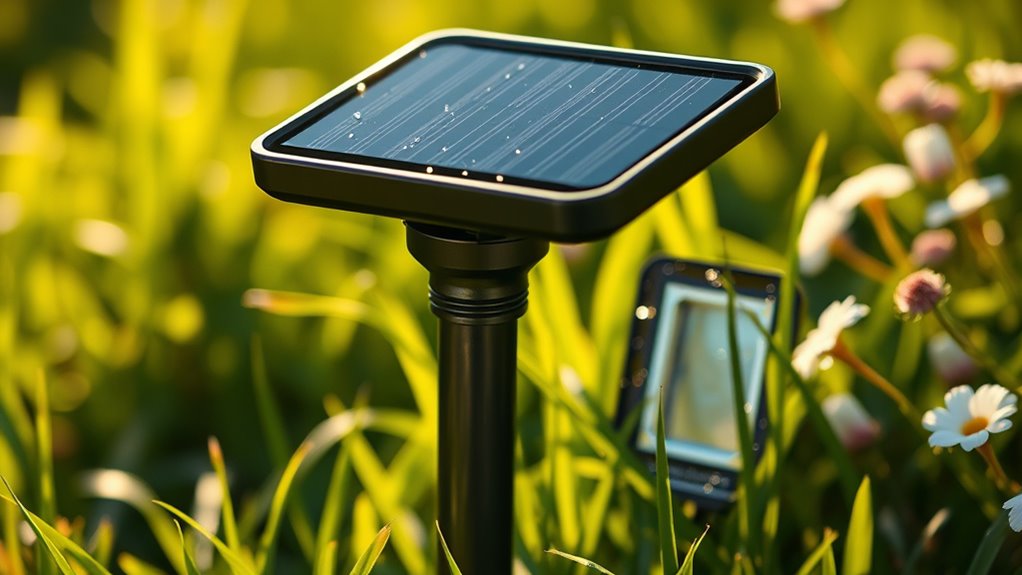
You’ll notice solar panels convert sunlight into electricity during the day. This energy then gets stored in the battery for use when it’s dark.
It’s pretty cool when you think about it. Understanding this process helps you see how solar lights stay powered all night.
Solar Panel Energy Conversion
How exactly do solar lights capture and store energy to keep shining after dark? They use solar panels made of photovoltaic cells that convert sunlight directly into electricity. When sunlight hits these cells, it excites electrons, creating an electric current.
This process, called the photovoltaic effect, allows the solar panel to generate direct current (DC) power. You’ll find these panels positioned on top of the light to maximize sun exposure during the day.
The energy produced flows through a circuit that directs it to a storage system, usually a rechargeable battery. This continuous conversion and transfer enable your solar light to gather and hold enough energy to operate efficiently once the sun sets.
Battery Storage Mechanism
Since solar lights rely on capturing sunlight during the day, they need an efficient way to store that energy for use at night. This is where the battery storage mechanism comes in. When the solar panel converts sunlight into electricity, it charges the built-in rechargeable battery.
This battery holds the energy until the light sensors detect darkness and activate the LEDs. Here’s how the process works:
- Solar panel captures sunlight and converts it into electrical energy
- Electrical energy flows to the rechargeable battery for storage
- Battery stores energy chemically for use during nighttime
- Light sensor triggers LED lights when it gets dark
- Stored energy powers LEDs until the battery depletes or sunlight returns
Without this storage system, solar lights wouldn’t provide consistent illumination after sunset. It’s pretty clever how everything works together, right?
What Types of Batteries Are Used in Solar Lights
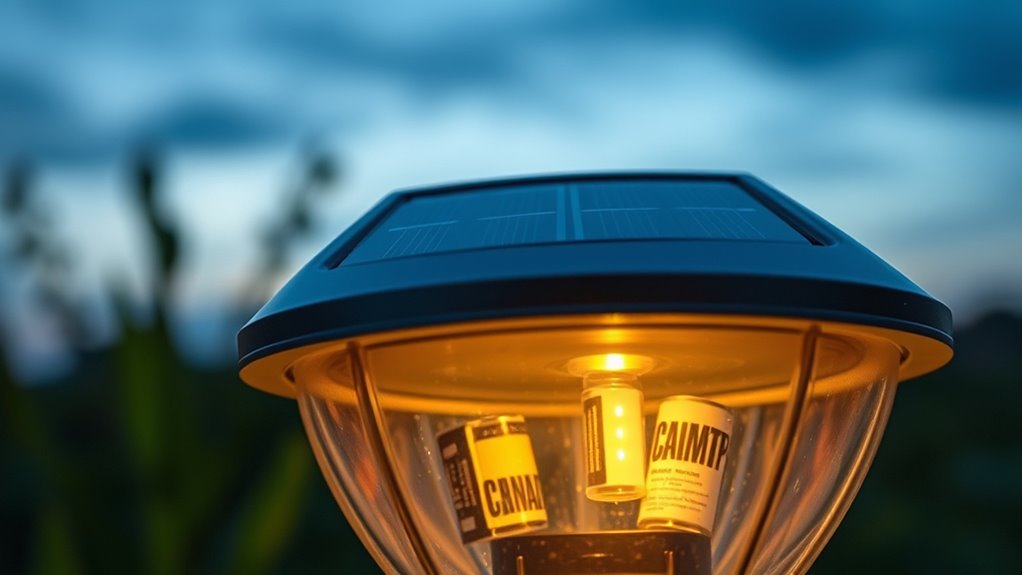
You’ll find that most solar lights use rechargeable batteries to store energy efficiently. Common types include NiMH and lithium-ion batteries, each offering different benefits.
Understanding these options helps you choose the best battery for your solar light’s performance and lifespan. It’s worth knowing a bit about each type to get the most out of your setup.
Common Battery Types
Several types of batteries power solar lights, each offering unique benefits depending on your needs. Choosing the right one impacts your solar light’s performance and lifespan.
Here are common battery types you’ll encounter:
- Nickel-Cadmium (NiCd): Durable and cost-effective but less environmentally friendly.
- Nickel-Metal Hydride (NiMH): Higher capacity and eco-friendlier than NiCd.
- Lithium-ion (Li-ion): Offers high energy density and longer life, ideal for premium lights.
- Lithium Iron Phosphate (LiFePO4): Safe, stable, and long-lasting, great for heavy use.
- Alkaline: Typically non-rechargeable and less common in solar lights.
Understanding these will help you pick the best battery for reliable, consistent solar lighting. It’s really worth knowing your options so your solar lights keep shining bright.
Rechargeable Battery Options
When choosing rechargeable batteries for your solar lights, understanding the different types available can help you maximize efficiency and lifespan. The most common rechargeable batteries used are Nickel-Metal Hydride (NiMH) and Nickel-Cadmium (NiCd).
NiMH batteries offer higher capacity and are more environmentally friendly, making them a popular choice. NiCd batteries are durable and handle low temperatures well but contain toxic cadmium, so disposal is tricky.
Some solar lights also use Lithium-ion (Li-ion) batteries, which provide higher energy density and longer life but come at a higher cost. You’ll want to check your solar light’s specifications to select the right battery type.
Using the correct rechargeable battery ensures your solar lights work longer and charge more effectively throughout the day. It really makes a difference in performance!
Why Rechargeable Batteries Are Essential for Solar Lights
Why do rechargeable batteries play such a crucial role in solar lights? Without them, your solar lights wouldn’t store the energy they collect during the day, making nighttime illumination impossible.
These batteries act as energy reservoirs, ensuring your lights shine when the sun isn’t around.
They store energy to keep your solar lights glowing even after the sun sets.
Here’s why rechargeable batteries are essential for solar lights:
- They store solar energy collected during daylight hours.
- They provide a consistent power supply after sunset.
- They are designed to be charged and discharged repeatedly.
- They help extend the overall lifespan of your solar light.
- They reduce the need for frequent battery replacements, saving you money.
What Happens When a Solar Light Battery Fails?
If your solar light battery fails, you’ll quickly notice that the light stops working or dims considerably after sunset. Since the battery stores the energy collected during the day, a failed battery can’t provide power to the LED at night.
You might see the light flicker, glow weakly, or not turn on at all. This issue often occurs gradually as the battery’s capacity diminishes over time.
Additionally, a dead battery can sometimes cause the solar light’s charging circuit to malfunction, leading to inconsistent operation. Without a functioning battery, the light loses its ability to store and release energy, defeating its purpose.
Recognizing these signs early helps you understand when the battery is no longer reliable, so you’re not left in the dark unexpectedly.
How to Replace and Maintain Solar Light Batteries
Although solar lights are designed to be low-maintenance, you’ll need to replace and maintain their batteries periodically to keep them working efficiently. When your solar light dims or stops working, it’s likely time for a battery change.
Here’s how to handle it:
- Turn off the solar light and remove it from its fixture.
- Open the battery compartment, usually secured with screws or clips.
- Remove the old rechargeable battery carefully.
- Insert a new battery with the correct type and voltage, typically NiMH or NiCd.
- Close the compartment securely and place the light back in sunlight to recharge.
Also, regularly cleaning the solar panel and checking connections helps extend battery life and performance. It’s a simple habit that really makes a difference over time.
Frequently Asked Questions
Can Solar Lights Work on Cloudy Days?
Yes, your solar lights can work on cloudy days, but they won’t shine as brightly. They still charge from diffused sunlight, so you’ll get some light, just less than on sunny days.
It’s kind of like when you’re outside on a cloudy day — it’s not as bright as when the sun is out, but you can still see. So, while your solar lights won’t be at full power, they’ll definitely still do their job.
Are Solar Lights Waterproof for Outdoor Use?
Imagine your backyard solar lights shining bright through a rainy evening.
Yes, most solar lights are waterproof, designed to withstand rain and moisture.
How Long Do Solar Lights Typically Last?
Solar lights typically last 2 to 5 years, depending on the battery quality and weather exposure.
You’ll want to replace batteries every 1 to 2 years to keep them shining brightly throughout the night.
That way, your solar lights stay reliable and keep your space well-lit without any hassle.
Can Solar Lights Be Used Indoors?
Using solar lights indoors is like trying to catch sunlight in a jar—they won’t work well without direct sunlight.
You’ll need a strong light source or alternative charging to keep them glowing inside your home.
Do Solar Lights Attract Insects?
Yes, solar lights do attract insects because their light mimics natural sources that bugs find appealing.
If you don’t want insects around, you might choose warmer, yellow-toned solar lights. These tend to attract fewer bugs.
Conclusion
You might be surprised to learn that over 80% of solar lights rely on rechargeable batteries to store energy, making them essential for consistent performance. Without these batteries, your solar lights wouldn’t work once the sun sets.
By understanding how to maintain and replace these batteries, you can keep your outdoor spaces beautifully lit while saving energy. So, don’t overlook your solar light batteries—they’re the heart of your system!
In fact, batteries are what make solar lights practical and reliable. They store the energy collected during the day, allowing your lights to shine brightly all night long. If you want your solar lights to work efficiently and last longer, paying attention to the batteries is key. Proper battery care ensures your solar lights perform at their best and continue to brighten your outdoor areas without interruption.