Do Solar Panels Work During Power Outage and How to Use Them
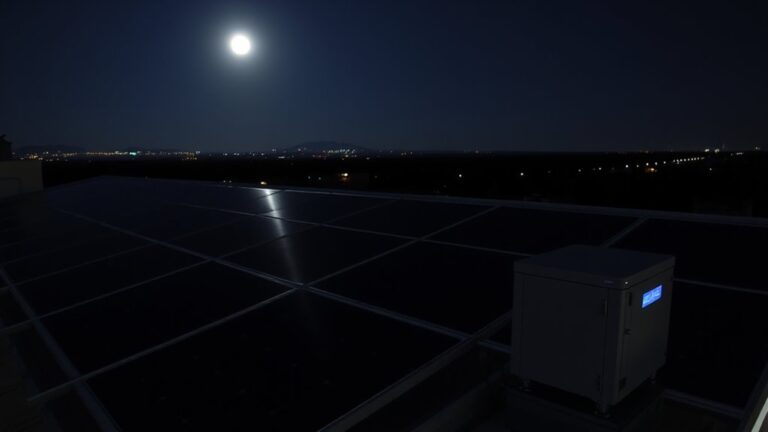
Solar panels alone don’t power your home during outages because most systems shut off for safety without the grid. This means when the power goes out, your solar panels stop working, too.
To actually use solar energy during blackouts, you’ll need either a battery backup or a specialized hybrid inverter.
These devices store and supply power independently of the grid, so your home can keep running.
Adding an automatic transfer switch is also a smart move. It helps the system safely disconnect from the grid to prevent any hazards.
With these upgrades, your solar setup can keep critical appliances running when the power goes out.
It’s a great way to stay prepared. Keep exploring how to prepare and troubleshoot your solar system for reliable backup power.
Key Takeaways
– Standard solar panels shut down during outages to prevent backfeeding and ensure safety.
This means they won’t provide power when the grid goes down.
– Solar panels alone cannot power a home in blackouts without batteries or special inverters.
So, just having panels isn’t enough to keep your lights on during an outage.
– Installing solar batteries stores excess energy for use when the grid is down.
That way, you’ve got backup power ready whenever you need it.
– Hybrid inverters and automatic transfer switches enable safe, independent solar power during outages.
They help switch your system to run off solar and batteries smoothly.
– Proper system setup with backup components allows seamless power supply during blackouts.
With the right gear, you can keep your home powered even when the grid fails.
Can Solar Panels Power Your Home During a Blackout?
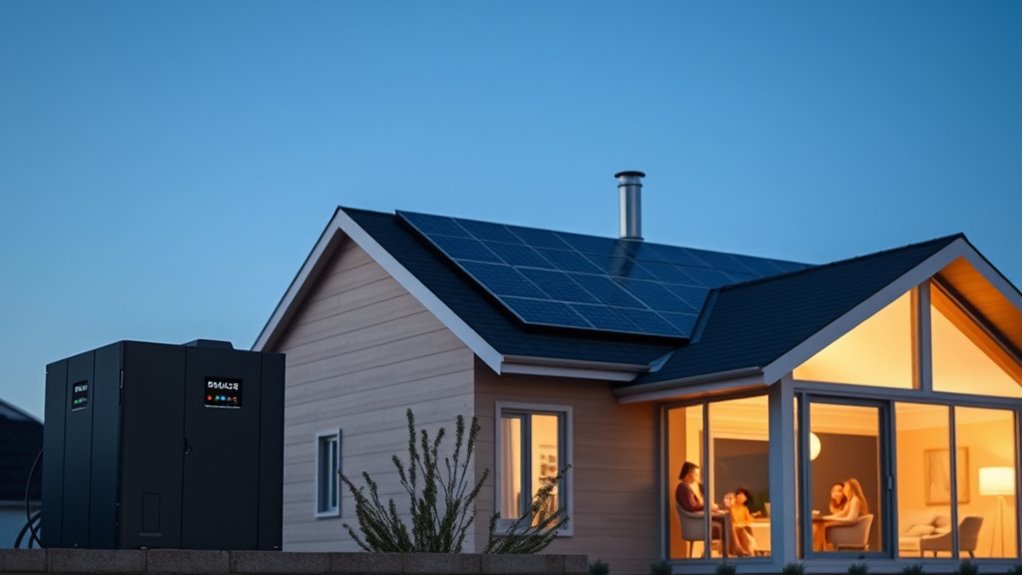
Although solar panels generate electricity from sunlight, they typically can’t power your home during a blackout unless you have a specialized setup. Your standard solar system is designed to shut down automatically for safety reasons when the grid goes down.
This prevents backfeeding, which could endanger utility workers repairing power lines. However, if you install a solar battery or an off-grid inverter, you can store energy and use it independently from the grid. This setup lets you draw power from your solar panels and batteries during an outage.
Without these additions, your panels won’t supply electricity. So, if you want your solar system to keep your lights on during blackouts, you’ll need to invest in the right components that allow safe, independent operation.
Why Don’t Most Solar Systems Power Homes During Outages?
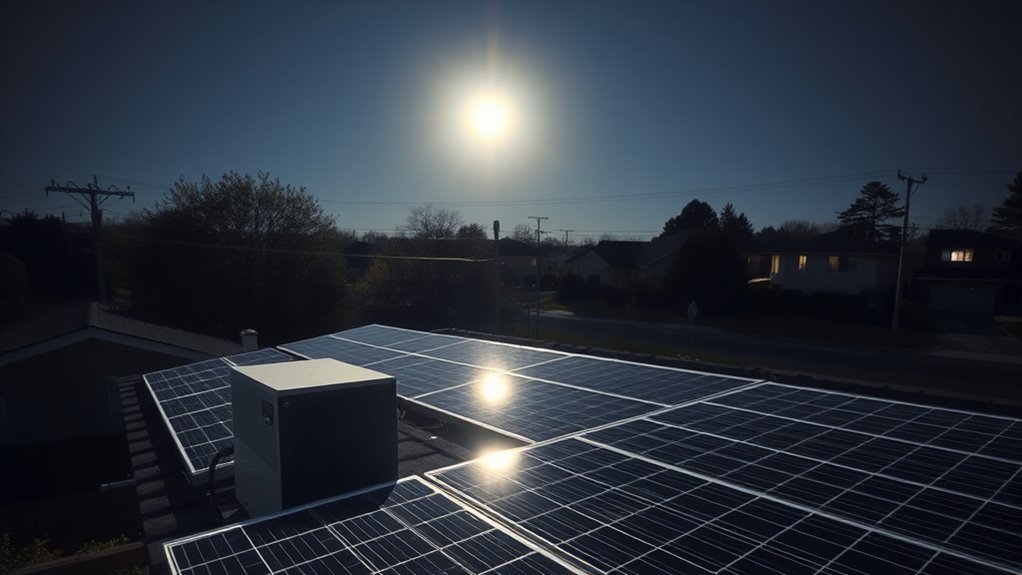
You might wonder why your solar panels don’t keep your lights on during a blackout. Most systems are tied to the grid and automatically shut off to protect utility workers.
These safety rules mean your panels can’t power your home unless you have special equipment installed. So, without that gear, your solar setup goes offline when the grid does.
Grid-Tied System Limitations
Since most solar panel systems are designed to work with the electrical grid, they automatically shut down during a power outage to protect utility workers from electrical backfeed. This means your grid-tied solar system won’t supply power to your home when the grid goes down.
Without the grid’s stable voltage and frequency, your inverter can’t safely operate, so it stops producing electricity. While your panels may still generate energy, it can’t reach your home or appliances.
Also, grid-tied systems don’t usually include batteries to store energy for use during outages. So, unless you have a backup power source or a battery system, your solar panels won’t keep your lights on during blackouts. That limits your energy independence right when you might need it most.
Safety Regulations Impact
Because safety regulations require it, most solar panel systems won’t power your home during outages to prevent backfeeding electricity onto the grid. Backfeeding can endanger utility workers fixing power lines by sending electricity back through the system unexpectedly.
To comply, your solar setup must include an automatic shutoff that disconnects it from the grid when the main power fails. This means your panels stop supplying electricity during outages, even if the sun is shining.
If you want backup power during outages, you’ll need a system designed with safety in mind, like one with a battery storage solution or a certified islanding inverter. These systems isolate your home’s electricity safely from the grid, allowing your solar panels to keep your essential appliances running without risking anyone’s safety.
How Solar Batteries Keep Your Solar Power On
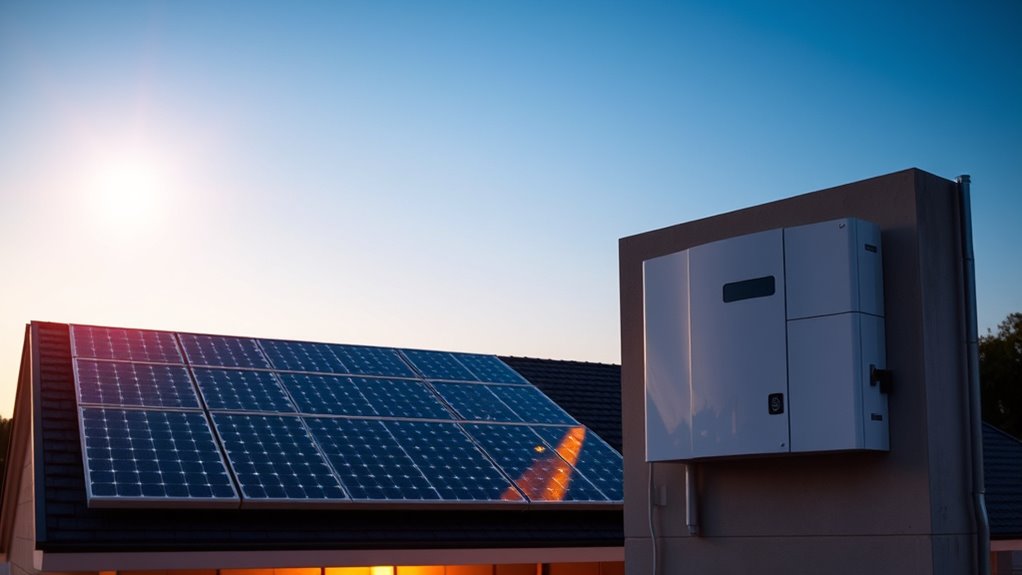
Although solar panels generate electricity when the sun shines, they can’t keep your power on during an outage without a way to store that energy.
That’s where solar batteries come in. They store excess energy your panels produce, so you have power even when the grid goes down.
Here’s how they keep your solar power on:
- Energy Storage: Batteries save surplus electricity generated during sunny hours for use at night or outages.
- Seamless Power Supply: When the grid fails, batteries automatically provide stored energy, preventing interruptions.
- Load Management: Batteries prioritize critical appliances first, ensuring essential functions remain powered longer.
Can You Use a Generator With Your Solar Panels?
You can use a generator with your solar panels, but you’ll need to check their compatibility first. It’s important to follow strict safety precautions to avoid backfeeding or damaging your system.
Let’s look at what you should consider before connecting the two. It’s really about making sure everything works smoothly together and stays safe.
Compatibility Considerations
When integrating a generator with your solar panel system, you’ll need to guarantee their compatibility to avoid damage and maintain efficient power flow. Not every generator works seamlessly with solar setups, so consider these key points:
- Inverter Compatibility: Your solar inverter must support generator input to switch between power sources smoothly without interruption or harm.
- Voltage and Frequency Matching: Make sure the generator’s output voltage and frequency align with your solar system. This helps prevent malfunctions or inefficiencies.
- Transfer Switch Integration: Use a proper transfer switch designed for both solar and generator inputs. It safely alternates power sources and protects your equipment.
Safety Precautions
Since generators and solar panels operate differently, taking proper safety precautions is essential to protect your equipment and yourself. When using a generator alongside your solar panels, never connect them directly without a transfer switch or an appropriate inverter system.
This prevents backfeeding, which can endanger utility workers and damage your electrical system. Always install a manual or automatic transfer switch to safely switch between power sources.
Also, confirm your generator is placed outdoors in a well-ventilated area to avoid carbon monoxide poisoning. Regularly inspect all connections and follow manufacturer guidelines for both systems.
How to Get Your Solar System Ready for Power Outages
Although solar panels can generate power during daylight, preparing your solar system for outages requires more than just sunlight. You need to make sure your system is equipped and configured to supply energy when the grid goes down.
Here’s how to get started:
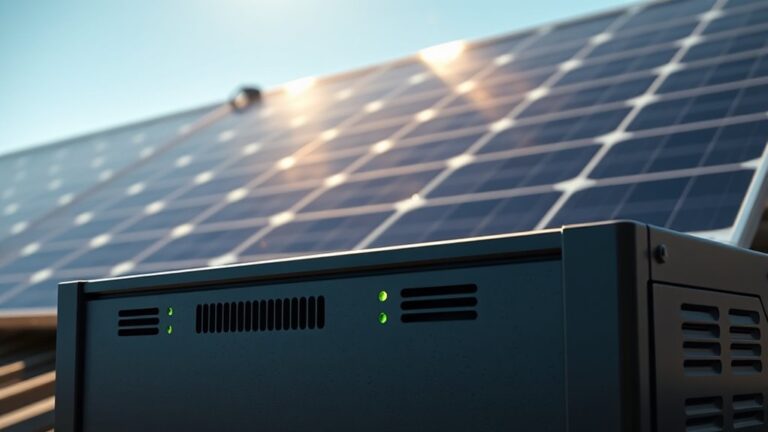
- Install a Battery Backup: Without grid power, your solar panels alone won’t power your home. A battery stores excess energy for use during outages.
- Use a Hybrid Inverter: A hybrid inverter manages power flow between solar panels, batteries, and your home. This lets your system switch seamlessly during outages.
- Set Up an Automatic Transfer Switch (ATS): The ATS disconnects your home from the grid and switches to battery power automatically when an outage occurs. It’s like having a backup plan that kicks in without you lifting a finger.
Troubleshooting Common Solar Power Issues During Blackouts
If your solar power system isn’t working during a blackout, you’ll want to pinpoint the issue quickly to restore energy. First, check if your solar inverter has an automatic shutdown feature for safety; many do, so it won’t feed power back to the grid during outages.
Next, inspect your battery charge—if it’s too low, your system won’t supply power. Confirm your backup system or generator is connected and functioning properly.
Also, verify any manual transfer switches are set correctly to isolate your home from the grid. Finally, look for blown fuses or tripped breakers in your solar setup.
Frequently Asked Questions
How Do Solar Panels Affect Home Insurance Policies?
You’ll likely see your home insurance rates change when adding solar panels, as insurers consider them valuable additions.
Make sure you update your policy to cover potential damage or theft. Also, check for any discounts that might be available.
It’s always a good idea to keep your insurer in the loop when you make upgrades like this. That way, you’re fully protected and might even save some money.
What Maintenance Do Solar Panels Require During Winter Months?
You don’t need to battle raging blizzards daily! Just clear heavy snow off panels gently.
Check for ice buildup, trim nearby branches, and inspect wiring. These steps keep your solar panels shining bright all winter long.
Can Solar Panels Increase My Home’s Resale Value?
Yes, solar panels can increase your home’s resale value by boosting energy efficiency and appealing to eco-conscious buyers.
They lower utility costs, making your property more attractive and potentially speeding up the sale process.
Are There Tax Incentives for Installing Solar Panels?
Yes, you can get tax incentives for installing solar panels. Many governments offer credits or deductions that lower your upfront costs.
You should check local programs and federal tax credits to maximize your savings. It’s definitely worth looking into!
How Do Weather Conditions Impact Solar Panel Efficiency?
You’ll see less efficiency on cloudy days, reduced output during rain, and diminished performance with snow cover.
You’ll get peak power under bright sunlight, ideal angles, and clear skies, so weather directly affects your solar energy production.
Conclusion
Solar panels can be a reliable backup during outages, but only if you prepare properly. Without batteries or a special setup, they shut off like a car engine when the key’s out.
Adding solar batteries or a compatible generator keeps your power flowing smoothly. By getting your system ready ahead of time, you’ll stay energized even when the grid fails.
Think of it as building a fortress of light, standing strong against the dark. Using solar panels during power outages is possible, but it requires planning and the right equipment. Solar batteries store energy to use when the sun isn’t shining, and special inverters allow your system to work independently from the grid.
So, if you want your solar panels to work during a power outage, invest in a battery backup or an off-grid setup. That way, you can enjoy continuous power and peace of mind no matter what happens to the grid.