7 Steps to Charge a Battery With a Solar Panel
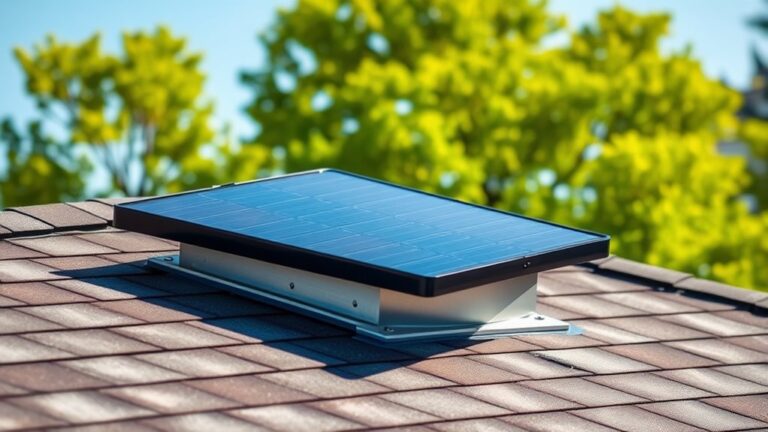
To charge your battery with a solar panel, start by picking a panel that matches your battery’s voltage and capacity. This step is super important because it ensures your system works efficiently without damaging any components.
Next, choose a compatible charge controller to regulate power safely and prevent overcharging.
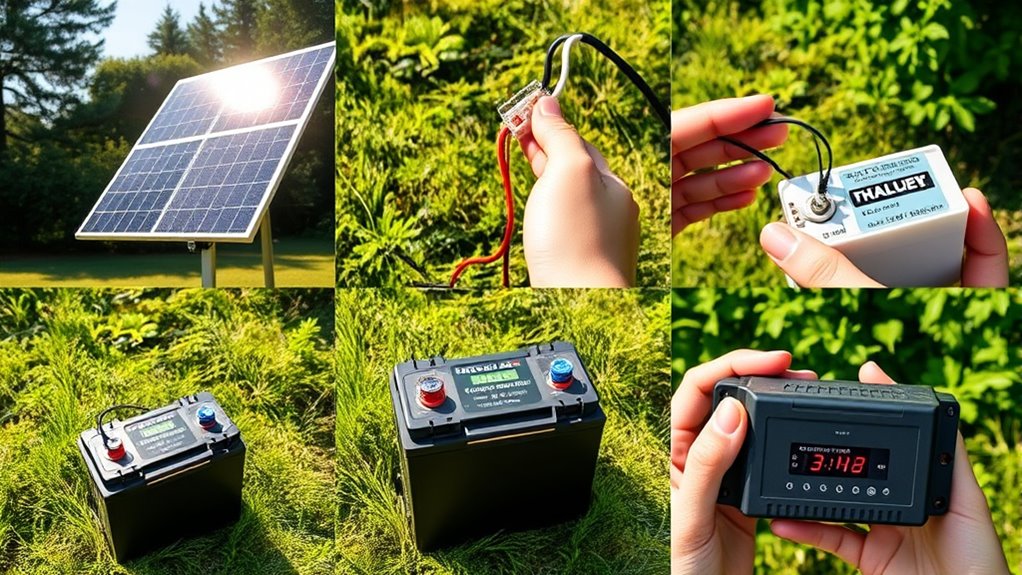
Now, connect your solar panel to the charge controller, then wire the controller to the battery. Make sure to connect with the correct polarity and include protection like fuses or breakers to keep everything safe.
Position your panel for maximum sunlight by adjusting the tilt and avoiding any shade throughout the day.
Don’t forget to regularly monitor your battery’s health and maintain your setup. Checking on things often helps your system last longer and perform better.
Following these steps sets you up for efficient, long-lasting solar charging—you can uncover more tips and details next.
Key Takeaways
– Select a solar panel with voltage and wattage matching your battery’s specifications for efficient and safe charging.
This step is crucial to make sure you don’t damage your battery or waste energy.
– Position the solar panel facing the equator and tilt it to your latitude for maximum sunlight exposure.
Doing this helps you get the most out of the sun’s rays.
– Connect the solar panel to a compatible charge controller to regulate voltage and prevent battery damage.
The charge controller acts like a safeguard for your battery.
– Wire the charge controller to the battery with correct polarity and include a fuse for overcurrent protection.
Always double-check the connections so nothing goes wrong.
– Regularly monitor battery voltage, maintain clean connections, and replace the battery if capacity or physical condition deteriorates.
Keeping an eye on your battery’s health will extend its life and keep your system running smoothly.
Choose the Right Solar Panel for Your Battery
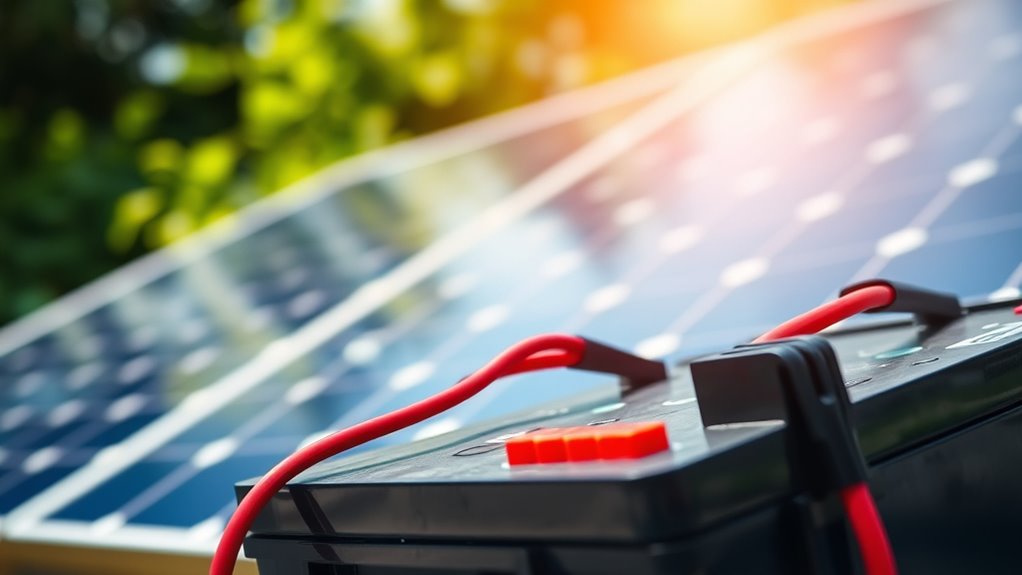
How do you know which solar panel suits your battery best? Start by checking your battery’s voltage—common types are 12V or 24V—and match your solar panel’s output voltage accordingly.
Next, consider the battery’s capacity in amp-hours (Ah) to estimate how much current your panel needs to supply for efficient charging. A panel that’s too weak will take forever to charge your battery, while one that’s too strong could risk overcharging without proper controls.
Also, think about your daily energy use and sunlight availability to size the panel correctly. Choose between monocrystalline or polycrystalline panels based on your budget and efficiency needs.
Pick a Charge Controller Compatible With Your Setup

You’ll need a charge controller that matches your solar panel’s voltage and current to protect your battery.
There are two main types: PWM and MPPT, each suited for different setups. Choosing the right one guarantees efficient and safe charging for your system.
It’s important to pick the one that fits your needs so your battery stays healthy and your solar setup runs smoothly.
Types of Charge Controllers
Why does choosing the right charge controller matter when charging your battery with a solar panel? It protects your battery from overcharging and extends its life.
There are mainly two types: PWM (Pulse Width Modulation) and MPPT (Maximum Power Point Tracking). PWM controllers are simpler and cost-effective, ideal for small systems where your panel voltage closely matches your battery voltage.
MPPT controllers are more efficient, adjusting the panel’s output to maximize energy harvest. They’re especially useful for larger or more complex setups.
When selecting a controller, consider your system size, budget, and performance needs. Using the appropriate type ensures safe charging and maximum energy use.
Matching Voltage and Current
When selecting a charge controller, what voltage and current ratings should you consider to guarantee compatibility with your solar panel and battery? You need to match these specs carefully to prevent damage and ensure efficient charging.
First, check your solar panel’s maximum voltage (Voc) and current (Isc). Then, look at your battery’s voltage requirements to confirm the controller supports it.
Finally, the charge controller’s current rating should exceed your panel’s maximum current output to handle peak loads safely.
- Verify the solar panel’s maximum voltage and current.
- Confirm the battery voltage matches the controller’s supported voltage.
- Choose a controller with a current rating higher than the panel’s max current.
- Ensure the controller’s voltage range covers your battery system for safe charging.
Connect Your Solar Panel to the Charge Controller
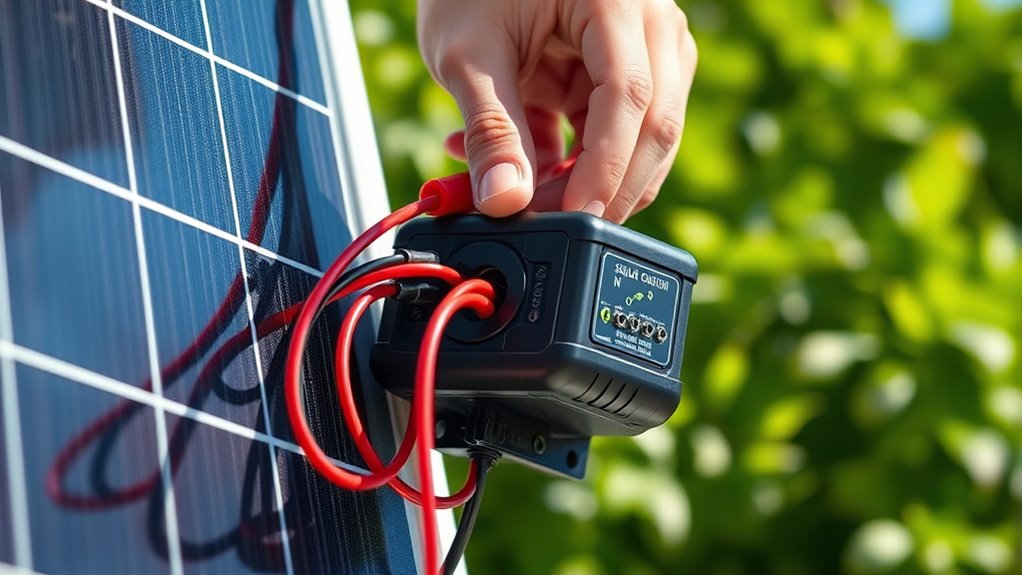
Before you can safely charge your battery, connect your solar panel to the charge controller to regulate the power flow. This step prevents overcharging and protects your battery’s lifespan.
First, identify the positive (+) and negative (–) terminals on both the solar panel and controller. Use appropriate gauge wires and firm connections to ensure efficiency and safety. Double-check polarity to avoid damage.
Here’s a quick reference to guide your connections:
| Solar Panel Terminal | Charge Controller Terminal |
|---|---|
| Positive (+) | Solar Input Positive (+) |
| Negative (–) | Solar Input Negative (–) |
| Wire Type | Use outdoor-rated cable |
| Connection Method | Secure with screw terminals |
| Safety Tip | Confirm polarity before connecting |
Following these steps ensures a stable energy transfer from your panel to the controller. It’s all about keeping things safe and working smoothly.
Wire the Charge Controller Safely to Your Battery
One essential step is wiring the charge controller safely to your battery to guarantee efficient and secure power transfer.
Follow these guidelines to avoid damage and ensure proper functionality:
- Turn off all power sources before connecting wires to prevent short circuits or shocks.
- Use the correct wire gauge based on the current rating of your system to handle the load safely.
- Connect the positive terminal of the charge controller to the battery’s positive terminal, then do the same for the negative terminals. Make sure the connections are secure and tight.
- Install a fuse or circuit breaker between the charge controller and battery to protect against overcurrent situations. This adds an extra layer of safety you don’t want to skip.
Monitor Solar Charging to Protect Your Battery
Keeping a close eye on your solar charging process is essential to protect your battery from overcharging or excessive discharge. Use a charge controller with built-in monitoring features to regulate voltage and current automatically.
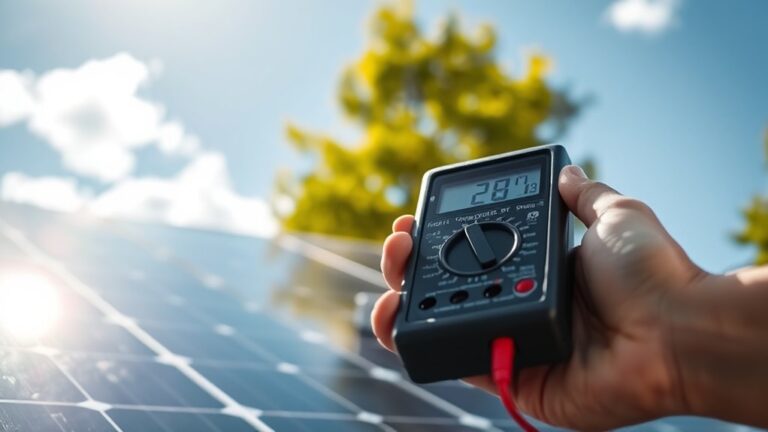
Check the controller’s display or app regularly to track charging status, battery voltage, and temperature. If you notice the battery voltage rising above recommended levels, reduce sunlight exposure or disconnect the panel temporarily.
Similarly, prevent deep discharge by making sure the battery doesn’t fall below its safe voltage threshold. Observing these details helps you spot issues early, like faulty wiring or shading, which can really affect performance.
Position Your Solar Panel for Maximum Sunlight
Although solar panels can still generate power on cloudy days, positioning your panel to capture direct sunlight throughout the day considerably boosts charging efficiency.
Solar panels generate power even on cloudy days, but direct sunlight significantly increases charging efficiency.
To maximize sunlight exposure, follow these steps:
- Face your panel south (in the Northern Hemisphere) or north (in the Southern Hemisphere) for ideal sun tracking.
- Tilt the panel angle to match your latitude, adjusting seasonally to capture more sunlight.
- Avoid shade from trees, buildings, or other obstructions that block the sun during peak hours.
- Use a solar tracker or adjustable mount to keep the panel aligned with the sun’s movement throughout the day.
Keep Your Solar Setup Running Smoothly for the Long Term
To keep your solar setup running smoothly, you’ll need to perform regular maintenance like cleaning panels and checking connections. It’s not hard, but it does make a big difference.
Monitoring your battery’s health is key to avoiding unexpected power loss. You don’t want to be caught off guard when the sun isn’t shining.
Regular Maintenance Tips
Since solar panels constantly face the elements, you’ll need to perform regular maintenance to assure they keep charging your battery efficiently. Neglecting upkeep can reduce their performance and lifespan.
Here are four essential maintenance tips:
- Clean Panels Regularly – Remove dirt, dust, and bird droppings with a soft cloth and mild detergent to maximize sunlight absorption.
- Inspect for Damage – Check for cracks, loose wiring, or corrosion that could interrupt power flow.
- Trim Nearby Vegetation – Make sure no trees or plants shade your panels during peak sunlight hours. It really helps keep things running smoothly.
- Secure Mounting – Tighten bolts and brackets to prevent panels from shifting or getting damaged in strong winds.
Following these steps helps maintain your solar setup’s efficiency and reliability over time. Just a little effort goes a long way!
Monitoring Battery Health
Maintaining your solar panels is just one part of keeping your system running smoothly. Monitoring battery health is vital to guarantee your setup lasts and performs well.
Regularly check your battery’s voltage and state of charge using a reliable meter. Look for signs of wear like swelling, corrosion, or leakage, and clean terminals to prevent buildup.
Keep an eye on the battery’s temperature, as overheating can shorten its lifespan. If you notice consistent drops in capacity or charging issues, it might be time to replace the battery.
Frequently Asked Questions
How Long Does It Take to Fully Charge a Battery With Solar?
It typically takes 6 to 12 hours to fully charge a battery with solar, depending on your panel’s wattage, battery capacity, and sunlight availability.
You’ll want to monitor conditions to optimize charging times effectively. It’s all about making the most of the sun when it’s out!
Can Solar Panels Charge Any Type of Battery?
You can charge most battery types with solar panels, but you’ll need the right charge controller and settings. Different batteries, like lead-acid or lithium, require specific voltage and current to charge safely and efficiently.
What Weather Conditions Affect Solar Charging Efficiency?
Cloudy conditions, cold climates, and constant rain can considerably curb your solar charging capacity. You’ll want to watch for weather whims, as sunshine is solar’s strongest source for swiftly supplying your battery with energy.
Are Portable Solar Panels Effective for Charging Batteries?
Yes, portable solar panels can effectively charge batteries, especially when you place them in direct sunlight. They’re convenient for outdoor use.
But their efficiency really depends on a few things—like the quality of the panel, how strong the sunlight is, and the capacity of your battery. So, it’s good to keep those factors in mind when you’re using them.
How Do Temperature Extremes Impact Battery Charging With Solar?
You’ll find extreme temperatures slow charging and reduce battery life. Cold temps lower capacity, while heat speeds discharge and risks damage.
Keep your battery within recommended ranges to maintain efficient, safe solar charging. It really helps to protect your battery and get the most out of your solar setup.
Conclusion
Charging your battery with a solar panel is like nurturing a seed with sunlight—both need the right care and attention to grow strong. By choosing the right panel, connecting everything safely, and monitoring your setup, you’re harnessing nature’s power to keep your battery alive and thriving.
Keep your solar system well-tended, and you’ll enjoy a steady flow of energy. This means turning sunlight into the lifeblood your battery needs to shine bright every day. Proper maintenance and smart charging practices ensure your battery lasts longer and performs better.
So, whether you’re setting up a small off-grid system or enhancing your existing solar setup, understanding how to charge a battery with a solar panel is key. With the right approach, you can maximize your solar power’s potential and keep your battery healthy and charged efficiently.