
5 Tips to Keep Snow Off Solar Panels
To keep snow off your solar panels and ensure they work efficiently all winter, it’s important to take some simple steps. Snow buildup can block sunlight and reduce energy production, so managing it is key.
One of the best ways to prevent heavy snow accumulation is by tilting your panels between 30 to 45 degrees. This angle helps snow slide right off instead of sticking around.
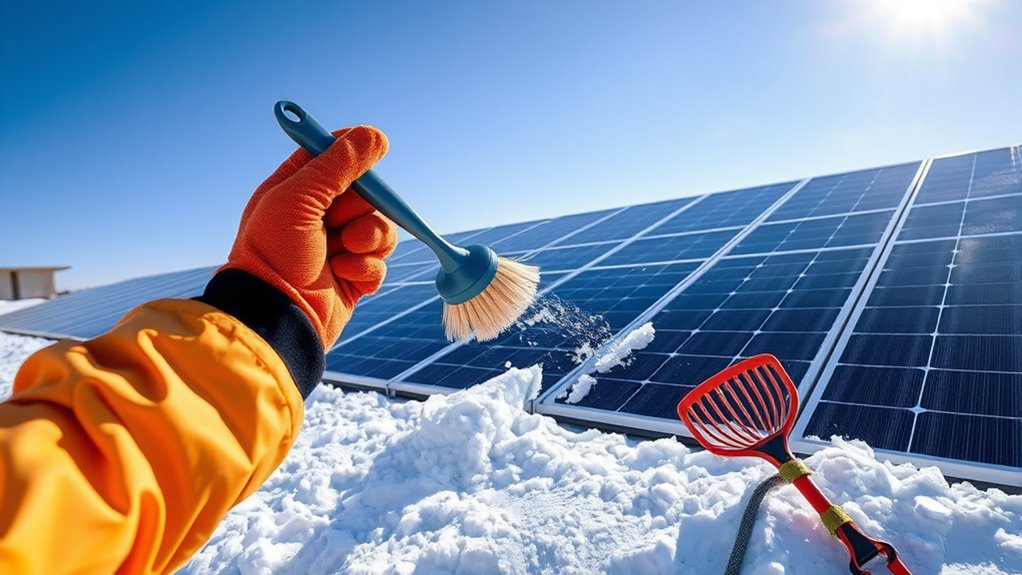
When it comes to clearing snow, use soft tools like roof rakes with foam edges or gentle brushes. These help remove snow without scratching or damaging your panels.
You might also consider applying anti-snow coatings to repel buildup, which makes snow less likely to stick in the first place.
Another option is installing heating elements that melt snow quickly and keep your panels clear.
Regular snow removal during heavy winters is a smart habit to keep your system running smoothly.
If you want to guarantee your panels stay clear and productive all season, exploring more detailed tips will help.
Key Takeaways
– Tilt solar panels between 30 to 45 degrees to encourage snow to slide off easily and maintain sunlight exposure.
It really helps to set the right angle so snow doesn’t just sit there. Plus, this way, your panels catch more sun.
– Use roof rakes with soft, non-abrasive edges to gently remove snow without damaging panels or wiring.
Be gentle when clearing snow! Using the right tools keeps everything safe and sound.
– Apply hydrophobic or silicone-based anti-snow coatings to repel snow and ice buildup on panel surfaces.
These coatings can make a big difference by preventing snow from sticking. It’s like giving your panels a little extra protection.
– Install heating elements beneath panels to melt snow quickly and maintain continuous energy production.
Heated panels sound fancy, but they’re super effective. They help keep your energy flowing even when it’s snowy.
– Schedule regular snow removal after heavy storms using soft tools or professional services for safe maintenance.
Don’t wait too long after a big snowfall. Keeping up with removal keeps your system running smoothly and safely.
Tilt Solar Panels to Reduce Snow Buildup
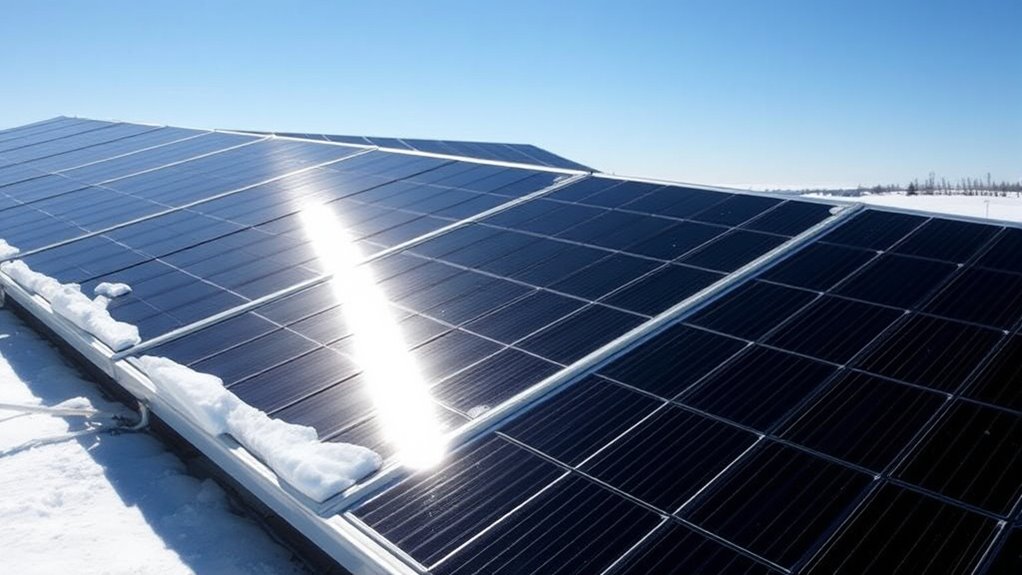
How can you prevent snow from piling up on your solar panels? One effective way is to adjust their tilt angle. When solar panels are installed with a steeper slope, snow is less likely to accumulate because it naturally slides off.
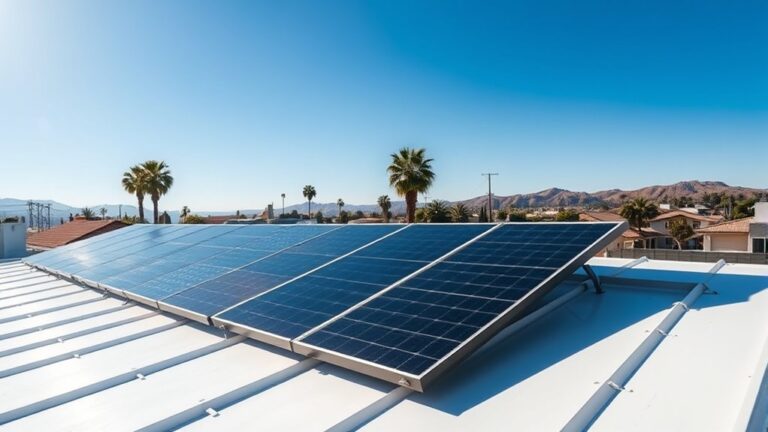
You’ll want to aim for an angle between 30 to 45 degrees, depending on your location’s snowfall and roof design. This tilt not only helps snow shed more easily but also maximizes sunlight exposure during winter months.
Keep in mind that panels installed flat or with a minimal angle tend to trap snow, reducing efficiency. By optimizing the tilt of your solar panels, you guarantee they stay clearer longer, maintaining better energy production even when snow falls in your area.
Safely Clear Snow Using Roof Rakes and Soft Tools
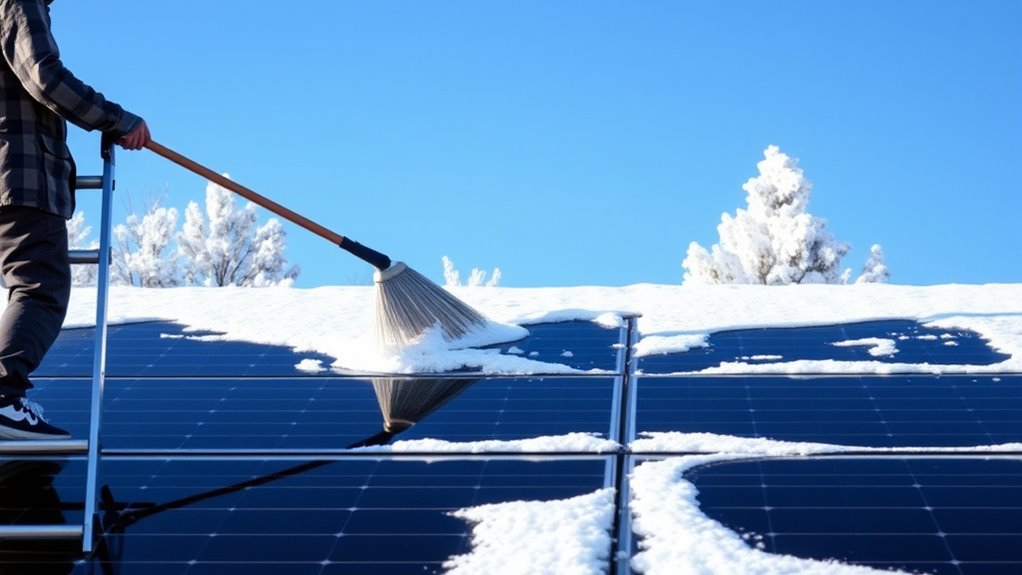
When snow builds up on your solar panels, you can safely remove it using roof rakes and soft tools designed for the job. Choose a roof rake with a long, extendable handle so you can reach your panels from the ground, avoiding risky climbs.
Make sure the rake has a soft, non-abrasive edge—like foam or rubber—to prevent scratching the glass surface. Gently pull the snow downward, working slowly to avoid damaging the panels or dislodging any wiring.
Use a soft-edged rake to gently pull snow down, protecting your panels and wiring from damage.
Avoid metal shovels or hard tools that could chip or crack the panels. For stubborn snow, use a soft-bristled broom or brush to sweep it off carefully.
Always prioritize your safety and take your time to protect both yourself and your solar investment.
Use Anti-Snow Coatings to Keep Panels Clear
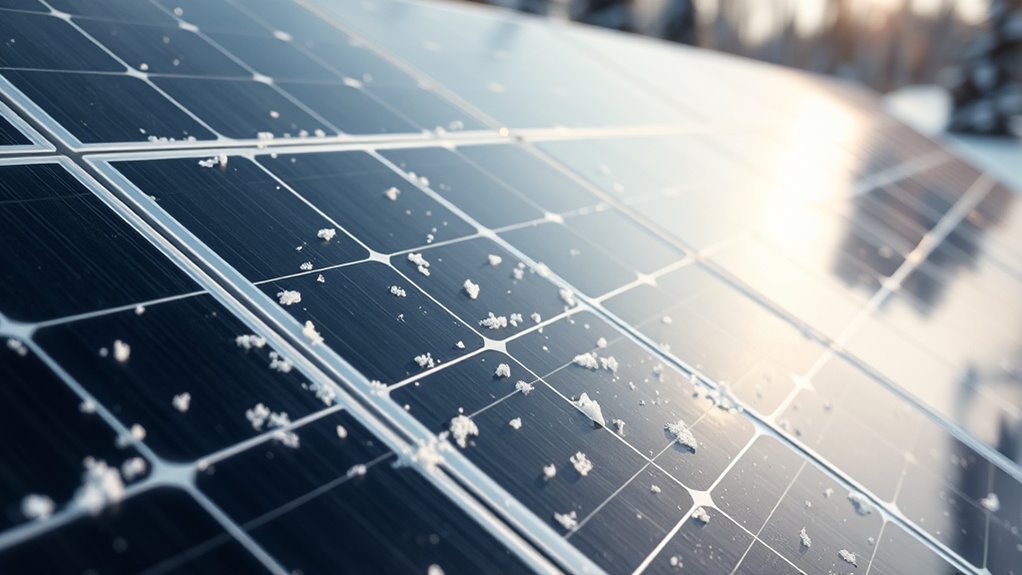
Although snow naturally accumulates on solar panels during winter, you can reduce buildup by applying anti-snow coatings designed specifically for this purpose. These coatings create a slick surface that prevents snow and ice from sticking, making it easier for snow to slide off.
You can apply these coatings yourself or hire a professional for best results. Just keep in mind, the effectiveness varies based on coating type and weather conditions.
| Coating Type | Benefits | Application Tips |
|---|---|---|
| Hydrophobic | Repels water and snow | Clean panels before applying |
| Silicone-Based | Durable and flexible | Reapply annually |
| Fluoropolymer | High resistance to buildup | Use with protective gear |
| Nano-Coatings | Thin and invisible layer | Apply in dry, mild weather |
Using anti-snow coatings helps keep your panels clear, improving efficiency all winter long. It’s a simple step that can make a big difference when the snow starts falling.
Install Heating Elements to Melt Snow Quickly
If you want to keep your solar panels free of snow without manual effort, installing heating elements is an effective solution. These elements, usually thin electric wires or mats, generate gentle heat that melts snow as it accumulates.
You can install them directly on the panel surface or just beneath it, ensuring even warmth without damaging the panels. When powered, they prevent snow buildup that blocks sunlight and reduces energy output.
Heating elements activate automatically with temperature sensors or timers, so you don’t have to monitor them constantly. While they consume some electricity, the energy gained from uninterrupted solar production often outweighs the cost.
Make sure to choose heating systems designed specifically for solar panels to ensure compatibility and safety. This smart addition keeps your panels clear and efficient throughout winter.
Plan Regular Snow Removal During Heavy Winters
Heating elements can keep your panels clear during light snowfalls, but heavy winters may still require more hands-on care. You’ll want to plan regular snow removal to maintain your solar panels’ efficiency.
Schedule times to safely clear snow, especially after significant storms, to prevent buildup that blocks sunlight. Use tools designed for solar panels, like soft-bristle brushes or roof rakes with extendable handles, to avoid damaging the surface.
Avoid sharp or metallic tools that could scratch the panels. If accessing your roof is risky, consider hiring a professional snow removal service experienced with solar equipment.
Staying proactive with snow removal guarantees your panels keep generating energy consistently through winter’s toughest months. It’s worth the effort to keep things running smoothly!
Frequently Asked Questions
Can Snow Damage My Solar Panels?
Snow won’t damage your solar panels because they’re built to withstand harsh weather. However, heavy, persistent snow might reduce efficiency temporarily.
You can clear snow carefully to keep them working well without causing harm. Just take your time and be gentle!
Do Solar Panels Work Efficiently in Cold Temperatures?
You’ll find solar panels work efficiently in cold temperatures; they perform better when cool, generate more electricity under bright sunlight, and maintain output despite frost.
Stay confident—they’re designed to handle chilly conditions without losing power. It’s pretty cool how well they adapt to the cold!
How Does Snow Affect Solar Panel Warranty?
Your solar panel warranty usually covers defects, not damage from snow. You’ll want to check the terms carefully—some warranties exclude weather-related issues.
If snow causes damage, it might not be covered. So, it’s a good idea to handle panels gently during winter.
Are There Specific Solar Panels Designed for Snowy Climates?
Yes, you’ll find solar panels specially suited for snowy settings, featuring sleek, slippery surfaces and sturdy structures.
These panels swiftly shed snow, so you won’t struggle with snow buildup. This ensures steady sunlight and strong energy production.
Can Snow Increase Solar Panel Energy Production?
No, snow doesn’t increase solar panel energy production. It actually blocks sunlight, which reduces efficiency.
But after the snow melts or slides off, panels can perform better in bright, reflective conditions. You’ll want to clear heavy snow quickly to keep things running smoothly.
Conclusion
Keeping your solar panels snow-free doesn’t have to be a hassle. By tilting your panels, using safe tools, and applying anti-snow coatings, you can make a big difference. These simple steps help prevent snow buildup and keep your system working efficiently.
You can also install heating elements or plan regular snow removal to tackle heavier snowfalls. These extra measures ensure your panels stay clear no matter how much snow comes your way.
Why let snow block your clean energy when a few simple steps can keep your panels clear and your power flowing? Taking action now means your solar panels will keep producing energy efficiently all winter long. Don’t wait for the next snowfall—use these tips to maintain peak solar panel performance and enjoy uninterrupted clean power throughout the snowy season!

3 Comments