5 Key Facts About How Much a Solar Panel Does Weigh
You’ll find most residential solar panels weigh between 40 and 50 pounds, which makes handling and installation pretty manageable with the right gear. The weight can vary quite a bit depending on the material, panel size, and design you choose.
For example, thin-film panels tend to weigh less, while polycrystalline ones are on the heavier side.
Your roof’s strength is super important since the extra weight impacts how safely the panels can be mounted. It also affects their durability, especially when facing wind or snow.
Plus, knowing how to transport your panels safely is key to avoiding any damage during installation.
Keep exploring to uncover how these factors shape your solar setup.
Key Takeaways
- Residential solar panels typically weigh between 40 and 50 pounds. This balance helps with both durability and ease of installation.
- Monocrystalline panels usually weigh around 40 pounds. Thin-film panels, on the other hand, are much lighter—often under 20 pounds.
- The weight of a panel depends on its size, material composition, and design features. These factors influence how easy it is to handle and what kind of structural support is needed.
- It’s important to assess your roof’s support capacity. You want to make sure it can safely bear the extra weight of the solar panels and mounting hardware.
- Proper handling usually involves multiple people and protective gear. Careful transport is key to prevent damage and keep everyone safe.
How Much Does a Typical Solar Panel Weigh?
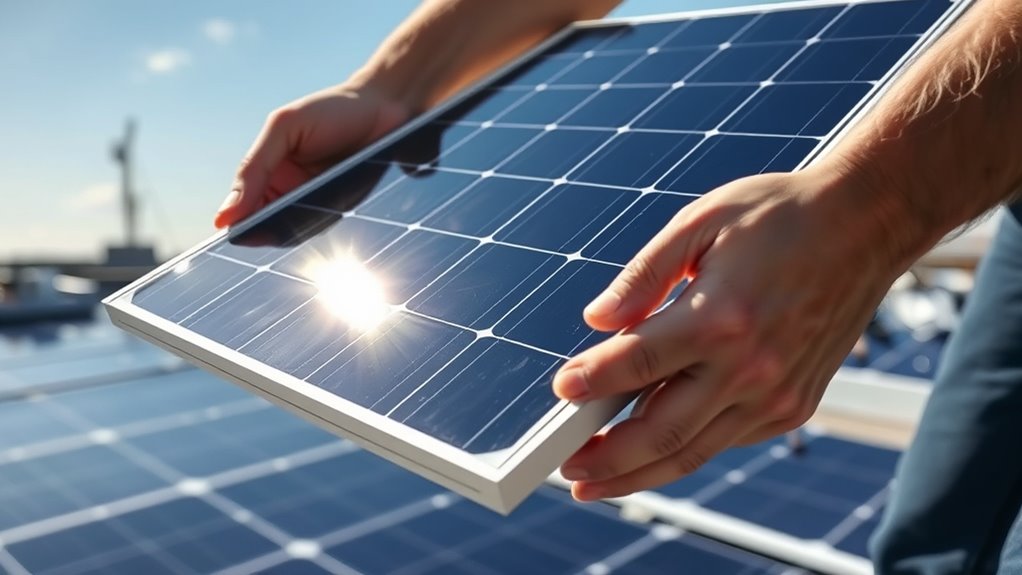
Although solar panels come in various sizes and types, most typical residential panels weigh between 40 to 50 pounds. You’ll find that this weight range makes them manageable for installation while still being sturdy enough to withstand weather conditions.
When you handle a panel, you’ll notice the solid frame and tempered glass contribute considerably to the overall weight. Despite their heft, solar panels aren’t overly cumbersome, so you can safely transport and mount them with proper equipment.
Knowing this weight helps you plan your rooftop installation or storage space effectively. If you’re curious about how different panels compare, keep in mind this typical weight range applies mainly to standard 60-cell residential panels, which are the most common for home use.
What Factors Influence Solar Panel Weight?
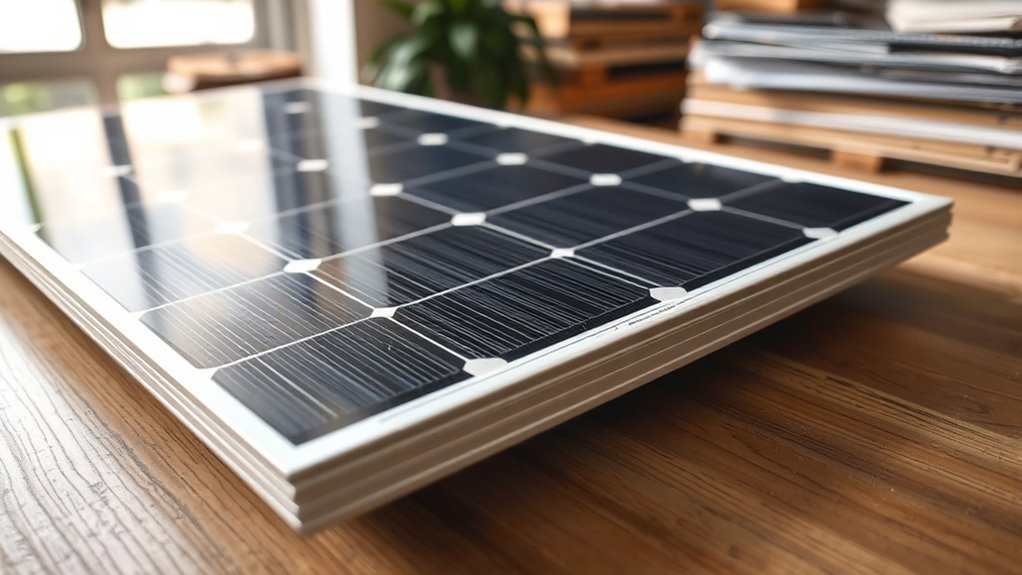
Understanding the typical weight of solar panels gives you a baseline, but several factors can change that number. You’ll find that the weight depends on the materials used, the panel’s size, and its design features.
Each of these elements can add or reduce weight, impacting installation and support requirements. It’s good to keep these in mind when planning your setup.
Here are three key factors influencing a solar panel’s weight:
- Material Composition: Panels made with heavier glass or metal frames weigh more than those using lightweight alternatives.
- Panel Size: Larger panels naturally weigh more due to increased surface area and components.
- Design and Durability Features: Reinforcements for weather resistance or extra layers for efficiency can add weight.
Being aware of these factors helps you choose the right panels for your specific needs. So, you can make the best choice without any surprises down the road.
How Do Solar Panel Types Compare by Weight?
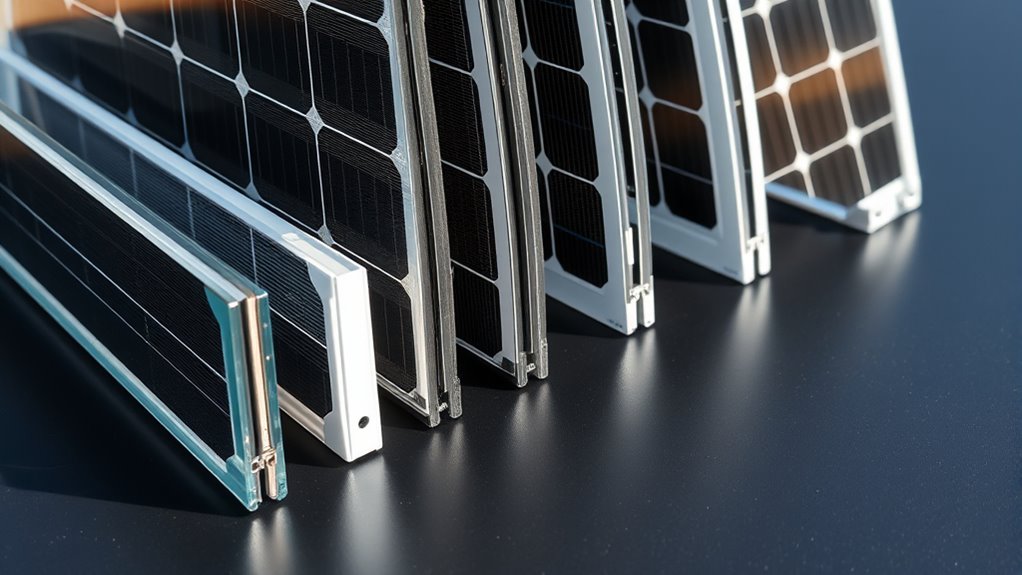
When choosing solar panels, you’ll notice that their weight varies considerably depending on the type. Monocrystalline panels, known for efficiency, generally weigh around 40 pounds each.
Polycrystalline panels tend to be slightly heavier, often weighing between 40 and 50 pounds due to their different manufacturing process. Thin-film panels, on the other hand, are much lighter since they use flexible materials and less glass.
These can weigh as little as 20 pounds or less per panel, making them easier to handle and install. Your choice will impact not only weight but also installation needs and structural considerations.
Understanding these weight differences helps you pick the right panel type for your specific project and roof capacity without unnecessary guesswork.
How Does Solar Panel Weight Affect Roof and Mounting Safety?
Since solar panels add extra weight to your roof, making sure your structure can handle them is super important for safety. If your roof isn’t strong enough, it might get damaged or, worse, collapse over time.
The mounting system also has to hold the panels’ weight securely. This helps prevent them from shifting or falling during strong winds or storms. It’s a good idea to check your roof’s current condition and talk to a professional before you get started.
Think about things like the roof material and how old it is, because those affect how much weight it can support. Also, properly designed mounts spread the weight out evenly, which really helps.
Don’t forget that wind and snow loads add extra stress to your roof, so those need to be factored in too.
How to Handle and Transport Heavy Solar Panels
Ensuring your roof and mounting system can support the weight of solar panels is just the start—you also need to handle and transport these heavy panels carefully to avoid damage or injury. Always lift panels with at least two people to evenly distribute the weight and prevent dropping.
Use protective gloves and wear sturdy boots for better grip and safety. When moving panels, keep them upright; laying them flat increases the risk of cracks.
Secure panels during transport with soft straps or padding to avoid scratches or bending. Avoid rushing—plan your route and clear obstacles ahead.
Frequently Asked Questions
How Long Do Solar Panels Typically Last?
Solar panels typically last about 25 to 30 years. You’ll find their efficiency slightly decreases over time, but they’ll keep generating electricity well beyond that.
Especially if you maintain them properly and avoid physical damage. So, with a little care, they can keep doing their job for a long time.
What Is the Average Energy Output of a Solar Panel?
You can expect an average solar panel to produce about 300 to 400 watts of power. That means it generates enough energy to power small devices or contribute considerably to your home’s electricity needs daily.
Pretty impressive, right? It’s a solid way to cut down your electric bill and help the environment at the same time.
Are Solar Panels Recyclable After Their Lifespan?
Yes, you can recycle solar panels after their lifespan. Many materials like glass and aluminum are reusable.
You’ll want to find a specialized recycling center to handle the process safely and responsibly for the environment. It’s a great way to keep things sustainable and reduce waste.
How Much Do Solar Panels Cost on Average?
You’ll typically pay between $10,000 and $15,000 for a full residential solar panel system before incentives. Costs vary based on size, quality, and location.
But the good news is, solar panels have become much more affordable in recent years. So, it’s definitely worth considering if you want to save on energy bills.
Can Solar Panels Work Efficiently in Cloudy Weather?
Yes, solar panels can still work efficiently in cloudy weather. They produce less energy than on sunny days but still generate power by capturing diffused sunlight.
Conclusion
So, next time you’re lifting a solar panel, don’t be surprised if it feels like you’re hoisting a mini elephant onto your roof. But hey, that’s just part of the charm—balancing the weight while dreaming of endless sunshine and lower bills.
Just remember, those panels aren’t feather-light fairy wings; they’re solid, serious slabs of tech. Handle them with care, or your rooftop might start questioning its life choices!
Understanding how much a solar panel weighs is key to proper installation and safety. These panels have a significant weight, which can impact your roof’s structure and the overall setup. So, when planning for solar energy, keep the weight factor in mind to ensure your roof can support it and you get the most out of your investment.