7 Easy Steps to Remove Snow From Solar Panels Safely
To remove snow from your solar panels safely, start by checking for any snow blockage. Make sure you’re wearing non-slip boots, insulated gloves, and safety goggles to keep yourself protected. These steps are crucial because working on snowy surfaces can be slippery and dangerous.
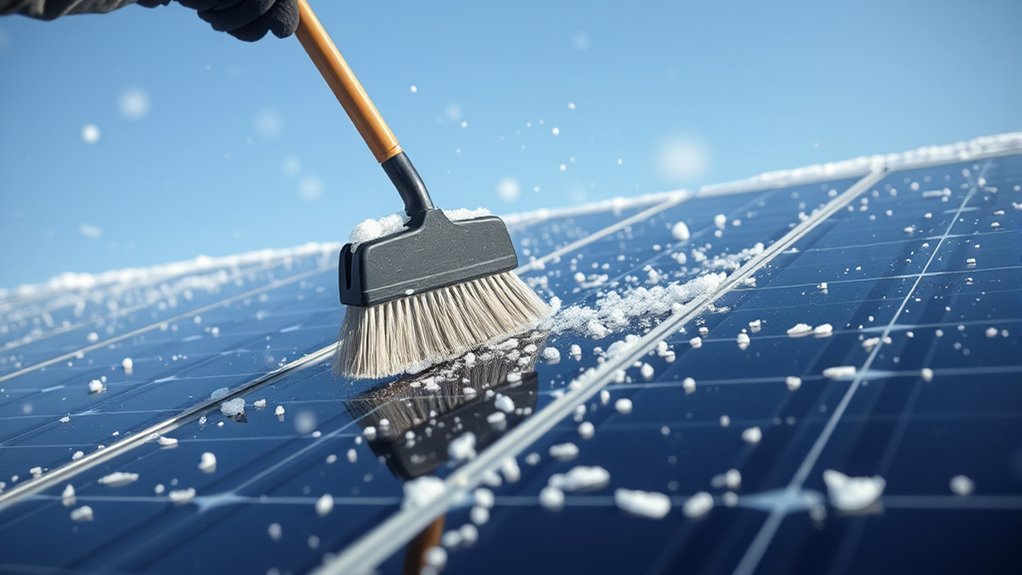
Use a soft-bristled snow brush or a plastic rake to gently clear the snow without scratching your panels. Avoid metal tools and don’t press down too hard, as this can damage the surface.
If the snow is stubborn, you can carefully apply lukewarm water or eco-friendly de-icing solutions to help melt it.
Always put your safety first and, if possible, wait for sunlight to naturally melt the remaining snow. Keeping these tips in mind will help you protect your solar panels and manage snow effectively, so they keep working efficiently all winter long.
Key Takeaways
– Use a soft-bristled snow brush or a plastic snow rake with a long handle to gently remove snow without scratching the panels.
This helps keep your solar panels safe while clearing them off.
– Wear non-slip boots, insulated gloves, and safety goggles to protect yourself during snow removal.
Safety first, right? You don’t want to slip or get hurt while working outside.
– Remove snow in thin layers using gentle, downward sweeping motions.
Take it slow and avoid pressing too hard on the panels to keep them intact.
– Avoid metal tools, hot water, or sharp objects; let ice melt naturally or use lukewarm water cautiously.
These can damage your panels, so it’s better to be patient or gentle.
– Prioritize personal safety by assessing snow conditions and weather before removal.
When you can, wait for sunlight to melt the snow naturally — it’s the safest and easiest option.
How to Check If Snow Is Blocking Your Solar Panels
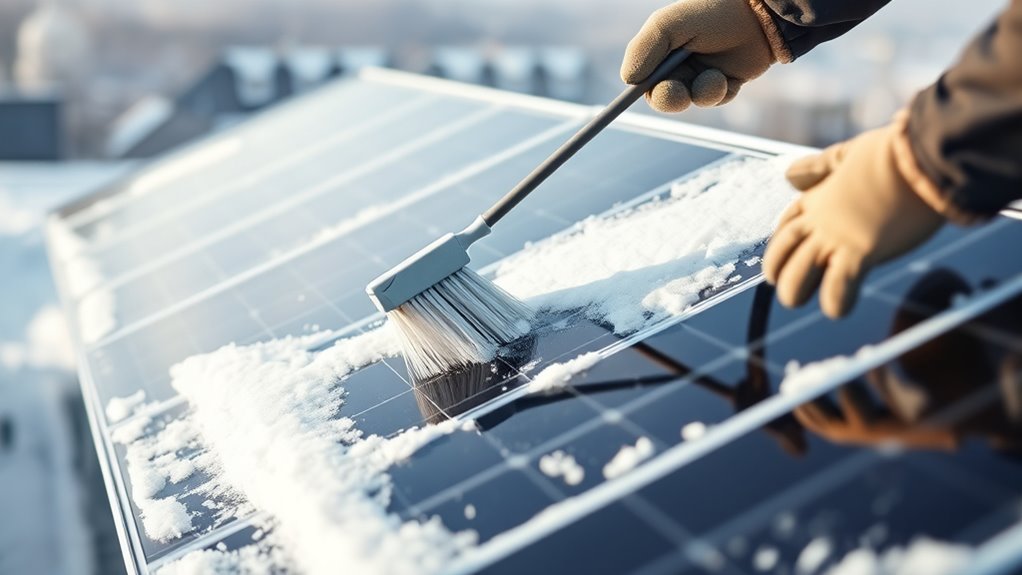
Before you begin removing snow, you need to determine whether your solar panels are actually blocked. Start by visually inspecting the panels from the ground if possible, using binoculars for a closer look.
Begin by checking your solar panels from the ground with binoculars before removing any snow.
Check for any visible snow accumulation that covers the surface entirely or partially. If the panels are on your roof, look for signs of reduced sunlight or drops in your solar energy output on your monitoring system. Sudden dips in performance often indicate snow coverage.
Also, keep an eye on weather reports—heavy snowfall days increase the chances of blockage. Avoid climbing onto the roof just yet; focus on remote observation first.
Confirming blockage helps you decide if snow removal is necessary, preventing unnecessary effort and protecting your panels from damage.
Safety Gear You Need Before Clearing Solar Panel Snow
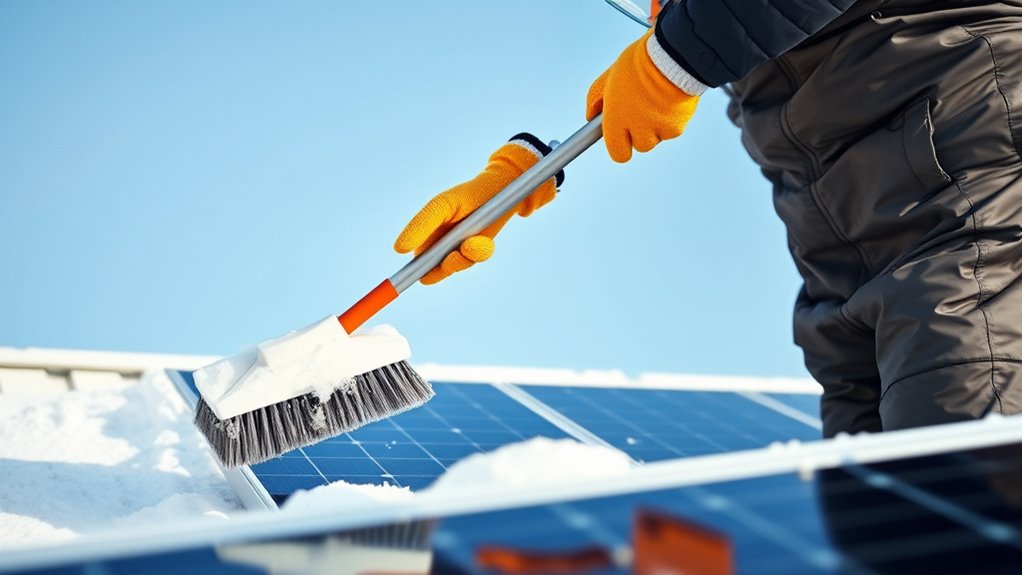
Once you’ve confirmed that snow is blocking your solar panels, the next step is to equip yourself with the right safety gear. Start with a sturdy pair of non-slip boots to prevent slipping on icy surfaces.
Wear insulated gloves to protect your hands from the cold and rough edges while clearing snow. Don’t forget safety goggles—they shield your eyes from flying snow and ice particles.
If you plan to access your roof, use a safety harness to prevent falls and make sure you have a stable ladder. Dress in layered, waterproof clothing to stay warm and dry throughout the process.
Preparing with these essential items will help you clear snow efficiently without risking injury or damage to your panels. Safety always comes first.
Choose the Right Tools to Clear Snow Safely
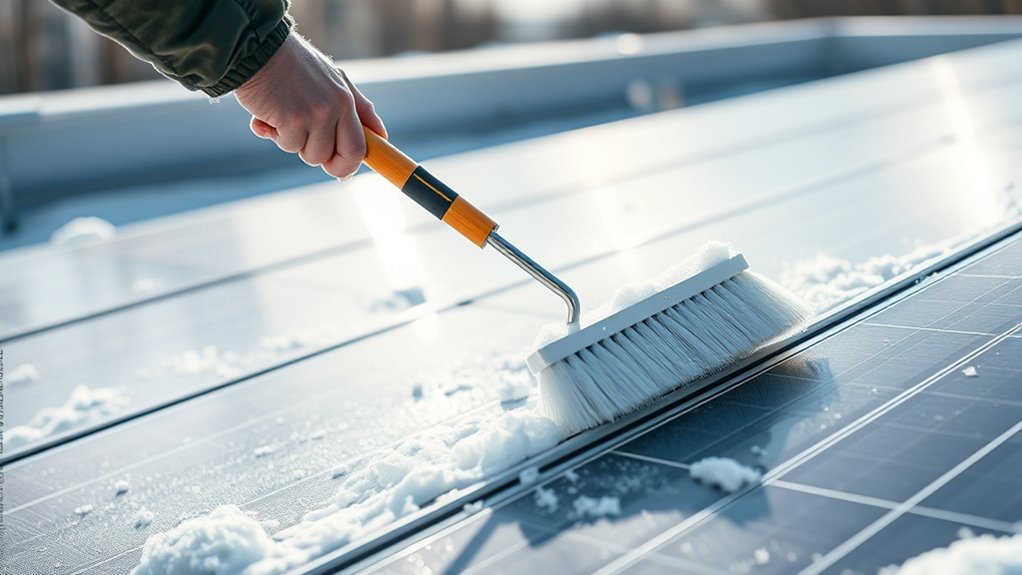
You’ll want to pick tools that protect your solar panels while clearing snow. Soft-bristled snow brushes work best because they gently remove snow without scratching the surface.
Avoid abrasive tools that can damage your panels and reduce their efficiency. It’s better to be careful here, so your panels keep working great!
Soft-Bristled Snow Brushes
How can you clear snow from your solar panels without causing damage? Using a soft-bristled snow brush is one of the safest methods. These brushes are designed to gently remove snow without scratching or harming the surface of your panels.
When choosing one, look for these features: soft, flexible bristles that won’t scratch glass or coatings, a long handle to reach panels easily without climbing, and lightweight construction for easy maneuvering.
Using a soft-bristled brush helps you clear snow effectively while protecting your investment. Just gently sweep snow off in a downward motion, avoiding heavy pressure.
This tool lets you maintain your panels’ efficiency and longevity during winter. It keeps them clear and ready to capture sunlight without risk of damage.
Avoid Abrasive Tools
Using a soft-bristled brush helps protect your solar panels, but choosing the wrong tools can cause serious damage. Avoid abrasive items like metal shovels, scrapers, or stiff-bristled brooms—they can scratch the glass surface or loosen the panel’s seals.
These scratches reduce efficiency and might lead to costly repairs. Instead, stick to plastic snow rakes or brushes designed specifically for solar panels. These tools gently clear snow without harming the panel’s delicate surface.
Also, never use sharp objects to chip away ice; let it melt naturally or use warm water in moderation. By carefully selecting your tools, you’ll maintain your panels’ performance and extend their lifespan.
How to Remove Snow Without Scratching Your Solar Panels
Although it might be tempting to clear snow quickly, taking care not to scratch your solar panels is essential. Scratches can reduce efficiency and damage the surface, so you should use gentle methods for snow removal.
Here’s how you can protect your panels: use a soft-bristled broom or a foam squeegee to gently sweep snow off without pressing too hard. Clear snow in light layers rather than heavy chunks to avoid applying excessive pressure.
Also, avoid metal tools or anything with hard edges that could gouge the glass. It’s better to be patient and careful here!
When to Use Warm Water or De-Icing Solutions on Solar Panels
You’ll want to use warm water carefully to avoid thermal shock that could damage your panels.
When ice buildup is stubborn, opt for safe de-icing solutions designed specifically for solar surfaces.
Knowing when and how to apply these methods keeps your panels protected and efficient.
Warm Water Usage Guidelines
When should you reach for warm water or de-icing solutions to clear snow from your solar panels? Use warm water only when the snow layer is thin and icy buildup makes manual removal difficult. Avoid hot water to prevent thermal shock, which can crack the glass.
Instead, use lukewarm water to gently melt ice without damaging the panels. Remember these guidelines:
- Apply lukewarm water carefully, avoiding excessive amounts that could seep into panel edges.
- Use warm water during mild temperatures to prevent rapid refreezing that creates more ice.
- Avoid using water if temperatures are well below freezing; it’s less effective and can cause damage.
Following these tips helps you safely clear snow and keep your solar panels functioning efficiently during winter. It’s all about being gentle and cautious to protect your investment.
Safe De-Icing Options
How can you safely remove stubborn ice from your solar panels without causing damage? Start by using warm water carefully—never hot water, as sudden temperature changes can crack the glass. Pour it gently to melt thin ice layers.
If the ice is thick or persistent, consider eco-friendly de-icing solutions made specifically for solar panels. Avoid harsh chemicals like rock salt or abrasive de-icers since they can corrode surfaces or reduce efficiency.
Apply these solutions sparingly and rinse off any residue promptly to prevent buildup. And hey, always check the manufacturer’s guidelines before using any product.
How to Prevent Snow Build-Up on Your Solar Panels
Why let snow accumulate on your solar panels when simple measures can keep them clear? Preventing snow build-up not only maintains your system’s efficiency but also reduces the need for risky cleanings.
You can take proactive steps to minimize snow accumulation and keep your panels functioning ideal throughout winter.
Here are practical ways to prevent snow build-up on your solar panels:
- Install panels at a steeper angle: Snow slides off easier when panels are tilted more sharply.
- Use anti-snow coatings or hydrophobic sprays: These make the surface slick, discouraging snow from sticking.
- Trim nearby trees and branches: This reduces shaded areas where snow can linger longer on your panels.
Implementing these tips helps keep your solar panels clear and your energy generation steady all season long.
Can’t Clear Snow Yourself? Here’s What to Do?
If you can’t safely clear snow from your solar panels yourself, don’t risk injury or damage by trying. Instead, consider professional help or alternative solutions to keep your panels functioning efficiently.
| Option | Description |
|---|---|
| Hire a Professional | Experts use specialized tools safely |
| Use a Heated Panel Cover | Prevents snow accumulation |
| Wait for Sunlight | Natural melting with warmer weather |
Hiring a professional ensures your panels stay intact while clearing snow effectively. Heated panel covers reduce buildup without manual effort.
If neither option suits you, waiting for sunlight to melt the snow is a safe choice. Always prioritize your safety and the condition of your solar system above all.
Frequently Asked Questions
How Does Snow Affect Solar Panel Efficiency During Winter?
Snow blocks sunlight, so your solar panels won’t generate much electricity during winter.
You’ll notice a drop in efficiency since the snow acts like a barrier, preventing your panels from absorbing the sun’s energy properly.
Basically, the snow gets in the way and keeps the panels from doing their job as well as they usually do.
Can Snow Damage the Wiring or Electrical Components of Solar Panels?
Snow isn’t usually a sneaky thief stealing your solar panel’s wiring or electronics. However, if ice forms or moisture seeps in, it can cause damage.
You’ll want to check seals and clear heavy snow carefully to protect them. It’s better to be safe than sorry when it comes to your solar setup.
What Is the Best Season to Install Solar Panels in Snowy Regions?
You should install solar panels in snowy regions during late spring or early summer. This timing guarantees clear weather, easier installation, and ideal exposure before winter.
That way, your panels can perform efficiently despite the snow later on. It’s all about getting them set up when conditions are just right!
Do Solar Panels Generate Heat to Melt Snow Naturally?
You might think solar panels have a cozy warmth, but they don’t generate enough heat to melt snow naturally.
Are There Solar Panel Brands Better Suited for Snowy Climates?
Yes, you’ll find brands like SunPower and LG that perform better in snowy climates due to their efficient panels and durable designs.
They help you get more energy even when snow partially covers your panels.
These brands are designed to handle tough weather, so you don’t have to worry as much about snow affecting your solar power output.
Conclusion
If you don’t clear snow from your solar panels, you might as well say goodbye to your energy savings and hello to a frozen power outage!
But don’t worry—you’ve got the know-how now to tackle that snowy blanket safely and effectively. With the right gear and tools, you’ll have your panels shining and soaking up the sun again in no time.
So don’t let snow win—take action and keep your energy flowing! Removing snow from solar panels not only restores their efficiency but also ensures you continue to benefit from clean, renewable energy throughout the winter months. By following simple, safe steps, you protect your investment and maintain consistent power production, even in snowy conditions. Keep your solar panels snow-free and enjoy uninterrupted energy savings all season long!