

7 Tips to Generate Leads for Solar Sales Fast
To generate solar sales leads fast, focus on targeting homeowners with high energy bills or those who value eco-friendly solutions. These prospects are more likely to be interested in cutting their costs and reducing their carbon footprint.
Boost your chances by optimizing your Google My Business profile and running location-based SEO to increase local visibility.
Social media ads aimed at green-minded buyers can also bring in quick leads. Hosting webinars is a great way to educate potential customers and build trust at the same time.
Offer limited-time deals to create urgency, which encourages prospects to act fast. Partnering with local home service providers can help you get valuable referrals.
And don’t forget to follow up quickly using CRM tools to keep your leads engaged and moving through the sales funnel.
Keep exploring these strategies to sharpen your lead game even further. The more you refine your approach, the faster you’ll see results.
Key Takeaways
– Target homeowners with high energy bills and eco-conscious values using local SEO and customer profiling for qualified solar leads.
It’s all about finding the right people who really need solar solutions.
– Host educational webinars and use social media ads focused on cost savings and environmental benefits to engage and inform prospects.
These tools help you connect and educate at the same time, making prospects more interested.
– Create urgency with limited-time offers and partner with local home service providers for expanded lead referrals.
Limited-time deals get people moving, and teaming up with local pros opens up more doors.
– Use CRM systems to automate prompt follow-ups, track interactions, and maintain organized communication with potential customers.
Keeping everything organized means no lead slips through the cracks.
– Personalize outreach based on customer behavior and data insights to increase conversion rates and build lasting trust.
When you tailor your approach, people feel understood and are more likely to say yes.
Identify Your Ideal Solar Lead Profiles

To generate quality solar leads fast, start by pinpointing exactly who your ideal customers are. Focus on homeowners or businesses with high energy bills, environmentally conscious values, or properties with ample roof space and sunlight.
Consider demographics like income level, location, and property ownership status since these impact purchasing power and eligibility for solar incentives. Create detailed profiles that highlight their pain points and motivations, such as lowering electricity costs or reducing carbon footprints.
Focus on income, location, and ownership to identify who benefits most from solar incentives and savings.
Use this clarity to tailor your outreach and messaging effectively. When you understand who benefits most from solar solutions, you avoid wasting time on unqualified prospects.
Instead, you attract leads who’re ready and able to invest, speeding up your sales process and boosting conversion rates tremendously. It’s all about working smarter, not harder!
Leverage Local SEO to Attract Nearby Solar Leads

When you enhance your online presence for local searches, you make it easier for nearby customers to find your solar services quickly. Start by claiming and updating your Google My Business profile with accurate contact details and service areas.
Next, focus on local keywords in your website content, like “solar panel installation in [Your City].” Finally, gather genuine customer reviews to boost your local reputation and search rankings.
Here’s a simple 3-step approach to leverage local SEO effectively:
- Optimize your website and listings with location-specific keywords.
- Make sure your business information is consistent across all online platforms.
- Encourage satisfied customers to leave positive reviews on Google and local directories.
This targeted local SEO strategy will drive more qualified solar leads right to your doorstep. Easy, right? Just follow these steps and watch your local presence grow!
Use Social Media Ads to Target Eco-Conscious Buyers
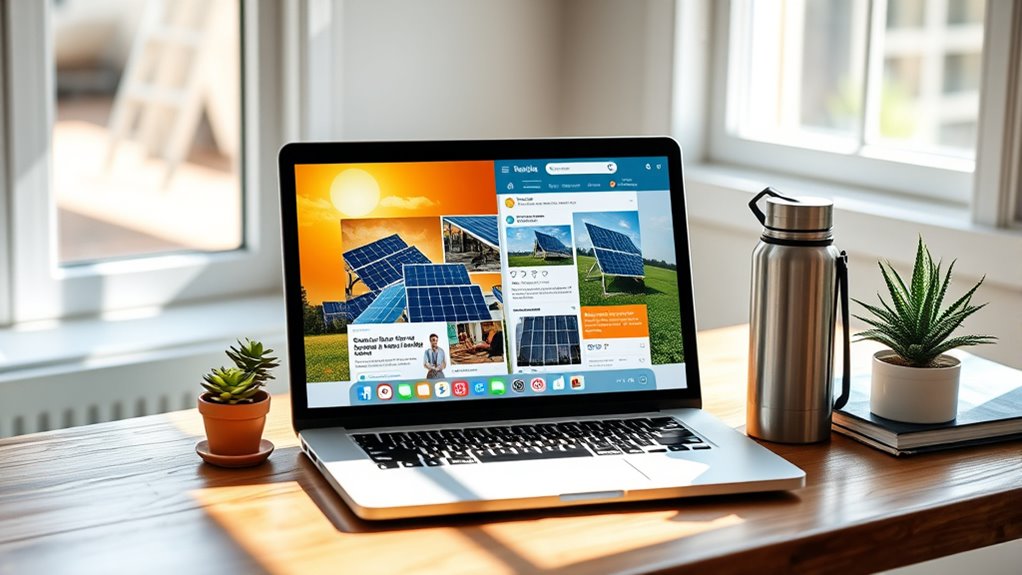
Since social media platforms offer powerful targeting tools, you can reach eco-conscious buyers who are genuinely interested in solar energy. Start by creating ads that highlight the environmental benefits of solar power and emphasize cost savings.
Use precise targeting options like interests in sustainability, green tech, and renewable energy to narrow your audience. Platforms like Facebook and Instagram let you filter by location, age, and behavior, so you connect with people ready to invest in solar solutions.
Use compelling visuals and clear calls-to-action to boost engagement. Monitor your campaigns regularly to optimize ad performance and adjust your budget for the best return.
Host Educational Webinars to Build Trust Fast
You can build trust quickly by hosting educational webinars on relevant solar topics your audience cares about.
Make sure to engage attendees with a live Q&A session to answer their burning questions.
Don’t forget to promote your webinars widely to attract a larger, interested crowd.
It’s a great way to connect and show you know your stuff!
Choose Relevant Solar Topics
Choosing the right solar topics can make all the difference in capturing your audience’s attention quickly. To engage potential leads effectively, focus on what truly matters to them.
Here are three key topic ideas to contemplate:
- Cost Savings and Incentives – Explain how solar panels reduce energy bills and highlight available rebates or tax credits. People love to hear about saving money, right? So make sure you break down the benefits clearly.
- Installation Process – Demystify the steps from consultation to activation, easing any concerns about complexity or disruption. Let them know it’s simpler than they might think.
- Environmental Impact – Emphasize how switching to solar helps reduce carbon footprints and promotes sustainability. It’s about making a difference and feeling good about it.
Engage With Live Q&A
When you engage with live Q&A sessions during educational webinars, you create a direct line of communication that builds trust quickly. Answering questions in real time shows your expertise and willingness to help, making potential customers feel valued and informed.
It also clears up doubts instantly, reducing hesitation about switching to solar energy. To maximize impact, prepare to address common concerns but stay flexible for unique queries.
Encourage attendees to participate actively by inviting their questions throughout the webinar. This interactive format not only boosts engagement but also demonstrates your transparency and commitment to customer education.
Promote Webinars Widely
Engaging with live Q&A sessions creates a valuable connection, but reaching a wider audience requires promoting your webinars effectively. To maximize attendance and generate leads fast, you need to get the word out strategically.
Start by sharing your webinar on all social media platforms, targeting solar-interested groups and communities. Sending personalized email invitations to your existing contacts encourages them to share with friends. You can also partner with local businesses or influencers to co-promote and tap into their audiences.
Make sure your webinar landing page is clear and easy to register on. Use compelling headlines that highlight the benefits of attending, like saving money and reducing carbon footprints.
Use Limited-Time Deals to Spark Quick Solar Leads
Although solar investments often require careful consideration, limited-time deals can create a sense of urgency that motivates potential customers to act quickly. You can leverage discounts, rebates, or exclusive add-ons for a short period to grab attention and boost lead generation.
Make sure to clearly communicate the deadline and emphasize the benefits of acting now, like saving money or locking in current rates before they rise. Use email campaigns, social media posts, and your website to spread the word effectively.
Build Partnerships With Local Home Services for Referrals
You can boost your solar leads by teaming up with local home service providers like electricians and roofers. Look for businesses that complement your services and propose mutual referral agreements.
This way, you both benefit from a steady flow of qualified leads. It’s a win-win that helps grow your network and your business.
Identify Complementary Service Providers
Partnering with just a few local home service providers can quickly expand your solar sales leads. To do this effectively, you need to identify services that naturally align with your solar business.
Focus on providers whose work complements solar installations, making referrals a win-win.
Here are three key types to evaluate:
- Roofing Contractors: They assess roof condition and can recommend solar alongside repairs or replacements.
- Electricians: Their electrical expertise ties directly into solar system setup and maintenance.
- Home Energy Auditors: They analyze energy use, creating opportunities to suggest solar solutions.
Establish Mutual Referral Agreements
Once you’ve pinpointed complementary home service providers, the next step is to formalize your collaboration through mutual referral agreements. These agreements create a clear framework for exchanging leads, ensuring both parties benefit fairly.
Reach out to local plumbers, electricians, and HVAC specialists—professionals whose clients might need solar solutions. Chat about how you’ll refer clients to each other and set expectations regarding lead quality and follow-up timelines.
Put everything in writing to avoid misunderstandings and build trust. Make it a habit to regularly review the agreement’s effectiveness and tweak it as needed to maximize results.
Follow Up Quickly to Close Solar Leads Using CRM
Although generating leads is crucial, following up quickly can make all the difference in closing solar sales. Using a CRM helps you stay organized and guarantees no lead slips through the cracks.
When a potential customer shows interest, act fast to maintain their enthusiasm.
Here’s how you can leverage your CRM effectively:
- Automate immediate responses to confirm receipt of inquiries and schedule follow-ups.
- Set reminders to contact leads within 24 hours, keeping your outreach timely.
- Track interactions to personalize your communication and address specific customer needs.
Frequently Asked Questions
What Financing Options Are Best for Solar Customers?
You’ll find solar loans, leases, and power purchase agreements best for customers. Loans offer ownership, leases lower upfront costs, and PPAs let them pay only for energy used.
Choose based on their financial comfort and goals. It really depends on what works best for their situation.
How Do Solar Panels Affect Home Insurance?
Solar panels usually increase your home’s value, so you’ll need to update your insurance policy.
You should notify your insurer to cover the panels against damage or theft. This also helps guarantee your coverage limits reflect the added value.
What Maintenance Do Solar Systems Require After Installation?
You’ll need to clean panels regularly, inspect for damage or shading, check inverter performance, and monitor energy output.
Scheduling annual professional inspections helps catch issues early. This way, your solar system runs efficiently and lasts longer.
Are There Government Incentives for Solar Panel Installation?
Yes, you’ll find various government incentives like tax credits, rebates, and grants to help reduce solar panel installation costs.
Be sure to check out federal, state, and local programs. They can really help you maximize your savings.
Making solar more affordable is easier than you might think!
How Long Does It Take to Install a Solar System?
You’ll be surprised—it usually takes just one to three days to install a solar system.
But before that, there’s planning, permits, and inspections, which can stretch the timeline.
Still, the wait’s worth it!
Conclusion
Think of generating solar leads like planting a garden. You start by knowing the right seeds—your ideal leads—and prepare the soil with local SEO and social media ads.
With webinars and partnerships, you water and nurture those seeds. Limited-time deals are the sunshine that sparks growth, while quick follow-ups are the careful tending that guarantees your garden thrives.
Stay consistent, and soon you’ll harvest a thriving crop of solar sales. By focusing on local SEO, running targeted social media campaigns, and offering timely promotions, you create the perfect environment for leads to grow fast. Remember, quick follow-ups and strong partnerships keep your pipeline healthy and active. Keep nurturing your efforts daily, and you’ll see your solar sales leads multiply rapidly, turning your business into a well-oiled lead-generating machine.





One Comment