7 Must-Know Facts About 100W Solar Panel Power
A 100W solar panel typically produces about 500 watt-hours daily with 5 peak sun hours. However, the actual output can vary depending on sunlight intensity, panel angle, and shading. These factors play a big role in how much power you can get.
You’ll usually find these panels around 40 by 20 inches in size, and they weigh between 10 to 15 pounds. That makes them perfect for small spaces like RVs or tiny homes where space is limited.
The efficiency of a 100W solar panel ranges from 15-20%. This depends on the type of panel you have and the conditions it’s exposed to.
To get the most from your panel, connect it properly using a charge controller.
Also, regular maintenance is key. Cleaning the panel and checking all the connections can help keep it running smoothly.
Keep exploring to uncover how to optimize and protect your panel long-term.
Key Takeaways
- A 100W solar panel produces about 500 Wh daily with 5 peak sun hours under ideal conditions. That means on a sunny day, you can expect a decent amount of energy from it.
- Efficiency ranges from 15% to 20%, influenced by solar cell type and environmental factors. So, the exact output can vary depending on where and how you use it.
- Panels typically measure around 40 x 20 inches and weigh 10 to 15 pounds for versatile installation. This size and weight make it easy to set up in various places.
- Regular cleaning and inspection prevent dirt buildup and physical damage, maintaining optimal performance. Keeping your panel in good shape really helps it work better.
- Proper wiring through a charge controller and secure mounting maximize energy output and system longevity. It’s worth taking the time to do this right for the best results.
How Much Power Does a 100W Solar Panel Produce?
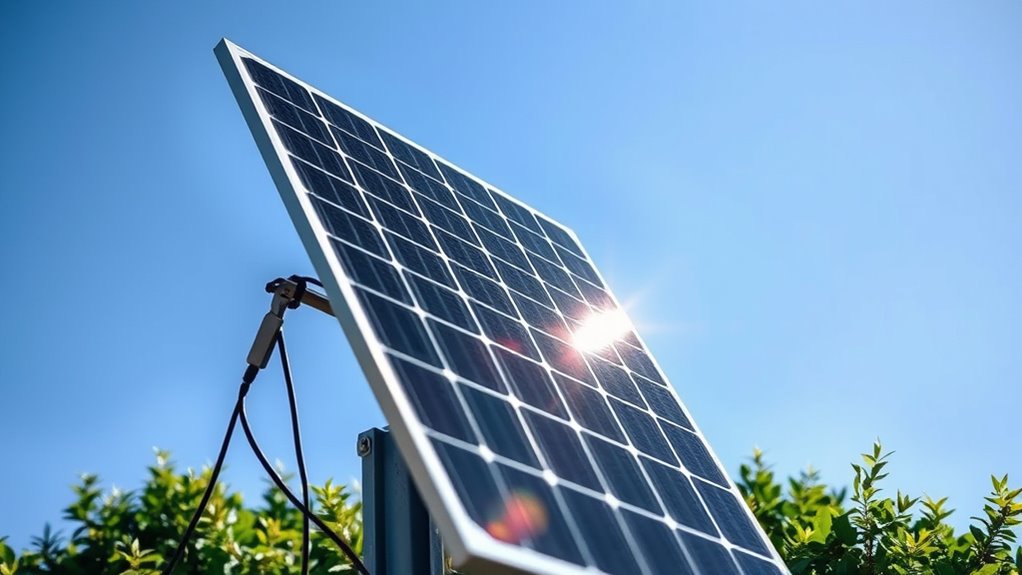
Although a 100W solar panel’s name suggests it produces 100 watts of power, the actual output depends on factors like sunlight intensity, angle, and duration. You won’t always get a full 100 watts; for example, on a cloudy day, output drops considerably.
When the sun shines brightly and the panel is positioned correctly, you can expect close to its rated capacity. Over several hours, this translates into more total energy, measured in watt-hours.
If the panel gets 5 peak sun hours, it can produce about 500 watt-hours daily. Keep in mind, shading or dirt on the panel reduces efficiency.
What Are the Size and Weight of 100W Solar Panels?
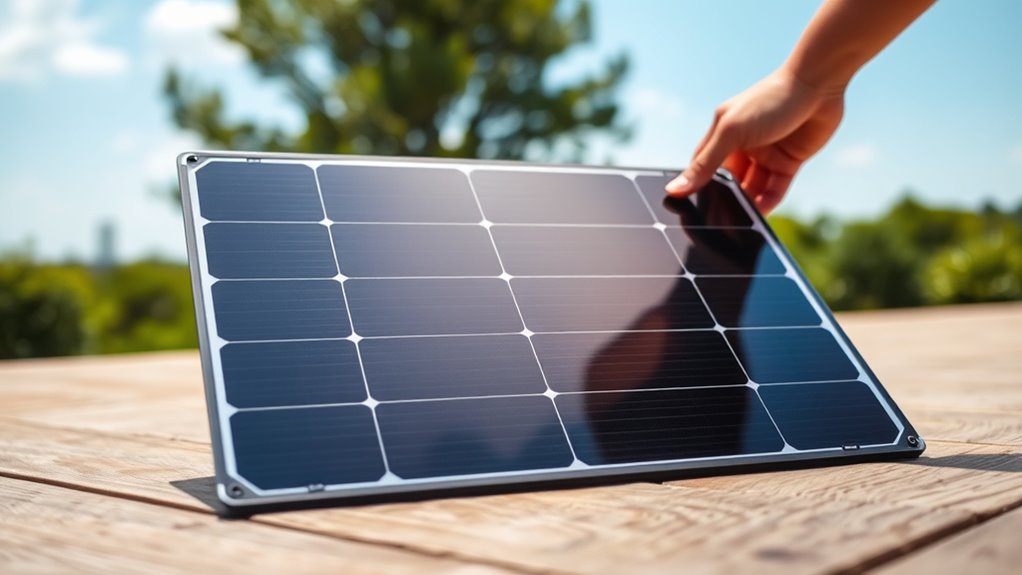
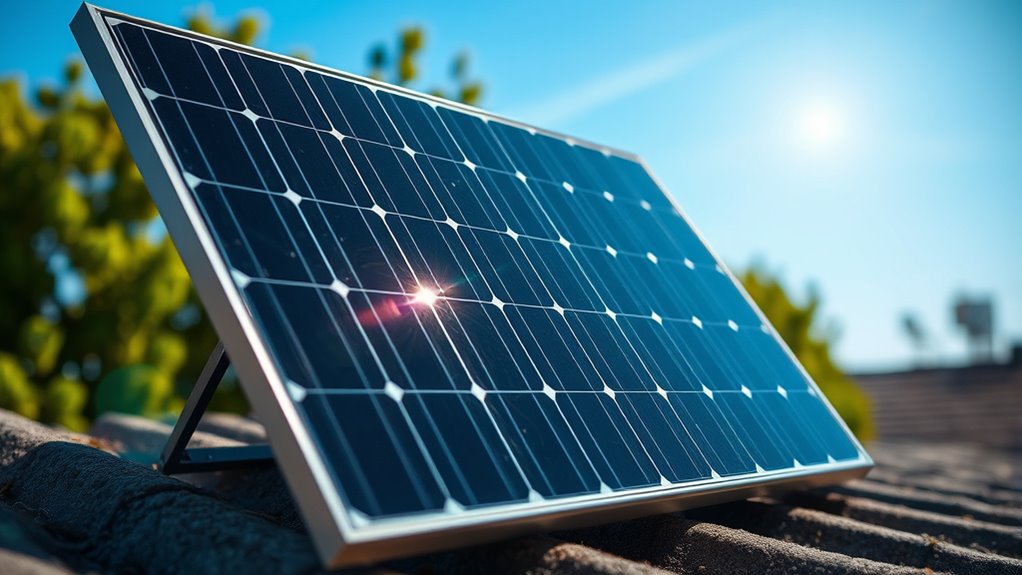
You’ll find that most 100W solar panels measure around 40 by 20 inches, making them compact enough for various setups. Their weight usually falls between 10 to 15 pounds, so they’re easy to handle and install.
Understanding these size and weight factors helps you plan for placement and transport. It’s pretty handy to know before you start setting things up!
Typical Dimensions Overview
A typical 100W solar panel measures around 40 inches by 20 inches and usually weighs between 15 to 20 pounds. This size makes it compact enough to fit on small rooftops, RVs, or portable setups without taking up too much space.
The panel’s slim profile, often less than 2 inches thick, helps keep installations sleek and manageable. While dimensions can vary slightly depending on the manufacturer and panel type, most 100W panels stay within this general range.
Knowing these dimensions helps you plan your system layout more effectively, ensuring you have enough space for mounting and wiring. This size balance also aids in ease of handling and transportation, making 100W panels a popular choice for versatile solar power solutions.
Weight Range Insights
When choosing a 100W solar panel, understanding its weight is essential for installation and portability. Most 100W panels weigh between 5 to 9 kilograms (11 to 20 pounds), making them manageable for solo or duo handling.
The weight depends on the panel’s materials, frame type, and protective glass thickness. Knowing this helps you plan mounting solutions and transport options effectively.
Here’s what to expect:
- Lightweight flexible panels: around 2.5 to 4 kg (5.5 to 9 lbs)
- Standard framed panels: typically 6 to 8 kg (13 to 18 lbs)
- Heavy-duty panels with reinforced frames: up to 9 kg (20 lbs)
- Additional mounting hardware adds to total weight
Keep these weight insights in mind to ascertain your setup matches your mobility and durability needs. It’ll make your life easier when moving or installing your solar panel.
How Efficient Are 100W Solar Panels Compared to Others?
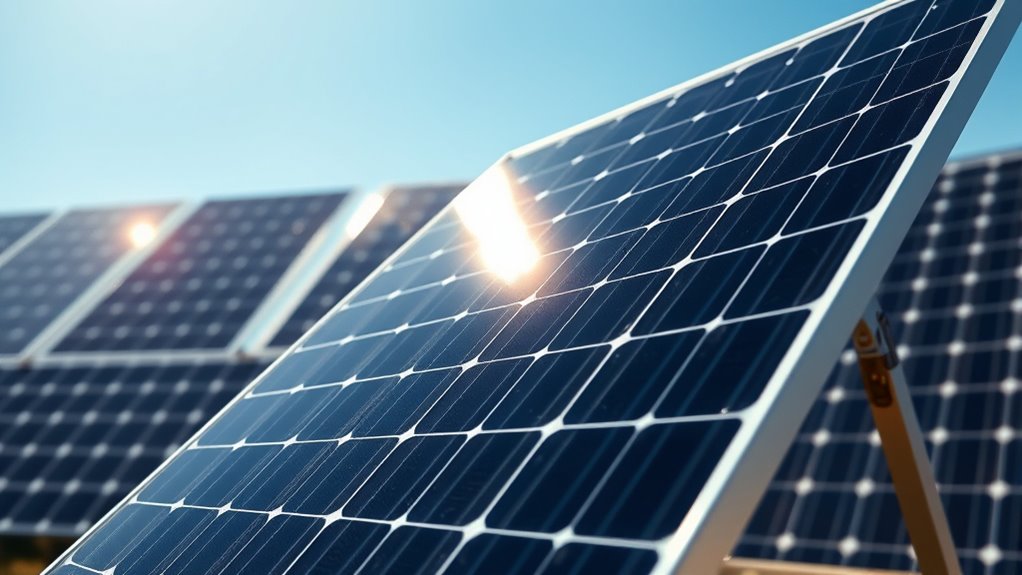
You’ll want to understand efficiency ratings to see how 100W solar panels stack up against others. These ratings show how well a panel converts sunlight into electricity, which can vary by size and technology.
Comparing performance versus panel size helps you choose the best option for your needs. It’s all about finding the balance that works best for your setup.
Efficiency Ratings Explained
Although 100W solar panels don’t always offer the highest efficiency ratings on the market, they strike a balance between power output and affordability that suits many users. You’ll find their efficiency typically ranges from 15% to 20%, which is decent but not top-tier.
Here’s what you should know about their efficiency ratings:
- Efficiency depends on the type of solar cells used, like monocrystalline or polycrystalline.
- Environmental factors such as sunlight intensity and temperature impact real-world performance.
- Higher efficiency panels usually come at a higher price point.
- Efficiency rating helps estimate how much sunlight the panel converts into usable electricity.
Understanding these points helps you set realistic expectations and choose a panel that fits your energy needs without overspending. It’s all about finding the right fit for you!
Performance Versus Panel Size
Since 100W solar panels come in various sizes, their performance often depends on how efficiently they convert sunlight relative to their physical dimensions. You’ll find that a smaller panel with high efficiency can outperform a larger, less efficient one even if both deliver 100W.
This efficiency impacts how much space you’ll need for installation, especially if space is limited.
Here’s a quick comparison of 100W panels and others:
| Panel Wattage | Approximate Size (sq. ft.) |
|---|---|
| 50W | 1.5 |
| 100W | 3.5 |
| 150W | 5.0 |
| 200W | 7.0 |
| 300W | 10.0 |
Choosing a panel with higher efficiency means you get more power per square foot. So, you can really optimize your setup that way.
Where Are 100W Solar Panels Most Commonly Used?
When you need reliable, portable power, 100W solar panels often come into play. They’re perfect for situations where you want to harness solar energy without bulky setups.
You’ll find these panels commonly used in various everyday and outdoor scenarios. Whether you’re camping, boating, or prepping for emergencies, their versatility shines.
Here are some common uses for 100W solar panels:
- Charging batteries for RVs and campers
- Powering small off-grid cabins or sheds
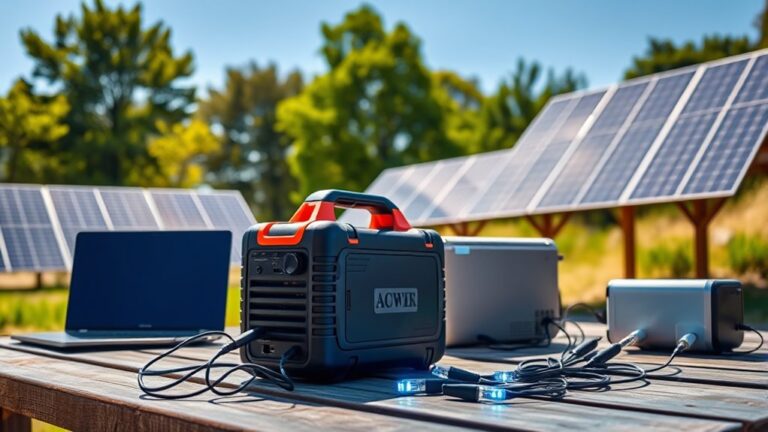
- Running portable electronics during outdoor adventures
- Providing backup power for emergency kits
With their manageable size and output, these panels fit right into your active lifestyle. They give you peace of mind and energy independence wherever you go.
How Do You Connect and Charge Batteries With a 100W Solar Panel?
To connect and charge batteries with a 100W solar panel, you’ll need the right components and a clear setup process. Start by connecting your solar panel to a charge controller to regulate voltage and prevent battery overcharging.
Begin by linking your 100W solar panel to a charge controller for safe and efficient battery charging.
Then, link the charge controller to the battery terminals—positive to positive, negative to negative. Use appropriate gauge wiring to handle the current safely.
Make certain the battery type (lead-acid, lithium, etc.) matches the charge controller’s settings for ideal charging. Once connected, place your panel in direct sunlight to start generating power.
Monitor the system occasionally to ensure proper charging and avoid overheating. With this setup, your 100W solar panel will efficiently charge your batteries for reliable off-grid power.
What Weather Conditions Affect 100W Solar Panel Performance?
Although 100W solar panels perform best under direct sunlight, various weather conditions can considerably impact their efficiency. You’ll notice performance dips when the weather isn’t ideal, affecting how much power your panel generates.
Here are key weather factors to watch:
- Cloudy skies: Reduce sunlight intensity, lowering energy production.
- Rain: Though panels still generate power, output drops due to less sunlight.
- Snow: Covers panels, blocking sunlight completely until cleared.
- High temperatures: Excessive heat can decrease panel efficiency despite bright sun.
Knowing these conditions helps you anticipate your panel’s power output and plan accordingly. That way, you get the most from your 100W solar panel no matter what the weather throws at you.
How Do You Maintain a 100W Solar Panel for Long-Term Use?
Understanding how weather impacts your 100W solar panel’s performance is only part of the equation. To maintain it for long-term use, you need to regularly clean the panel surface. Dust, dirt, and bird droppings can block sunlight, reducing efficiency.
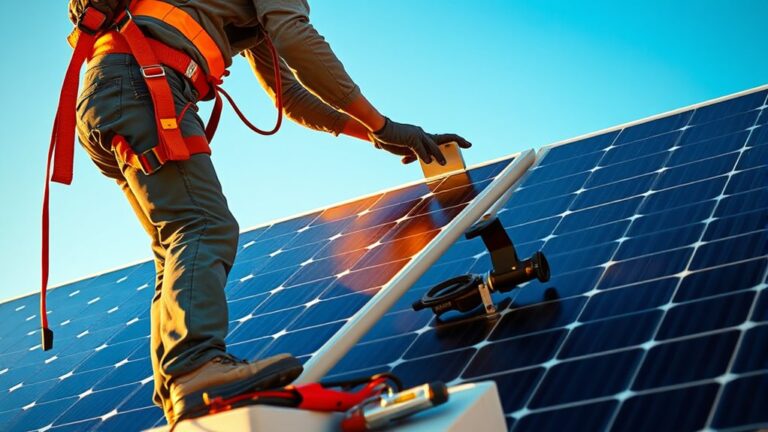
Use a soft cloth or sponge with mild soapy water, avoiding abrasive materials. Check for any physical damage like cracks or loose connections and address them promptly. Make sure the mounting system stays secure and adjust the panel angle seasonally for ideal sun exposure.
Also, inspect wiring and charge controllers for wear or corrosion. By staying proactive with these simple steps, you’ll keep your 100W solar panel operating efficiently and extend its lifespan considerably. Regular care prevents issues before they affect performance.
Frequently Asked Questions
What Materials Are Used to Manufacture 100W Solar Panels?
You’ll find 100W solar panels made from silicon cells, usually monocrystalline or polycrystalline, covered by glass.
They’re framed in aluminum, with a protective backsheet and encapsulated by EVA to keep everything durable and efficient under sunlight.
Basically, these materials work together to make sure the panel lasts long and performs well when soaking up the sun.
Can 100W Solar Panels Be Integrated With Smart Home Systems?
Yes, you can integrate 100W solar panels with smart home systems. They often connect via inverters and smart controllers, letting you monitor energy use and optimize power.
This makes your home more efficient and eco-friendly effortlessly. It’s a pretty straightforward way to keep an eye on your energy and save some bucks too.
What Is the Average Lifespan of a 100W Solar Panel?
You can expect your 100W solar panel to last around 25 to 30 years. With proper maintenance, it’ll keep generating power efficiently.
That said, its output might slowly decrease over time. But don’t worry, it usually happens very gradually.
Are 100W Solar Panels Recyclable or Eco-Friendly?
Think of 100W solar panels as green warriors; they’re eco-friendly by reducing carbon footprints.
While parts can be recycled, you’ll need specialized facilities to handle them properly. So, don’t toss them in regular recycling bins.
How Do 100W Solar Panels Perform in Indoor or Shaded Environments?
100W solar panels perform poorly indoors or in shaded areas since they rely on direct sunlight. You’ll get reduced power output, so it’s best to place them where they receive ample sunlight for peak performance.
Basically, these panels need good light to work well. If they’re stuck in the shade or inside, don’t expect much power from them. So, try to find a sunny spot for the best results!
Conclusion
A 100W solar panel can produce around 300 to 600 watt-hours daily, depending on sunlight. That’s enough to power small devices or charge batteries efficiently.
This compact yet powerful panel weighs about 10-15 pounds, making it super easy to install just about anywhere.
By understanding its size, efficiency, and maintenance needs, you can confidently use it for camping, tiny homes, or emergency backup.
With just a bit of care, your 100W panel will keep delivering clean energy for years. It’s a reliable and eco-friendly way to stay powered up wherever you go.
So, whether you’re hitting the outdoors or setting up a small off-grid system, a 100W solar panel is a smart choice. It combines portability with enough power to keep your devices running smoothly. Investing in one means embracing sustainable energy without hassle or heavy lifting.