10 Essential Steps to Design a Solar Power Plant
To design a solar power plant, start by choosing a sunny, accessible site with minimal shading and easy grid access. This step is crucial because the location directly impacts your system’s efficiency and energy output. Picking the right spot sets a strong foundation for your solar project.
Next, calculate your system size based on your current energy needs, and don’t forget to factor in future expansion. It’s smart to plan ahead so your solar power plant can grow with your demands without major overhauls.
Select efficient panels, inverters, and durable mounts to ensure long-lasting performance. Then, plan proper grounding, surge protection, and inverter placement to keep your system safe and reliable.
Estimate costs early on, explore financing options, and navigate permits to avoid delays. Setting up monitoring and maintenance routines is essential to keep everything running smoothly.
Lastly, consider adding energy storage solutions for increased reliability. Following these steps guarantees an optimized, high-performing solar power system, with plenty of details to explore ahead.
Key Takeaways
- Select an optimal site with abundant sunlight, minimal shading, and easy grid access for efficient solar power generation. This step is crucial to make the most out of your investment.
- Accurately size the system by assessing energy needs, peak demand, and future expansion plans. Knowing exactly what you need helps avoid overspending or underperformance.
- Choose high-quality panels, inverters, and mounting equipment while designing layout for maximum sun exposure and cooling. Quality components and smart design go hand in hand to boost efficiency.
- Plan grounding, surge protection, and grid interconnection in coordination with utility standards to ensure safety and reliability. Don’t overlook these details—they keep your system safe and compliant.
- Implement monitoring, maintenance schedules, and energy storage integration to optimize performance and system resilience. Regular check-ups and smart storage options make a big difference in the long run.
Choose the Best Site for Your Solar Power Plant
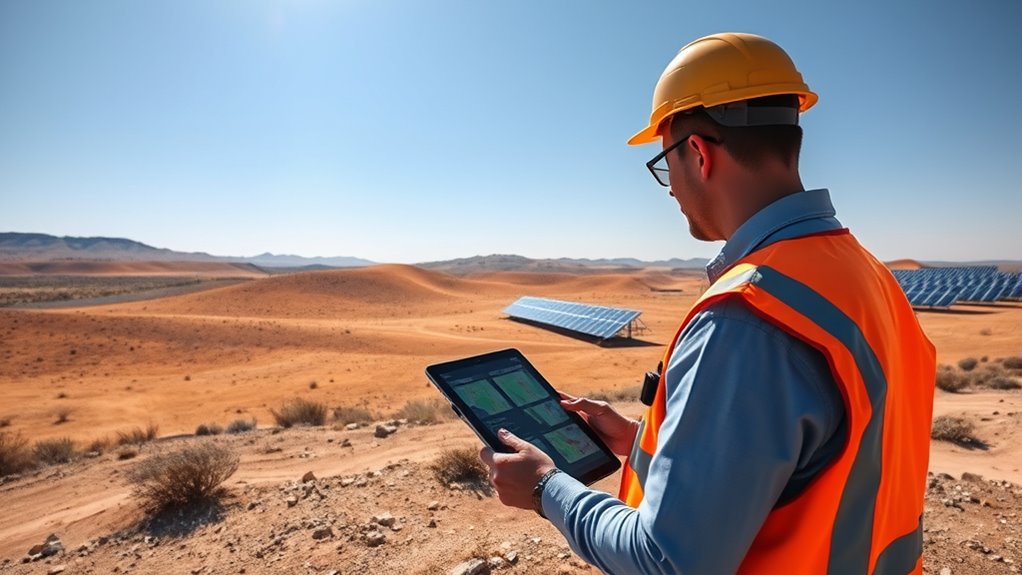
Where should you place your solar power plant to get the most energy? You’ll want a location with abundant sunlight throughout the year, ideally somewhere with minimal cloud cover and low pollution.
Open, flat land works best since it allows you to install panels without shading or uneven surfaces. Avoid areas near tall buildings, trees, or hills that could cast shadows and reduce efficiency.
Also, consider accessibility for installation and maintenance. Proximity to the grid makes connecting your system easier and more cost-effective.
Check local regulations and land use policies to make sure your project won’t face legal hurdles. By carefully selecting a site that maximizes sunlight exposure and simplifies logistics, you set a strong foundation for your solar power plant’s success.
Calculate the Right System Size for Your Energy Needs
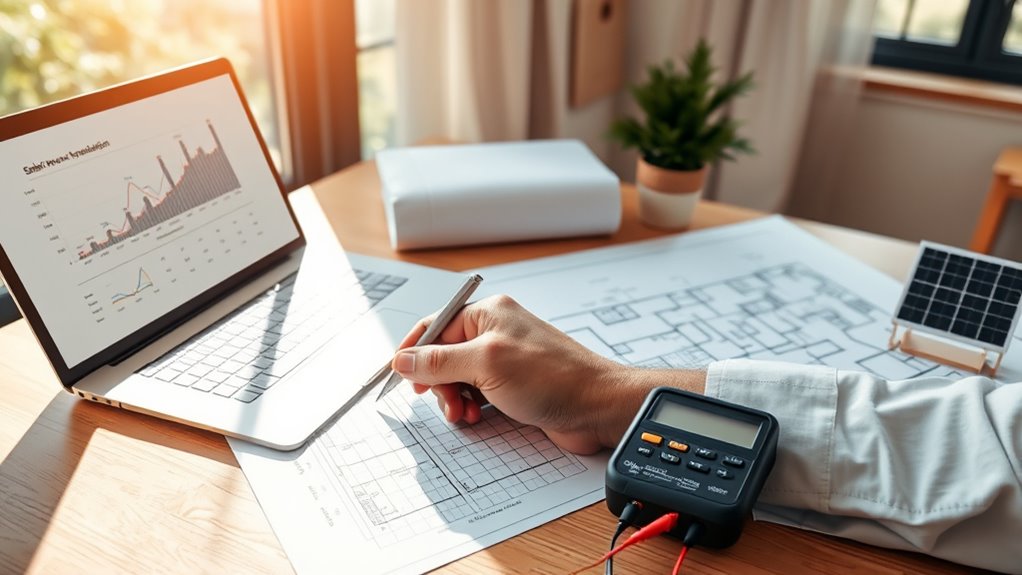
To size your solar power plant correctly, start by evaluating your daily energy consumption. Remember to factor in seasonal variations that can affect sunlight and energy needs.
It’s also important to determine your peak power demand. This way, you can guarantee your system can handle the highest load without any issues.
Assess Daily Energy Consumption
How much energy do you actually use each day? To design an efficient solar power plant, you need to assess your daily energy consumption accurately.
Start by reviewing your electricity bills for at least a month to understand your average daily usage in kilowatt-hours (kWh). Then, track the power ratings and usage hours of your major appliances to verify these numbers.
This step guarantees you don’t oversize or undersize your system, which can save you money and optimize performance.
Once you have a clear picture of your daily energy needs, you can select solar panels and battery storage that match your consumption.
Factor Seasonal Variations
Although you’ve assessed your daily energy consumption, you’ll need to factor in seasonal variations to size your solar power system correctly. Solar energy production fluctuates throughout the year due to changes in sunlight hours, weather, and temperature.
For example, winter days are shorter with less intense sunlight, which reduces your system’s output. To avoid energy shortages during these periods, calculate your system size based on the lowest solar irradiance months rather than the peak.
Review historical solar data for your location to understand these trends. By accounting for seasonal dips in energy generation, you’ll guarantee your system reliably meets your needs year-round.
This approach prevents undersizing and helps maintain consistent energy supply, keeping your solar investment efficient and dependable no matter the season.
Determine Peak Power Demand
Your solar power system’s size hinges on accurately determining your peak power demand. Start by listing all the electrical devices and appliances you use simultaneously during your highest energy consumption period. Check their power ratings, usually in watts, and add them up to find your total peak load.
Don’t forget to include future expansions or additional equipment you might add. You also need to take into account the duration these devices run at peak load to estimate your energy usage accurately. This calculation ensures your system can handle the maximum power without overloading.
Estimate Solar Power Plant Costs and Financing Options
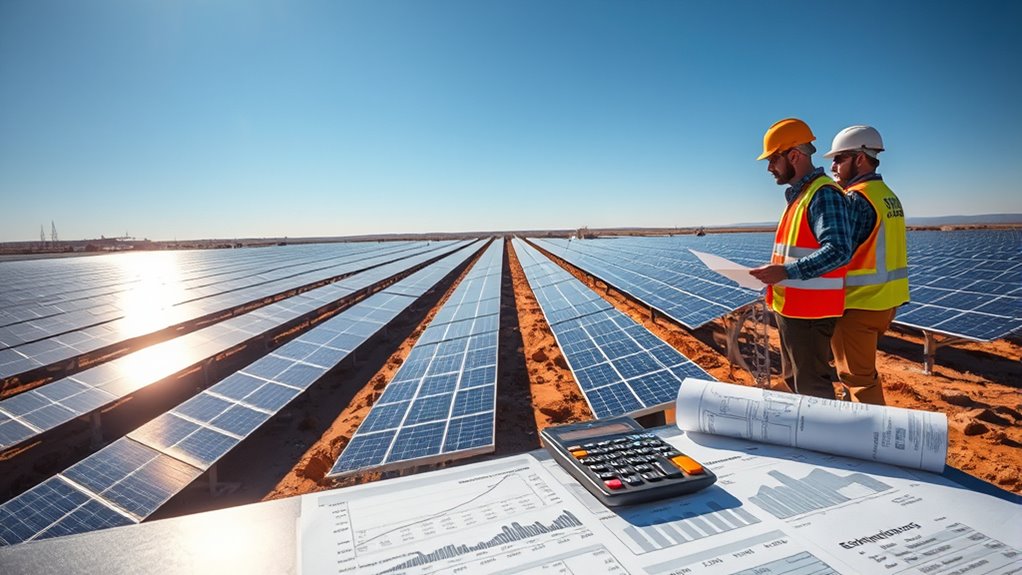
Estimating the costs of a solar power plant requires careful analysis of several key factors, including equipment, installation, and ongoing maintenance. You’ll want to break down expenses clearly to avoid surprises.
Consider these essential cost components:
- Solar panels and inverters: the core hardware.
- Site preparation and installation labor.
- Wiring, mounting systems, and electrical components.
- Maintenance and possible system upgrades over time.
On the financing side, explore options like loans, leases, power purchase agreements (PPAs), or government incentives. Each comes with pros and cons depending on your budget, credit, and long-term goals.
Navigate Permitting and Regulatory Requirements
After figuring out the costs and financing, you’ll need to focus on obtaining the necessary permits and meeting regulatory requirements to move your solar power plant project forward. Start by researching local, state, and federal regulations that apply to your site.
Begin by researching all local, state, and federal regulations to secure permits for your solar project.
Contact relevant agencies early to understand zoning laws, environmental assessments, and grid interconnection rules. Prepare detailed documentation showing compliance with safety and environmental standards.
Don’t overlook community engagement; addressing local concerns can speed approval. Keep track of application deadlines and fees to avoid delays.
Working with experienced consultants or legal advisors can help you navigate complex regulations efficiently. Staying proactive and organized guarantees your project meets all legal requirements, paving the way for smooth construction and operation of your solar power plant.
Select Efficient Solar Panels, Inverters, and Mounting Equipment
When choosing components for your solar power plant, selecting efficient solar panels, inverters, and mounting equipment plays a crucial role in maximizing energy output and ensuring long-term reliability. You want panels with high conversion efficiency to capture more sunlight and withstand harsh conditions.
Choose inverters that optimize power conversion and offer smart monitoring features. Mounting equipment must be durable and adaptable to your site’s terrain and weather.
Focus on these key factors:
- High-efficiency monocrystalline or polycrystalline solar panels
- Reliable string or central inverters with proven track records
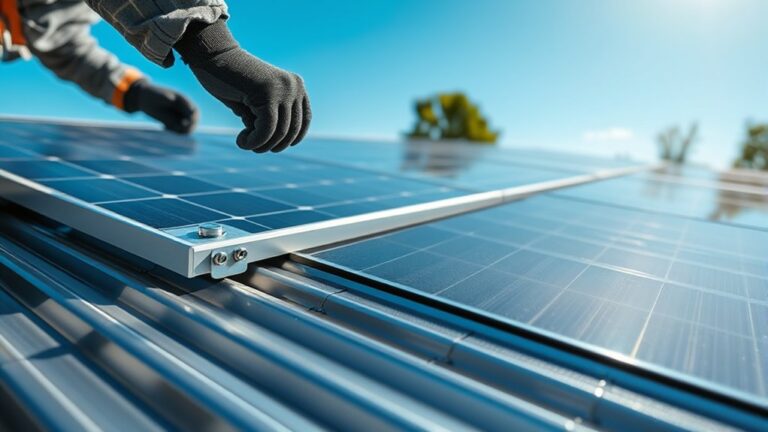
- Robust, corrosion-resistant mounting structures
- Compatibility with local environmental and mechanical conditions
Design the Layout to Maximize Sunlight Capture
Although selecting high-quality components is essential, you’ll maximize your solar power plant’s efficiency by carefully designing the layout to capture the most sunlight throughout the day. Start by orienting your solar panels to face true south in the Northern Hemisphere (or true north in the Southern Hemisphere) to optimize sun exposure.
Next, confirm you space the panels properly to prevent shading from adjacent rows, especially during early mornings and late afternoons. You should also consider the site’s topography and avoid placing panels on steep slopes that reduce sunlight incidence.
Additionally, factor in seasonal sun angles to adjust tilt angles for maximum annual energy production. By thoughtfully arranging the panels, you’ll capture sunlight more effectively, boosting your plant’s overall power output without adding extra equipment.
Plan Electrical Wiring Layout and Inverter Configuration
To guarantee your solar power plant runs efficiently, you need to carefully plan the electrical wiring layout and inverter configuration. Proper wiring minimizes energy loss and ensures safety. At the same time, selecting the right inverters converts DC power from panels into usable AC power effectively.
Start by mapping panel strings to optimize voltage and current. Then, choose inverter types—central, string, or microinverters—based on your plant size and design. It’s important to think through these steps before installation.
Don’t forget to plan for cable sizing to reduce voltage drop. Also, ensure safe routing to avoid damage and make maintenance easier.
Make sure there’s adequate grounding and surge protection in place. Finally, consider inverter placement carefully for cooling and accessibility. This way, your system stays reliable and easy to manage.
Plan Grid Connection and Interconnection
How will your solar power plant connect to the grid and guarantee seamless interconnection? First, identify the nearest grid connection point and assess its capacity.
Next, coordinate with the utility company to understand technical requirements and secure the necessary approvals. This step is crucial to avoid surprises down the line.
Design your interconnection system to handle voltage, frequency, and safety standards. This ensures smooth power flow without any disruptions.
Be sure to use protection devices and communication protocols to manage grid stability and fault conditions effectively. These measures keep everything running safely and reliably.
| Step | Description | Key Consideration |
|---|---|---|
| Site Assessment | Locate ideal grid connection point | Proximity and capacity |
| Utility Coordination | Obtain interconnection agreements | Compliance and timing |
| System Design | Integrate protection and control systems | Safety and stability |
Planning grid connection meticulously avoids costly delays and ensures reliable operation. So, taking your time here really pays off!
Set Up Monitoring and Maintenance Plans
Why should you prioritize setting up monitoring and maintenance plans for your solar power plant? Because consistent oversight guarantees your system runs efficiently, catches issues early, and maximizes energy output.
Without a solid plan, small problems can escalate, leading to costly repairs and downtime.
To set up effective monitoring and maintenance, focus on:
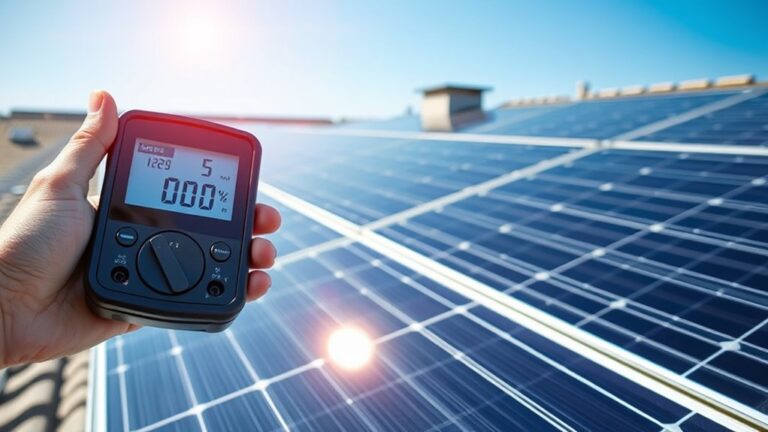
- Installing real-time monitoring systems to track performance and detect faults instantly
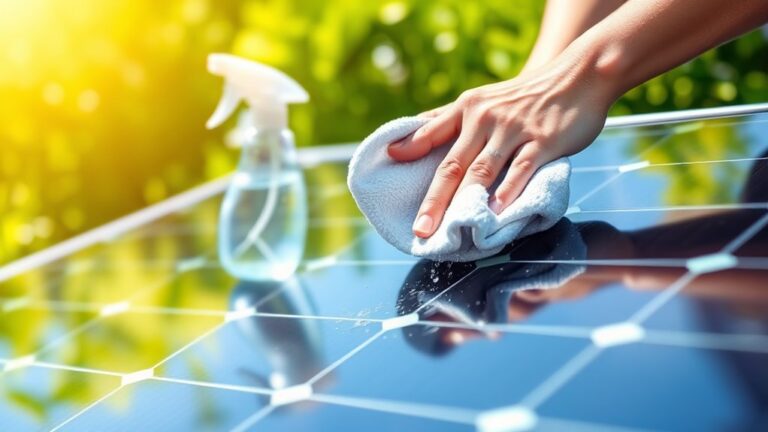
- Scheduling regular inspections to clean panels and check wiring integrity
- Training your team to respond quickly to alerts and perform preventive maintenance
- Keeping detailed logs of maintenance activities and system performance for ongoing analysis
Optimize Solar Plant Performance Using Energy Storage
Although solar panels generate energy during the day, you can maximize your plant’s efficiency by integrating energy storage systems that store excess power for use when sunlight is unavailable. By adding batteries or other storage technologies, you guarantee a steady energy supply, even during cloudy periods or at night.
This not only improves reliability but also helps balance supply and demand, preventing energy waste. When selecting storage options, consider capacity, lifespan, and cost to match your plant’s needs.
Properly managed energy storage allows you to shift energy usage, reduce peak demand charges, and increase overall system resilience. Implementing smart controls can optimize charging and discharging cycles, extending battery life and enhancing performance.
In short, energy storage is key to revealing your solar plant’s full potential.
Frequently Asked Questions
How Do Solar Panels Impact Local Wildlife and Ecosystems?
You’ll find solar panels can disrupt habitats and shade plants, affecting local wildlife.
But if you plan carefully, you can minimize harm by preserving natural areas and using wildlife-friendly designs to protect ecosystems.
What Are the Best Practices for Recycling Old Solar Panels?
Imagine old panels stacked like puzzle pieces; you’ll want to remove hazardous materials carefully. Then, separate valuable metals, glass, and silicon.
After that, send them to certified recyclers. Doing this keeps waste low and resources cycling efficiently. It’s a smart way to handle solar panels responsibly!
How Does Weather Variability Affect Long-Term Solar Power Output?
You’ll see that weather variability directly impacts your solar power output by causing fluctuations in sunlight levels. Cloud cover, temperature changes, and storms reduce efficiency.
Can Solar Power Plants Integrate With Other Renewable Energy Sources?
You can integrate solar power plants with other renewables like wind or hydro, like puzzle pieces fitting perfectly. This combination boosts reliability and balances energy supply, ensuring you get steady power even when sunlight or wind varies.
It’s kind of like having backup plans all working together. When one source dips, another picks up the slack, keeping everything running smoothly.
What Are the Cybersecurity Risks for Solar Power Plant Systems?
You face cybersecurity risks like hacking, data breaches, and malware attacks targeting control systems. These threats can disrupt operations, cause power outages, or even damage equipment.
To stay secure, you’ll need strong encryption, regular updates, and constant monitoring. It’s all about staying one step ahead of potential attackers.
Conclusion
Now that you’ve got the essentials down, imagine the impact your solar power plant could make—not just on your energy bills but on the environment too.
But here’s the twist: the real challenge isn’t just building it; it’s mastering every step from planning to performance.
Are you ready to take the leap and turn the sun’s power into your greatest asset?
The future of energy is waiting for you to make the move. Designing a solar power plant is more than just installation; it’s about creating a sustainable energy solution that benefits both your wallet and the planet.
By following these essential steps, you’ll be equipped to maximize efficiency, reduce costs, and contribute to a cleaner environment.
So, dive into the process with confidence—your journey to harnessing solar power starts here!