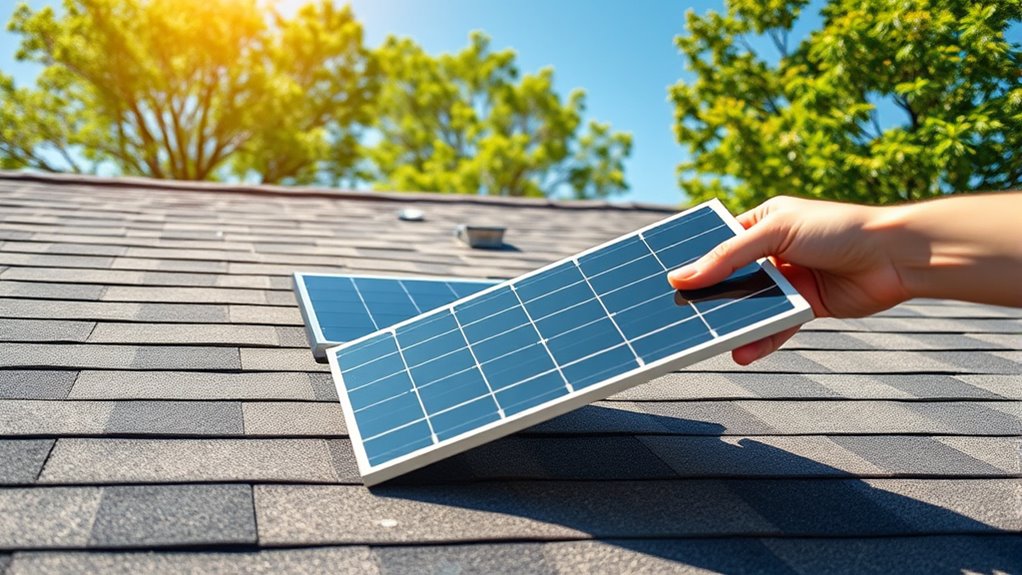
5 Tips to Determine If My Roof Is Good for Solar
To know if your roof is good for solar, start by checking its age and condition. Older or damaged roofs might need repairs before you can install panels, so that’s an important first step.
Next, measure your roof’s usable space, making sure to avoid shaded or obstructed areas.
Also, consider the direction your roof faces. South-facing roofs or those with a good tilt usually get the best sunlight for solar energy.
Don’t forget to look out for shade from trees or chimneys since shade can really cut down your panels’ efficiency.
Finally, confirm that your roof’s materials are compatible with solar panels.
Taking the time to explore these factors will help guarantee a smooth solar setup and lasting energy savings. It’s all about making sure your roof is ready to soak up the sun!
Key Takeaways
- Check if your roof is less than 15-20 years old and free of damage to support solar panel installation. You want to make sure it’s sturdy enough before adding panels.
- Measure unobstructed roof space to ensure enough area for solar panels and maintenance access. It’s important to have room not just for the panels, but also to move around when needed.
- Confirm your roof faces south or has a tilt angle near your latitude for optimal solar efficiency. This helps your panels soak up the most sun throughout the day.
- Identify and avoid shaded areas from trees or structures that can reduce solar panel energy output. Even a little shade can lower how much power your system produces.
- Verify your roof material is compatible with solar panels, such as asphalt shingles, metal, or concrete tiles. Some materials are easier to work with and last longer when paired with solar.
Check Your Roof’s Age and Condition
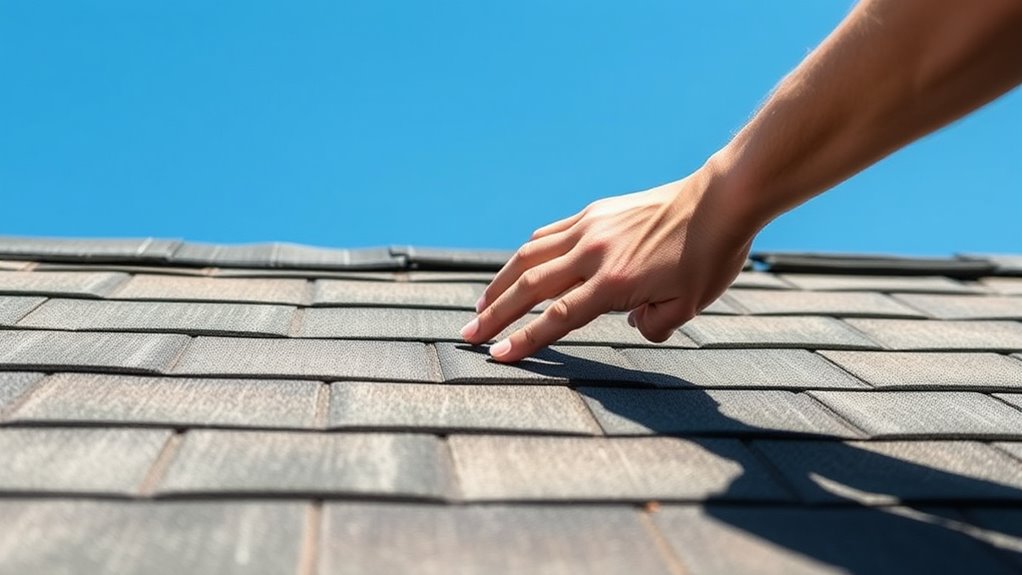
Before installing solar panels, you should check your roof’s age and condition to guarantee it can support the system. If your roof is older than 15 to 20 years, it might need replacement soon, which means installing solar panels now could be inefficient and costly.
Look for damaged or missing shingles, leaks, or sagging spots that indicate structural issues. You want a strong, stable surface to hold the weight of the panels and withstand weather elements. If you spot any problems, fix them before proceeding.
Also, consider the roofing material; asphalt shingles, metal, and tile roofs usually work well with solar installations. Taking these steps ensures your investment lasts longer and performs at its best without unexpected repairs in the near future.
Measure Your Roof’s Space for Solar Panels
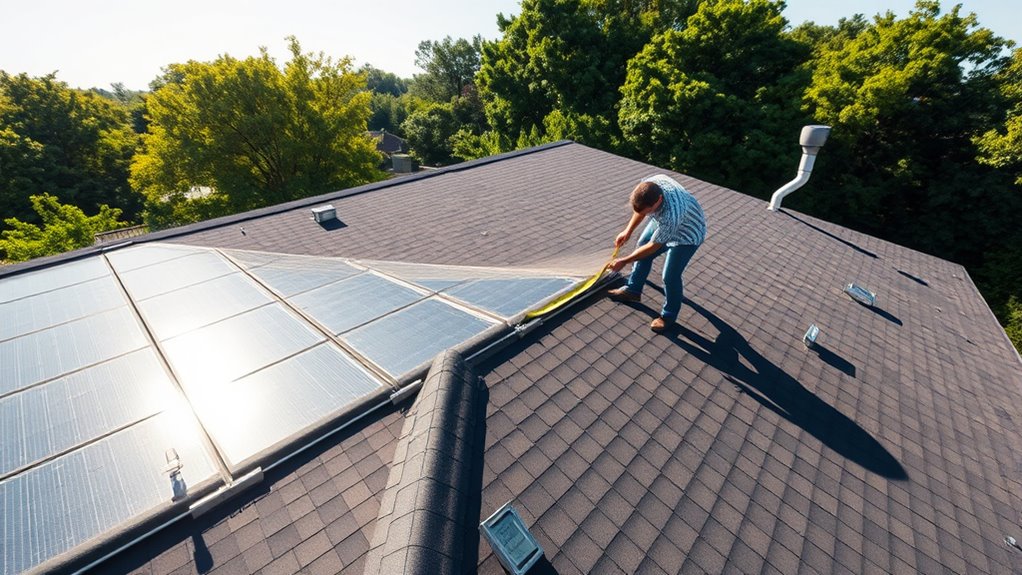
To determine if your roof can accommodate solar panels, you need to measure the available space accurately. Start by identifying clear, unobstructed areas on your roof where panels can be installed without shading from chimneys, vents, or trees.
Begin by locating clear, unobstructed roof areas free from shading for accurate solar panel measurement.
Use a tape measure to record the length and width of these sections. Multiply these dimensions to get the square footage.
Keep in mind that standard solar panels typically measure about 65 inches by 39 inches. So, you can estimate how many panels will fit based on your total roof space.
Remember to leave some room for maintenance access and setbacks required by local codes. Once you have your measurements, you’ll have a clearer idea of how many solar panels your roof can support.
Evaluate Roof Orientation and Tilt for Solar Efficiency
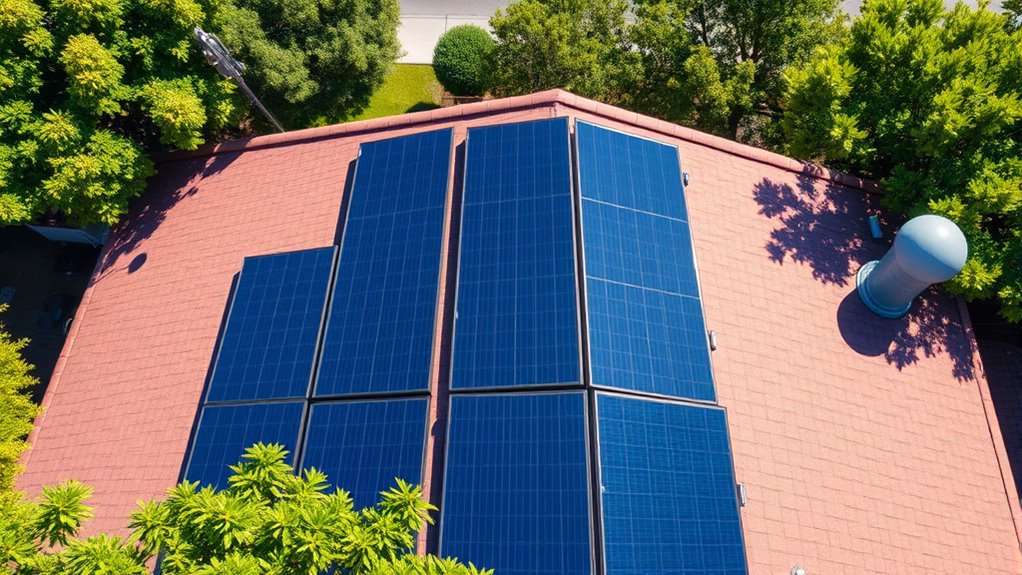
Since your roof’s orientation and tilt directly impact how much sunlight your panels receive, evaluating these factors is essential for maximizing solar efficiency. Ideally, your roof should face south in the Northern Hemisphere to capture the most sunlight throughout the day.
The tilt angle should match your latitude for the best energy absorption, but slight variations can still work well. It’s not always perfect, but a little flexibility goes a long way.
Here’s a quick guide to help you assess your roof’s orientation and tilt:
| Orientation | Ideal Tilt Angle | Solar Efficiency Potential |
|---|---|---|
| South | Latitude angle | High |
| East/West | Latitude ± 15° | Moderate |
| North | Latitude angle | Low |
| Flat Roof | Adjustable mounts | Moderate to High |
| Steep Roof | Latitude angle | High |
Spot Shade That Could Cut Solar Power
Although your roof might seem ideal for solar panels, even small areas of shade can considerably reduce their efficiency. You need to carefully assess any spot shade caused by nearby trees, chimneys, vents, or antennas.
These shaded patches can block sunlight and lead to a significant drop in energy output, especially if they fall on critical parts of the solar array. You might not notice shade during certain times of the day, so consider observing your roof at different hours or using a solar pathfinder tool.
If spot shade is unavoidable, you should plan your panel layout to avoid the shaded areas or use microinverters or power optimizers to minimize the impact on your system’s overall performance. Don’t overlook this step—it’s essential for maximizing solar power production.
Pick Roof Materials Compatible With Solar Panels
When choosing solar panels, you’ll want to guarantee your roof materials are compatible to avoid installation challenges and ensure long-lasting performance. Asphalt shingles, metal, and concrete tiles typically work well with solar panels, offering sturdy and durable bases.
If your roof uses wood shakes or slate, installation might be trickier and more expensive due to their fragile nature. Flat roofs with membrane materials require special mounting systems, so factor that into your planning.
Also, check your roof’s age and condition—older roofs may need repairs or replacement before adding solar panels. By selecting roofing materials that align with solar installation requirements, you’ll not only simplify the process but also maximize the efficiency and lifespan of your solar system.
Frequently Asked Questions
How Much Do Solar Panels Typically Cost to Install?
Solar panel installation typically costs between $15,000 and $25,000, depending on your system size and location.
You’ll save more with incentives and rebates, so it’s worth researching local programs to reduce your upfront expenses.
It might seem like a big investment at first, but those savings can really add up over time!
What Maintenance Do Solar Panels Require Over Time?
You’ll need to clean your solar panels occasionally to remove dirt and debris. Check for shading or damage and inspect wiring yearly.
Most systems require minimal maintenance, but regular monitoring guarantees they perform efficiently over time. It’s pretty simple to keep them in good shape!
Are There Government Incentives for Installing Solar Panels?
Imagine sunlight as money falling from the sky—yes, you can catch it!
You’ll find government incentives like tax credits and rebates that make installing solar panels more affordable.
They help you save while you power your home sustainably.
How Long Does It Take to Recoup Solar Panel Investment?
You’ll typically recoup your solar panel investment in 5 to 10 years, depending on your energy usage, local electricity rates, and available incentives.
After that, your solar system fundamentally generates free electricity for you. It’s a pretty great deal when you think about it!
Can Solar Panels Increase My Home’s Resale Value?
They say, “A penny saved is a penny earned.” Installing solar panels can increase your home’s resale value by attracting energy-conscious buyers and lowering utility costs.
This makes your property more appealing and can potentially boost its market price. It’s a win-win if you’re thinking about selling in the future!
Conclusion
By checking your roof’s age, space, and tilt, you’re laying the foundation for solar success. Don’t let shading sneak in like a thief in the night, stealing your power.
Make sure your roof materials play well with solar panels to keep everything running smoothly. With these tips, your roof can become a shining powerhouse, turning sunlight into savings.
Choosing the right roof for solar is key to maximizing energy efficiency and long-term savings. When you consider factors like roof age, available space, tilt, shading, and material compatibility, you’re setting yourself up for a smart solar investment. A well-prepared roof not only supports your solar panels securely but also helps you capture the most sunlight possible. This means more clean energy, lower electricity bills, and a brighter, eco-friendly future. So, take the time to evaluate your roof carefully—because a good roof is the first step toward unlocking the full potential of solar power.