What Happens When LED Lights Charge Solar Panels?
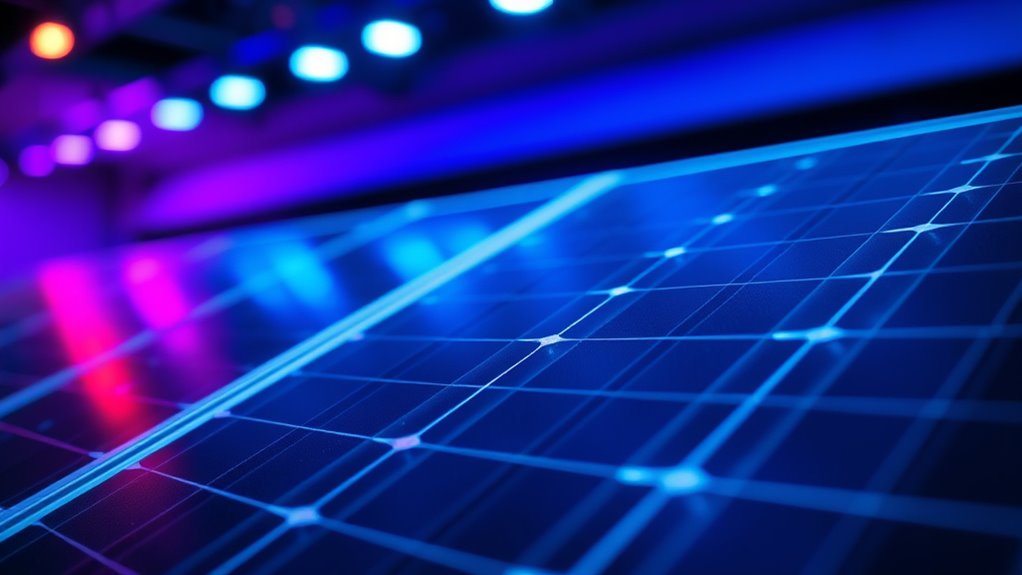
When LED lights charge solar panels, your panels generate electricity by absorbing LED photons. However, this process is slower and less efficient than using sunlight because LEDs have lower intensity and a narrower light spectrum.
The type of solar panel you use also plays a big role in how well it performs under LED light. Monocrystalline panels tend to work best with LED lighting.
You can definitely power small devices indoors this way, but don’t expect the same energy output as you would from natural sunlight.
If you’re curious about how to optimize this setup or want to learn about the challenges involved, keep reading!
Key Takeaways
- LED lights emit lower intensity and a narrower spectrum of light. This means solar panels charge more slowly and less efficiently compared to when they’re exposed to sunlight.
- Solar panels do absorb photons from LEDs and generate current. However, the energy output is reduced because the LED light’s spectrum and intensity don’t match what solar panels are optimized for.
- Monocrystalline panels tend to perform best under LED lighting. That’s because they have higher sensitivity and work more efficiently in low-light conditions.
- Using LED charging indoors can be practical, especially for low-power devices, sensors, or off-grid setups where sunlight is limited or unavailable.
- You can improve charging efficiency by optimizing the LED wavelength, choosing the right panel type, and positioning the panels carefully. Still, challenges like heat build-up and low light intensity remain.
Can LED Lights Charge Solar Panels? How It Works
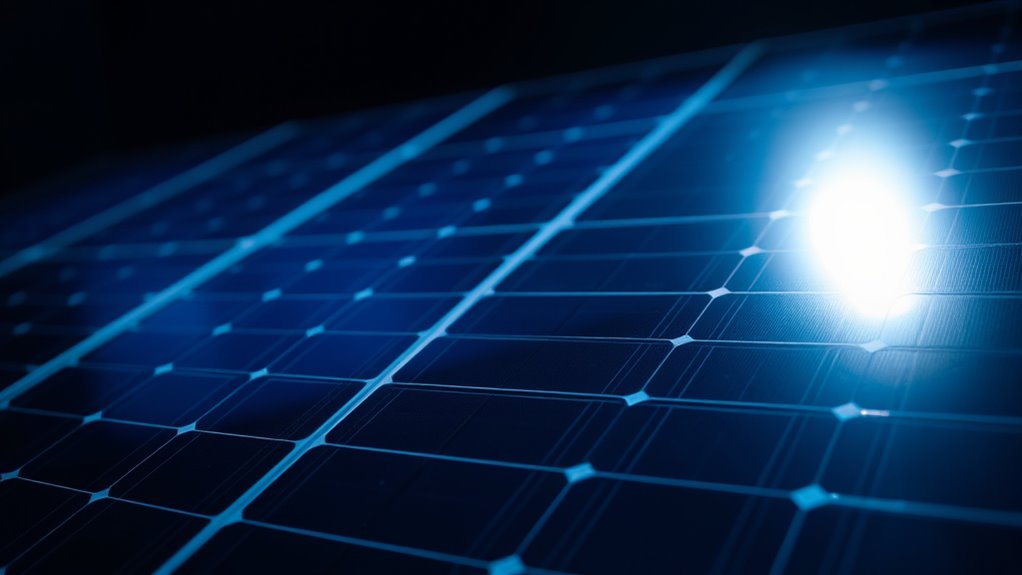
Although LED lights emit less energy than sunlight, they can still charge solar panels under the right conditions. When you expose a solar panel to LED light, its photovoltaic cells absorb the light photons, which excite electrons and create an electric current.
The key is using LEDs that emit light in wavelengths matching the panel’s sensitivity, typically in the visible spectrum. You’ll also want the LED light to be intense enough and close enough to the panel to generate usable power.
Keep in mind, charging happens slower compared to natural sunlight because LEDs produce lower intensity. Still, in controlled environments like indoor setups or emergency kits, LEDs can provide a reliable energy source for solar panels, making them versatile for various applications.
How Efficient Are Solar Panels When Charged by LEDs?
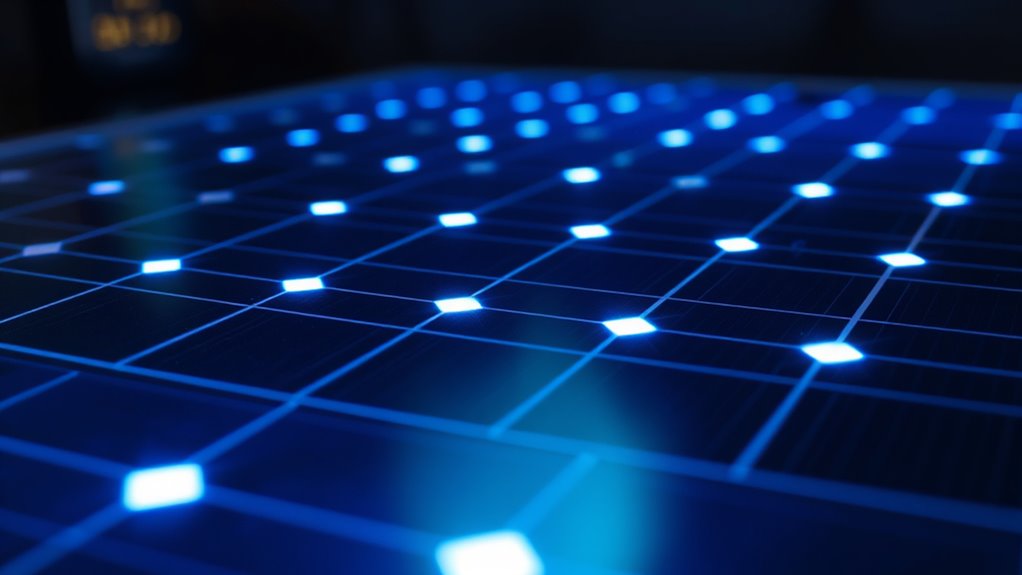
When you charge solar panels with LED lights, you’ll notice their efficiency is markedly lower compared to sunlight. LED lights emit a narrower spectrum and less intensity than the broad, powerful range of the sun’s rays.
Because solar panels are designed to capture sunlight’s full spectrum, they don’t convert LED light as effectively. In practical terms, this means the energy output from solar panels under LED lighting is substantially reduced.
Solar panels capture sunlight’s full spectrum, so they convert LED light far less efficiently.
You might get some charge, but it’ll be slower and less reliable. If you rely on LEDs for charging, expect diminished performance and longer charging times.
While LEDs can supplement solar charging, they aren’t a substitute for natural sunlight when it comes to efficiency and power generation.
What Solar Panels Work Best With LED Lights?
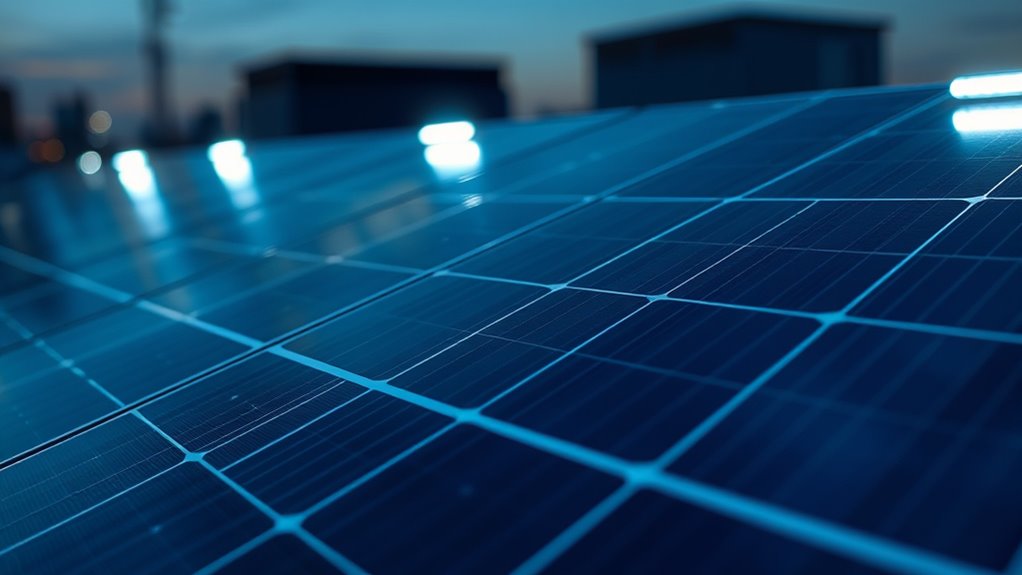
Since LED lights produce a limited spectrum and lower intensity, choosing the right type of solar panel can make a noticeable difference in how well they charge under LED illumination. You’ll want panels that perform efficiently with low light and specific wavelengths.
Monocrystalline panels generally work best due to their higher sensitivity and efficiency. Amorphous panels also do well in low light but have lower overall efficiency.
Polycrystalline panels tend to be less effective under LED lighting because they require broader spectrum light to perform ideal.
| Solar Panel Type | LED Charging Performance |
|---|---|
| Monocrystalline | High efficiency, best choice |
| Amorphous | Good low-light sensitivity |
| Polycrystalline | Moderate, less effective |
| Thin-film | Variable, depends on material |
Practical Uses for LED-Charged Solar Panels Indoors
If you want to harness solar power indoors, LED lights can provide a reliable, low-intensity energy source to keep your solar panels charged. You can use this setup to power small devices like sensors, LED indicators, or low-wattage gadgets without relying on external electricity.
It’s especially useful in enclosed spaces like basements, greenhouses, or workshops where sunlight is scarce. By pairing energy-efficient LED bulbs with compatible solar panels, you maintain a steady energy flow, reducing your dependence on the grid.
This approach also supports off-grid setups, emergency lighting, or experimental projects where traditional solar charging isn’t feasible. With careful planning, you can optimize your indoor solar system to maximize the energy harvested from LED sources.
That way, you make your space more energy resilient and eco-friendly. It’s a smart move if you want to keep things green and efficient indoors.
Challenges of Using LEDs to Power Solar Panels
Why doesn’t charging solar panels with LED lights always work as expected? One major challenge is the difference in light intensity. LEDs often emit less energy than sunlight, so your solar panels may charge very slowly or inefficiently.
Also, the spectrum of LED light doesn’t always match what solar cells absorb best, reducing energy conversion. You’ll notice that distance and angle matter too—LEDs need to be positioned carefully to maximize exposure.
Heat buildup can also affect performance since LEDs produce less heat than sunlight, which sometimes limits the solar cells’ ideal operating temperature. Finally, cost is a concern: using high-powered LEDs for charging can be expensive and not energy-efficient, making it hard to justify compared to natural sunlight.
Future Innovations in Using LEDs to Power Solar Panels
Although current LED technology faces limitations in efficiently charging solar panels, ongoing innovations are rapidly closing the gap. You’ll soon see improvements like specialized LED wavelengths tailored to solar cell materials and smart systems that optimize light intensity and angle.
These advances will boost energy conversion rates, making LED-powered solar charging more practical.
Here’s a quick look at future innovations:
| Innovation | Potential Benefit |
|---|---|
| Tunable LED wavelengths | Maximizes absorption efficiency |
| Smart light angle control | Enhances energy capture |
| Integrated sensors | Real-time performance tuning |
| Advanced photovoltaic cells | Better response to LED light |
| Energy storage integration | Continuous power supply |
With these, you can expect more reliable and efficient LED-to-solar energy systems soon.
Frequently Asked Questions
Can LED Lights Damage Solar Panels Over Time?
No, LED lights won’t damage your solar panels over time. They produce low-intensity light, so your panels won’t overheat or degrade.
Just make sure your setup is proper, and your panels will stay safe and efficient. It’s pretty straightforward!
Do Different LED Colors Affect Solar Panel Charging?
Different LED colors do affect solar panel charging; you can’t judge a book by its cover.
Blue and green LEDs usually boost charging efficiency more than red or yellow, thanks to their higher energy photons.
It’s pretty interesting how the color of light can make such a difference, right? So, if you’re thinking about optimizing solar charging, keep the LED color in mind!
How Do Led-Charged Solar Panels Perform in Cold Weather?
You’ll find LED-charged solar panels perform better in cold weather since low temperatures improve their efficiency.
Just remember, while cold boosts output, the LED light intensity still limits how much energy your panels can generate.
Are There Safety Concerns With Using LEDS to Charge Panels?
You don’t need to worry much about safety when using LEDs to charge solar panels. LEDs run cool and have low voltage, minimizing risks like overheating or electrical hazards.
Just make sure you have proper wiring and use quality components. That way, everything stays safe and works smoothly.
Can Solar Panels Store Energy From LED Light for Later Use?
Think of solar panels as thirsty sponges—they can soak up energy from LED lights, but it’s a slow sip compared to sunlight.
You can store that energy, but it’s usually minimal and not very efficient.
Conclusion
You might be surprised to learn that solar panels can still generate about 10-20% of their usual output when charged by LED lights. While LEDs aren’t as powerful as sunlight, they offer a reliable indoor energy source.
If you’re thinking about powering small devices or experimenting indoors, LED-charged solar panels could be a smart, eco-friendly choice. It’s pretty cool to know that even artificial light can help generate clean energy!
Keep an eye out—future innovations might make this method even more efficient and practical for everyday use. Using LED lights to charge solar panels isn’t just a neat idea; it’s a step toward greener living and sustainable energy solutions indoors. So, whether you’re into tech experiments or just want to reduce your carbon footprint, LED-powered solar panels are definitely worth exploring.