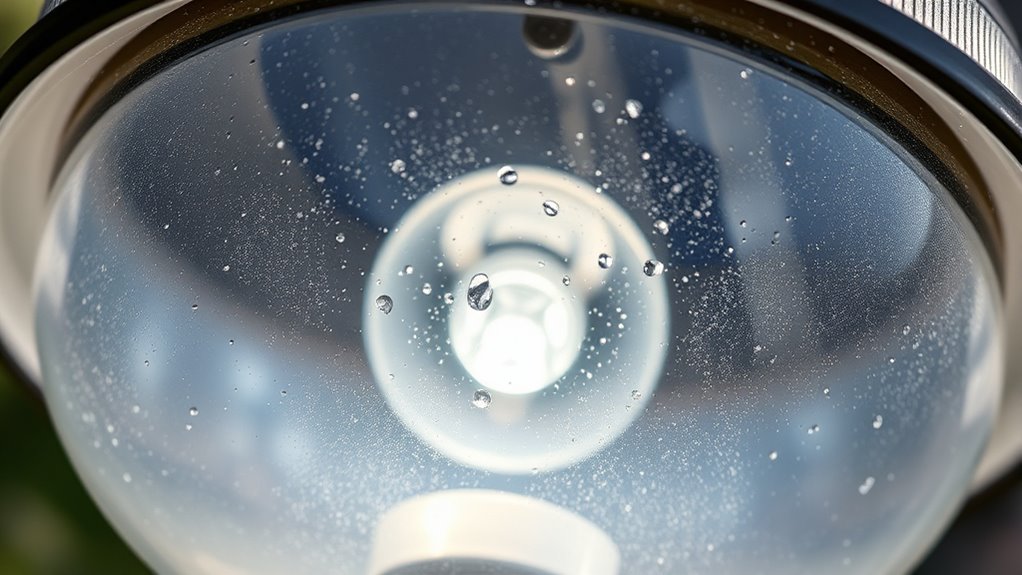
Why Do Solar Lights Fog Up Inside?
Solar lights fog up inside because moisture sneaks in through tiny gaps or imperfect seals. When temperatures change, this trapped moisture condenses, especially during humid or rainy weather. It’s a common problem that can affect how well your solar lights work and how they look.
If the design doesn’t have proper ventilation or uses materials that don’t breathe, the moisture has nowhere to go. That makes the fogging even worse.
Sealing any cracks and improving airflow can really help prevent this issue.
Keep exploring to find easy fixes and learn more about how weather impacts your solar lights’ performance. It’s all about keeping them clear and shining bright!
Key Takeaways
- Moisture sneaks into solar light casings through tiny gaps or imperfect seals. This causes condensation to form inside the light.
- When temperatures change, trapped humid air inside the light condenses. This happens especially during cool nights and warm mornings.
- If the enclosure is airtight and doesn’t have ventilation, moisture can’t escape. That’s when fog starts to build up inside the casing.
- High humidity, rain, and watering all add more moisture exposure. This makes the fogging inside the light even worse.
- Sometimes, the casing design isn’t great and lacks ventilation. That traps moisture inside, leading to persistent fog and dimmer light output.
Why Solar Lights Get Moisture Inside Their Casings
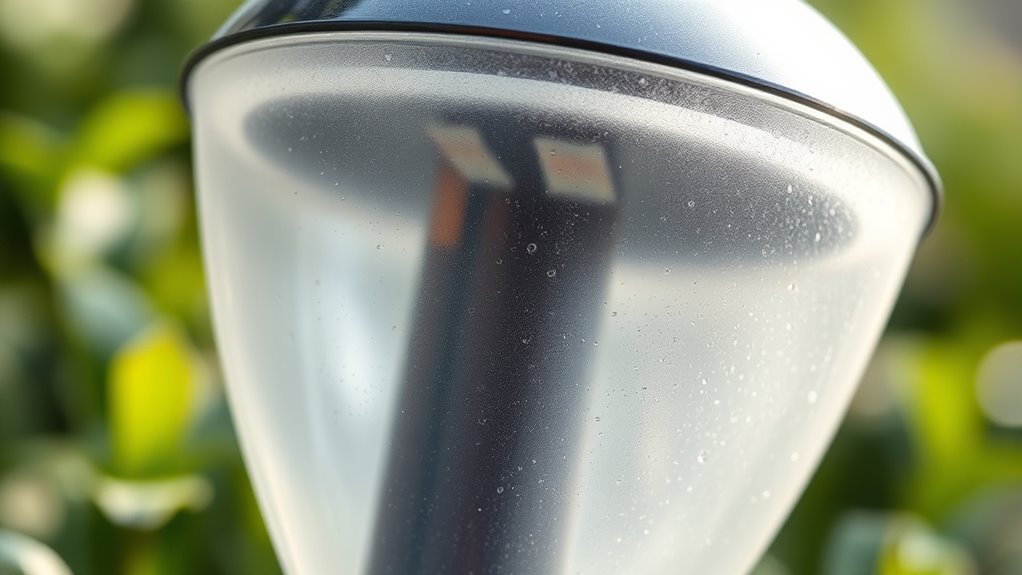
Although solar lights are designed to withstand outdoor conditions, they can still develop moisture inside their casings. You might wonder how water gets in when these lights are sealed.
Solar lights, though built for outdoors, can still trap moisture inside their sealed casings.
The truth is, tiny gaps or imperfect seals allow humid air to sneak inside. When the temperature drops, this moisture condenses, causing fog or droplets on the interior surfaces.
Also, if you install your solar lights in areas with high humidity or after watering plants nearby, the chances of moisture buildup increase. Even the materials used in the casing can absorb some moisture over time, slowly releasing it inside.
To prevent this, you need to check for cracks, confirm proper sealing, and place your solar lights where exposure to excessive moisture is limited.
How Weather and Temperature Cause Solar Lights to Fog Up

When weather changes quickly, your solar lights can fog up as temperature shifts cause moisture inside to condense. At night, cooler air contracts, lowering the temperature inside the light’s casing. If warm, humid air is trapped inside, that moisture turns into tiny water droplets, creating fog.
In the morning, as temperatures rise, warm air holds more moisture, but the cooler surfaces inside the light cause condensation to form. Rapid temperature swings, like a cold night followed by a warm day, increase this effect.
Also, rainy or humid weather adds extra moisture that can seep inside, making the fogging worse. Understanding how these natural temperature and weather changes affect your solar lights helps you anticipate and manage the fogging problem more effectively.
Design and Ventilation Flaws That Lead to Foggy Solar Lights
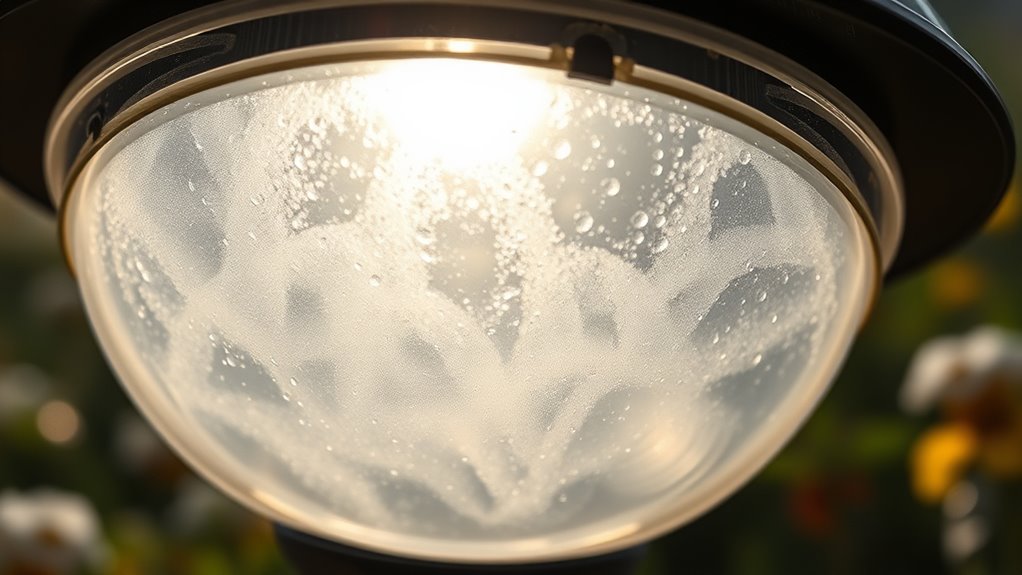
Because many solar lights lack proper ventilation, moisture often gets trapped inside their casings, causing fog to form. When you buy or install solar lights, it’s important to understand how design flaws contribute to this issue.
Many solar lights fog up due to trapped moisture from poor ventilation and design flaws.
Poor sealing and absence of air vents prevent humidity from escaping, leading to condensation buildup. Also, materials used in the casing can affect internal temperature changes, which makes the fogging even worse.
Here are three common design and ventilation flaws causing foggy solar lights:
- Tight, airtight enclosures without breathable gaps
- Inadequate or no vent holes for air circulation
- Use of non-breathable plastics that trap heat and moisture
How Poor Ventilation Makes Fogging Worse
If your solar lights don’t have proper ventilation, trapped moisture has nowhere to go, which makes fogging inside the casing much worse. When moisture gets inside, it clings to the inner surfaces, creating that annoying foggy layer that dims the light.
Without vents or breathable materials, the moisture can’t escape, so it accumulates over time. You might notice the fog worsens after rain or heavy dew because the water vapor has no outlet.
Poor ventilation also prevents air circulation, which normally helps dry out any condensation. To keep your solar lights clear, you need to guarantee they have adequate airflow.
Otherwise, the trapped moisture will keep building up, reducing brightness and potentially damaging the internal components. Proper ventilation is key to preventing persistent fogging.
How Temperature Changes Trigger Condensation in Solar Lights
How exactly do temperature swings cause condensation inside your solar lights? When the temperature drops, the air inside the light cools down too. Cooler air can’t hold as much moisture, so the excess water vapor turns into tiny droplets on the light’s interior surfaces.
This process happens especially when:
- Warm air inside the light meets the cooler outer casing during nighttime.
- Rapid temperature drops after a sunny day cause moisture to condense quickly.
- Humid air trapped inside the light cools below its dew point.
These frequent temperature changes cause repeated condensation cycles, making your solar lights fog up from the inside. It’s a natural reaction to fluctuating outdoor conditions, and understanding this helps explain why you see that fogging happen.
Easy Ways to Prevent and Fix Foggy Solar Lights
To keep your solar lights clear, start by sealing any gaps or cracks where moisture can sneak in. You can also place silica gel packs inside to absorb excess humidity.
Finally, improving the ventilation design helps reduce condensation buildup over time. It’s a simple step that makes a big difference!
Seal Gaps And Cracks
While moisture can sneak into solar lights through tiny openings, you can prevent it by sealing gaps and cracks effectively. Doing this not only keeps fog out but also protects the internal components from damage.
To seal your solar lights properly, follow these steps:
- Inspect the light carefully for any visible gaps, cracks, or loose fittings.
- Use a waterproof silicone sealant or weatherproof tape designed for outdoor use to cover the openings.
- Allow the sealant to dry completely before reinstalling the solar light to ensure a tight, moisture-proof seal.
Use Silica Gel Packs
Because moisture inside your solar lights can cause fogging and damage, using silica gel packs offers a simple and effective solution to keep them dry. You can place a small silica gel pack inside the light’s housing or near the battery compartment to absorb excess moisture.
These packs attract and trap water vapor, preventing condensation from forming on the lens or internal components. Just make sure the packs don’t interfere with any wiring or moving parts.
Replace the silica gel packs periodically, especially if you notice they’ve become saturated or lose their effectiveness. This easy step helps maintain clear lighting and extends the life of your solar lights without requiring complicated repairs or modifications.
Silica gel packs are an affordable and low-maintenance way to combat internal fogging issues. It’s a simple trick that really makes a difference!
Improve Ventilation Design
Although moisture buildup often feels unavoidable, you can reduce fogging in your solar lights by improving their ventilation design. Proper airflow prevents condensation from forming inside the light’s enclosure.
Here’s how you can enhance ventilation effectively:
- Add Small Ventilation Holes: Create tiny holes in non-critical areas to allow air exchange while keeping water out.
- Use Breathable Seals: Replace airtight seals with breathable ones that block moisture but let air pass.
- Elevate the Light Fixture: Position the light slightly off surfaces to encourage airflow underneath and around it. This little change can make a big difference!
Frequently Asked Questions
Can Foggy Solar Lights Affect Battery Life?
Yes, foggy solar lights can affect battery life because moisture can cause corrosion or short circuits inside.
You should clean and dry them regularly to keep the battery functioning well and extend your solar light’s lifespan.
Do Solar Light Brands Differ in Fogging Issues?
You might find some brands handle moisture better, offering a clearer experience.
However, no solar light is completely immune to fogging, so choosing ones with quality seals and ventilation can help you enjoy brighter, longer-lasting glow.
Is Fog Inside Solar Lights Harmful to Electronics?
Fog inside solar lights isn’t usually harmful right away, but over time, moisture can cause corrosion or short circuits.
You should keep them dry and sealed to protect the electronics and maintain your solar lights’ performance.
Can Foggy Solar Lights Cause Electrical Shorts?
Don’t count your chickens before they hatch—foggy solar lights can cause electrical shorts if moisture reaches the wiring. You should keep them dry and sealed well to avoid corrosion and potential damage to the electronics inside.
It’s really important to make sure no water sneaks in. Otherwise, you might end up with a short circuit and a busted light. So, a good seal is key!
Are Foggy Solar Lights Covered Under Warranty?
You might find foggy solar lights covered under warranty if moisture causes damage, but it depends on the manufacturer’s policy.
Check your warranty terms carefully, and contact customer support to see if they’ll replace or repair them.
It’s always worth asking because some companies are pretty flexible with these issues.
Better to be safe and get it checked out!
Conclusion
You might be surprised to learn that up to 70% of solar light fogging issues come from poor ventilation and temperature swings. When moisture gets trapped inside, it not only dims the light but can also damage the electronics.
By improving airflow and sealing gaps, you can keep your solar lights clear and bright. Taking these simple steps helps you enjoy reliable, long-lasting outdoor lighting without the annoying fog buildup.
In short, good ventilation and managing temperature changes are key to preventing solar lights from fogging up inside. Keeping moisture out protects both the brightness and the electronics, so your lights stay shining strong. With a little care and maintenance, you can avoid fog inside solar lights and enjoy hassle-free illumination for years to come.