Do Solar Panels Cause Cancer: Assessing the Risks
You don’t have to worry—solar panels don’t cause cancer or emit harmful radiation. These panels safely convert sunlight into electricity using mostly silicon, with trace metals securely sealed inside.
They only produce low-level electromagnetic fields, similar to what your phone emits, and these are well below safety limits. Studies show no link between solar panels and cancer.
With proper installation and recycling, any risks remain minimal.
If you want to understand more about solar panel safety and debunk common myths, there’s plenty to explore.
Key Takeaways
- Solar panels do not emit harmful ionizing radiation linked to cancer.
- The low-level non-ionizing EMFs from panels are far below health risk limits.
- Trace toxic metals in panels are securely sealed, so you won’t be exposed during normal use.
- There’s no credible scientific evidence that connects solar panels or living near them to cancer.
- When solar panels are properly installed, maintained, and recycled, they are safe.
- This also helps minimize any potential health risks.
How Do Solar Panels Work and What Materials Affect Your Health?
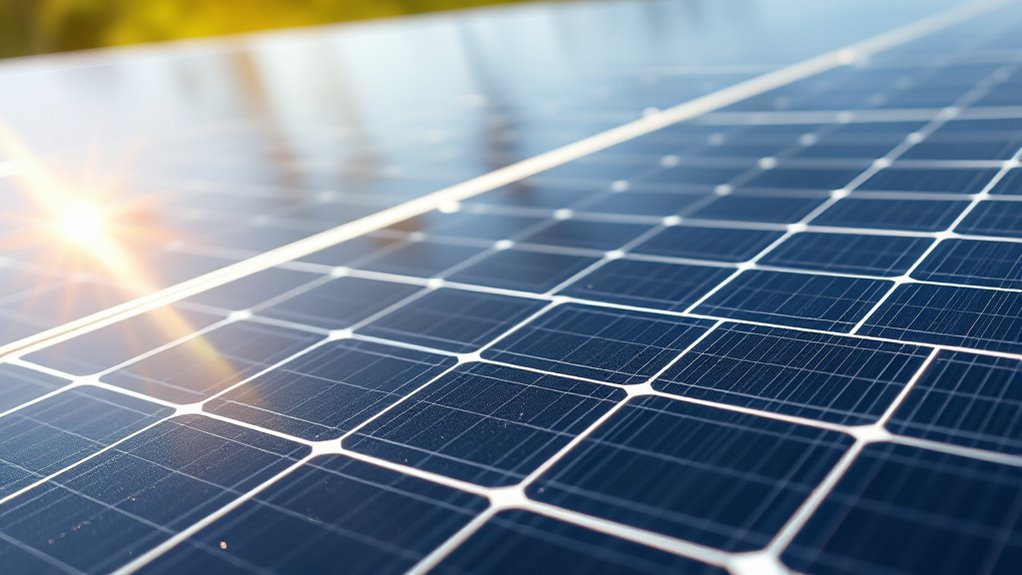
Although solar panels seem simple, they rely on complex technology to convert sunlight into electricity. When sunlight hits the solar cells, it excites electrons, creating an electric current you can use.
These cells are mostly made from silicon, a non-toxic material commonly found in electronics. However, solar panels also contain trace amounts of metals like cadmium and lead, which can be harmful if the panels break or degrade.
Solar cells mainly use non-toxic silicon but include small amounts of harmful metals like cadmium and lead.
You won’t be exposed to these metals during normal use, but improper handling during manufacturing or disposal could pose risks. Panels are sealed tightly to prevent leaks, so under everyday conditions, they’re safe.
Understanding these materials helps you grasp why proper installation and recycling are essential for minimizing any potential health impacts. It’s all about keeping things safe while making the most of solar energy.
Do Solar Panels Emit Radiation That Could Harm You?
While solar panels generate electricity by converting sunlight, they don’t emit harmful radiation that could affect your health. The energy they produce is clean and safe, without releasing ionizing radiation like X-rays or gamma rays, which can damage cells.
Instead, solar panels work through the photovoltaic effect, creating an electric current from sunlight. The only kind of radiation you might encounter around solar panels is a very low level of non-ionizing electromagnetic fields (EMFs) from their electrical components.
These EMFs are similar to those from everyday electronics such as your phone or Wi-Fi router, and they fall well below safety limits set by health authorities. So, you can feel confident that solar panels won’t expose you to dangerous radiation while powering your home.
Do Solar Panels Really Cause Cancer? Here’s What Science Says
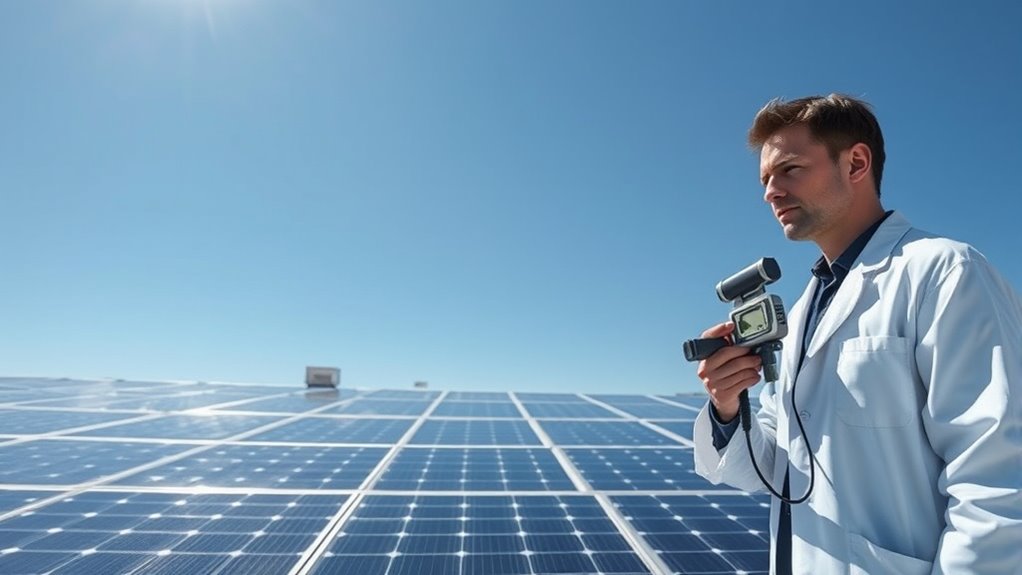
Because you might have heard concerns about solar panels and cancer, it’s important to look at what the research actually shows. Scientists have thoroughly studied solar panels and found no credible evidence connecting them to cancer.
Concerns about solar panels causing cancer are unfounded according to thorough scientific research.
Here’s what you need to know:
- Solar panels emit no harmful ionizing radiation, the type known to cause cancer.
- Extensive health studies on communities using solar energy have shown no increase in cancer rates.
- Regulatory bodies worldwide monitor and guarantee solar tech safety, protecting your health.
What Are the Common Myths About Solar Panels and Health?
You’ve probably heard concerns about radiation from solar panels or worries about toxic materials leaking into the environment. These myths often make people question the safety of solar energy for their health.
Let’s clear up what’s true and what’s not when it comes to these common misconceptions.
Radiation Exposure Concerns
Although solar panels harness energy from the sun, many people worry they might expose you to harmful radiation. The truth is, solar panels do not emit ionizing radiation like X-rays or gamma rays, which can cause cancer. Instead, they convert sunlight into electricity safely.
However, misconceptions persist.
Here are three common radiation fears you might have heard:
- Solar panels emit dangerous radiation – They don’t. Panels only absorb sunlight; they don’t release harmful waves.
- Living near solar farms increases cancer risk – No evidence supports this. Solar farms don’t produce hazardous radiation.
- Solar panels interfere with your body’s natural electromagnetic field – This claim lacks scientific backing.
Understanding these facts can help you feel confident about solar energy’s safety.
Toxic Material Misconceptions
Misunderstandings about solar panels don’t stop at radiation—they often extend to concerns about toxic materials. You might hear that solar panels contain harmful substances that can cause cancer. But here’s the thing: while solar panels do include materials like lead and cadmium, these are securely encapsulated to prevent exposure.
The risk from these materials during normal use or disposal is minimal. So, no need to worry too much about that.
Here’s a quick look at common myths versus facts:
| Myth | Fact |
|---|---|
| Solar panels leak toxic metals | Materials are sealed and don’t leak during use |
| Toxic waste from panels causes cancer | Proper recycling minimizes environmental risks |
| All solar panels contain lead | Only certain types; most use safe alternatives |
| Panels release toxins when broken | Risk is low with proper handling and disposal |
Bottom line: you can trust that solar panels are safe when used responsibly.
How Can You Safely Install and Maintain Solar Panels?
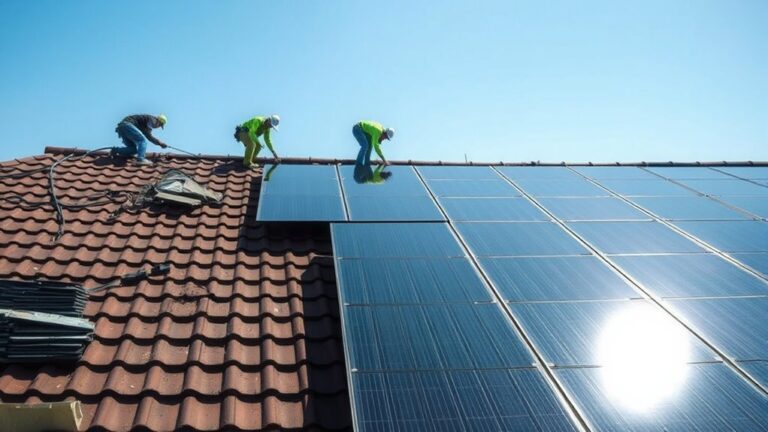
When installing and maintaining solar panels, prioritizing safety guarantees both your well-being and the system’s efficiency. You should never take shortcuts with electrical components or rooftop work.
Here’s how to protect yourself and your investment:
- Hire Certified Professionals: Qualified installers ensure proper handling of electrical systems and secure panel placement. This reduces the risks of shocks or falls.
- Use Proper Safety Gear: Always wear gloves, non-slip shoes, and a harness when working on your roof. These simple steps help you avoid injuries.
- Schedule Regular Inspections: Routine checks help identify damage or wear early. This prevents hazards like electrical faults or panel dislodgment.
Why Are Solar Panels a Safe and Healthy Choice for Your Home?
Because solar panels rely on clean, renewable energy from the sun, they pose minimal health risks to you and your family. They don’t emit harmful pollutants or radiation like fossil fuels do, so you’re not exposed to carcinogens linked to cancer.
Installing solar panels can also improve your home’s air quality by reducing reliance on traditional energy sources that release toxins. Plus, modern panels are designed with safety in mind, meeting strict regulations to prevent electrical hazards.
You don’t have to worry about them causing health issues indoors or outdoors. By choosing solar panels, you’re making a smart, eco-friendly decision that supports your family’s well-being while cutting your carbon footprint.
It’s a safe, healthy choice that benefits both you and the environment.
Frequently Asked Questions
Can Solar Panels Affect Nearby Wildlife or Plants?
Yes, solar panels can affect nearby wildlife and plants by altering habitats and shading areas. But don’t worry, you can minimize harm by carefully planning installations.
It’s all about preserving ecosystems and avoiding disruption to local flora and fauna. With some thoughtful steps, solar energy can be friendly to nature too!
Do Solar Panels Impact Property Value or Insurance?
Think of solar panels like a garden adding curb appeal; you’ll likely see property value rise by 4-6%.
Some insurers might adjust rates, but many actually offer discounts for energy-efficient homes like yours.
It’s a win-win for both your wallet and the environment!
How Long Do Solar Panels Typically Last Before Replacement?
Solar panels typically last about 25 to 30 years before you might consider replacing them.
With proper maintenance, they can even function efficiently beyond that, though their energy output may gradually decrease over time.
Are There Any Environmental Concerns in Solar Panel Manufacturing?
You should know that solar panel manufacturing can produce hazardous waste, including heavy metals like cadmium. But companies are improving processes to reduce environmental impact.
They are recycling panels and using safer materials to protect both people and the planet. It’s great to see these steps making solar energy cleaner all around.
Can Solar Panels Be Recycled After Their Lifespan Ends?
Yes, you can recycle solar panels after their lifespan ends. Many materials like glass, metal, and silicon are recoverable.
Recycling reduces waste and environmental impact, so it’s a smart choice for sustainability and resource conservation. It really helps keep our planet cleaner!
Conclusion
You might worry about solar panels causing cancer, but rest assured, science shows they’re safe. They don’t emit harmful radiation, and the materials used pose no significant health risks when installed properly.
By choosing reputable installers and maintaining your system, you can enjoy clean energy without fear. Solar panels not only protect your health but also help the environment.
This makes them a smart, safe choice for your home and future. So, if you’re concerned about cancer risks from solar panels, there’s no need to stress. Installing solar panels is a great way to reduce your carbon footprint and promote a healthier planet while keeping your family safe.