How Do Solar Shades Provide Privacy at Night?
You can get nighttime privacy with solar shades by choosing fabrics with tighter weaves or lower openness levels that limit visibility from outside. These materials help block the view into your home when it’s dark.
Keep in mind that bright indoor lights make shades more transparent, so dimming your lights or adding layered treatments like curtains can help.
Proper installation and full window coverage also prevent gaps that compromise privacy.
Want to find out how the right materials and lighting tricks make solar shades work better after dark? It’s all about picking the best fabrics and managing your indoor lighting to keep your space private at night.
Key Takeaways
- Solar shades’ privacy at night depends on fabric density and openness. Tighter weaves block more visibility from outside.
- But when you turn on indoor lights, it flips the shade’s opacity. This makes solar shades more transparent, which can reduce nighttime privacy.
- To boost privacy, you can use dual-roller shades or blackout fabrics. These options help block silhouettes and stop people from seeing through at night.
- Also, make sure your shades are installed properly and cover the entire window. This way, you avoid gaps that might let others peek in after dark.
- Another trick is to combine solar shades with dimmed indoor lighting or add layered window treatments. Doing this really helps improve privacy once the sun goes down.
How Solar Shades Provide Daytime Privacy
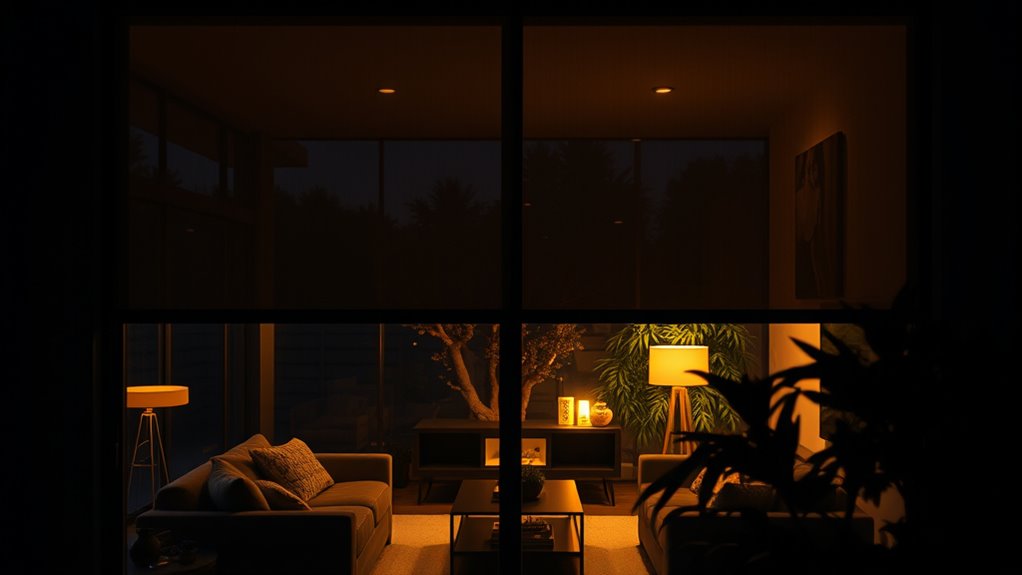
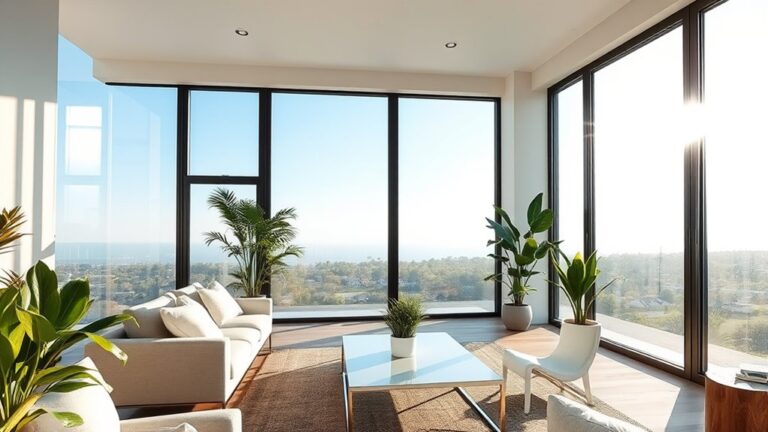
Although solar shades are often praised for their nighttime benefits, they also offer excellent daytime privacy. When you lower solar shades during the day, they block the view from outside while still letting natural light in.
Solar shades provide daytime privacy by blocking outside views while allowing natural light to brighten your space.
Their tightly woven fabric limits what outsiders can see, so you can enjoy your space without feeling exposed. You’re able to maintain a connection to the outdoors since the shades reduce glare and preserve your view.
Plus, they prevent passersby or neighbors from peeking inside, which helps keep your activities private. By using solar shades, you control your privacy without sacrificing daylight or comfort.
This balance makes them ideal for living rooms, offices, or any area where you want to protect your privacy while enjoying sunshine.
Why Do Solar Shades Lose Privacy When Lights Are On at Night?
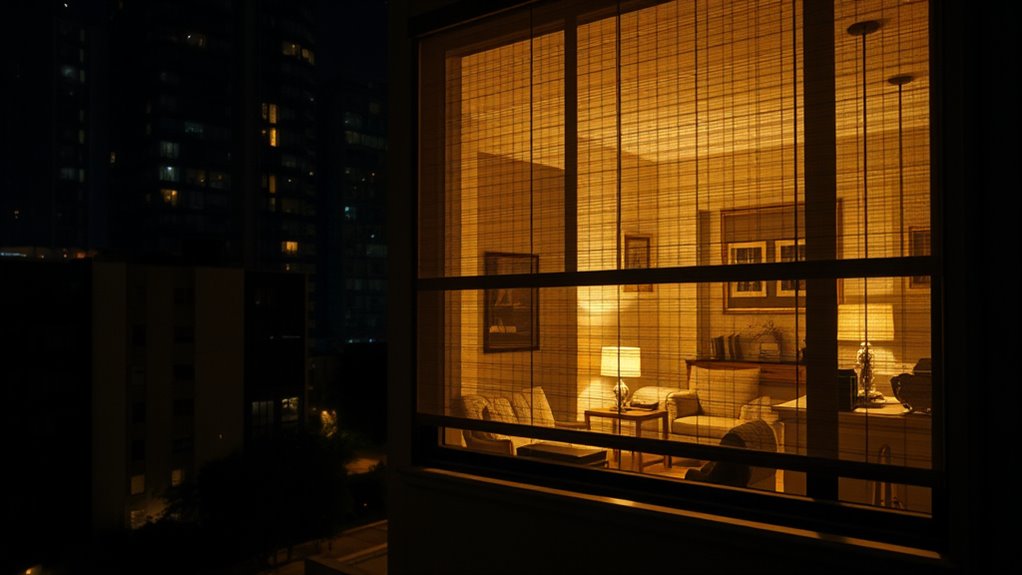
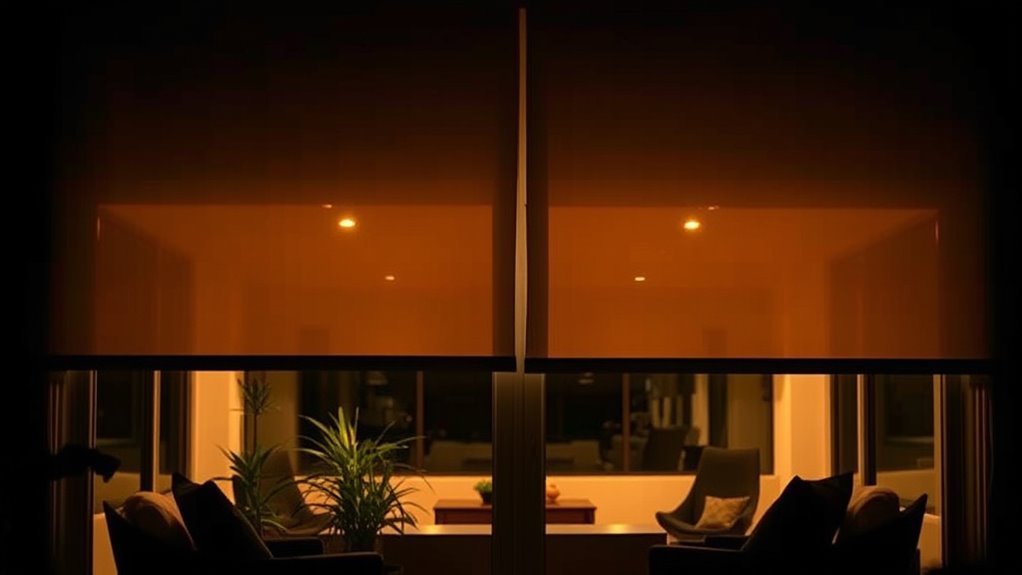
You’ll notice solar shades lose their privacy at night mainly because indoor lights make the shades more transparent. When your lights are on, the direction of light reverses, shining out through the shade instead of blocking views from outside.
This shift changes how much you can see in and out, affecting your privacy. So, basically, the shades work great during the day but can feel less private once it gets dark and your lights are on.
Light Direction Impact
Why does your privacy vanish as soon as you turn on the lights inside at night? It all comes down to the direction of light. During the day, sunlight outside is much stronger than the light inside, so your solar shades block the view from outside effectively.
But at night, when your indoor lights are brighter than the darkness outside, the light flows outward through the shades. This reversal means people outside can see in because the shades don’t block light coming from inside.
Your shades work by balancing light levels—when that balance tips, privacy fades. So, the key is the contrast in light direction: bright inside light shining out defeats the privacy that solar shades provide at night.
Transparency Changes At Night
When the sun sets and you switch on your indoor lights, the transparency of solar shades changes dramatically. During daylight, these shades block outside views while letting natural light through.
But at night, the light inside your home shines outward, reversing the effect. Your solar shades become more see-through from the outside because the darker exterior contrasts with your brightly lit interior.
This shift means people outside can often see inside, reducing your privacy. The material’s weave and openness play a role too—more open weaves allow greater visibility when lit from within.
Understanding this transparency change helps you anticipate when solar shades won’t fully shield your interior views. It’s a good reminder to think about additional privacy measures after dark.
Indoor Lighting Effects
How does indoor lighting affect the privacy of your solar shades at night? When you turn on lights inside, the contrast between the bright interior and the dark exterior shifts. This change makes it easier to see through the shades.
Here’s why your solar shades lose privacy with indoor lighting:
- Light Reflects Inward: Indoor lights bounce off surfaces, lighting up your room and making silhouettes visible through the shades.
- Reduced Exterior Contrast: When the interior is bright, the outside darkness no longer blocks views inside. This flips the daytime privacy effect.
- Material Transparency: The woven fabric of solar shades becomes more see-through under strong indoor light, revealing shapes and movement indoors.
To keep your privacy, try dimming the lights or using extra window treatments. You might also want to turn off lights near windows at night.
Which Materials and Weaves Improve Nighttime Privacy
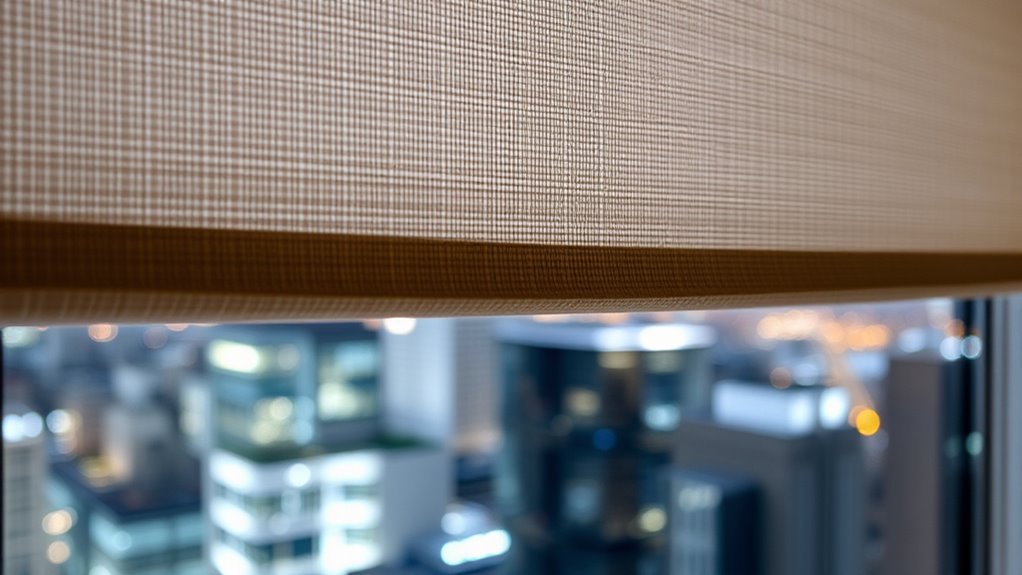
You’ll want to choose solar shades made from dense fabrics with tight weave patterns to boost nighttime privacy. Opaque materials work best because they block views from outside when your lights are on.
Let’s explore how these features make your shades more effective after dark. It’s all about keeping your space cozy and private, even when the lights are shining bright inside.
Dense Fabric Choices
Since nighttime privacy depends heavily on blocking interior visibility, choosing dense fabrics for your solar shades makes a significant difference. You want materials that not only reduce light penetration but also prevent silhouettes from showing through.
Here are three dense fabric choices to contemplate:
- Polyester blends: These fabrics offer durability and a tight surface that limits see-through at night. They’re a reliable option if you want something that lasts.
- Fiberglass: Often coated with vinyl, fiberglass provides a sturdy, dense barrier against visibility. It’s tough and does a great job keeping prying eyes out.
- Opaque woven vinyl: This material combines density with easy maintenance, ensuring your privacy stays intact after dark. Plus, it’s simple to clean and care for.
Selecting any of these dense fabrics helps maintain your seclusion without sacrificing style or function. You’ll find they block interior views effectively, especially when paired with proper installation.
Tight Weave Patterns
Although fabric density plays an essential role, the tightness of the weave considerably impacts nighttime privacy by limiting how much light and detail pass through. When you choose solar shades with tight weave patterns, the small gaps between threads reduce visibility from outside, especially when interior lights are on.
Materials like polyester and fiberglass often feature these tight weaves, providing durability alongside privacy. You’ll notice that tighter weaves block more fine details, making it hard for onlookers to distinguish shapes or movements inside.
Conversely, looser weaves let more light and silhouettes show through, compromising privacy after dark. So, when selecting solar shades, focus on those with dense, tightly woven fabrics to enhance your nighttime privacy without sacrificing natural light during the day.
Opaque Material Benefits
How exactly do opaque materials enhance nighttime privacy in solar shades? They block visibility from outside by eliminating transparency, so no one can see inside when your lights are on.
To maximize privacy, focus on these key materials and weaves:
- Polyester with Tight Weave – Offers strength and blocks light effectively, preventing silhouettes.
- Vinyl-Coated Fabrics – These provide a solid barrier that’s durable and resists moisture, ideal for privacy and longevity.
- Blackout Fabrics – Designed specifically to block all light, making them perfect for rooms requiring complete privacy at night.
Choosing shades made from these materials ensures you maintain your privacy without sacrificing style or function. Especially after sunset, when visibility inside increases, these materials really come through.
Tips to Boost Privacy With Solar Shades at Night
Wondering how you can make solar shades more effective for nighttime privacy? Start by pairing them with interior lighting strategies. Keep your indoor lights dim or use lamps with warm bulbs to reduce glare that could reveal your silhouette through the shades.
Also, consider layering your solar shades with lightweight curtains; this combo adds privacy without sacrificing style. Make sure your shades fully cover the window without gaps at the edges, as even small openings can compromise privacy.
Adjust the shade’s openness factor—lower openness levels block more visibility while still allowing some natural light. Finally, clean your shades regularly to maintain their opacity and effectiveness.
Alternative Window Treatments for Nighttime Privacy
When solar shades alone don’t provide the level of privacy you need at night, exploring alternative window treatments can offer effective solutions. You might want to contemplate these options:
- Blackout Curtains: These block out light completely and prevent anyone from seeing inside, giving you maximum privacy.
- Frosted Window Film: This adhesive film obscures your view from outside while still allowing natural light in during the day.
- Cellular Shades: Their honeycomb structure traps light and provides insulation, while offering excellent privacy when closed.
Each of these alternatives can work alone or alongside your solar shades to enhance nighttime privacy.
Choosing Solar Shades That Balance Day and Night Privacy
If you prefer to stick with solar shades but still want to maintain privacy after dark, selecting the right type is key. Look for shades with a tighter weave or higher opacity fabric—they block more visibility when interior lights are on.
Dual-roller shades offer flexibility, letting you switch between solar fabric during the day and blackout or privacy fabric at night. Also, consider the openness factor; a lower percentage means less transparency, enhancing nighttime privacy without sacrificing too much daylight.
Don’t forget to measure your windows accurately, as proper fit helps prevent gaps that could compromise privacy. By choosing solar shades designed to balance light control and privacy, you can enjoy natural daylight and feel secure once the sun sets.
Frequently Asked Questions
Can Solar Shades Block UV Rays While Providing Privacy?
Yes, solar shades block UV rays while providing privacy during the day. They let you enjoy natural light without worrying about harmful sun exposure.
However, at night, they don’t offer privacy if lights are on inside. So, you’ll need additional window treatments for full nighttime privacy. It’s something to keep in mind when planning your window coverings.
How Do Solar Shades Affect Indoor Temperature Regulation?
Solar shades help regulate indoor temperature by blocking heat from the sun during the day. This keeps your space cooler and more comfortable.
At night, they act like insulation. They reduce heat loss and help maintain a cozy temperature inside your home.
Are Solar Shades Compatible With Smart Home Systems?
Sure, solar shades seamlessly sync with smart systems, letting you control comfort conveniently.
You’ll find they function flawlessly with voice commands and apps, so you can adjust shade settings swiftly, securing style and smart living simultaneously.
What Maintenance Is Required to Keep Solar Shades Effective?
You’ll need to regularly dust or vacuum your solar shades to keep them clean. Occasionally, wipe them with a damp cloth and mild detergent.
Avoid harsh chemicals, and check for any damage to guarantee they stay effective. It’s pretty simple, but these little steps make a big difference!
Do Solar Shades Reduce Glare on Screens During the Day?
Yes, solar shades reduce glare on screens during the day by blocking direct sunlight while still allowing natural light in.
You’ll enjoy clearer screen visibility without harsh reflections or eye strain. It makes your space more comfortable and productive.
Conclusion
Solar shades shine during the day, shielding your space with sleek, see-through style. But when darkness descends and lights glow inside, their privacy power weakens.
To keep your comfort and concealment constant, consider carefully crafted materials and clever combinations. Boost your blinds with blackout liners or layered looks.
By balancing brightness and barriers, you’ll build better boundaries, blending beauty with bold privacy both day and night. Using the right materials and layering techniques ensures your solar shades provide privacy at night without sacrificing natural light during the day. This approach helps maintain a cozy, private atmosphere indoors while still enjoying the benefits of solar shades. So, for effective nighttime privacy, think beyond just the shades—combine them with blackout options or additional layers to keep your space secure and stylish around the clock.