
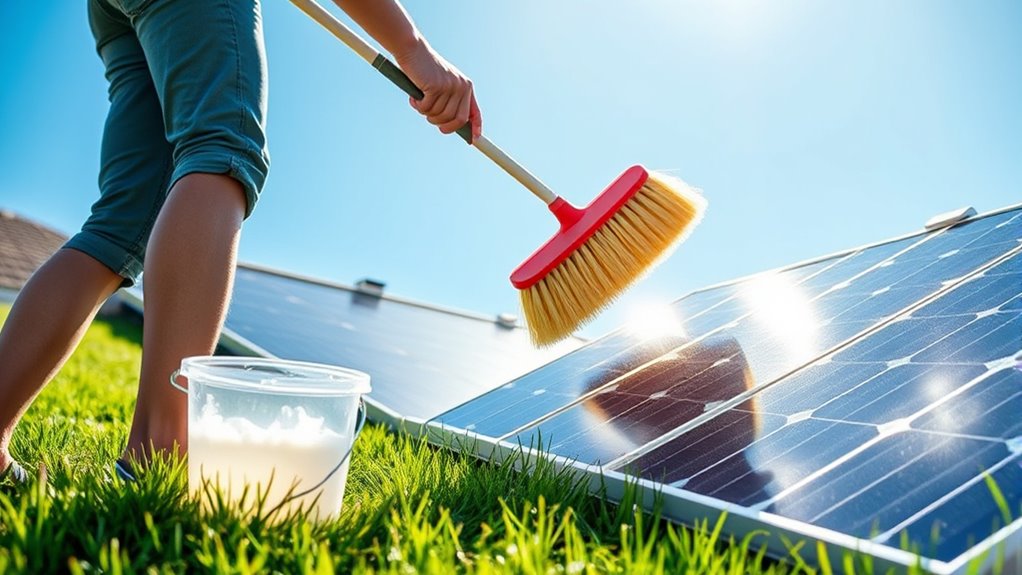
How to Clean Solar Panels From the Ground in 3 Easy Steps
To clean your solar panels from the ground, start by gathering a few essential tools. You’ll need a soft-bristle brush or sponge, a telescoping pole, a bucket filled with mild soap and lukewarm water, and a hose with a gentle spray nozzle. These items will help you safely and effectively remove dirt and grime without damaging your panels.
First, rinse the panels gently with the hose to wash away loose dirt and debris.
Then, dip the brush attached to the telescoping pole into the soapy water and clean the panels in circular motions. Be careful to avoid any electrical parts while scrubbing.
Finally, give the panels a thorough rinse to wash off all soap residue. Take a moment to inspect for any missed spots and clean them as needed.
Following these simple steps will help maintain your solar panels’ efficiency and extend their lifespan.
Key Takeaways
- Use a soft-bristle brush or sponge attached to a telescoping pole to reach panels safely from the ground.
- Rinse panels gently with a hose before applying a mild soap solution using circular motions.
- Avoid harsh chemicals and make sure water doesn’t touch any electrical parts while you clean.
- Rinse thoroughly to get rid of all the soap and to prevent streaks from forming.
- Take a close look at the panels once you’re done. If any stubborn dirt is still there, just repeat the process.
Gather the Right Tools for Cleaning Solar Panels From the Ground
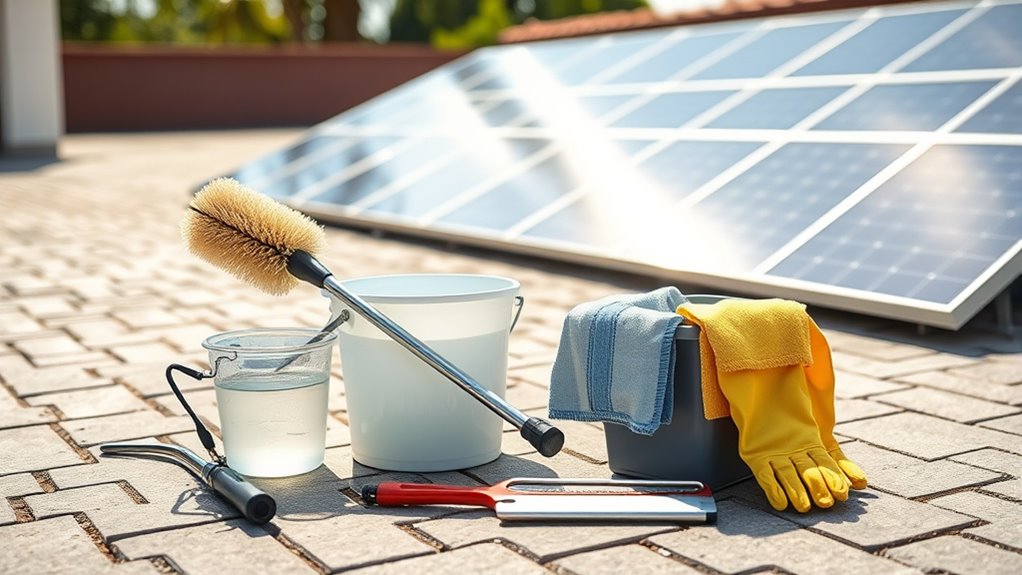
Before you start cleaning your solar panels from the ground, make sure you have the right tools on hand. You’ll need a soft-bristle brush or a sponge to avoid scratching the panels.
A telescoping pole can help you reach higher areas safely without climbing. Have a bucket filled with lukewarm water mixed with a mild, non-abrasive soap ready to loosen dirt and debris.
Avoid harsh chemicals or abrasive cleaners that could damage the panel surface. A hose with a gentle spray nozzle is useful for rinsing off soap residue.
Clean Your Solar Panels Safely: Step-by-Step Ground-Level Guide
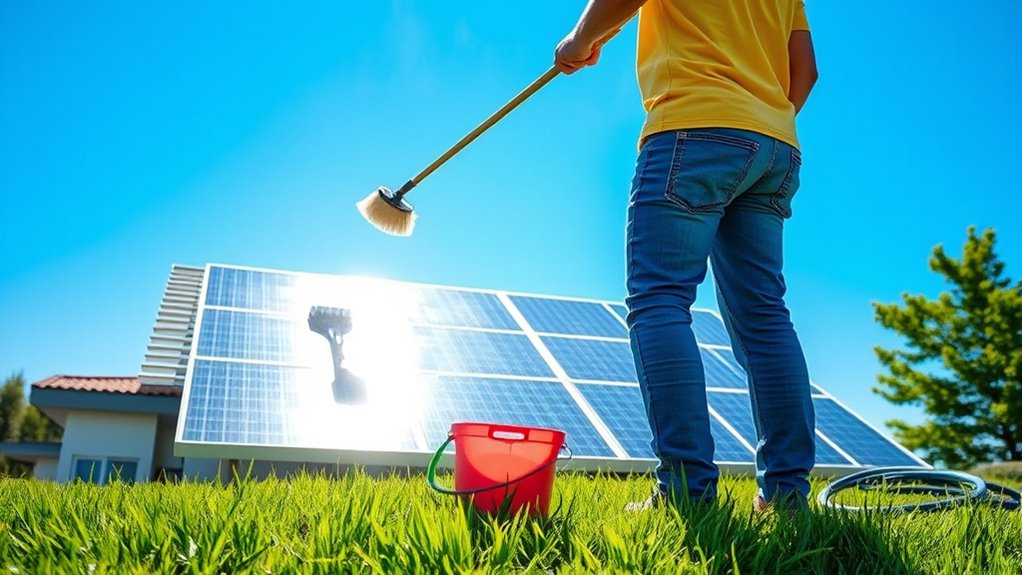
With your tools ready, you can start cleaning your solar panels safely from the ground. Begin by gently rinsing the panels with a hose to remove loose dirt.
Prepare your tools and gently rinse solar panels with a hose to safely remove loose dirt from the ground.
Next, use a soft-bristle brush or sponge attached to an extendable pole to apply a mild soap solution. Avoid harsh chemicals or abrasive materials that can damage the panels.
Clean in circular motions, covering each panel evenly. After scrubbing, rinse thoroughly with water to remove soap residue.
Be careful not to spray water directly into electrical components. If spots or stubborn grime remain, just repeat the gentle cleaning process.
Finally, inspect the panels for any missed areas or damage. By following these steps, you’ll keep your solar panels efficient without risking safety or panel integrity.
Maintenance Tips to Keep Solar Panels Spotless Longer
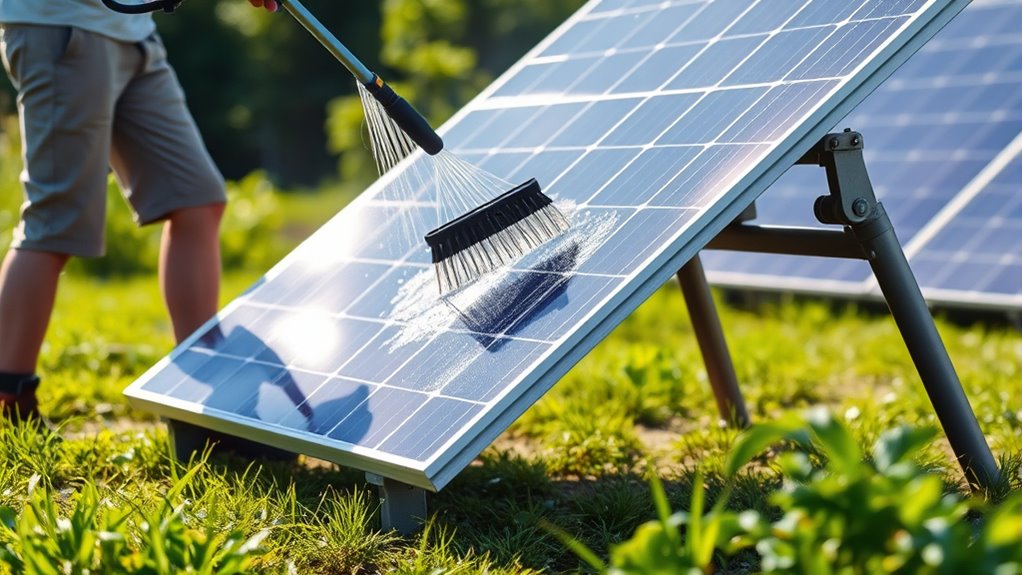
Although regular cleaning is essential, taking a few simple maintenance steps can help keep your solar panels spotless longer. First, check for debris like leaves and bird droppings weekly and remove them promptly using a soft brush or leaf blower.
Trim nearby trees to reduce shading and falling debris. Also, avoid walking on panels to prevent damage.
Make sure your panels are tilted correctly to allow rainwater to naturally wash away dirt. Inspect for any cracks or loose mounts periodically and address issues early.
And here’s a tip: consider installing a protective coating designed for solar panels to reduce dust accumulation. By staying proactive with these small tasks, you’ll maintain ideal panel efficiency and extend the time between thorough cleanings, saving you effort and energy in the long run.
Frequently Asked Questions
How Often Should Solar Panels Be Cleaned for Optimal Performance?
You should clean your solar panels every 6 months to keep them efficient.
If you notice heavy dust, bird droppings, or pollen buildup, clean them more often. This way, you’ll guarantee peak performance and energy production.
Can Rain Alone Keep Solar Panels Clean Enough?
Rain alone can’t keep your solar panels clean enough. It might wash off loose dirt, but stubborn grime and bird droppings need manual cleaning.
To keep your panels working at their best and maximize energy efficiency, you can’t just rely on rain. A little extra care goes a long way.
Are Professional Solar Panel Cleaning Services Worth the Cost?
You might think professional cleaning is overpriced, but they guarantee thorough dirt removal and boost efficiency.
If you lack time or equipment, their expertise can save you money by maximizing your solar panels’ energy output.
What Are Common Signs That Solar Panels Need Cleaning?
You’ll notice reduced energy output, visible dirt, dust, bird droppings, or streaks on your panels.
If your bills spike or performance drops, it’s a clear sign your solar panels need cleaning for peak efficiency.
Keeping them clean helps make sure you get the most out of your solar investment.
Does Cleaning Solar Panels Improve Their Energy Efficiency Significantly?
Yes, cleaning your solar panels can considerably boost their energy efficiency. Dirt and debris block sunlight, reducing output.
Conclusion
Now that you’ve learned how to clean your solar panels from the ground, imagine sparkling panels soaking up sunlight like bright mirrors on your roof. With just a few simple tools and steps, you’re not only boosting their shine but also their energy power.
Keep up with regular maintenance, and your panels will stay spotless longer, turning sunlight into savings effortlessly. Cleaning solar panels from the ground is easy and safe, helping you maintain peak energy efficiency without climbing on the roof.
You’ve got this—your clean panels are ready to work hard for you! By following these simple steps, you’ll maximize your solar investment and enjoy more reliable, cost-effective energy every day.
2 Comments