What Can Solar Panels Power in a House?
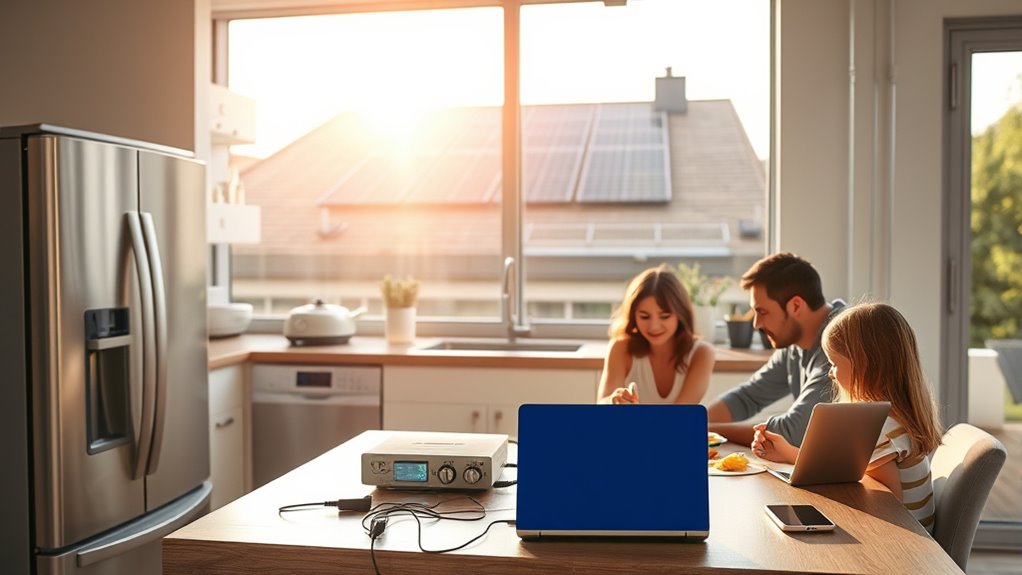
You can power most household essentials with solar panels, including lights, TVs, refrigerators, and computers. Solar energy is a great way to reduce your electricity bills while being eco-friendly.
Smaller devices like phones, fans, and smart home gadgets run well during sunny hours, thanks to inverters converting energy for your use.
Energy-efficient appliances maximize benefits, while battery storage can help run heating or cooling systems. Depending on your system size and location, you might even power your entire home.
It’s pretty amazing how versatile solar power can be.
Keep exploring to see how solar can fit your lifestyle and needs. With the right setup, you’ll enjoy clean, reliable energy every day.
Key Takeaways
- Solar panels can power essential household devices like lights, TVs, refrigerators, and computers during sunny hours.
- Energy-efficient appliances, such as eco-mode washers and small kitchen gadgets, work best with solar power.
- LED lighting, laptops, chargers, and smart home devices are easily supported by solar energy systems.
- Larger systems with battery storage can power HVAC systems, including heat pumps and air conditioners.
- Full home power is achievable with adequate system size, roof space, energy-efficient devices, and storage solutions.
How Much Energy Can Solar Panels Really Provide?
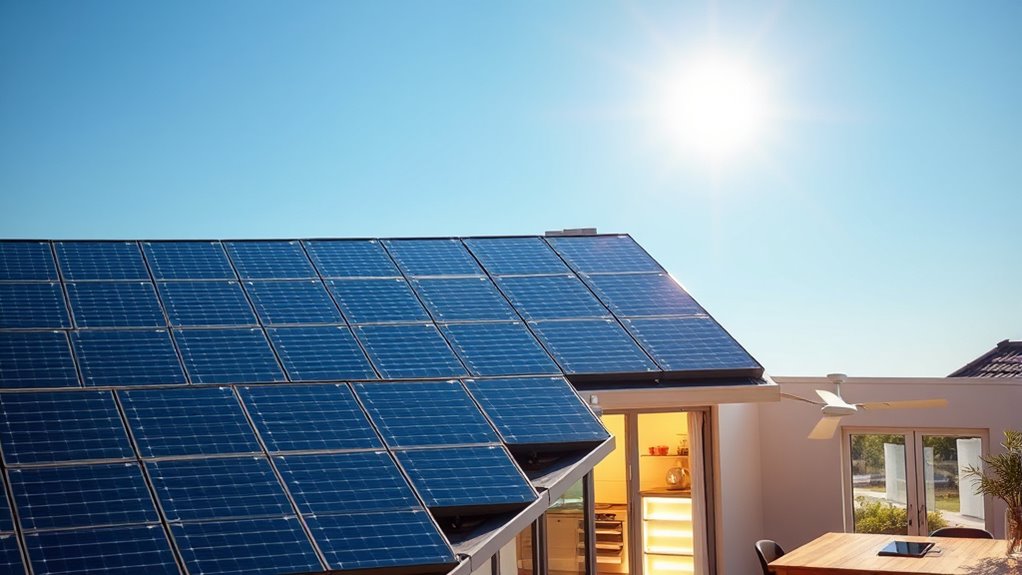
Although the exact amount varies, solar panels can provide a significant portion of your home’s energy needs. The energy they generate depends on factors like the size of your system, roof orientation, and local sunlight hours.
On average, a typical residential solar system can produce between 3,000 to 8,000 kilowatt-hours (kWh) annually, covering a large part of your electricity use. If you live in a sunny region, you’ll get more power, while cloudier areas yield less.
You can estimate your system’s output by multiplying its wattage by the hours of peak sunlight you receive daily. Just keep in mind, energy production fluctuates seasonally, so your monthly output may vary.
Proper installation and maintenance also help maximize how much energy you get. So, it’s worth paying attention to those details to make the most out of your solar setup.
What Household Devices Can You Power With Solar Panels?
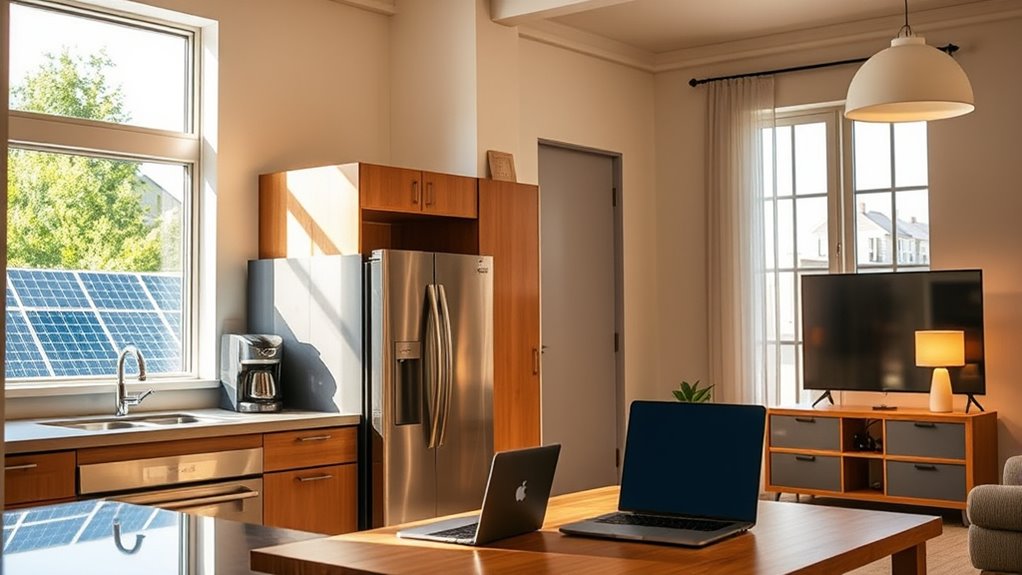
When you harness solar energy, you can power many common household devices, from lights and televisions to refrigerators and computers. Solar panels convert sunlight into electricity that runs your essential electronics and appliances.
You can keep your phone charged, operate your microwave, and even run your washer and dryer during sunny hours. Solar energy also powers smaller gadgets like fans, laptops, and gaming consoles.
While solar panels supply direct current (DC), inverters convert it to alternating current (AC), compatible with most household devices. However, devices that use less power consistently work best.
You can also power security systems and smart home devices easily. With a properly sized solar setup, you’ll reduce reliance on the grid and lower your electricity bills while keeping your daily devices running smoothly.
Which Appliances Work Best With Solar Panels?
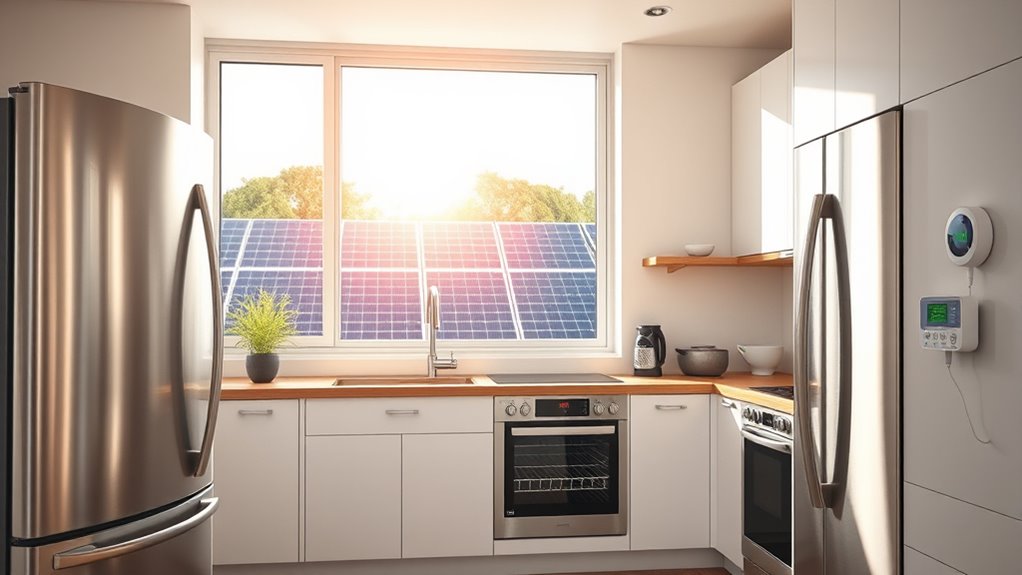
Since solar panels generate a limited amount of energy depending on sunlight, you’ll want to focus on appliances that use power efficiently. Energy-efficient refrigerators, LED water heaters, and modern washing machines with eco-modes work best because they consume less electricity.
Focus on energy-efficient appliances like refrigerators and washing machines to get the most from your solar power system.
Small kitchen appliances like microwaves and slow cookers also make good use of solar power since they require shorter run times or lower wattage. Avoid high-demand devices like electric ovens or central air conditioners during peak hours, as they can quickly drain your system.
Instead, choose appliances with Energy Star ratings and consider smart plugs to control usage. By prioritizing these efficient devices, you’ll maximize your solar setup’s benefits without overloading your energy supply.
This approach helps you save money and reduce your carbon footprint effectively.
How Do Solar Panels Support Lighting and Electronics?
How exactly do solar panels power your home’s lighting and electronics? Solar panels convert sunlight into electricity, which flows through an inverter to power your lights and devices.
This process lets you run LED bulbs, TVs, laptops, and more without relying solely on the grid. Plus, solar energy can help reduce your electricity bills and shrink your carbon footprint.
Here’s a quick look at typical power use for common lighting and electronics:
| Device | Average Power Use (Watts) |
|---|---|
| LED Light Bulb | 7 |
| Laptop | 50 |
| TV (LED) | 70 |
| Smartphone Charger | 5 |
| Router | 10 |
With efficient solar setups, you can comfortably power these daily essentials without a hitch.
Can Solar Panels Run Your Heating and Cooling Systems?
Although heating and cooling systems demand more energy than typical electronics, solar panels can still power them effectively with the right setup. If you install a sufficiently sized solar array, it can generate enough electricity to run your HVAC system, especially during sunny months when demand peaks.
Pairing solar panels with an energy-efficient heat pump or a modern, high-SEER air conditioner improves performance and reduces energy consumption. Additionally, incorporating a battery storage system allows you to use solar energy even when the sun isn’t shining, helping maintain consistent comfort.
Keep in mind, though, that your system’s capacity and local climate impact how well solar panels can handle your heating and cooling needs. So, it’s important to assess your energy usage and consult a professional for excellent design.
Is It Possible For Solar Panels To Power Your Entire Home?
You might wonder if solar panels can power your entire home. While it’s possible, you’ll need to take into account factors like your energy use, roof space, and sunlight availability.
Understanding these limits will help you decide if going fully solar is right for you. It’s all about knowing what works best for your unique situation.
Whole Home Energy Potential
Can solar panels truly power your entire home? The answer depends on your energy needs and system size.
With the right setup, solar panels can generate enough electricity to cover all your household demands. Here’s what influences your whole home energy potential:
- System Size: Larger solar arrays produce more power, increasing the chance of fully meeting your energy consumption.
- Energy Efficiency: Using energy-efficient appliances and habits lowers your overall demand, making full solar coverage easier.
- Energy Storage: Incorporating batteries lets you store excess power for nighttime or cloudy days, ensuring continuous supply.
Limitations And Considerations
While solar panels offer impressive potential, several limitations and considerations affect whether they can fully power your home. Your location plays a vital role—solar efficiency drops in cloudy or shaded areas.
Roof size and orientation also limit how many panels you can install. Energy needs fluctuate daily and seasonally, so your system might not always meet peak demands without battery storage.
Initial costs and maintenance are other factors to weigh. Plus, local regulations and incentives can impact installation feasibility and cost-effectiveness.
If you rely heavily on high-energy appliances, solar alone might not cover everything. To decide if solar can power your entire home, assess your energy usage, site conditions, and budget carefully.
Combining solar with energy efficiency upgrades and storage often provides the best results. It’s usually not just about panels but about the whole system working together.
Frequently Asked Questions
How Do Weather Conditions Affect Solar Panel Efficiency?
You’ll see solar panels produce less energy on cloudy or rainy days because sunlight is weaker.
Snow can block panels, while extreme heat might reduce efficiency.
Clear, sunny weather gives you the best power output. It’s when your panels work their hardest and generate the most energy.
What Maintenance Do Solar Panels Require?
Think of your solar panels as a garden—they need regular care. You’ll want to clean them a few times a year, check for debris or damage, and guarantee connections stay tight to keep energy flowing smoothly.
It’s not hard, really. Just a little attention now and then keeps everything working great!
Can Solar Panels Increase My Home’s Property Value?
Yes, solar panels can increase your home’s property value. Buyers often appreciate energy savings and eco-friendliness, making your house more attractive.
Plus, they can lower utility costs, which adds financial appeal to potential buyers. It’s a win-win!
How Long Do Solar Panels Typically Last?
Solar panels typically last about 25 to 30 years, but many keep producing electricity beyond that with slightly reduced efficiency.
You can expect reliable energy for decades if you maintain them well and monitor their performance regularly. It’s pretty impressive how long they can keep going!
Are There Government Incentives for Installing Solar Panels?
Imagine sunlight turning into savings—yes, you’ll find government incentives like tax credits and rebates that cut your upfront costs.
These programs make installing solar panels much more affordable, brightening your home and your wallet simultaneously.
Conclusion
Solar panels can power almost everything in your home, from tiny gadgets to big appliances, making your energy bills shrink like a snowman in July. While they shine brightest with lighting and electronics, they can also handle heating and cooling with the right setup.
Though going 100% solar might sound like rocket science, it’s totally doable with smart planning. You’re just one step away from turning your home into an energy powerhouse!
With the right solar panel system, you can reduce reliance on traditional energy sources and save money. Solar energy is a clean, renewable way to power your home efficiently. So, whether it’s your lights, electronics, heating, or cooling, solar panels can cover it all and help you live more sustainably.