
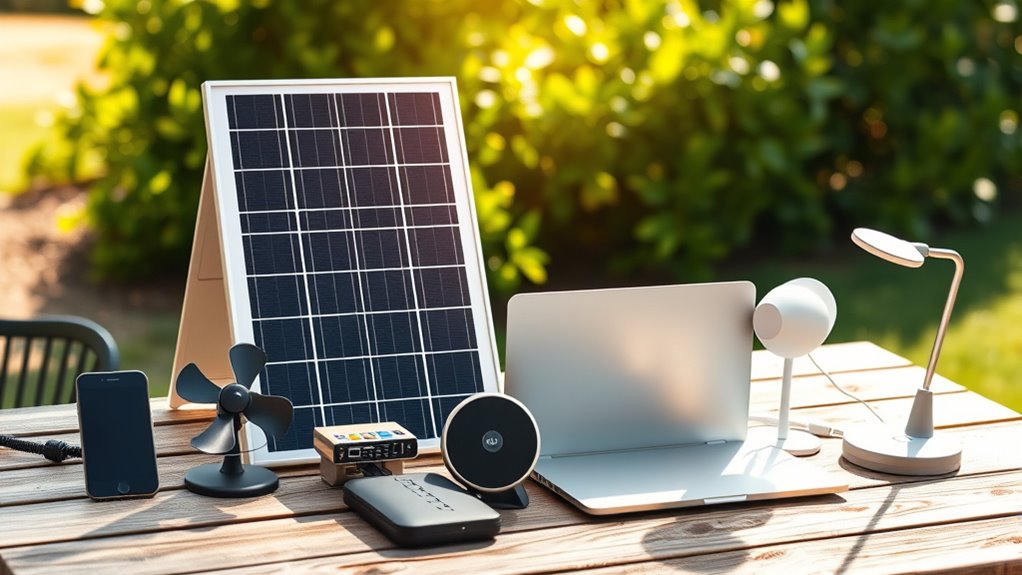
What Will a 100 Watt Solar Panel Power: 5 Devices to Try
With a 100 watt solar panel, you can power small LED lights, keep portable fans running, and charge your phone or other small gadgets easily. It’s a handy solution for anyone looking to stay off the grid or reduce their electricity bills.
Plus, it’s perfect for outdoor adventures like camping or tailgating.
It’s also great for operating mini fridges or coolers, especially if paired with a battery. This setup ensures you have cool drinks and fresh food no matter where you are.
If you want to get the most out of your panel and discover more practical device ideas, keep exploring how to maximize its efficiency and usage.
Trust me, there are plenty of clever ways to make that 100 watt panel work hard for you!
Key Takeaways
- A 100 watt solar panel can power small LED lights for off-grid illumination and camping setups. It’s perfect for those cozy nights outside without access to the grid.
- It effectively charges smartphones, tablets, and small electronic devices multiple times daily. So, you can keep your gadgets ready to go without worrying about outlets.
- The panel supports low-wattage fans (5-15 watts) for cooling in outdoor or remote areas. A nice breeze can make all the difference when you’re off the beaten path.
- Mini fridges or coolers consuming 30-50 watts can be powered with an appropriate battery and controller. This keeps your food and drinks fresh even when you’re far from home.
- Small water pumps and essential appliances like CPAP machines are compatible with 100 watt solar panels. It’s great to know you can run important devices without interruption.
Everyday Devices Powered by a 100 Watt Solar Panel
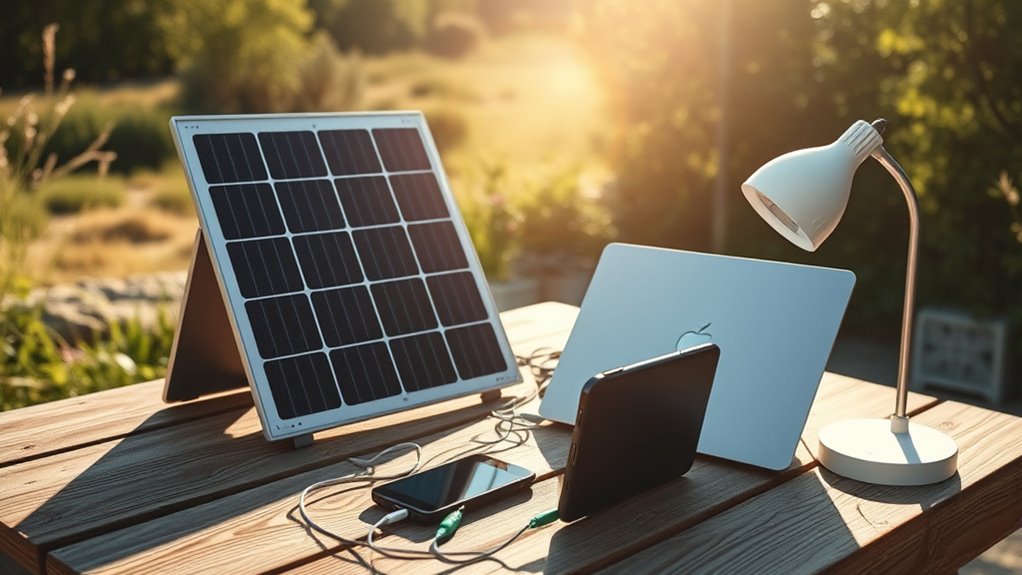
Although a 100 watt solar panel may seem modest, it can power many everyday devices you use regularly. You can run small LED lights, keeping your space illuminated without relying on traditional electricity.
A 100 watt solar panel can easily power small LED lights, providing reliable, off-grid illumination.
It’s perfect for powering a small fan, helping you stay cool during warm days. You can also use it to operate a portable radio or a small Bluetooth speaker, allowing you to enjoy your favorite tunes off the grid.
Additionally, it can power essential small appliances like a CPAP machine or a low-wattage water pump. With this solar panel, you gain energy independence for many simple tasks.
That makes it a smart choice for camping, tiny homes, or emergency preparedness without overwhelming your setup.
Charging Phones and Small Electronics
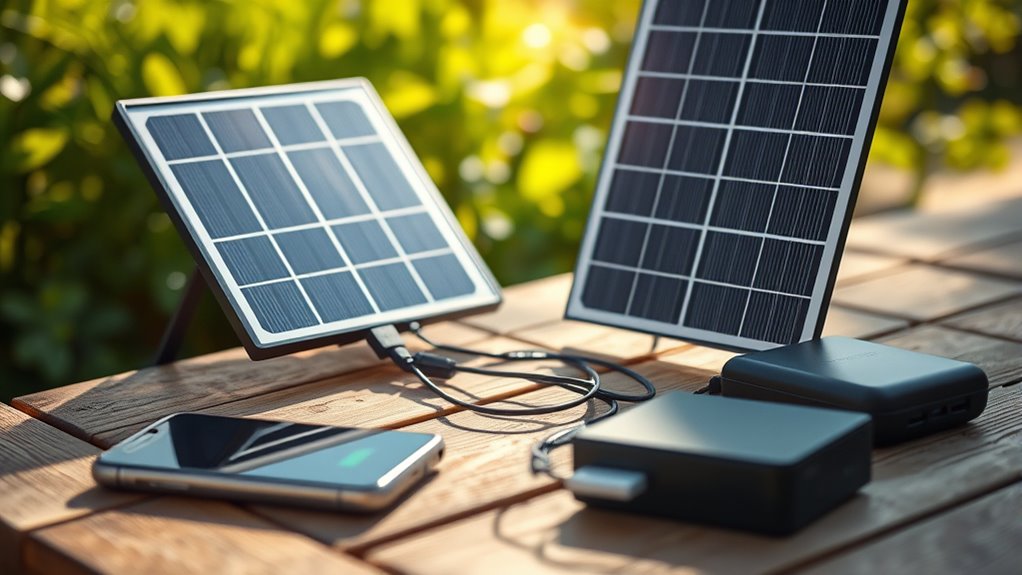
How easily can you keep your phone and small electronics charged using a 100 watt solar panel? Quite easily. A 100 watt panel produces enough energy to fully charge smartphones, tablets, Bluetooth speakers, and other small gadgets multiple times a day under good sunlight.
You’ll just need a compatible charge controller or power bank with USB outputs to connect your devices safely. This panel’s output matches the modest power demands of these items, ensuring steady charging without overloading.
Plus, it’s portable enough to take on camping trips or remote workdays. Just position the panel in direct sunlight, and you’ll maintain reliable power for your essential electronics, even off-grid. This setup keeps your devices alive and ready, no matter where you are.
Running Portable Lights and Fans
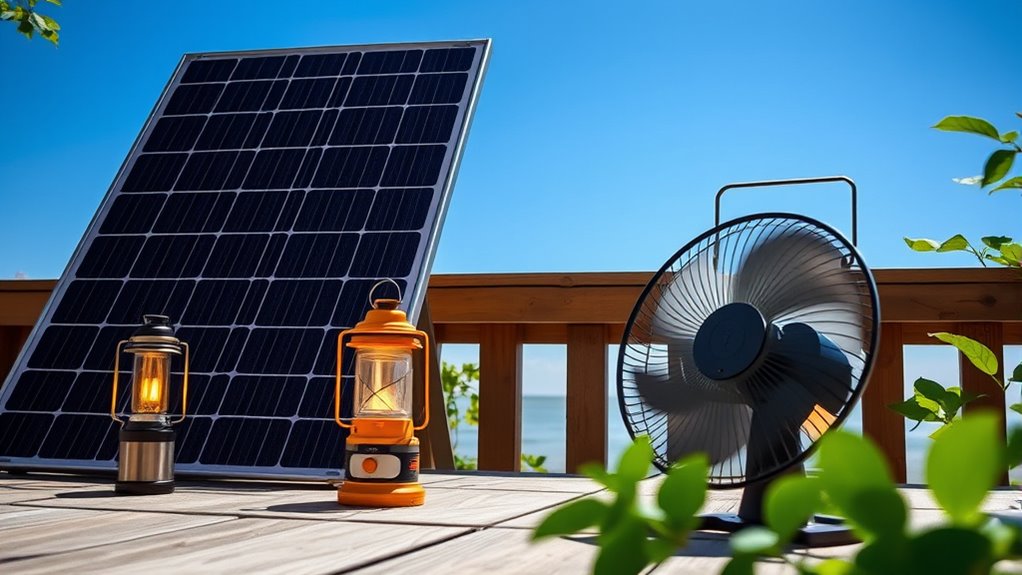
Beyond keeping your small electronics charged, a 100 watt solar panel can also power portable lights and fans. This makes it a super versatile choice for outdoor or off-grid use.
You can run LED lanterns or string lights efficiently, providing bright, energy-saving illumination for camping or backyard setups. Since LED lights consume very little power, your panel can keep them running throughout the evening without draining the battery too quickly.
Similarly, small DC fans designed for camping or personal use can be powered to improve airflow and comfort in tents or small rooms. Just be sure to check the fan’s wattage—most portable fans use between 5 to 15 watts.
Powering Mini Fridges and Coolers
When you want to keep your food and drinks cool off-grid, a 100 watt solar panel can power mini fridges and coolers efficiently. These appliances typically use between 30 to 50 watts, making them a great match for your solar setup.
You’ll need a deep cycle battery and a charge controller to store and regulate the power, ensuring consistent cooling even when the sun isn’t shining. Keep in mind, mini fridges draw more power during compressor startup, so having a battery with sufficient capacity is important.
Maximizing Your 100 Watt Solar Panel’s Efficiency
Wondering how to get the most out of your 100 watt solar panel? Start by positioning it to face the sun directly during peak hours, typically between 10 a.m. and 4 p.m.
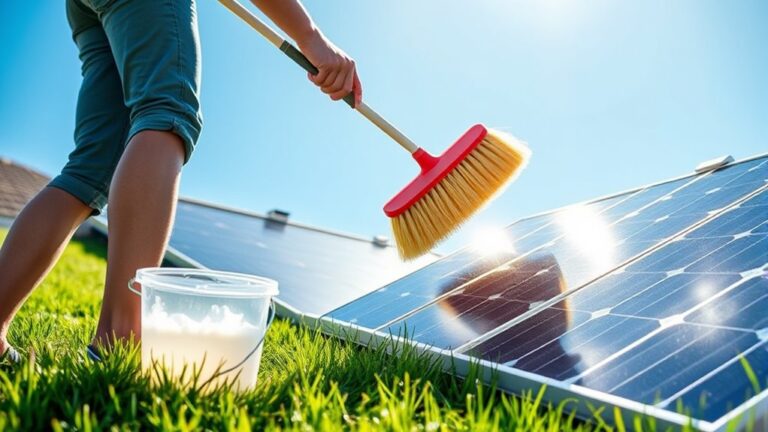
Keep the panel clean and free from dust or debris, as dirt can reduce its efficiency appreciably. Use an efficient charge controller to prevent battery overcharging and energy loss.
Make sure to minimize shading from trees, buildings, or other objects. Even partial shade can drastically cut power output.
Pair your panel with energy-efficient devices and try to avoid running high-consumption appliances all at once.
Finally, keep an eye on your system regularly with a solar app or multimeter. This way, you can spot any drops in performance quickly.
These simple steps will help you squeeze every watt and get reliable power when you need it.
Frequently Asked Questions
How Long Does It Take to Install a 100 Watt Solar Panel?
It usually takes you about 1 to 2 hours to install a 100 watt solar panel, depending on your experience and tools.
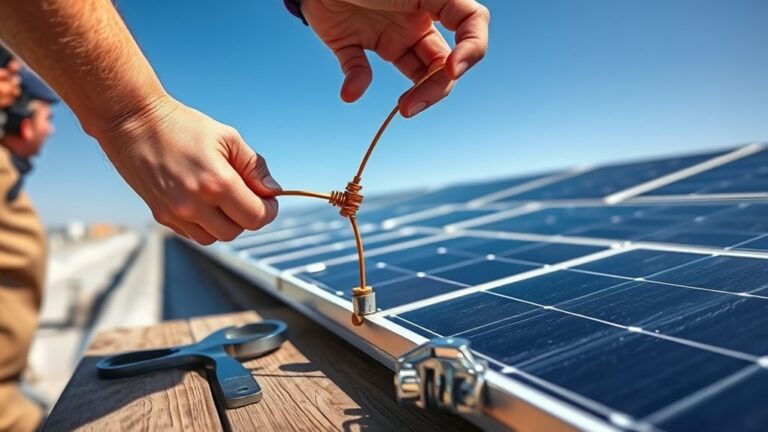
You’ll need to mount it, connect wiring, and secure everything properly for safe, efficient use.
Don’t worry, it’s not too complicated once you get the hang of it! Just take your time and double-check your connections.
What Is the Lifespan of a 100 Watt Solar Panel?
You can expect a 100 watt solar panel to last around 25 to 30 years. Over time, its efficiency will gradually decrease, but with proper care, it’ll keep powering your devices reliably for decades.
It’s pretty impressive, right? Just a little maintenance here and there can go a long way in making sure your panel keeps working strong.
Can a 100 Watt Solar Panel Be Used Off-Grid?
Yes, you can use a 100 watt solar panel off-grid. It powers small devices, charges batteries, and runs lights.
You’ll need a charge controller and battery to store energy and keep your setup efficient and reliable. This way, you can make the most out of your solar panel without any hassle.
How Do Weather Conditions Affect a 100 Watt Solar Panel?
Weather conditions impact your 100 watt solar panel’s efficiency—cloudy days reduce power output, rain and snow block sunlight, and extreme heat can lower performance.
You’ll get the best results in bright, clear sunlight. It’s pretty simple: the more sunshine, the better your panel works!
Are There Safety Concerns With Using a 100 Watt Solar Panel?
You shouldn’t worry about a 100 watt panel exploding like a rocket! Just avoid water contact, guarantee proper wiring, and use a charge controller.
These steps keep your system safe and prevent electrical hazards. It’s really not as complicated as it sounds!
Conclusion
With a 100 watt solar panel, you can power up to 5 small devices simultaneously, making it a great option for on-the-go energy needs. For example, it can charge your phone about 4 times a day, keeping you connected without draining the grid.
By understanding what your panel can handle, you’ll maximize its efficiency and enjoy reliable, eco-friendly power wherever you are. It’s a smart, simple way to stay charged sustainably! Using a 100 watt solar panel not only supports your daily energy needs but also helps reduce your carbon footprint. Whether you’re camping, traveling, or just looking for backup power, this solar panel offers a practical and green solution. Embracing solar power means you get dependable, renewable energy that fits your lifestyle and keeps your devices running smoothly.

11 Comments