How Does Solar Power Work at Night?
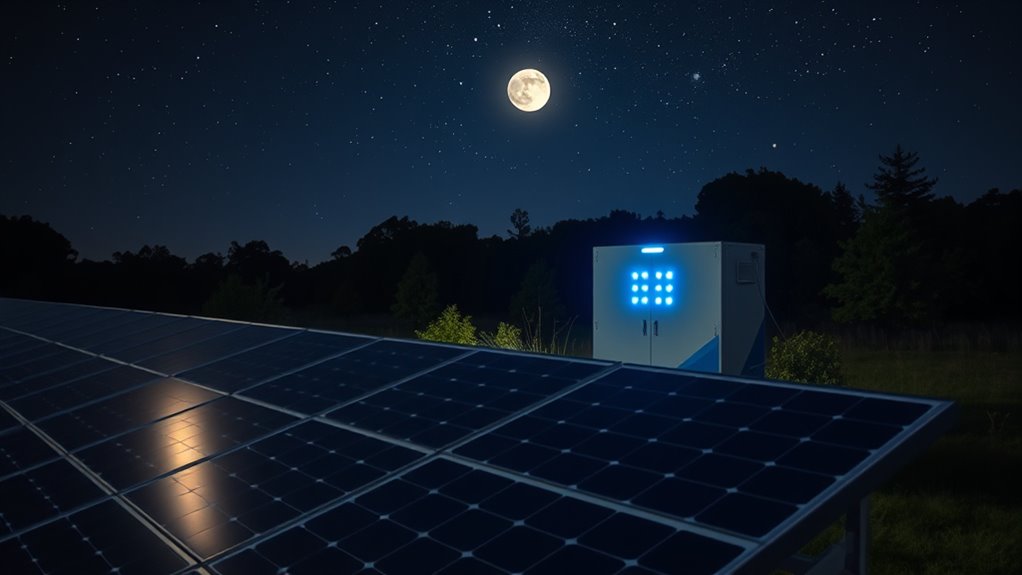
You use solar power at night by relying on batteries that store the energy your panels generate during the day. These batteries keep electricity ready, and an inverter converts it from DC to AC so your home stays powered.
If you’re connected to the grid, excess energy can feed into it for credits, which you can use after sunset.
Backup systems like generators may also help.
Keep exploring to discover how these technologies work together for reliable nighttime solar power.
Key Takeaways
- Solar power generated during the day is stored in batteries to provide electricity at night. This way, you still get power even when the sun isn’t shining.
- Inverters convert the stored DC battery power into usable AC electricity for nighttime use. So, your home appliances can run smoothly after sunset.
- Grid-tied systems let you feed any extra solar energy back to the grid. Then, you can draw power from the grid when your solar storage runs low.
- Backup generators and fuel cells are great for supplying power if your solar storage isn’t enough. They act like a safety net during those longer cloudy periods.
- Smart energy management helps optimize how storage is used. This ensures you have continuous and reliable power even after the sun goes down.
How Solar Power Works After the Sun Sets
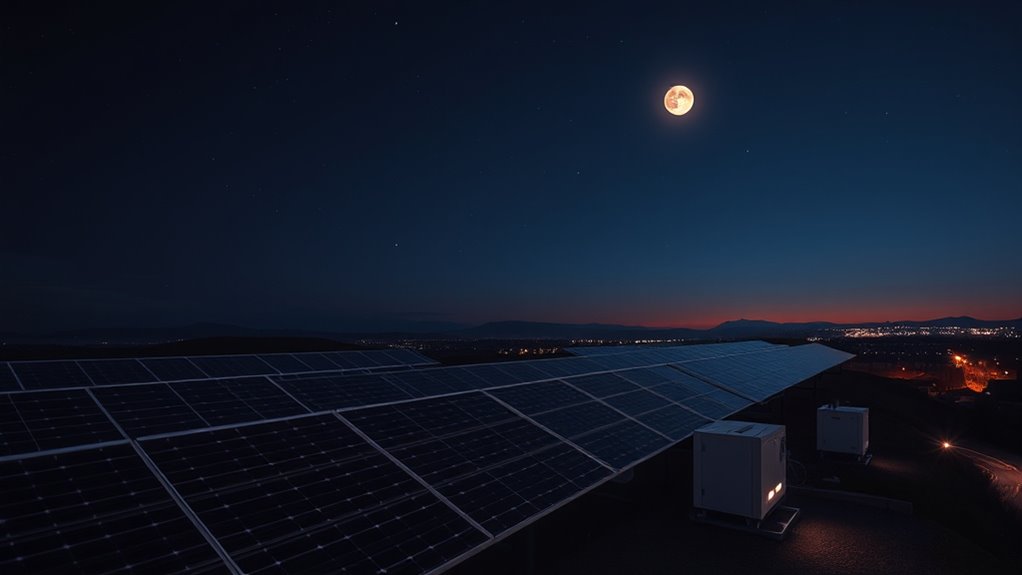
Although solar panels don’t generate electricity without sunlight, you can still use solar power after the sun sets by relying on energy storage systems like batteries. During the day, your solar panels convert sunlight into electricity, which you can use immediately or store for later.
When night falls, your system draws power from these stored reserves instead of the panels themselves. This way, you maintain a steady supply of clean energy around the clock. Without this setup, you’d have to switch to the conventional grid once darkness arrives.
How Do Solar Batteries Store Energy for Nighttime Use?
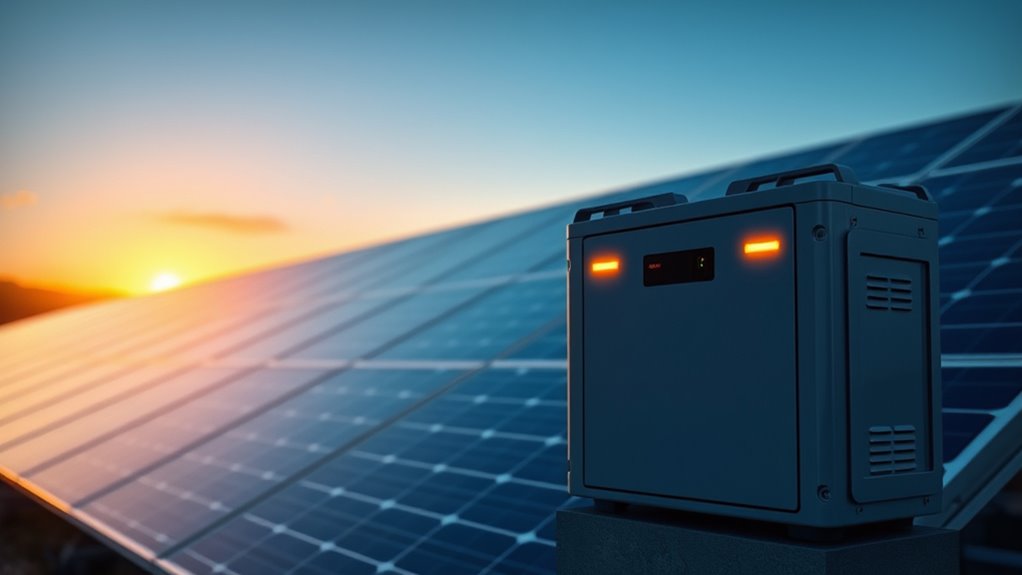
To keep your solar power system running at night, solar batteries play a key role by storing the electricity your panels generate during the day. Here’s how they do it:
- Energy Conversion: Your solar panels convert sunlight into direct current (DC) electricity.
- Charging: This DC electricity flows into the battery, where chemical reactions store the electrical energy.
- Storage: The battery holds this energy safely until you need it, even after the sun sets.
- Discharging: When the sun goes down, the battery releases the stored energy, converting it back to usable electricity to power your home.
What Types of Batteries Work Best for Solar Storage?
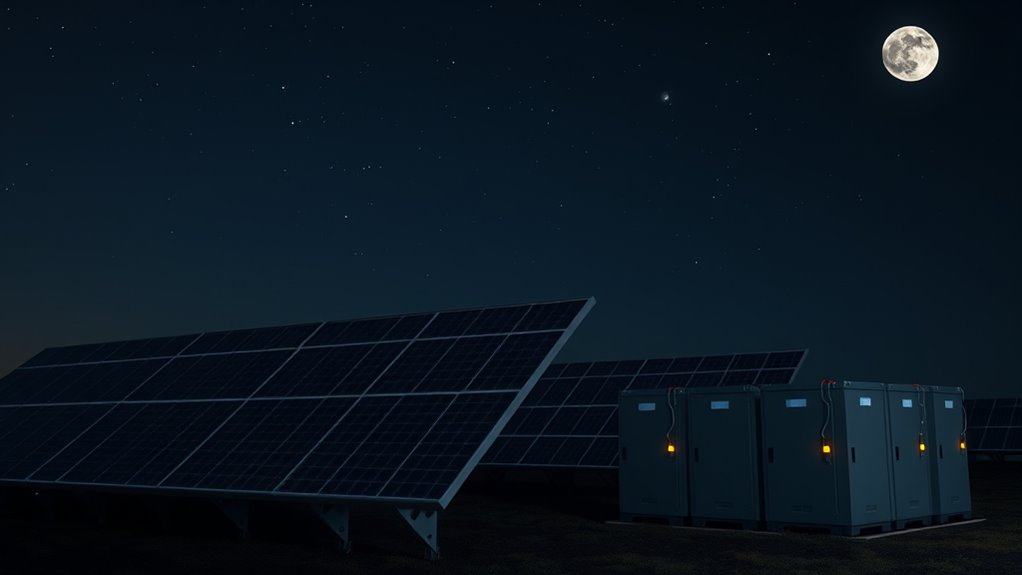
You’ll want to choose the right battery to store your solar energy efficiently. Lithium-ion batteries offer high performance and long life, while lead-acid batteries are more affordable but bulkier.
Also, keep an eye on emerging battery technologies that could change the game soon. They might offer even better options for solar storage in the near future.
Lithium-Ion Battery Advantages
Many homeowners and businesses choose lithium-ion batteries for solar storage because they offer a high energy density, longer lifespan, and faster charging capabilities compared to other battery types.
If you want to maximize your solar system’s efficiency, lithium-ion batteries are a smart choice. They really make a difference.
Here’s why you should consider them:
- Compact size – They store more energy in less space.
- Long cycle life – You get thousands of charge-discharge cycles before performance drops.
- Low maintenance – They don’t require regular topping up or equalizing.
- Fast charging – Quickly store solar energy during peak sunlight hours.
Pretty convenient, right?
Lead-Acid Battery Characteristics
While lithium-ion batteries are popular, lead-acid batteries remain a reliable and cost-effective option for solar energy storage. If you’re looking for a tried-and-true solution, lead-acid batteries offer durability and a well-understood technology.
You’ll find two main types: flooded and sealed (AGM or gel). Flooded batteries require regular maintenance, like checking water levels, but tend to cost less upfront.
Sealed lead-acid batteries need less upkeep and are safer indoors, though they come at a higher price. Keep in mind, lead-acid batteries generally have a shorter lifespan and lower depth of discharge compared to lithium-ion.
That means you can’t use as much of their stored energy without damaging them. Still, they’re a solid choice if you want affordability and proven performance in your solar setup.
Emerging Battery Technologies
How do new battery technologies stack up against traditional options for solar storage? You’ll find that emerging batteries offer better efficiency, longer life, and greater safety.
Here are four types you should know about:
- Lithium-Ion Batteries – Lightweight, high energy density, and fast charging make these popular for home solar systems.
- Solid-State Batteries – These promise improved safety and lifespan by replacing liquid electrolytes with solid materials.
- Flow Batteries – Ideal for large-scale storage, they use liquid electrolytes and offer easy scalability.
- Sodium-Ion Batteries – A cheaper alternative to lithium-ion, with growing potential for wider adoption.
Can Solar Power Systems Work Without Batteries at Night?
You might wonder if solar power can keep your home running at night without batteries.
If your system is grid-tied, it can draw electricity from the grid when the sun isn’t shining.
Let’s explore how this setup uses nighttime energy sources to keep things powered.
Grid-Tied Systems Explained
Because solar panels don’t produce electricity at night, you might wonder if you need batteries to keep your home powered. The good news is, with a grid-tied solar system, you don’t.
These systems connect your solar panels directly to the electrical grid, allowing you to draw power when your panels aren’t producing. Here’s how it works:
- During the day, your panels generate excess electricity, which you send back to the grid.
- You earn credits for the energy you supply, reducing your electricity bill.
- At night, you use those credits to draw power from the grid without interruption.
- This setup eliminates the need for costly battery storage while keeping your home powered 24/7.
Grid-tied systems cleverly balance solar generation and grid supply. It’s a smart way to keep your energy flowing smoothly all day and night.
Nighttime Energy Sources
Can solar power systems keep your home running after the sun goes down without batteries? Yes, they can—if your system is connected to the electrical grid.
When your solar panels aren’t producing energy at night, your home automatically draws power from the grid, ensuring a continuous supply without needing onsite battery storage.
This setup means you don’t have to invest in expensive batteries, but you’ll still rely on your utility company after dark.
Alternatively, some people use generators or other renewable sources like wind turbines to supplement energy at night. However, without batteries or a grid connection, solar systems alone can’t power your home once the sun sets.
How Do Solar Inverters Help Use Stored Energy After Dark?
Although solar panels stop producing electricity at night, solar inverters play a crucial role in keeping your home powered by converting the stored energy from your batteries into usable electricity. When the sun sets, the inverter switches from direct solar input to battery power seamlessly.
Here’s how solar inverters help you use stored energy after dark:
- Convert DC to AC: They transform the battery’s direct current (DC) into alternating current (AC) for your home appliances.
- Manage Power Flow: Inverters regulate how much power is drawn from the batteries to avoid overuse.
- Monitor Battery Health: They track charge levels to maximize battery life and efficiency.
- Ensure Safety: Inverters prevent backflow to the grid, protecting both your system and utility workers.
This way, your home stays powered effortlessly after the sun goes down. It’s like having a backup plan that just kicks in automatically.
Other Technologies That Support Solar Power at Night
When the sun sets, you don’t have to rely solely on batteries to keep your solar power system running smoothly. Other technologies, like thermal energy storage, let you store heat generated during the day and convert it to electricity or use it for heating at night.
You might also use grid-tied systems, which allow you to draw power from the grid when solar energy isn’t available and feed excess power back during the day. Additionally, smart energy management systems optimize how and when energy is used or stored, improving efficiency.
Some advanced setups include fuel cells that convert stored hydrogen into electricity after dark. By combining these technologies, you can maintain a reliable, clean energy supply even when the sun isn’t shining.
Frequently Asked Questions
How Does Weather Affect Solar Power Efficiency at Night?
Weather doesn’t affect solar power efficiency at night since solar panels don’t generate electricity without sunlight.
However, cloudy or rainy days reduce daytime energy storage. So, you might have less power available during nighttime hours.
Are There Government Incentives for Nighttime Solar Power Systems?
Yes, you can find government incentives like tax credits and rebates for nighttime solar power systems, especially those with battery storage.
Check local and federal programs to maximize savings and support your clean energy investment effectively.
It’s definitely worth looking into because these incentives can really help lower your upfront costs.
Plus, they make switching to nighttime solar power a smarter financial move overall.
What Maintenance Is Required for Solar Batteries Used at Night?
You’ll want to give your solar batteries some gentle TLC—regularly check connections, keep terminals clean, and avoid deep discharges. This keeps them happy and healthy, ensuring they store energy efficiently for when you need it most.
It’s pretty simple stuff, but it makes a big difference. Just a little care goes a long way in keeping your batteries working well through the night.
Can Solar Power Systems Integrate With Home Automation at Night?
Yes, you can integrate solar power systems with home automation at night. Your system can manage stored energy and control lighting, appliances, and optimize consumption automatically.
This way, it ensures efficient power use even when the sun isn’t shining. Pretty handy, right?
How Long Do Solar Batteries Typically Last With Nightly Use?
Solar batteries usually dance through 5 to 15 years of nightly use before they start to tire.
You’ll notice their energy fading like a candle’s glow, signaling it’s time for a fresh spark to keep powering your nights.
Conclusion
Even when the sun dips below the horizon, your solar power system doesn’t sleep—it’s like a hidden reservoir, quietly storing daylight’s energy for night’s needs. With batteries acting as your personal energy vault, and inverters releasing that power, you keep your home glowing under the moon’s watchful eye.
So, while darkness falls, your solar setup keeps humming, turning night into a silent partner in your clean energy journey. This means your solar power system works around the clock, providing reliable electricity even when the sun isn’t shining.
Thanks to battery storage and smart inverters, solar power at night is not just possible—it’s efficient and seamless. Your home stays powered, reducing dependence on the grid and maximizing the benefits of renewable energy. That’s how solar power works at night, keeping your life bright and sustainable.