How Do You Put Solar Panels on a Mobile Home?
To put solar panels on your mobile home, start by inspecting your roof for any damage, available space, and how much sun it gets throughout the day. It’s important to choose lightweight, weather-resistant panels and mounting hardware that match your specific roof type.
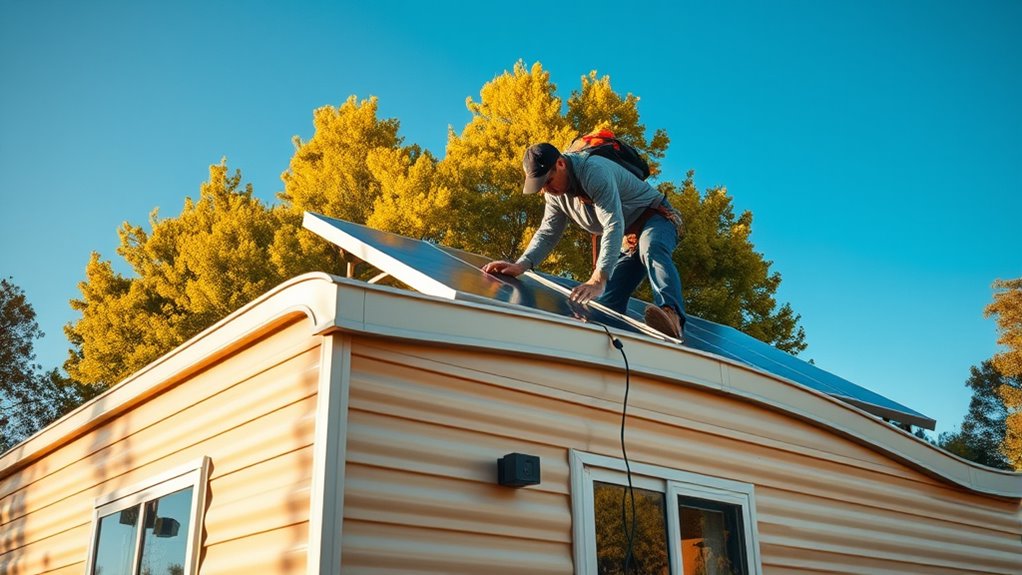
Next, securely install the panels using the right mounts designed for mobile homes. After that, connect everything to your electrical system with proper wiring and an inverter to convert the solar energy into usable power.
Don’t forget about regular maintenance — cleaning the panels and doing inspections will keep your system running efficiently over time.
If you want to get the most out of your solar panel setup on a mobile home, understanding each step of the installation process is key. It makes the whole experience smoother and more effective!
Key Takeaways
- Assess the mobile home roof for structural integrity, sunlight exposure, and available space before installation. This step is really important to make sure everything will hold up and work efficiently.
- Choose lightweight, high-efficiency solar panels with compatible mounting hardware designed specifically for mobile homes. You want something that won’t add too much weight but still performs well.
- Repair any roof damage, clean the surfaces, and install flashing to secure mounts and prevent water leaks. Taking care of these details will help avoid problems down the line.
- Mount the panels securely, connect the wiring to an inverter and charge controller, and then integrate the system with the home’s electrical setup. It might sound complicated, but it’s all about making sure power flows safely and smoothly.
- Regularly clean the panels, inspect the hardware, monitor energy output, and trim any nearby foliage. Keeping up with maintenance helps your system run efficiently for years to come.
Assess Your Mobile Home Roof for Solar Panels
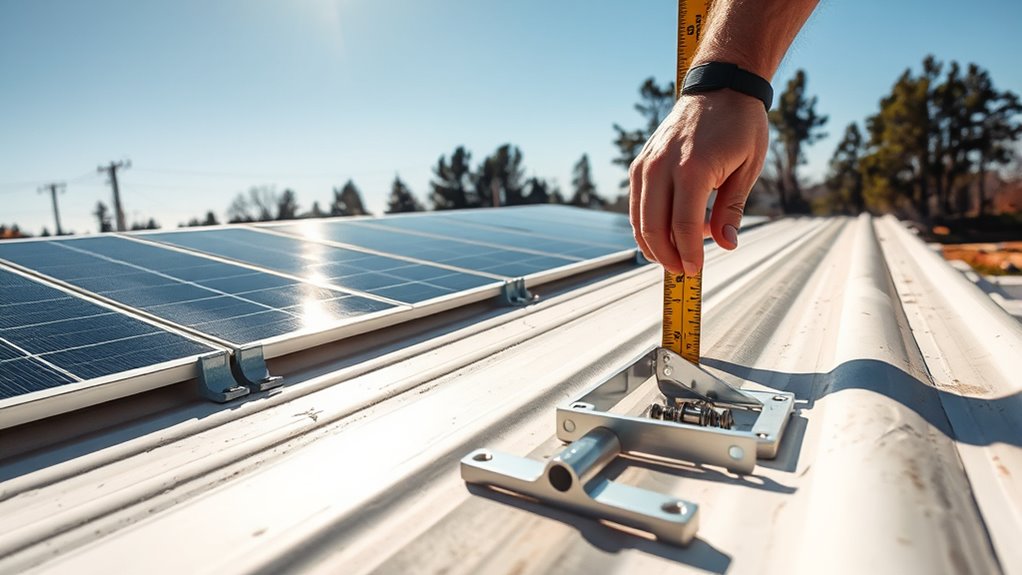
Before installing solar panels, you need to carefully assess your mobile home roof to verify it can support the system. Start by checking the roof’s condition—look for any damage, leaks, or weak spots that might need repair.
Also, confirm the roofing material; metal roofs are ideal. But if yours is shingled or made from other materials, you’ll need to ensure compatibility with mounting hardware.
Measure the available space to see how many panels can fit. Don’t forget to consider shading from trees or nearby structures that could reduce efficiency.
Finally, evaluate the roof’s angle and orientation to maximize sunlight exposure. If you’re unsure about the roof’s strength or suitability, consult a professional to avoid costly mistakes during installation.
Prepare Your Roof for Solar Panel Installation
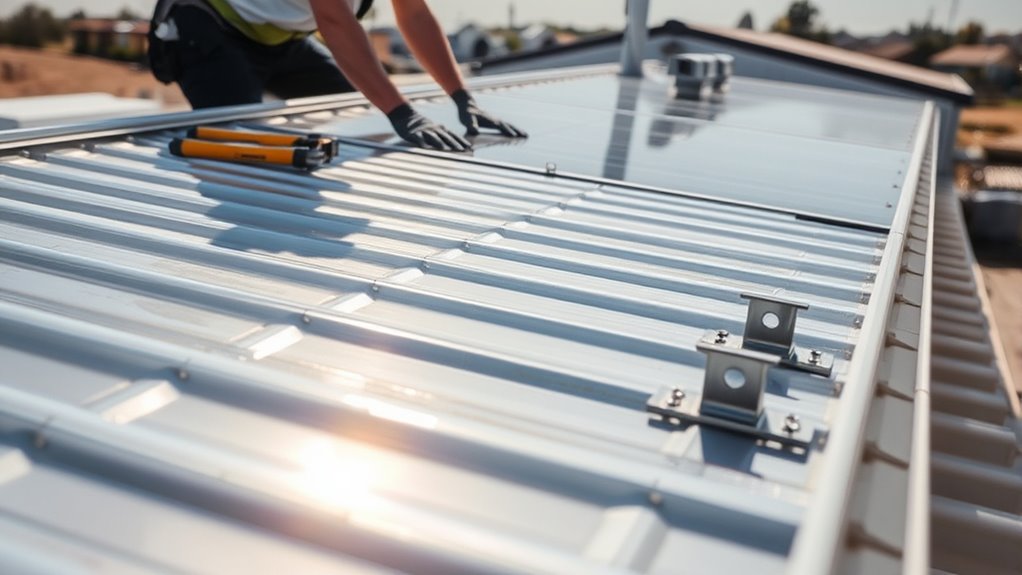
Before installing solar panels, you need to check your roof’s condition to verify it can support the added weight. Make sure to weatherproof and seal any vulnerable spots to prevent leaks and damage.
Taking these steps will create a solid foundation for your solar setup. It’s all about making sure your roof is ready to handle the job without any issues.
Roof Condition Assessment
How can you guarantee your mobile home’s roof is ready to support solar panels? Start by inspecting the roof’s overall condition. Check for any signs of damage like cracks, leaks, or rot.
You want a sturdy, dry surface since solar panels add weight and require secure mounting. Look closely at the roofing material—metal roofs are ideal, but if you have shingles or rubber, make sure they’re intact and not nearing the end of their lifespan.
Don’t forget to assess the structural support underneath; weak framing can cause issues once panels are installed. If you spot any problems, be sure to address them before moving forward.
Taking these steps assures your roof can safely handle the installation and maximize your solar investment’s lifespan.
Weatherproofing and Sealing
Once you’ve confirmed your roof can support solar panels, it’s time to focus on weatherproofing and sealing to protect your mobile home from leaks and water damage. Start by inspecting all potential entry points where mounts or brackets will be installed.
Use high-quality roofing sealant to cover screw holes and seams, ensuring a watertight barrier. Apply flashing around mounts to divert water away from the attachment points, preventing moisture buildup.
Don’t forget to check and reseal any existing roof penetrations like vents or chimneys that might be disturbed during installation. Proper weatherproofing not only safeguards your roof but also extends the lifespan of your solar setup.
Taking these steps carefully will help you avoid costly repairs and keep your home safe and dry. It’s worth the effort to make sure everything is sealed up tight!
Choose the Right Solar Panels and Equipment
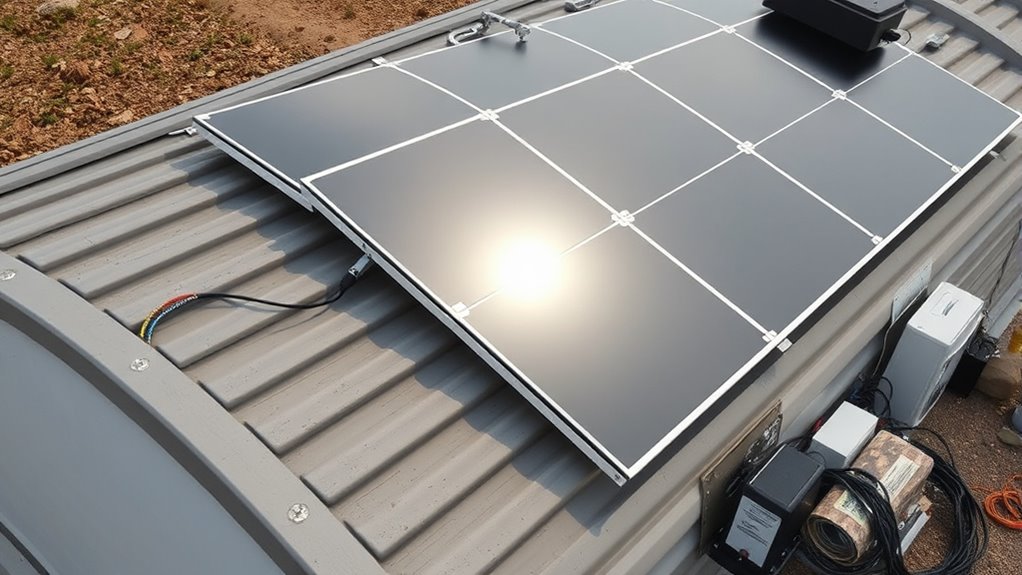
When selecting solar panels for your mobile home, you’ll want to prioritize efficiency and durability to maximize energy production in limited space. Look for high-efficiency monocrystalline panels, as they provide more power in smaller footprints.
Prioritize efficiency and durability by choosing high-efficiency monocrystalline panels for maximum power in limited space.
Also, consider panels with robust weather resistance to withstand wind, rain, and temperature changes common around mobile homes.
Besides panels, choose compatible inverters and mounting hardware designed for mobile or lightweight structures. Flexible or lightweight mounting systems can reduce stress on your roof.
Don’t forget to select a charge controller that matches your battery setup if you’re using energy storage. Finally, verify all equipment has proper certifications and warranties to guarantee safety and long-term performance.
Choosing the right gear upfront saves you headaches later. It’s definitely worth taking the time to get it right!
Install Solar Panels on Your Mobile Home
Before installing solar panels, you’ll want to prepare your mobile home’s roof by checking for damage and cleaning the surface.
Next, consider your mounting options carefully, whether it’s using roof racks or adjustable mounts designed for mobile homes.
Taking these steps guarantees your panels stay secure and work efficiently. It’s worth spending the time upfront to avoid problems later on.
Roof Preparation Tips
Although installing solar panels on a mobile home might seem straightforward, you’ll need to prepare the roof carefully to guarantee a secure and efficient setup. Start by inspecting the roof for damage or weak spots.
Clean debris and dirt to assure proper adhesion and avoid future issues. Check for leaks and repair any you find. Measuring your roof space helps you plan panel placement effectively.
| Task | Why It’s Important | Tools Needed |
|---|---|---|
| Inspect Roof | Identify damage or weak spots | Ladder, flashlight |
| Clean Surface | Ensure panel adhesion | Broom, hose |
| Repair Leaks | Prevent water damage | Sealant, putty |
| Measure Roof | Plan panel placement | Tape measure |
These steps set the foundation for a durable solar panel system. And believe me, taking the time now will pay off big time later!
Mounting Panel Options
Since your mobile home’s roof type and condition can vary, choosing the right mounting option for your solar panels is crucial to guarantee stability and efficiency. You can opt for rail-based mounts, which attach securely to the roof and allow panel adjustment.
If your roof can’t support penetrations, consider ballasted mounts that use weights to hold panels in place without drilling. Another option is adhesive mounts, suitable for metal roofs, which stick panels down without compromising the surface.
For mobile homes with limited roof space or weight restrictions, adjustable tilt mounts help maximize sunlight exposure. Always confirm your chosen mounts are compatible with your roof material and local building codes.
Connect Solar Panels to Your Electrical System
When you connect solar panels to your electrical system, you’ll need to guarantee the inverter, charge controller, and breaker box work together seamlessly. Follow these steps to ensure a smooth connection:
First, install the charge controller between your solar panels and battery bank. This helps regulate voltage and prevents overcharging.
Install the charge controller between your solar panels and batteries to regulate voltage and prevent overcharging.
Next, connect the inverter. It converts DC power from your batteries into AC power for your mobile home’s electrical system.
Then, wire the breaker box to the inverter output. This gives you a safe point to control and protect your home’s circuits.
Finally, use proper grounding throughout your system. This avoids electrical hazards and improves safety.
Maintain Your Solar Panels for Best Performance
To keep your solar panels working efficiently, you need to perform regular maintenance. Start by inspecting the panels monthly for dirt, debris, or damage.
Clean them gently with water and a soft cloth or sponge—avoid harsh chemicals that could harm the surface. Also, trim nearby trees or plants that might cast shadows, reducing energy output.
Check wiring and connections for corrosion or wear, and tighten any loose fittings. Don’t forget to monitor your system’s performance through your inverter or app to spot drops in output early.
Scheduling a professional inspection once a year guarantees everything runs smoothly. By staying proactive, you’ll maximize your solar panels’ lifespan and energy efficiency, saving money and reducing hassle over time.
Frequently Asked Questions
How Much Do Solar Panels Cost for a Mobile Home?
You’ll typically spend between $8,000 and $15,000 on solar panels for a mobile home, depending on system size and installation complexity.
Incentives and rebates can lower your costs, so check local programs before buying. It’s definitely worth looking into!
Are There Government Incentives for Mobile Home Solar Installations?
Yes, you’ll find government incentives for mobile home solar installations, like tax credits and rebates. These programs help reduce costs and make solar more affordable.
Can Solar Panels Increase My Mobile Home’s Resale Value?
Yes, solar panels can increase your mobile home’s resale value by making it more energy-efficient and appealing.
Buyers often appreciate lower utility costs, so installing solar can boost your home’s marketability and overall worth. It’s a smart upgrade that many people look for these days.
How Long Do Solar Panels Typically Last on a Mobile Home?
Solar panels typically last 25 to 30 years on your mobile home. With proper maintenance, they can perform efficiently throughout this time.
This helps you save on energy costs and boosts your home’s value. So, investing in solar panels is definitely worth it in the long run!
What Is the Average Payback Period for Solar Panels on a Mobile Home?
You’ll typically see a payback period of 7 to 10 years for solar panels. Considering panels last 25+ years, you’ll enjoy many years of nearly free energy after covering your initial investment.
That means after the first decade, your energy costs drop significantly. It’s a smart way to save money in the long run while helping the environment.
Conclusion
Installing solar panels on your mobile home might seem tricky, but with careful assessment and preparation, it’s surprisingly straightforward. While a traditional roof offers simplicity, your mobile home’s unique structure demands extra attention.
Choosing the right panels and connecting them properly guarantees efficient energy use, turning your home into a sustainable powerhouse. Plus, with the right setup, you can maximize energy production even in limited space.
With regular maintenance, what once felt like a challenge becomes a smart, eco-friendly solution that pays off every day. Installing solar panels on a mobile home not only reduces your energy bills but also boosts your home’s value. So, if you’re thinking about going green, solar panels on a mobile home are definitely worth considering!