Do Solar Blankets Help Heat Pools?
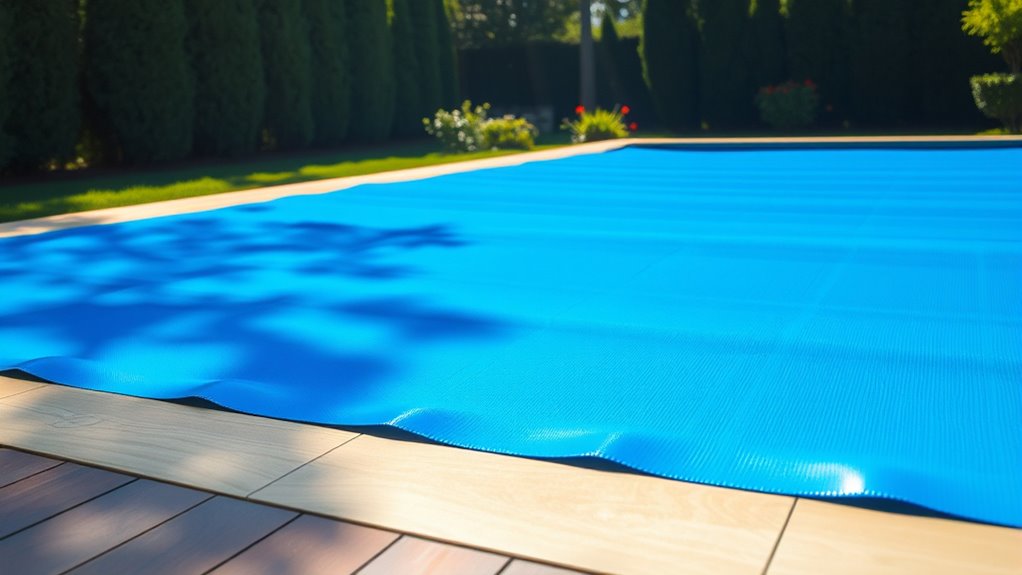
Yes, solar blankets really help heat your pool by trapping the sun’s warmth and reducing evaporation, which is a major cause of heat loss. These pool covers act like an insulating layer, keeping heat from escaping and maintaining a more comfortable temperature for swimming.
Plus, they save you money by lowering heating costs and limit water and chemical usage. Different materials and thicknesses affect how well they work.
Keep exploring, and you’ll find out how to get the best results for your pool.
Key Takeaways
- Solar blankets trap the sun’s heat and transfer it to pool water, raising temperatures by several degrees on sunny days. They reduce heat loss by limiting evaporation and acting as an insulating layer over the water surface.
- These blankets help keep the water warmer overnight and even on cloudy days, all without using extra energy. It’s a smart way to enjoy a cozy pool.
- By cutting down on water evaporation, solar blankets save water and reduce the need for pool chemicals. This makes pool maintenance easier and more efficient.
- The material and thickness of the blanket matter too. Thicker, reinforced blankets usually last longer and hold in more heat, giving you better warmth overall.
How Effective Are Solar Blankets at Heating Pools?
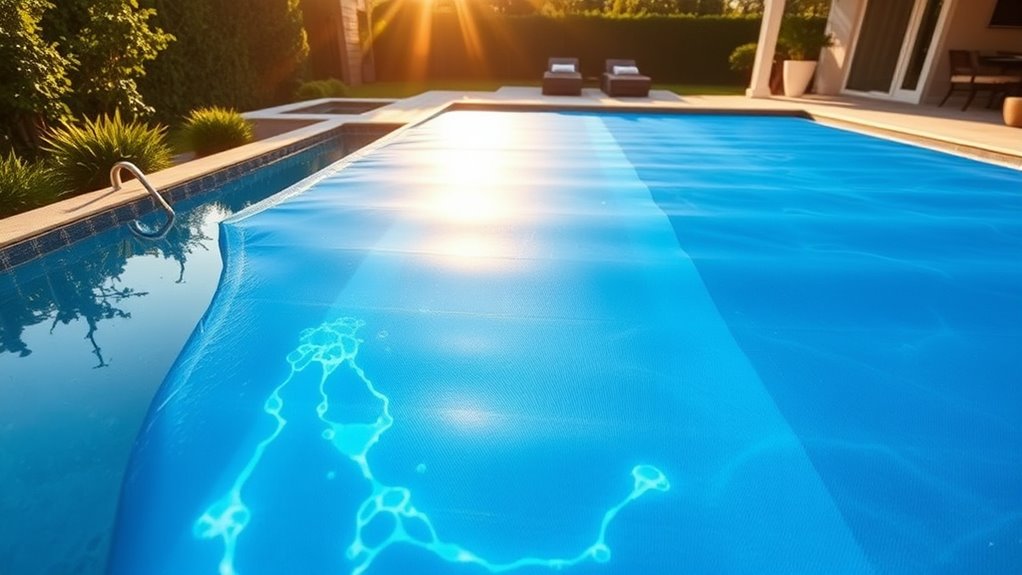
Although solar blankets might seem simple, they effectively trap heat from the sun and transfer it to your pool water. You’ll find that using one can raise your pool’s temperature by several degrees, especially on sunny days.
The blanket reduces heat loss by limiting evaporation, which is a major way pools lose warmth. While they won’t replace a dedicated pool heater, they provide a cost-effective way to extend your swimming season.
The effectiveness depends on factors like your local climate, pool size, and how consistently you use the blanket. If you cover your pool every night, you’ll notice a bigger temperature difference.
How Do Solar Blankets Keep Your Pool Warm?
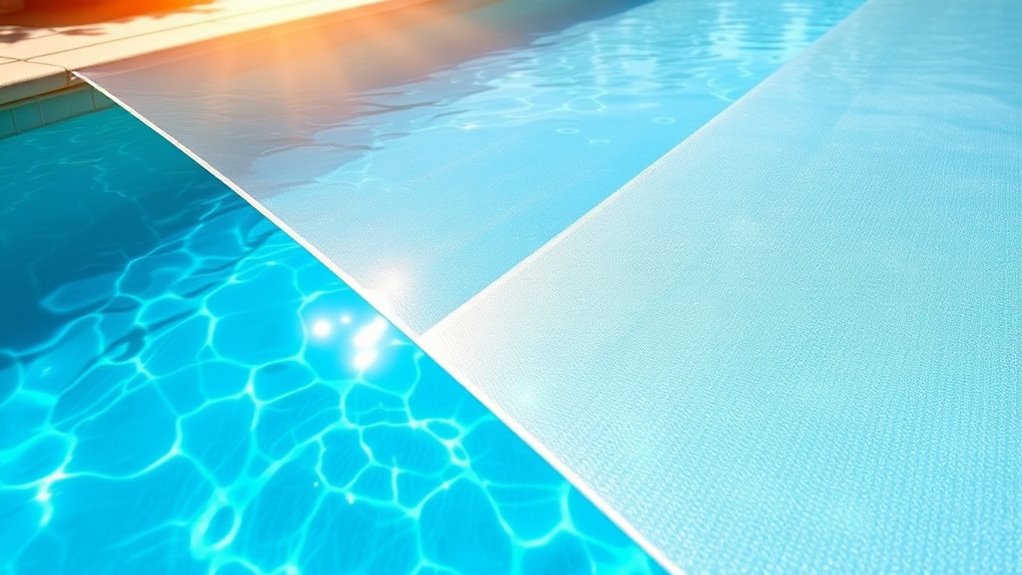
You keep your pool warm with a solar blanket by trapping heat and reducing evaporation. It acts like a shield, locking in the sun’s warmth while letting sunlight pass through.
Solar Blanket Heat Retention
When you cover your pool with a solar blanket, it traps the sun’s heat and prevents warm water from escaping into the cooler air. The blanket acts like a thin insulating layer, reducing heat loss by conduction and convection.
Its material, often made of durable plastic with air bubbles, creates pockets that hold the heat close to the water’s surface. This design helps minimize temperature drops overnight or on cloudy days.
By keeping warmth locked in, the blanket guarantees your pool stays comfortably heated longer without extra energy. You’ll notice less heat escaping, which means your pool requires less supplemental heating.
Using a solar blanket effectively maintains the water temperature by retaining the heat absorbed during sunny periods. This makes your pool more energy-efficient and enjoyable.
Minimizing Evaporation Losses
Besides retaining heat, solar blankets play a key role in reducing evaporation from your pool’s surface. When your pool is uncovered, water molecules escape into the air, causing significant heat loss.
By covering your pool with a solar blanket, you create a barrier that slows down this evaporation process. This means your pool loses less water and stays warmer for longer periods.
Minimizing evaporation also helps conserve water, saving you from frequent refills and reducing chemical usage. In addition, less evaporation means less heat escapes, which directly contributes to maintaining a comfortable swimming temperature.
Enhancing Sunlight Absorption
Although solar blankets reduce heat loss, they also actively boost your pool’s warmth by enhancing sunlight absorption. The blanket’s surface is designed to capture and trap solar energy, allowing more heat to transfer into the water beneath.
When you place the blanket on your pool, its transparent cells act like tiny greenhouses, concentrating sunlight and increasing the water temperature. This process is especially effective on sunny days when the sun’s rays are strong.
What Types of Solar Blankets Warm Pools Best?
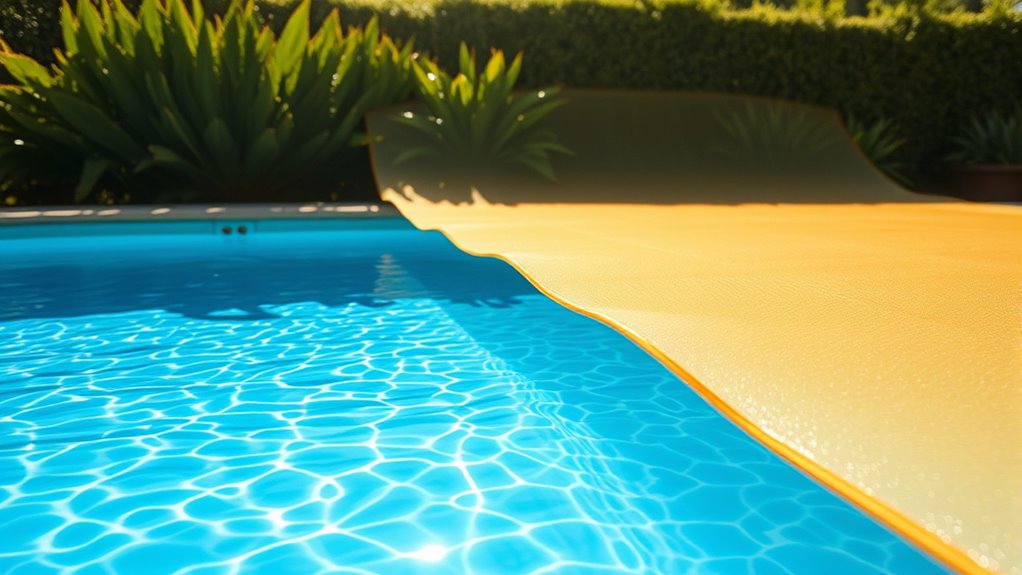
When choosing a solar blanket, you’ll want to compare materials like polyethylene and vinyl, as each affects heat retention differently. Thickness also plays a big role in how well your pool stays warm overnight.
Let’s explore which combinations work best to keep your water cozy. It’s all about finding the right balance that fits your pool’s needs and your budget.
Material Types Comparison
Since solar blankets come in various materials, choosing the right one can considerably impact how well your pool retains heat. You’ll find most blankets made from polyethylene, vinyl, or polypropylene. Each material offers different durability, heat retention, and cost benefits.
Polyethylene is lightweight and affordable but less durable. Vinyl lasts longer and resists tearing, making it a solid mid-range option. Polypropylene provides excellent heat retention and durability but at a higher price.
Consider your budget and how often you use your pool to pick the best fit.
| Material | Durability | Heat Retention |
|---|---|---|
| Polyethylene | Moderate | Moderate |
| Vinyl | High | Good |
| Polypropylene | Very High | Excellent |
| Bubble Wrap | Low | Moderate |
| Reinforced Vinyl | Very High | Good |
Thickness and Heat Retention
Thicker solar blankets trap more heat, making them a smart choice if you want your pool to warm up faster and stay warm longer. When choosing the right thickness, consider these factors:
- Heat Retention: Thicker blankets reduce heat loss, keeping water warmer overnight.
- Durability: A thicker material resists tears and punctures better, lasting through multiple seasons.
- Weight: Heavier blankets can be harder to handle but often provide superior insulation.
- Cost: Thicker blankets typically cost more upfront but save money by reducing heating needs.
Benefits of Using a Solar Blanket for Your Pool
If you want to enjoy a warmer pool without spending extra on heating, a solar blanket offers an effective solution. It traps heat from the sun, reducing evaporation and keeping your pool comfortable longer.
You’ll also save money on energy bills and cut down on water loss. Plus, solar blankets help keep debris out, making maintenance easier.
| Benefit | Description | Why It Matters |
|---|---|---|
| Heat Retention | Captures and holds solar heat | Warmer water with less energy |
| Energy Savings | Reduces need for pool heaters | Lower electricity bills |
| Water Conservation | Minimizes evaporation | Saves water and refill costs |
| Cleaner Pool | Prevents leaves and dirt entering | Less frequent cleaning |
How Can You Maximize Heat Retention With a Solar Blanket?
To get the most heat from your solar blanket, you’ll want to use it correctly and maintain it well. First, always cover your pool immediately after use to trap heat and reduce evaporation.
Second, clean the blanket regularly to prevent dirt and debris from blocking sunlight absorption. This keeps your blanket working efficiently.
Third, store the blanket away from sharp objects and harsh weather when not in use to extend its lifespan. A little care goes a long way.
Finally, consider using a reel system to make covering and uncovering your pool quick and hassle-free. This encourages consistent use, which is key.
Key Factors to Consider Before Buying a Solar Blanket
Using your solar blanket properly sets the stage for effective heating, but selecting the right one from the start makes all the difference.
Before buying, consider the blanket’s size, material, thickness, and UV resistance. These factors affect how well it retains heat and its durability. Also, think about ease of handling and storage.
| Factor | What to Look For | Why It Matters |
|---|---|---|
| Size | Matches your pool’s shape | Ensures full coverage |
| Material | Polyethylene or vinyl | Balances durability and cost |
| Thickness | 8-16 mils | Affects heat retention |
| UV Resistance | High UV protection | Prevents quick wear |
| Handling | Lightweight, with reels | Makes use and storage easier |
Choosing wisely means better performance and longer-lasting warmth. It really pays off to pick the right blanket from the get-go.
Frequently Asked Questions
How Do Solar Blankets Impact Pool Water Chemistry?
Solar blankets reduce water evaporation, which helps maintain your pool’s chemical balance by keeping sanitizer levels steady.
However, they can also trap contaminants, so you’ll need to test and adjust your pool chemistry more often to keep it balanced. It’s a bit of a trade-off, but staying on top of it makes all the difference.
Can Solar Blankets Prevent Algae Growth in Pools?
Yes, solar blankets can help prevent algae growth by blocking sunlight, which algae need to thrive.
You’ll still need proper chemical balance and regular cleaning, but using a solar blanket reduces algae risks and keeps your pool clearer. It’s a simple way to give your pool some extra protection.
Are Solar Blankets Safe for Pool Pumps and Filters?
Think of your pool pump and filter as the heart and lungs of your pool; solar blankets protect them by reducing debris and evaporation.
You won’t harm your equipment—in fact, you’ll help it breathe easier and last longer. It’s like giving your pool a little extra care every day.
How Long Do Solar Blankets Typically Last?
Solar blankets typically last around 3 to 5 years with proper care. You’ll want to avoid excessive sun damage and store them well during winter to extend their lifespan.
Doing this helps keep your pool heating efficiently. It’s all about giving them a little TLC so they can do their job longer.
Can Solar Blankets Be Used on Indoor Pools?
Yes, you can use solar blankets on indoor pools. For example, Sarah used one in her basement pool to reduce evaporation and maintain warmth.
She saved energy even without direct sunlight, proving their effectiveness indoors. It’s a smart way to keep your pool cozy and cut down on heating costs.
Conclusion
Think of a solar blanket as your pool’s cozy sweater, trapping warmth and keeping chills at bay. By using one, you’re not just heating water—you’re extending swim time and saving energy.
To get the most from your solar blanket, choose the right type and cover your pool consistently. With these simple steps, you’ll enjoy a warmer pool that feels inviting, no matter the season.
Solar blankets help heat pools by capturing the sun’s energy and reducing heat loss. They’re an easy and effective way to maintain comfortable water temperatures while lowering energy costs. So, don’t let the cold win—wrap your pool in warmth with a solar blanket and make every swim enjoyable!