Is Solar Worth It in Wisconsin?
Yes, solar is worth it in Wisconsin. Solar panels actually perform well in cooler temperatures, which is great news for the state’s climate. Plus, federal and state incentives help lower the upfront costs considerably, making solar more affordable than you might think.
While shorter winter days and snow can reduce your system’s output, proper system design and local installer expertise make sure your setup stays efficient year-round.
Maintenance is low, so you won’t have to worry about much after installation. And best of all, you can save on your energy bills.
If you want to understand costs, panel choices, and how to maximize your savings, there’s definitely more to explore.
Solar energy in Wisconsin is a smart investment worth considering!
Key Takeaways
- Wisconsin’s cooler climate actually helps solar panels work more efficiently, even though the winter days are shorter and snow sometimes covers the panels.
- Plus, there are some great federal and state incentives available, like a 30% tax credit and Focus on Energy rebates, which can really bring down the cost of installing solar.
- To get the most out of your system, make sure it’s the right size for your needs, faces south, and isn’t shaded too much. This setup helps boost energy production throughout Wisconsin’s mixed weather.
- Installing solar can cost between $15,000 and $25,000 before incentives kick in. But, since the panels require little maintenance and last a long time, they offer solid value over the years.
- It’s also smart to pick experienced local installers who know Wisconsin’s climate and rules well. That way, you get the best performance, savings, and support for your warranty.
How Does Wisconsin’s Climate Affect Solar Power Efficiency?
How well does solar power perform in Wisconsin’s climate? You might be surprised to learn that despite its cold winters, Wisconsin gets a decent amount of sunlight throughout the year, especially during spring and summer.
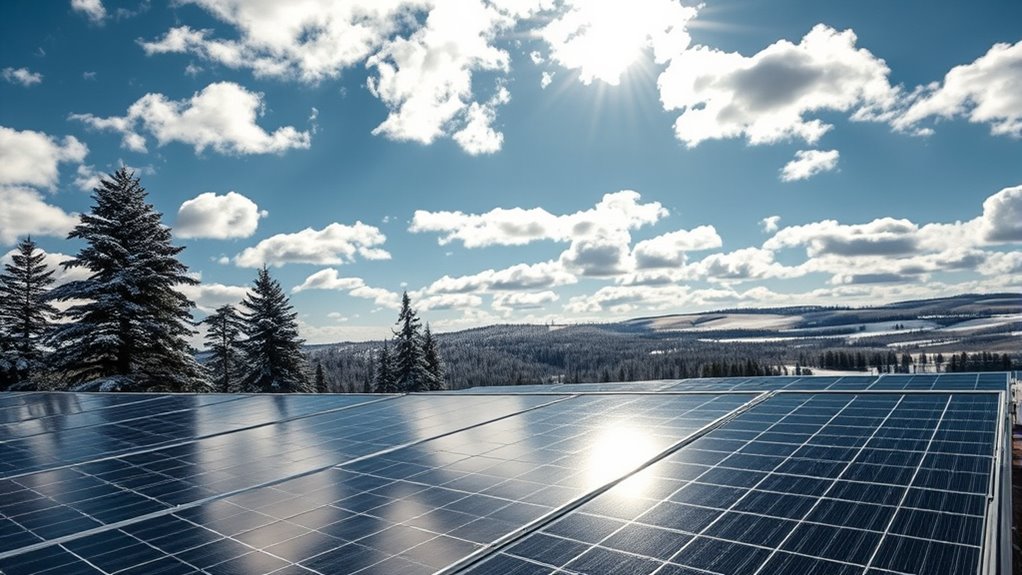
Solar panels actually work more efficiently in cooler temperatures, so those chilly days aren’t a drawback. However, shorter daylight hours in winter and frequent cloud cover can reduce overall solar production.
Solar panels thrive in cooler weather, though winter’s shorter days and clouds may lower output.
You’ll want to take into account seasonal variations when sizing your system to make certain it meets your energy needs year-round. Snow can temporarily block panels, but it usually slides off quickly due to the panels’ smooth surface and angle.
With proper installation and maintenance, solar power remains a viable and efficient energy solution in Wisconsin’s variable climate.
What Government Incentives Make Solar Affordable in Wisconsin?
You can make solar more affordable in Wisconsin thanks to several government incentives. Wisconsin offers solar tax credits, net metering benefits, and state renewable rebates that help lower your upfront costs.
Getting to know these incentives is a smart move. It’ll show you just how much you can save by going solar.
Wisconsin Solar Tax Credits
Several government incentives make solar energy more affordable for Wisconsin residents. While Wisconsin doesn’t offer a state-specific solar tax credit, you can still benefit from the federal solar Investment Tax Credit (ITC). This lets you deduct 30% of your solar system’s cost from your federal taxes.
That considerably lowers your upfront expenses. Additionally, Wisconsin has property tax exemptions for solar installations. So, your home’s assessed value won’t increase due to solar panels, helping you avoid higher property taxes.
Some local utilities also offer rebates or incentives. It’s definitely worth checking with your provider. While the state lacks a direct solar tax credit, combining the federal ITC with local incentives and exemptions makes solar power a financially smart choice for you in Wisconsin.
Net Metering Benefits
Beyond tax credits and rebates, net metering plays a key role in making solar power affordable for Wisconsin homeowners. When your solar panels produce more electricity than you use, net metering lets you send that excess energy back to the grid.
In return, your utility company gives you credits that offset your future electricity bills. This means you’re effectively banking energy during sunny days to use later, reducing your overall costs.
Wisconsin’s net metering policies guarantee you get fair value for the extra power you generate, making your investment pay off faster. By taking advantage of net metering, you can lower your monthly expenses and improve your system’s return on investment.
All in all, net metering makes solar a smarter choice for your home.
State Renewable Rebates
Wisconsin offers a variety of state renewable rebates that can considerably lower the upfront cost of installing solar panels. These incentives are designed to encourage you to invest in clean energy by directly reducing your initial expenses.
Depending on your location and utility provider, you may qualify for cash rebates or performance-based incentives that reward the energy your system generates. Pairing these with federal tax credits makes solar more affordable than ever.
| Rebate Program | Description |
|---|---|
| Focus on Energy | Up to $1,000 rebate for residential solar |
| WPPI Energy | Performance-based incentives per kWh |
| Madison Gas & Electric | Variable rebates based on system size |
| WE Energies | Limited-time rebates for new installations |
Make sure to check with your utility for the latest offers before committing. It’s always good to stay updated!
How Much Do Solar Installation and Maintenance Cost in Wisconsin?
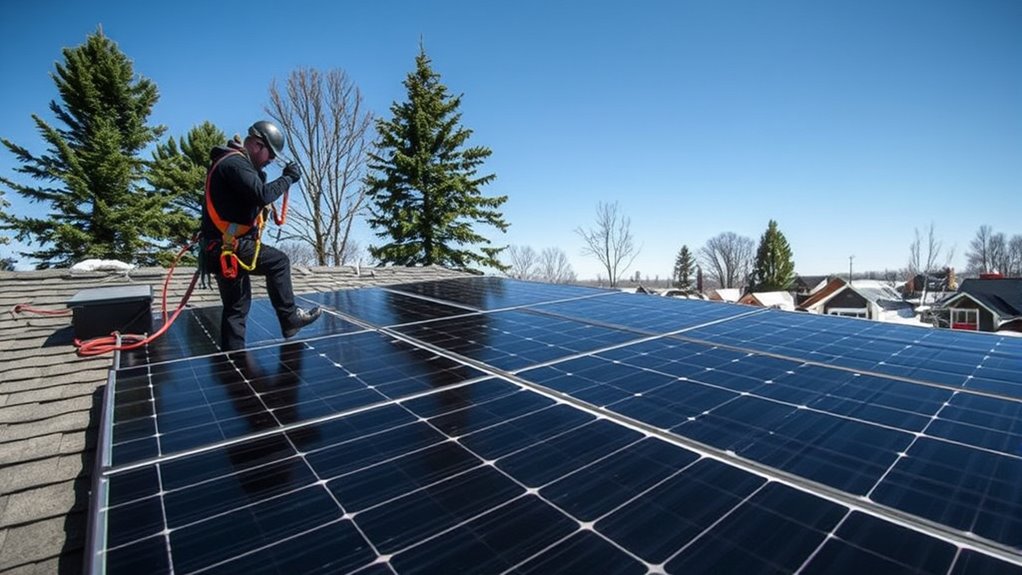
You’ll want to understand the breakdown of installation costs before committing to solar in Wisconsin. Knowing what goes into the price helps you spot where your money is going.
Plus, maintenance expenses play a key role in your long-term savings and system performance. It’s not just about the upfront cost—you want to keep your system running smoothly for years to come.
Installation Price Breakdown
Installing a solar system in Wisconsin typically costs between $15,000 and $25,000 before incentives. This price covers equipment, labor, and permits.
You’ll find that panels and inverters make up most of the upfront costs, while installation charges vary based on your roof’s complexity.
Here’s a clear breakdown of typical installation costs:
| Component | Cost Range | Percentage of Total |
|---|---|---|
| Solar Panels | $7,000 – $12,000 | 45% |
| Inverter | $1,000 – $2,500 | 10% |
| Installation | $5,000 – $8,000 | 35% |
Understanding these costs helps you budget smartly. It also shows you exactly where your money goes when switching to solar.
Maintenance Expenses Overview
Maintaining your solar system in Wisconsin typically involves minimal costs, making it an affordable long-term investment. After installation, your main expenses will come from occasional upkeep rather than frequent repairs.
You can expect to spend modestly on routine checks and cleaning to keep your panels efficient. Here’s what you should consider:
- Annual inspection fees, usually between $100-$300
- Cleaning costs, if you don’t do it yourself, around $75-$150
- Inverter replacement every 10-15 years, which can cost $1,000-$2,000
- Minor repairs for wiring or mounting hardware, typically under $200
- Monitoring system subscription fees, if applicable, usually $10-$30 monthly
How Much Can You Save on Energy Bills With Solar Panels in Wisconsin?
Solar panels can considerably cut your energy bills in Wisconsin, often reducing costs by 50% or more depending on your system size and energy usage. By generating your own electricity, you rely less on utility power, which means lower monthly bills.
Over time, these savings can add up, helping you recoup your initial investment faster. Here’s a quick look at potential monthly savings based on different household energy uses:
| Monthly Energy Usage (kWh) | Estimated Monthly Savings |
|---|---|
| 500 kWh | $30 – $45 |
| 750 kWh | $45 – $70 |
| 1,000 kWh | $60 – $90 |
| 1,250 kWh | $75 – $110 |
Your actual savings depend on your system’s efficiency and how much sunlight your location receives. So, it’s a good idea to consider those factors when estimating your potential savings.
Which Solar Panels Are Best for Wisconsin Homes?
Understanding how much you can save with solar panels is just the start—picking the right type of panels for your Wisconsin home makes a big difference in maximizing those savings.
You want panels that perform well in varying weather and lower light conditions common in Wisconsin. That way, you get the most out of your investment no matter the season.
Here are the best options to evaluate:
- Monocrystalline panels: High efficiency, great for limited roof space.
- Polycrystalline panels: More affordable, slightly lower efficiency.
- Bifacial panels: Capture sunlight from both sides, boosting energy production.
- Thin-film panels: Flexible and perform better in shade but less efficient overall.
- High temperature coefficient panels: Maintain performance despite Wisconsin’s summer heat.
Choosing panels with proven durability and good warranty coverage guarantees long-term value for your investment. So, it’s worth looking for brands that stand behind their products.
Key Factors to Consider When Choosing Solar for Your Wisconsin Home
Since Wisconsin experiences a mix of weather conditions and seasonal changes, you’ll need to take into account factors like roof orientation, local incentives, and your energy usage patterns when choosing solar for your home.
First, make sure your roof gets enough sunlight year-round; south-facing roofs with minimal shading work best. Next, explore state and utility incentives—these can considerably reduce upfront costs and improve your return on investment.
Also, analyze your energy consumption to size the system properly, preventing overspending on unnecessary capacity. Don’t forget to check local regulations and net metering policies, which affect how much you can save.
Finally, work with reputable installers familiar with Wisconsin’s climate to ensure your system is durable and efficient through snowy winters and cloudy days.
Frequently Asked Questions
How Long Does the Solar Panel Installation Process Take in Wisconsin?
The solar panel installation process in Wisconsin usually takes about one to three days for the physical setup.
However, the entire process, including permits and inspections, can take several weeks to a few months depending on local regulations.
It really depends on where you are and how busy the local authorities are.
Are There Any Local Wisconsin Companies Specializing in Solar Panel Installation?
Yes, you’ll find several local Wisconsin companies specializing in solar panel installation, like Solar Service, Inc. and Focus on Energy.
They’ll guide you through options tailored to your home’s needs efficiently and reliably. It’s pretty straightforward to get started with them.
Can Solar Panels Increase My Home’s Resale Value in Wisconsin?
Solar panels are like a shining crown for your home, boosting its resale value in Wisconsin. Buyers appreciate energy savings and sustainability, so installing them can make your property more attractive.
It can increase its market appeal substantially. Plus, who doesn’t love the idea of lower energy bills? It’s a win-win for both you and future buyers!
What Are the Common Challenges of Maintaining Solar Panels in Wisconsin?
You’ll face challenges like snow buildup, occasional dirt, and shading from trees in Wisconsin. Regular cleaning and inspections help keep your panels efficient.
Don’t worry; winter maintenance is manageable with the right tools and timing. It’s all about staying on top of it and knowing when to act.
How Do Wisconsin Utility Companies Handle Solar Energy Net Metering?
Wisconsin utility companies generally offer net metering, letting you credit excess solar energy back to the grid. However, policies and credit rates vary, so you’ll want to check your specific utility’s rules before going solar.
It’s a good idea to get familiar with your utility’s details because what works for one company might not work the same way for another. This way, you can make the most out of your solar setup without any surprises.
Conclusion
If you’re wondering whether solar’s worth it in Wisconsin, the answer shines bright like a summer day. Despite the colder climate, solar panels still capture plenty of energy, especially with state incentives easing costs.
You’ll save on bills and boost your home’s value, making solar a smart investment. By choosing the right panels and considering your unique needs, you can harness Wisconsin’s sun and power up your savings year-round.
In short, solar power in Wisconsin is definitely worth considering. The combination of sunlight, financial incentives, and long-term savings makes it a smart choice for homeowners. Plus, installing solar panels can increase your property value and reduce your carbon footprint. So, if you want to cut energy bills and invest in clean, renewable energy, solar in Wisconsin is a bright idea for your home and wallet.