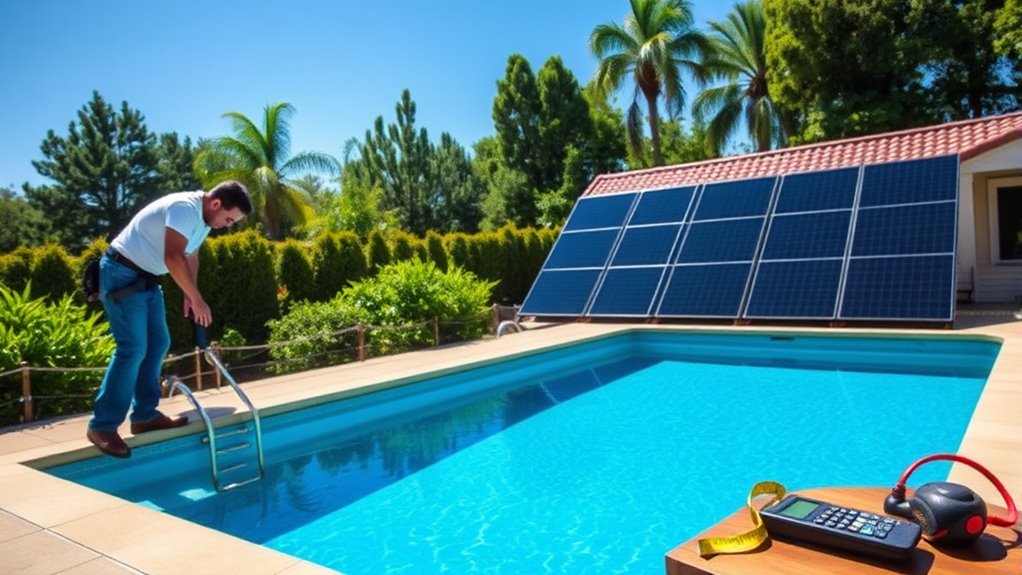
10 Tips to Calculate How Many 4×8 Solar Pool Heaters for a 14000-Gallon Pool
To size your 14,000-gallon pool’s solar heaters, start by measuring its surface area and volume accurately. Knowing these details helps you understand how much heat your pool loses each day. Don’t forget to factor in your climate and the daily sunlight your area receives since these affect heat loss, mainly through evaporation.
Next, decide how much you want to raise your pool’s temperature. Each 4×8 solar pool heater panel offers about 20,000 BTUs daily. So, calculate how many panels you’ll need to match your heating goals.
Keep in mind, seasonal changes and how often you use your pool also play a big role.
For the best results, place your solar panels facing south with minimal shading. This setup boosts efficiency and helps you get the most heat from the sun. Keep reading to discover more tips on optimizing your solar pool heater system!
Key Takeaways
- Calculate pool surface area and volume to determine total gallons and heat loss accurately. This helps you understand exactly what you’re working with.
- Estimate the desired temperature increase and match the panel BTU output to achieve efficient heating. It’s all about balancing your needs with what the panels can deliver.
- Consider local climate, sunlight hours, and seasonal variations to adjust the number of panels needed. These factors can really change how much heat you get.
- Position panels facing true south with optimal tilt and avoid shading for maximum solar gain. A little planning here goes a long way.
- Ensure sufficient installation space with proper mounting options and easy plumbing access for maintenance. You’ll thank yourself later when it’s time to service the system.
Calculate Your Pool’s Surface Area and Volume
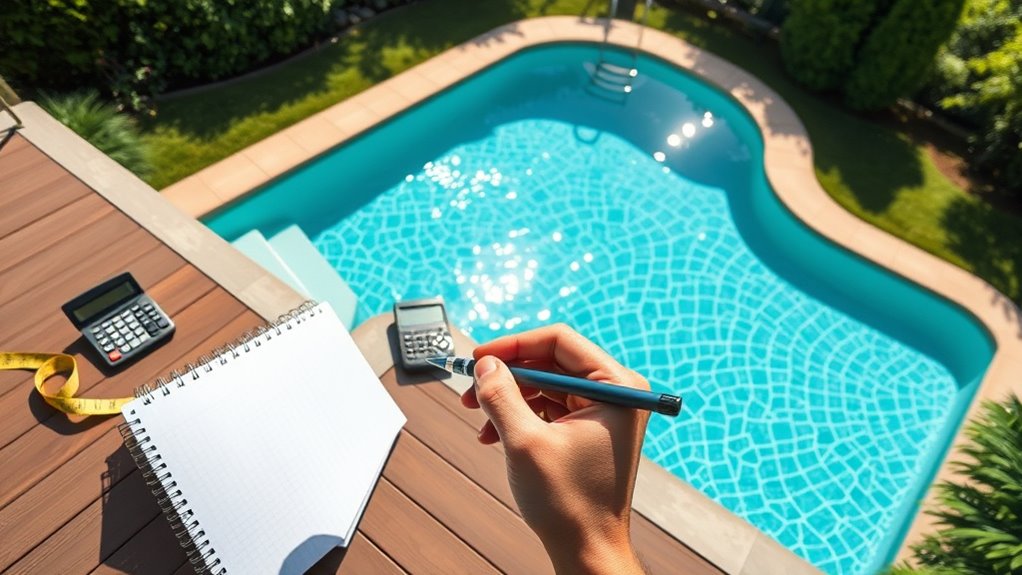
Before you can determine how many 4×8 solar pool heaters you need, you’ll first need to calculate your pool’s surface area and volume. Start by measuring the length and width of your pool if it’s rectangular, then multiply these two numbers to find the surface area in square feet.
For irregular shapes, break the pool into simpler shapes, calculate each area, and add them together. Next, measure the average depth of the pool and multiply it by the surface area to find the volume in cubic feet.
To convert cubic feet to gallons, multiply by 7.48. Knowing these figures guarantees you choose the right number of solar panels to effectively cover and heat your pool.
Accurate calculations are the foundation for efficient solar heating. So, it’s worth taking the time to get these numbers right!
Factor In Local Climate and Sunlight for Solar Heating
Once you’ve determined your pool’s surface area and volume, the next step is to factor in your local climate and sunlight availability. These elements directly impact how effectively your solar heaters can warm your pool.
If you live in a sunny area, fewer panels may suffice. But in cooler or cloudier regions, you’ll need more to make up for less solar gain.
Consider these factors when planning:
- Average daily sunlight hours throughout the year
- Seasonal temperature variations and cold spells
- Local weather patterns like frequent cloudy or rainy days
- Shade from trees or buildings that could block sunlight
Estimate Daily Heat Loss From Your Pool
Because your pool loses heat every day through evaporation, radiation, and convection, you need to estimate this daily heat loss to figure out how much solar heating is required. Start by measuring the pool’s surface area since heat loss is proportional to it.
Evaporation causes the most heat loss, so make sure to factor in local humidity and wind conditions. Dry, windy days increase evaporation rates quite a bit.
Radiation loss depends on the temperature difference between the water and the surrounding air. Meanwhile, convection loss relates to air movement over the pool surface.
You can use a heat loss calculator or formulas that combine these factors to get an estimate in BTUs or kWh per day. This estimate helps you choose the right number of 4×8 solar panels to keep your pool’s temperature just right.
Determine Your Desired Water Temperature Increase
To determine how many 4×8 solar pool heaters you need, you first have to decide how much you want to raise your pool’s temperature. Think about the difference between your current water temperature and your ideal swimming temperature.
This desired increase guides how much heat your solar panels must provide daily. Visualize the comfort level you’re aiming for and the climate you live in.
- A cozy 5°F increase for mild climates
- A revitalizing 10°F boost for moderate warmth
- A substantial 15°F rise for cooler areas
- Maintaining a steady temperature year-round for consistent comfort
How 4×8 Solar Panel Size Affects Heating Capacity
Although the 4×8 size might seem standard, its dimensions directly impact how much heat your solar pool heater can generate each day.
The panel’s surface area determines how much sunlight it captures, influencing the water temperature rise. Larger panels absorb more solar energy, boosting heating capacity, while smaller ones heat less water.
Here’s a quick comparison to help you visualize:
| Panel Size (ft) | Approximate Heat Output (BTUs/day) |
|---|---|
| 4 x 8 | 20,000 |
| 4 x 10 | 25,000 |
| 5 x 8 | 25,000 |
| 5 x 10 | 31,000 |
Knowing your panel size helps you estimate how many units you’ll need for your 14,000-gallon pool. It’s all about matching the right panel to your pool size for optimal heating.
Assess Efficiency Ratings of 4×8 Solar Pool Panels
Understanding the size and heat output of your 4×8 solar panels gives you a baseline. But you also need to check out their efficiency ratings to get a clear picture of how they perform.
Knowing your 4×8 solar panels’ size and heat output is just the starting point.
Efficiency ratings show how well the panels turn sunlight into usable heat. This can affect how many panels you’ll actually need.
When you’re looking at efficiency, keep an eye on a few things: heat transfer efficiency percentages to compare different models, the materials used in the absorber plate and tubing, and the insulation quality to keep heat loss to a minimum.
Also, don’t forget to check for certifications or lab-tested performance data. These can give you confidence that the panels really deliver what they promise.
Calculate the Number of 4×8 Panels Needed
Since you know your pool’s size and the efficiency of your 4×8 panels, you can now calculate how many panels you’ll need to guarantee your 14,000-gallon pool is comfortably warm.
First, determine the total square footage of your pool’s surface area to estimate how much heat it requires daily. Each 4×8 panel covers 32 square feet and provides a specific heat output based on its efficiency rating.
Divide your pool’s heat requirement by the heat produced per panel to find the necessary number of panels. For example, if your pool needs 1,000,000 BTUs daily and one panel produces 50,000 BTUs, you’ll need 20 panels (1,000,000 ÷ 50,000).
This straightforward calculation ensures you install enough solar panels for effective heating without overspending. It’s a simple way to make sure your pool stays warm all season long.
Adjust Panel Count Based on How Often You Use the Pool
After figuring out how many 4×8 panels your pool needs, think about how often you actually use it. If you swim daily, you’ll want more panels to keep the water comfortably warm.
If you use the pool only on weekends or occasionally, fewer panels might suffice. This way, you save money while still getting heat when you need it.
Consider how your usage impacts your heating needs:
- Daily swimmers enjoying warm water every morning
- Weekend users needing quick heat-ups before pool time
- Occasional swimmers satisfied with moderate temperature rises
- Hosting parties requiring consistent warmth throughout the day
Adjusting the panel count based on your usage helps optimize costs and performance. That way, you don’t overspend or end up with chilly pool days.
How Seasonal Changes Affect Solar Pool Heating
Although solar pool heaters work year-round, seasonal changes can considerably impact their efficiency and the number of panels you need. In colder months, your pool water loses heat faster, so you’ll require more solar panels to maintain a comfortable temperature.
Conversely, during warmer months, fewer panels might suffice since the sun’s intensity and duration increase naturally. Also, shorter daylight hours in fall and winter reduce heating time, affecting how quickly your pool warms.
Keep in mind that weather patterns, like cloudy or rainy days, further influence solar heater performance. To optimize heating throughout the year, plan for seasonal variations by adjusting your panel count to match your local climate’s solar availability and temperature fluctuations.
This approach guarantees you get consistent, energy-efficient pool heating year-round.
Plan Installation Space and Solar Panel Orientation for Best Results
Understanding how seasonal changes affect your solar pool heater needs sets the stage for proper installation planning. To maximize efficiency, you need enough flat space that faces the sun most of the day.
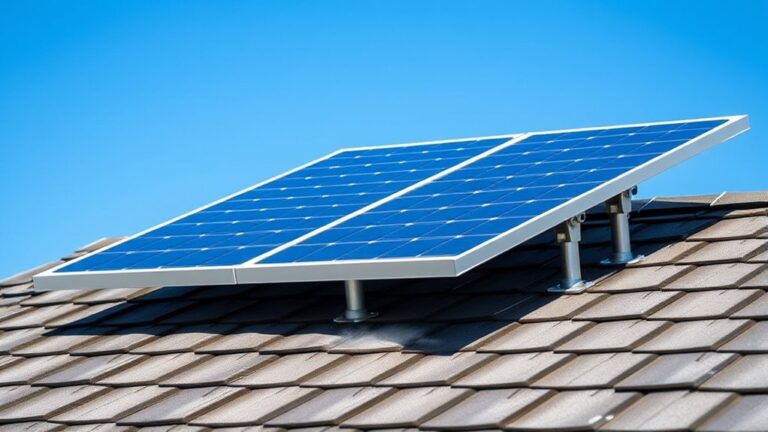
Orientation matters—panels should ideally face true south (in the Northern Hemisphere) to capture the most sunlight. Avoid shaded areas caused by trees or buildings, especially during peak sun hours.
Also, consider the roof’s angle or choose a ground mount that mimics it for ideal sun exposure.
Here’s what to keep in mind when planning your installation space and orientation:
- Clear, unobstructed area with full sun exposure
- South-facing orientation for maximum sunlight
- Tilt angle matching your latitude for best solar gain
- Easy access for maintenance and plumbing connections
Frequently Asked Questions
How Long Does It Take to Install a 4×8 Solar Pool Heater?
It usually takes you about 3 to 6 hours to install a 4×8 solar pool heater, depending on your experience and setup complexity.
You’ll want to prep, mount panels, and connect plumbing carefully for best results.
Taking your time with each step can really pay off in the long run. Just make sure you have everything ready before you start!
What Maintenance Is Required for 4×8 Solar Pool Panels?
Regularly rinse and remove debris to maintain maximum efficiency. Check connections carefully, clean collectors cautiously, and cover panels during cold conditions.
You’ll keep your 4×8 solar panels performing perfectly with simple, consistent care. Just a little attention goes a long way!
Are 4×8 Solar Pool Heaters Compatible With Saltwater Pools?
Yes, 4×8 solar pool heaters work fine with saltwater pools. You’ll just want to choose corrosion-resistant materials and regularly check your system to prevent salt damage.
This keeps your heater efficient and long-lasting. It’s pretty straightforward to maintain once you get the hang of it!
Can I Connect Multiple 4×8 Solar Panels in Series or Parallel?
Picture sunlight weaving through panels—yes, you can connect multiple 4×8 solar panels in series or parallel. Series increases pressure; parallel boosts flow.
Choose based on your pump’s power and plumbing setup for ideal heating efficiency. It’s all about matching what you have with what your system needs.
What Is the Average Lifespan of a 4×8 Solar Pool Heater?
You can expect a 4×8 solar pool heater to last about 10 to 15 years with proper care. Regular maintenance really makes a difference.
Also, protecting it from harsh weather will help you get the most out of its lifespan. So, a little effort goes a long way!
Conclusion
So, after all those calculations and careful planning, you might think heating your 14,000-gallon pool with 4×8 solar panels is rocket science. But no worries—just toss in a handful of panels, hope for endless sun, and enjoy your perfectly warm pool… eventually.
In reality, taking the time to calculate and adjust based on your usage and climate means you won’t be left shivering or overspending. Who knew math could actually save your swim season?
By understanding how many 4×8 solar pool heaters you need for a 14,000-gallon pool, you can maximize efficiency and comfort. It’s all about balancing the right number of panels with your local climate and pool usage. So, don’t skip the calculations—planning ahead ensures a warm, inviting pool all season long without breaking the bank.