Author: Admin

  • 5 Tips to Get Snow Off Solar Panels Safely

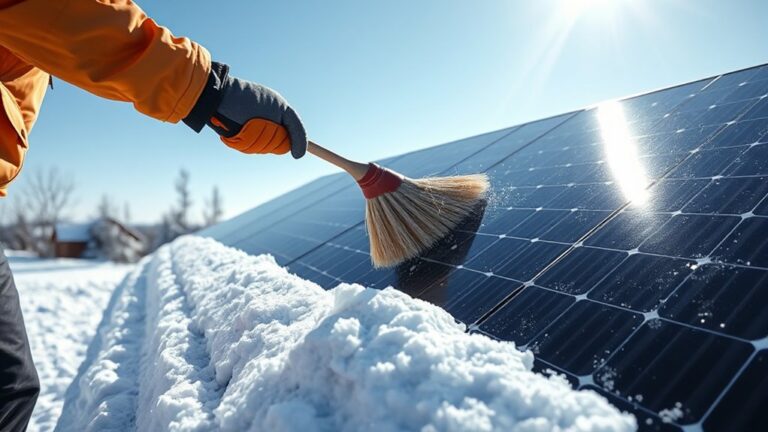
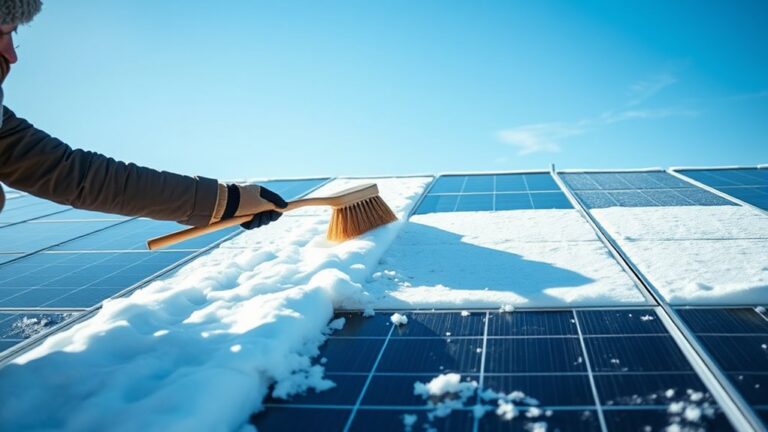
    To get snow off your solar panels safely, don’t use sharp tools that can scratch or crack the glass. Instead, grab a soft roof rake with a foam head. Stand on stable ground and gently pull the snow downward.

    You can also melt snow with warm water around 90°F to avoid any damage. Just be careful not to use water that’s too hot.

    Protect your panels from ice by making sure they’re installed at proper angles. Applying safe coatings can help too.

    Keep an eye on your panels’ performance during winter. That way, you can catch any issues early.

    Discover how to keep your panels efficient all season long!
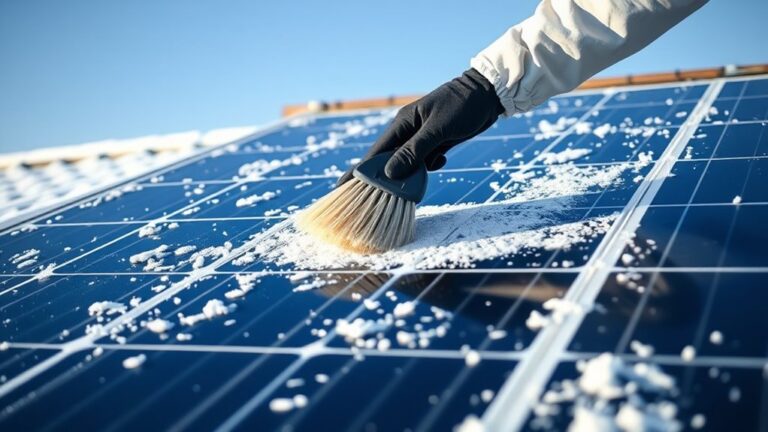
  • 5 Easy Tips to Get Snow Off Solar Panels

    You can let the sun naturally melt light snow on your panels—thin snow usually disappears within hours without effort.

    For heavier snow, gently use a soft snow rake with foam blades to avoid damage. Spray warm (not hot) water on icy spots to soften ice safely.

    Installing heating cables helps prevent buildup automatically, while regularly clearing snow boosts your panels’ efficiency.

    Want to discover how each method protects your system and maximizes energy?

  • How to Clean Solar Panels From the Ground in 3 Easy Steps

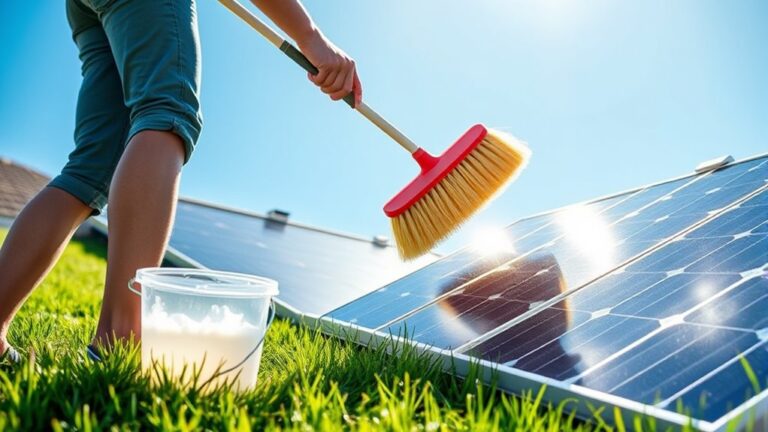
    To clean your solar panels from the ground, first gather a soft-bristle brush or sponge, a telescoping pole, a bucket with mild soap and lukewarm water, and a hose with a gentle spray nozzle.

    Next, rinse the panels gently to remove loose dirt. Then, use the brush on the pole with soapy water in circular motions, avoiding electrical parts.

    Finally, rinse thoroughly and inspect for missed spots. Keep following these tips to maintain your panels’ efficiency and lifespan.

  • How to Clean Solar Light Panels in 3 Easy Steps

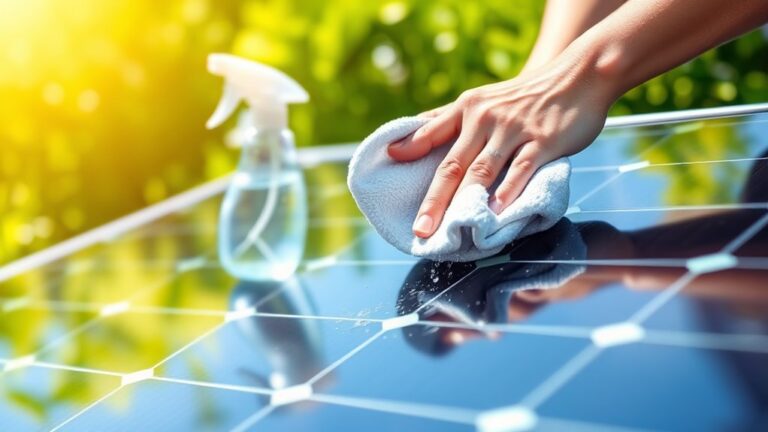
    To clean your solar light panels in 3 easy steps, start by gathering a soft cloth or sponge, warm soapy water, and gloves for protection.

    Rinse the panels with clean water to remove loose dirt, then gently wipe them using the soapy cloth to avoid scratches.

    Finally, rinse off any soap residue and dry the panels with a microfiber cloth to prevent streaks. Keep them clean regularly for peak performance, and you’ll find more ways to maintain their efficiency.

  • 10 Steps to Clean Snow Off Solar Panels Safely

    To safely clean snow off your solar panels, first assess the snow depth and coverage. Then, make sure to wear insulated boots, gloves, and goggles.

    Turn off your solar system before you start. Use soft-bristled brushes or microfiber cloths—never metal tools or hot water—to gently clear snow from the top down.

    Afterwards, check your system’s output to spot any issues. For long-term care, angle panels steeply and consider snow-melting options.

    Keep going to discover detailed tips and avoid common mistakes.

  • How to Check Solar Panel Output in 5 Simple Steps

    You can check your solar panel output in five simple steps. First, read real-time power data on your inverter’s display.

    Next, use your system’s monitoring app for convenient tracking and alerts. It makes keeping an eye on things super easy.

    Then, compare actual output to the panel’s rated performance considering weather conditions. This helps you know if your system is working right.

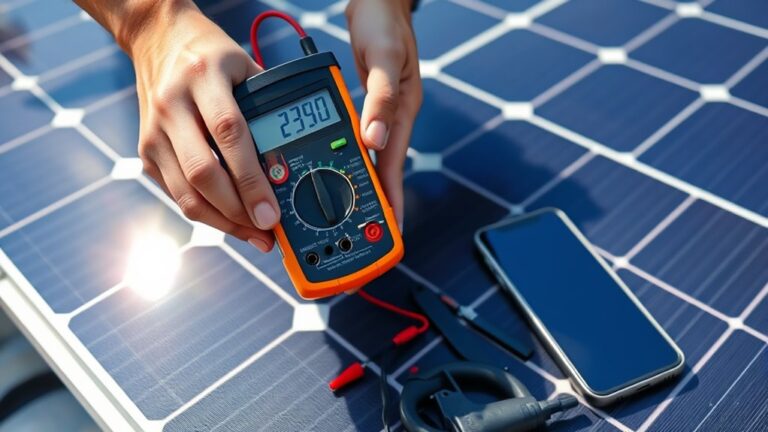
    After that, safely measure voltage and current with a multimeter, wearing gloves. Safety first, always!

    Finally, troubleshoot common issues like dirt or loose wiring to boost output. Keep going to uncover more helpful details and tips.

  • 7 Steps to Charge a Battery With a Solar Panel

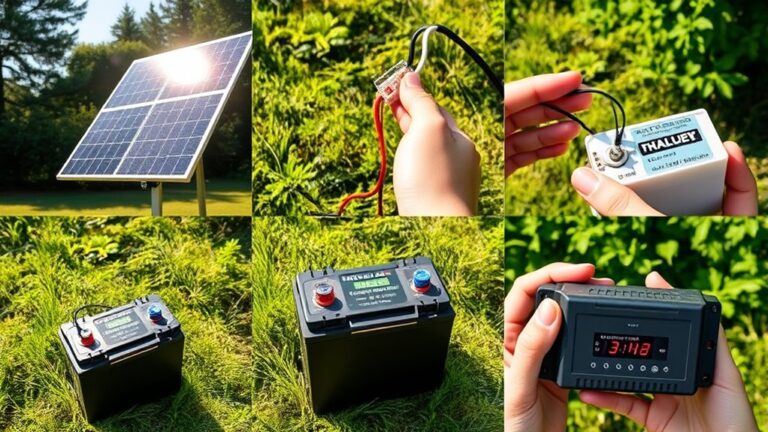
    To charge your battery with a solar panel, first pick a panel that matches your battery’s voltage and capacity. Choose a compatible charge controller to regulate power safely.

    Connect your panel to the controller, then wire the controller to the battery with correct polarity and protection. Position your panel for maximum sunlight by adjusting tilt and avoiding shade.

    Regularly monitor battery health and maintain your setup. Following these steps sets you up for efficient, long-lasting solar charging—you can uncover more tips and details next.

  • How Much Watts Does a Solar Panel Produce?

    You can expect a typical solar panel to produce between 250 and 400 watts depending on its type—monocrystalline panels tend to be higher, while thin-film panels produce less.

    Your panel’s size, efficiency, and how well it’s positioned toward the sun also play a big role.

    Weather, temperature, shading, and your location can further impact actual output.

    While the rated wattage shows peak capacity, real-world conditions usually mean less power.

    Keep exploring to understand what truly affects your solar system’s performance.

  • How Much Solar Power Do You Need to Run a House?

    To figure out how much solar power you need to run your house, start by calculating your daily energy use from utility bills. Then, factor in your region’s sunlight hours, seasonal changes, and any shading on your roof.

    Don’t forget to size your system for future needs and consider battery storage to use power when the sun isn’t shining. Planning carefully helps you build an efficient, cost-effective system tailored to your lifestyle.

    There’s more to explore about optimizing and upgrading your setup. So, take your time and get it right!

  • 7 Key Factors That Affect How Much Solar Does Cost in AZ

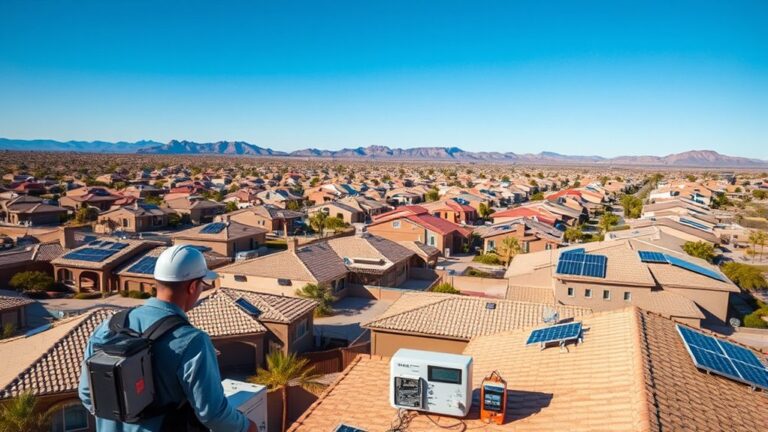
    When considering solar costs in Arizona, you’ll want to factor in system size and panel type since bigger, efficient setups cost more upfront but save more long-term. Your roof’s type and condition impact installation complexity and price, along with local permit and inspection fees.

    Installer reputation matters too, affecting reliability and hidden costs. Don’t forget valuable state incentives and federal tax credits, plus market demand and timing can drive prices up or down.

    Exploring these details can help you make the best solar investment. It’s all about balancing upfront costs with long-term benefits.