
How to Check Solar Panel Output in 5 Simple Steps
You can check your solar panel output in five simple steps to ensure your system is running efficiently and saving you money on energy bills. Monitoring the performance of your solar panels helps you catch any issues early and maximize your clean energy production. Whether you’re a homeowner or just curious about solar power, these easy steps will guide you through the process.
First, read real-time power data on your inverter’s display. This gives you immediate feedback on how much energy your panels are producing right now.
Next, use your system’s monitoring app for convenient tracking and alerts. It’s a handy way to keep an eye on output from anywhere.
Then, compare actual output to the panel’s rated performance considering weather conditions. This helps you understand if your system is performing as expected.
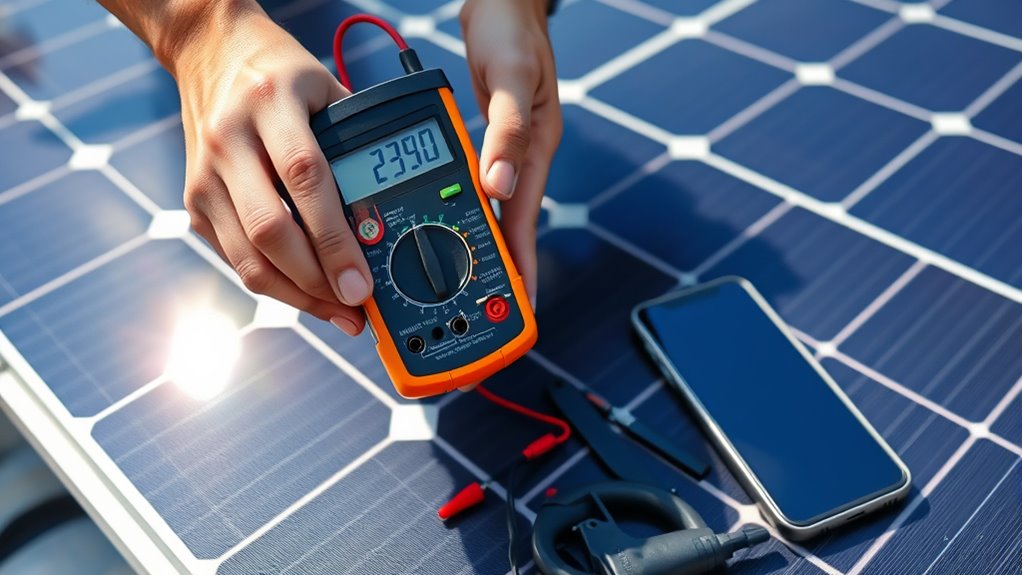
After that, safely measure voltage and current with a multimeter, wearing gloves. Safety first here — don’t skip the gloves!
Finally, troubleshoot common issues like dirt or loose wiring to boost output. Sometimes a quick clean or tightening a connection can make a big difference.
Keep going to uncover more helpful details and tips.
Key Takeaways
- Locate the inverter and check its display for real-time wattage output during peak sunlight. This gives you an immediate idea of how much energy your panels are producing.
- Use a solar monitoring app connected via Wi-Fi or Bluetooth to track energy production remotely. It’s super handy to keep an eye on things even when you’re not at home.
- Compare the actual output against the panel’s rated power and current weather conditions. That way, you can tell if your system is performing as expected or if something might be off.
- Safely measure voltage and current with a digital multimeter, ensuring the system is off before testing. Always prioritize safety when handling electrical equipment.
- Inspect and clean panels, check wiring, and troubleshoot any discrepancies to maintain optimal performance. Keeping everything in good shape helps your solar setup run efficiently for years.
Read Solar Panel Output on Your Inverter
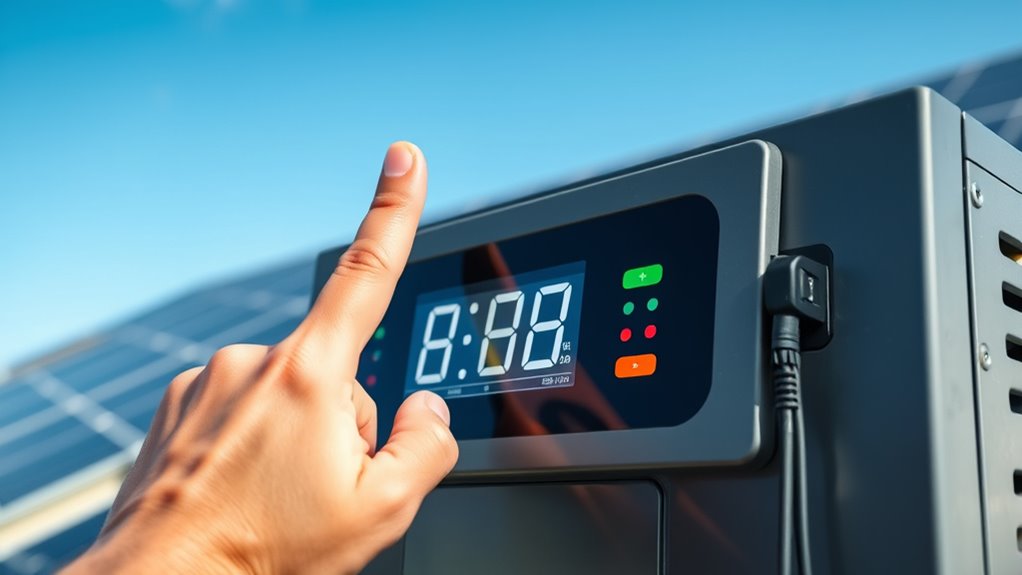
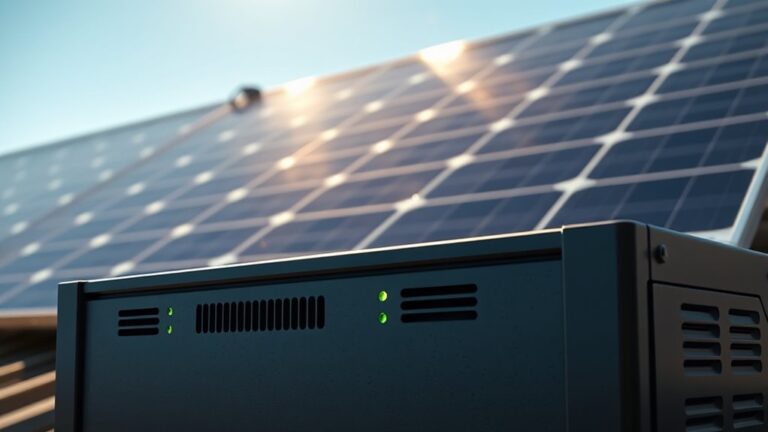
Before you can assess your solar panels’ performance, you need to read their output on your inverter. The inverter converts the DC electricity your panels generate into AC power for your home. It usually displays real-time data right on its screen.
To check the output, locate the inverter—often mounted near your electrical panel or outside your home. On its display, you’ll see numbers representing volts, amps, or watts. Focus on the wattage, as it shows how much power your panels produce at that moment.
If you notice unusually low numbers during peak sunlight, it might indicate an issue. Make sure the inverter is on and functioning correctly before taking any readings. This quick check helps you understand your system’s current performance.
Track Solar Panel Output With Monitoring Apps
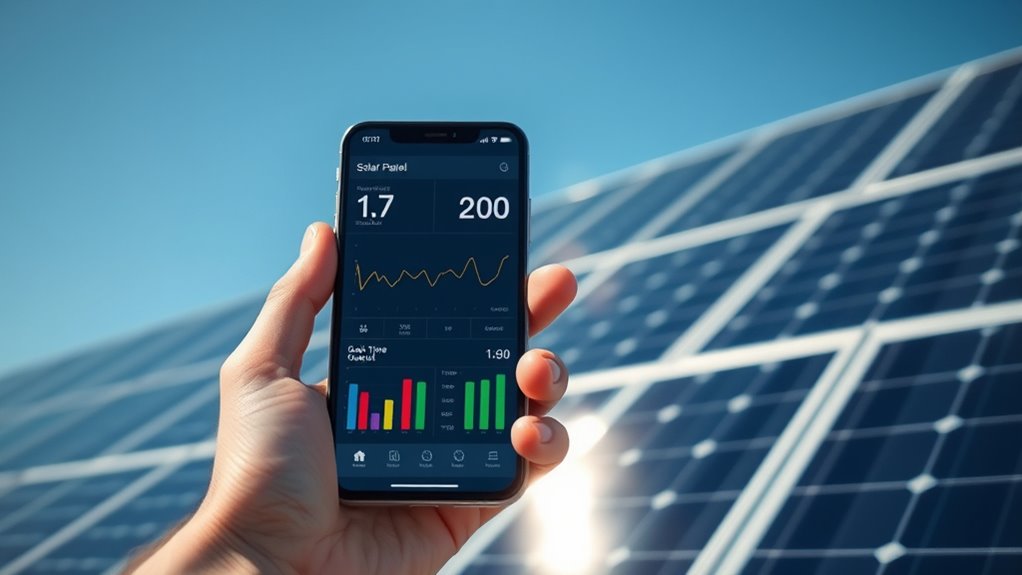
Wondering how to keep a close eye on your solar panel output without constantly checking the inverter? Monitoring apps are the perfect solution. These apps connect to your solar system through Wi-Fi or Bluetooth, giving you real-time data right on your smartphone or tablet.
You can track energy production, daily and monthly outputs, and even spot trends over time. Many apps send alerts if your system underperforms, helping you catch issues early.
Setting up is usually straightforward—just download the app recommended by your solar provider and follow the pairing instructions. With monitoring apps, you gain instant access to your system’s performance anytime, anywhere. It makes staying informed and optimizing your solar energy use a breeze, without any hassle.
Compare Solar Panel Output to Expected Ratings
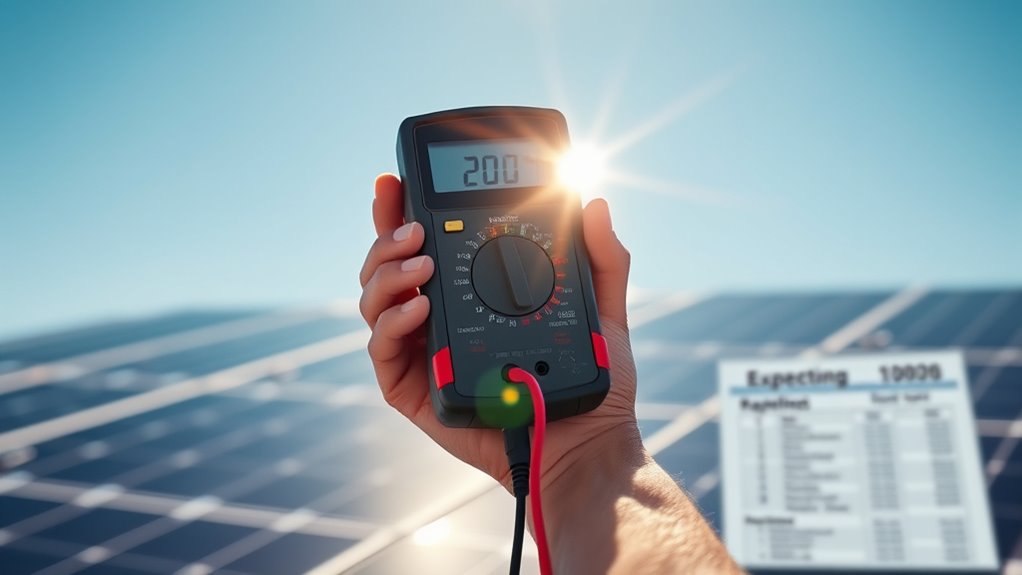
Although monitoring apps provide real-time data, you should regularly compare your solar panel output to the expected ratings to assure your system performs at its best.
Doing this helps you spot any performance issues early and guarantee your panels deliver the power they’re supposed to.
Here’s how you can do it:
- Find the rated power output on your solar panel’s label or datasheet (usually in watts).
- Check the current solar irradiance and weather conditions since these affect output.
- Compare your measured output to the expected output under similar conditions, considering panel efficiency and age.
If your output consistently falls short, it might be time for maintenance or inspection. This comparison keeps your system efficient and saves you money.
Measure Solar Panel Voltage and Current Safely
To accurately compare your solar panel’s output to its expected ratings, you’ll need reliable measurements of voltage and current. Start by turning off any connected devices to avoid electrical hazards.
Use a digital multimeter set to the appropriate voltage range for your panel. Connect the multimeter’s leads to the panel’s positive and negative terminals, making sure they have firm contact without shorting them.
For current measurement, switch the multimeter to the current setting and connect it in series with the panel’s output wire. Always wear insulated gloves and avoid touching exposed wires.
Take measurements under direct sunlight for accuracy. Never measure current without the proper setup, as it can damage your meter or cause injury.
Following these safety tips ensures you get precise readings without risking harm. It’s better to be cautious and safe while working with electrical equipment.
Troubleshoot Solar Panel Output Issues
If your solar panel isn’t producing the expected power, you’ll need to identify the root cause quickly. Start by checking for obvious issues like dirt or debris blocking sunlight.
Next, inspect the wiring and connections for damage or loose contacts that could interrupt power flow. Finally, test the panel’s voltage and current output using a multimeter to compare with the manufacturer’s specifications.
- Clean the panel surface thoroughly to remove dust or leaves.
- Examine all cables and connectors for wear, corrosion, or looseness.
- Measure output voltage and current under direct sunlight and compare results.
Following these steps will help you pinpoint and fix common output problems. This way, you can ensure your solar panel operates efficiently.
Frequently Asked Questions
How Long Do Solar Panels Typically Last?
You can expect solar panels to last about 25 to 30 years. They gradually lose efficiency over time, but with proper care, they’ll keep producing energy well beyond their warranty period.
It’s pretty impressive, right? Even after a couple of decades, they’re still working hard to power your home. Just a little upkeep can go a long way!
What Factors Affect Solar Panel Efficiency?
Wondering what affects your solar panel’s efficiency? Dirt, shading, temperature, and panel age all play a role.
You’ll want to keep panels clean, avoid obstructions, and monitor conditions to make sure they perform at their best. It’s easier than you might think!
Can Solar Panels Work During Cloudy Days?
Yes, your solar panels can work on cloudy days, but they’ll produce less energy since sunlight is weaker.
You’ll still get some power, just not as much as on bright, sunny days when the sun’s rays are direct. It’s kind of like when you’re outside on a cloudy day — it’s not as bright, but there’s still some light.
How Much Maintenance Do Solar Panels Require?
You’ll find solar panels require just a gentle touch of upkeep—mostly keeping them clean and checking connections yearly.
With this light care, they’ll keep shining efficiently, letting you enjoy hassle-free, green energy for years.
Are Solar Panels Environmentally Friendly?
Yes, solar panels are environmentally friendly because they reduce your carbon footprint by generating clean, renewable energy. You’ll cut greenhouse gas emissions and rely less on fossil fuels, helping protect the planet for future generations.
It’s a simple switch that makes a big difference. Plus, once installed, solar panels produce energy quietly and without pollution. So, they’re a smart choice if you want to go green and save some money too.
Conclusion
Checking your solar panel output might seem complex, but with simple steps like reading your inverter and using apps, it becomes straightforward. While comparing actual output to expected ratings feels technical, measuring voltage and current brings you hands-on with your system.
Troubleshooting issues might seem intimidating, yet it’s empowering once you grasp the basics. By blending tech tools with practical checks, you’ll confidently keep your solar energy flowing efficiently every day.
Keeping an eye on your solar panel output is easier than you think. Using simple methods like inverter readings and monitoring apps helps you understand your system’s performance. Regular checks and troubleshooting ensure your solar panels work at their best, maximizing energy production and saving you money. So, stay proactive with these easy tips to enjoy reliable and efficient solar power every day!

16 Comments