
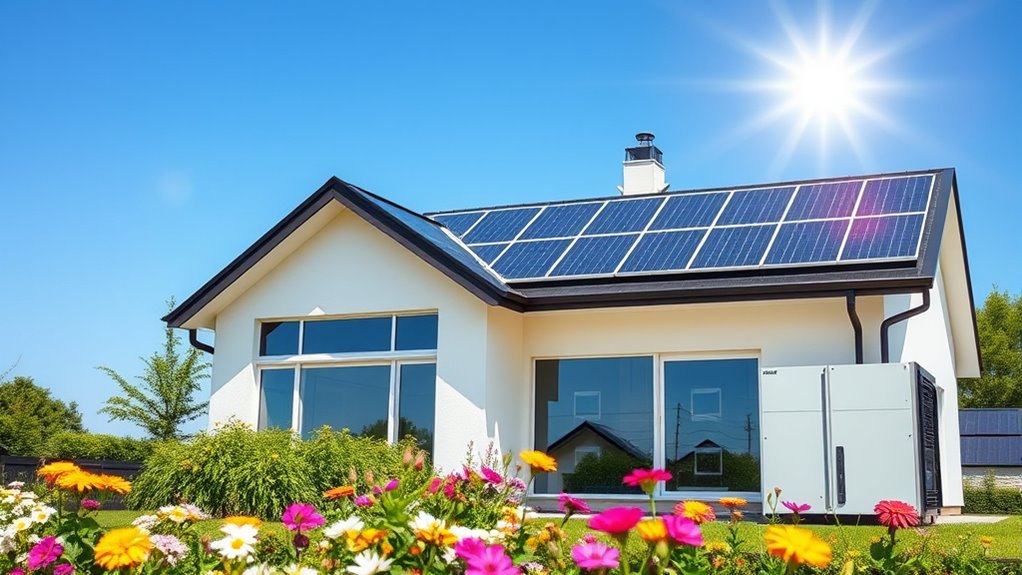
How to Run My House Only on Solar Power
To run your house solely on solar power, start by calculating your daily energy use from bills and appliances. This helps you understand how much electricity you really need to generate.
Next, choose efficient solar panels and inverters that fit your roof and sun exposure.
Adding battery storage is a smart move to guarantee power at night or on cloudy days. It keeps your home running smoothly even when the sun isn’t shining.
Make sure to install everything safely while following local regulations.
Regular maintenance is key too—clean your panels and keep an eye on performance to catch any issues early.
With proper planning and upkeep, you can keep your home powered day and night.
Plus, exploring ways to optimize every part of your system will help you save money and improve reliability in the long run.
Key Takeaways
- Calculate your average daily energy use and figure out the solar system size you’ll need. Keep in mind peak sun hours and possible system losses when doing this.
- Pick high-efficiency solar panels along with inverters that match your roof layout and any shading issues you might have.
- Install a lithium-ion battery storage system that’s big enough to cover your energy use during the night and on cloudy days.
- Make sure to regularly clean and maintain your solar panels. Also, keep an eye on system performance and tweak settings to get the best energy production and storage.
- Use energy management systems and energy-efficient appliances to keep your consumption balanced. This helps ensure you have a reliable, uninterrupted solar power supply.
Why Switch to Solar Power for Your Home
Although the initial investment might seem high, switching to solar power for your home can save you significant money on energy bills over time. You’ll reduce or even eliminate your electricity costs, freeing up cash for other priorities.
Investing in solar power may cost upfront but drastically cuts your energy bills, freeing money for what matters most.
Solar energy also increases your home’s value, making it a smart long-term investment. By generating your own power, you gain independence from utility companies and protect yourself against rising energy prices.
Plus, you’ll shrink your carbon footprint, helping the environment by cutting greenhouse gas emissions. Solar power is reliable and low-maintenance, so once your system is set up, it runs smoothly with minimal effort.
Choosing solar means you’re making a practical, eco-friendly decision that benefits your wallet and the planet. It’s really a win-win!
How to Calculate Your Home’s Solar Power Needs
To figure out your home’s solar power needs, start by evaluating your current energy consumption. Next, calculate the solar panel capacity required to meet that demand.
This helps ensure you install the right system size for your household. It’s a simple way to make sure you’re not overpaying or underpowered.
Assess Energy Consumption
Before installing solar panels, you need to figure out how much energy your home actually uses. Start by reviewing your electricity bills over the past year to find your average monthly and daily usage in kilowatt-hours (kWh). This gives you a clear baseline for your energy consumption.
Next, list all major appliances and devices, noting their power ratings and estimated daily usage hours. Multiply these to calculate their individual energy use, then add them up for a detailed picture.
Don’t forget to take into account seasonal changes and habits that affect usage. Accurately evaluating your energy consumption helps you understand your true needs, ensuring your solar system can supply enough power without overspending or falling short.
Determine Solar Panel Capacity
Calculating the right solar panel capacity starts with matching your system’s output to your home’s energy needs. First, determine your average daily energy consumption in kilowatt-hours (kWh) from your utility bills.
Next, consider the peak sun hours your location receives daily—this varies by region and influences how much energy each panel produces. Divide your daily energy use by the average peak sun hours to find the kilowatt (kW) capacity your solar array needs.
For example, if you use 30 kWh daily and get 5 peak sun hours, you’ll need a 6 kW system. Finally, factor in system losses (about 10-15%) for efficiency, and you’ll have a more accurate solar panel capacity suited to power your home reliably.
Choosing Solar Panels, Inverters, and Other Equipment
Now that you know your power needs, it’s time to pick the right solar panels and inverters. You’ll want to compare types of panels based on efficiency and cost.
Then, choose an inverter that matches your system size and energy goals. Getting these components right will guarantee your solar setup runs smoothly and efficiently.
Solar Panel Types
Which type of solar panel suits your home best? You’ll mainly encounter three types: monocrystalline, polycrystalline, and thin-film.
Monocrystalline panels offer the highest efficiency and durability, making them ideal if you have limited roof space. Polycrystalline panels cost less but are slightly less efficient, a good choice when space isn’t a concern.
Thin-film panels are lightweight and flexible but generally less efficient and degrade faster. So, they work best for unconventional installations.
When selecting panels, consider factors like efficiency, cost, warranty, and aesthetics. Also, pay attention to the panel’s temperature coefficient, as panels perform differently in heat.
While you focus on choosing the right panels, remember the overall system depends on quality components working together. So, pick reliable brands and certified equipment to guarantee longevity and performance.
Inverter Selection Guide
Although choosing the right solar panels is crucial, selecting the appropriate inverter is just as important to guarantee your system runs efficiently. The inverter converts the direct current (DC) from your panels into alternating current (AC) that powers your home.
You’ll want to pick between string inverters, microinverters, or power optimizers depending on your roof layout and shading conditions. String inverters are cost-effective for uniform sunlight, while microinverters offer better performance for shaded or complex roofs by optimizing each panel individually.
Consider the inverter’s efficiency rating, warranty, and compatibility with your solar panels. And don’t forget to check if it supports battery integration if you plan to add energy storage.
Choosing the right inverter ensures you maximize energy output and system reliability. It’s definitely worth taking the time to find the best fit for your setup!
Setting Up Solar Battery Storage for Reliable 24/7 Power
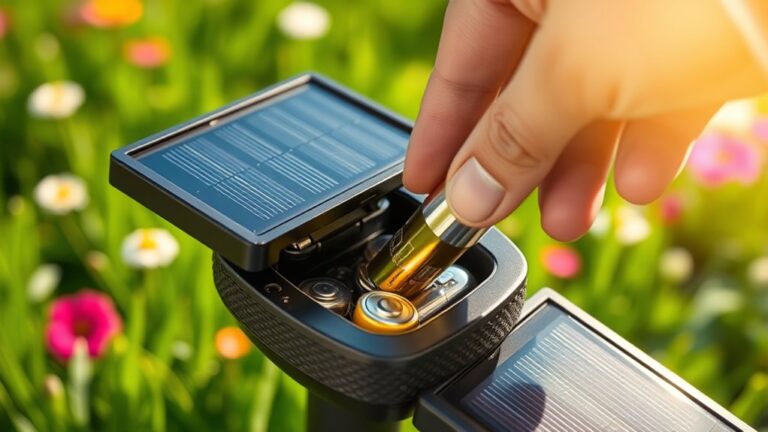
Because solar panels only generate electricity when the sun is shining, you’ll need a reliable battery storage system to keep your home powered around the clock. Choose a battery with enough capacity to store excess energy generated during the day, so you can use it at night or during cloudy periods.
Lithium-ion batteries are popular for their efficiency and lifespan. Consider your home’s daily energy consumption to size your battery bank correctly.
| Battery Type | Capacity (kWh) | Lifespan (Years) |
|---|---|---|
| Lithium-ion | 10-20 | 10-15 |
| Lead-acid | 5-15 | 3-5 |
| Flow Battery | 10-30 | 10-20 |
| Saltwater | 5-15 | 7-10 |
Proper battery setup guarantees you enjoy uninterrupted solar power 24/7. So, take your time picking the right system that fits your needs!
How to Install Your Solar System Safely and Effectively
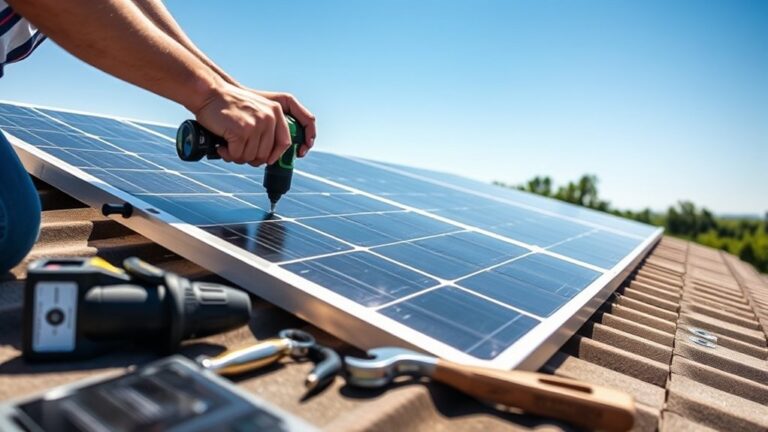
Before you start installing your solar system, make sure you understand local regulations and have the proper permits in place. This step guarantees compliance and helps you avoid costly delays.
Next, focus on safety and efficiency during installation. Here’s what you should keep in mind:
- Use appropriate personal protective equipment (PPE) like gloves and safety glasses to prevent injuries.
- Follow manufacturer instructions carefully for mounting panels and wiring to avoid damage or hazards.
- Double-check all electrical connections and ensure your inverter and battery are installed in a well-ventilated area.
Taking these precautions will make your installation smoother and safer. It’s always better to be cautious and prepared!
Tips for Managing and Maintaining Your Solar Power System
Once your solar power system is up and running, managing and maintaining it properly guarantees it performs efficiently and lasts longer. Regularly check your panels for dirt, leaves, or debris, as these can block sunlight and reduce output.
Clean them gently with water and a soft brush when needed. It’s a simple task, but it makes a big difference.
Monitor your system’s performance through the inverter display or a monitoring app to spot any issues early. That way, you can catch problems before they become costly.
Schedule annual professional inspections to confirm wiring and components are in good condition. It’s worth the investment to keep everything running smoothly.
Keep an eye on shading from new tree growth or nearby structures. Even small shadows can affect your system’s efficiency.
Also, maintain battery health if you use storage by following manufacturer guidelines. Proper care here ensures your batteries last longer and perform better.
Frequently Asked Questions
Can I Sell Excess Solar Energy Back to the Grid?
Yes, you can sell excess solar energy back to the grid through net metering or feed-in tariffs. These programs let you earn credits or payments for the extra power you generate.
It’s a good idea to check your local utility’s policies. They’ll explain exactly how they credit your account and what options are available to you.
How Does Weather Affect Solar Panel Efficiency?
Think of your solar panels as sun-hungry flowers—they perform best in bright, clear weather. Cloudy skies and rain dim their energy, making them work a bit harder.
Snow or dirt can block sunlight, too, which reduces your system’s efficiency considerably. So, keeping them clean and clear really helps!
Are Solar Panels Covered by Home Insurance?
Yes, your solar panels are usually covered by home insurance, but you should check your policy details. You might need to add specific coverage or increase your limits to protect against damage, theft, or natural disasters.
It’s a good idea to review your policy carefully. Sometimes, standard coverage might not be enough for all the risks your solar panels face. So, don’t hesitate to ask your insurance provider about the best options for full protection.
What Incentives or Tax Credits Are Available for Solar Installation?
You’ll get a 30% federal tax credit on your solar system’s cost, but that’s not all—many states and local programs offer rebates or incentives too.
Don’t miss out; these can dramatically cut your installation expenses. It’s definitely worth checking what’s available in your area!
How Long Do Solar Panels Typically Last?
Solar panels typically last about 25 to 30 years, but many continue producing electricity beyond that.
You’ll notice a gradual efficiency drop over time, so it’s a good idea to plan for some maintenance or replacement down the road.
That way, you can keep your system running at its best without any surprises.
Conclusion
Switching to solar power isn’t just smart—it’s empowering. By calculating your needs and choosing the right equipment, you’re setting yourself up for success. Add reliable battery storage, and you’re truly taking control of your energy future.
Imagine never worrying about outages or rising bills again. With proper installation and maintenance, your home will run smoothly on clean, renewable energy. It’s a win for your wallet and the planet.
So, why wait? Harness the sun’s power today and watch your home—and savings—shine brighter every day. Running your house only on solar power means energy independence, lower utility costs, and a smaller carbon footprint. Start your solar journey now and enjoy the freedom and peace of mind that comes with sustainable living.

One Comment