How Solar Power Can Work at Night – Practical Guide
You can power your home with solar energy at night by storing extra electricity generated during the day in batteries, like efficient lithium-ion ones, to use after sunset. This way, the energy you capture when the sun is shining keeps your lights and devices running even after dark.
Smart energy management helps you prioritize essential devices and conserve power.
Combining solar with wind or backup generators ensures continuous energy no matter the weather. It’s a great way to make sure you’re never left in the dark.
Plus, innovative tech like solar fuels adds more options to keep your energy supply steady.
Keep exploring these strategies, and you’ll find even more ways to keep the lights on around the clock. It’s easier than you think to make solar work for you day and night!
Key Takeaways
- Solar power works at night by storing excess daytime energy in batteries for use after sunset.
- Hybrid systems combine solar with wind or generators to ensure continuous power regardless of conditions.
- Smart energy management optimizes battery use by prioritizing essential loads and monitoring consumption in real time.
- Solar thermal storage captures heat during the day to release energy at night efficiently.
- Technological advances like improved batteries and solar fuels enhance nighttime solar energy availability.
How to Use Solar Power After the Sun Sets
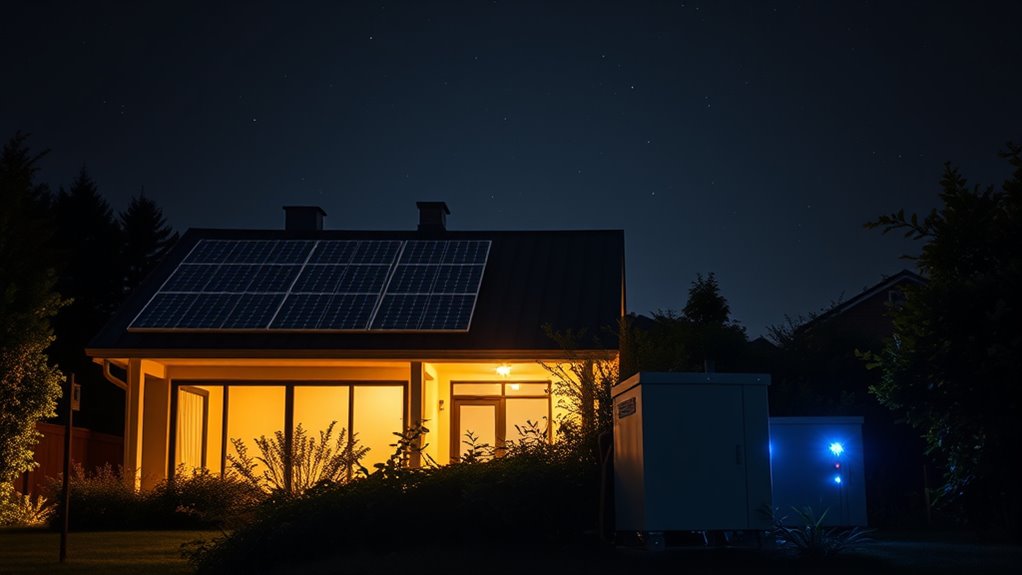
Although solar panels only generate electricity during daylight, you can still use solar power after the sun sets by storing the excess energy produced during the day in batteries. When your panels generate more power than you need, that surplus doesn’t have to go to waste.
Instead, it gets saved for later use, ensuring your home stays powered through the night. You’ll want to monitor your daily energy consumption closely to optimize how much you store.
Using energy-efficient appliances and turning off unnecessary devices at night helps stretch your stored power further. By planning your energy use and maximizing storage during sunny hours, you can enjoy the benefits of solar power well beyond daylight without interruption.
Battery Storage Solutions for Nighttime Solar Power
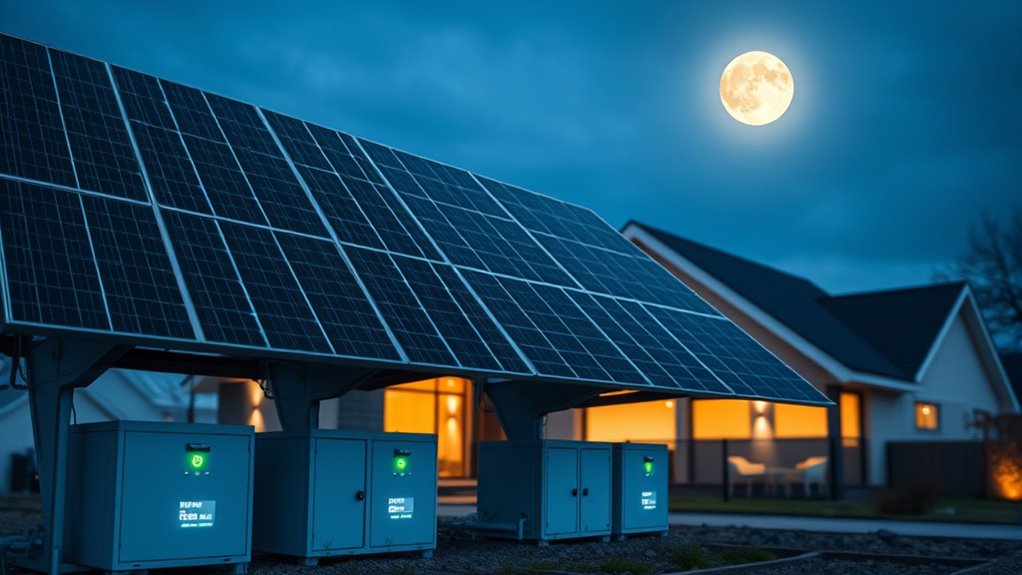
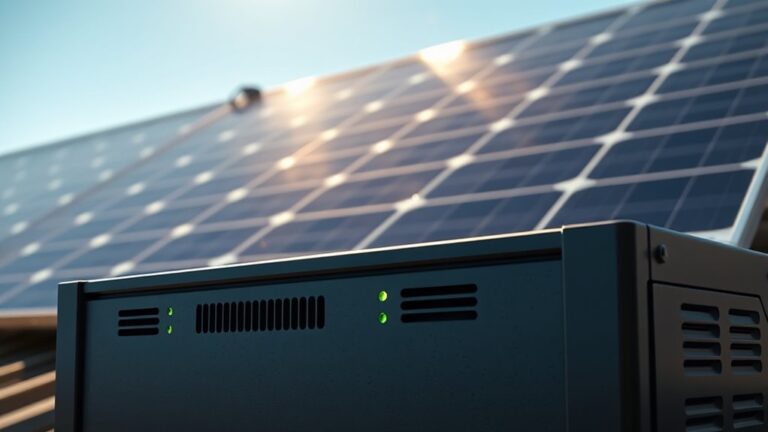
When you want to rely on solar power after dark, choosing the right battery storage solution is essential. Batteries store the excess energy your panels produce during the day, so you can use it when the sun isn’t shining.
Lithium-ion batteries are popular for their efficiency, long lifespan, and compact size. They’re ideal if you want reliable, maintenance-free storage.
Lithium-ion batteries offer efficient, long-lasting, and compact energy storage with minimal maintenance.
Lead-acid batteries cost less upfront but require more upkeep and have shorter lifespans. For larger setups, flow batteries offer scalability and durability but come with higher costs.
Make sure your battery’s capacity matches your nighttime energy needs to avoid outages. Properly sizing and installing your battery system guarantees you get the most from your solar investment, keeping your home powered smoothly after sunset.
Smart Energy Management for Continuous Solar Power
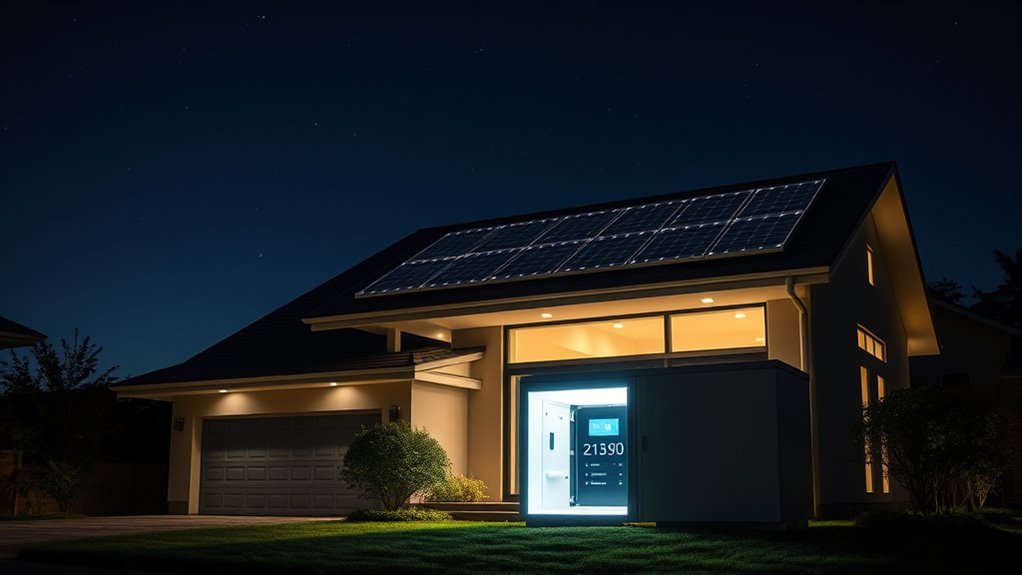
You’ve seen how battery storage keeps solar power available at night, but smart energy management takes it further.
By optimizing your energy use and automating load management, you can guarantee continuous, efficient power without wasting a watt.
Let’s explore how these technologies work together to keep your solar system running smoothly around the clock.
Battery Storage Solutions
How can solar power keep your home running after the sun sets? Battery storage solutions are key. These systems store excess energy generated during the day, so you can draw power when sunlight isn’t available.
By installing efficient lithium-ion or advanced lead-acid batteries, you guarantee a reliable energy reserve. Smart battery management systems monitor charge levels to prevent overcharging or deep discharge, extending battery life and maintaining performance.
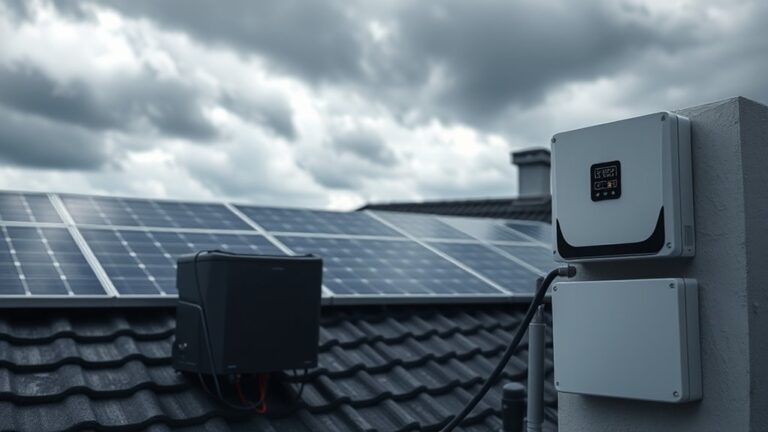
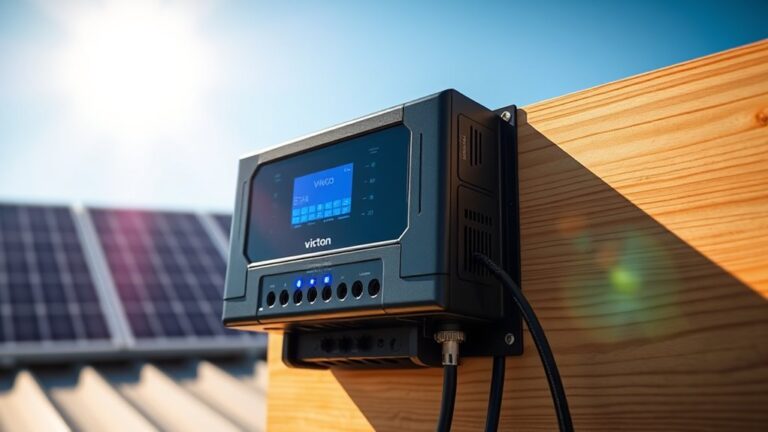
You can even integrate your battery with your solar inverter for seamless energy flow. This means your home stays powered through the night, cloudy days, or power outages without relying on the grid.
Choosing the right battery capacity depends on your energy needs and daily usage patterns, so plan accordingly to maximize your solar investment. It’s all about making the most of the energy you generate and keeping your home comfortable no matter what.
Energy Consumption Optimization
Storing energy with batteries is only part of the solution to keeping your home powered through the night. To maximize solar power efficiency, you need to optimize your energy consumption.
Start by identifying high-energy appliances and limiting their use during nighttime when solar input is zero. Shift flexible activities, like laundry or dishwashing, to daylight hours when solar energy is abundant.
Use energy-efficient lighting and smart thermostats to cut unnecessary power draw after sunset. Monitoring your energy use with real-time apps helps you stay aware and make informed decisions.
Automated Load Management
While optimizing your energy consumption is essential, automated load management takes your solar power system a step further by intelligently controlling when and how devices use electricity. This smart energy management prioritizes critical loads and schedules non-essential appliances during periods of excess solar generation or low grid demand.
By doing so, it reduces strain on your battery storage and ensures continuous power availability, even at night. You can set up automated systems that respond to real-time data from solar panels, weather forecasts, and energy prices, maximizing efficiency.
With automated load management, you avoid manual adjustments and prevent energy waste, making your solar setup more reliable and cost-effective. Ultimately, it helps you get the most from your investment while maintaining a steady power supply around the clock.
Hybrid Systems: Combining Solar With Other Energy Sources
Because solar power alone can’t meet energy demands around the clock, hybrid systems combine solar with other energy sources to guarantee a steady supply. You can integrate solar panels with wind turbines, batteries, or even diesel generators to assure continuous power. This is especially important at night or during cloudy days.
This mix helps balance costs, reliability, and environmental impact. It’s a smart way to make sure you’re covered no matter the weather or time of day.
Here’s a quick comparison of common hybrid components:
| Energy Source | Strengths | Drawbacks |
|---|---|---|
| Solar Panels | Clean, renewable | No power at night |
| Wind Turbines | Operate day and night | Weather-dependent |
| Battery Storage | Stores excess energy | Limited capacity |
| Diesel Generator | Reliable backup | Emits pollution |
Choosing the right combination really depends on your energy needs and local conditions. So, think about what works best for you and your situation.
Innovative Solar Technologies for Nighttime Energy
Although solar panels don’t generate electricity at night, recent innovations are changing how you can harness solar energy around the clock. Technologies like solar thermal energy storage let you capture heat during the day and use it to generate power after sunset.
You’ll also find advancements in photovoltaic materials that store excess energy more efficiently for nighttime use. Another exciting development is the use of bifacial solar panels, which can absorb reflected light from the environment, extending energy capture into low-light conditions.
Additionally, research into solar fuels—converting sunlight into chemical energy—holds promise for nighttime power. By exploring these cutting-edge technologies, you can reduce your reliance on the grid and make solar energy a more consistent, reliable resource, even after dark.
Maximizing Solar Power Efficiency at Night
To maximize solar power efficiency at night, you need reliable energy storage solutions that hold onto daytime energy.
You can also use smart power management to optimize how and when electricity is used. It really helps to keep things running smoothly.
Combining solar with hybrid systems adds backup options to keep your power steady after dark. That way, you’re covered even when the sun isn’t shining.
Energy Storage Solutions
How can you guarantee your solar power system keeps working when the sun goes down? The key lies in effective energy storage solutions. By installing high-quality batteries, you can store excess solar energy generated during the day for use at night.
Lithium-ion batteries are popular for their efficiency and longevity, while lead-acid batteries offer a more affordable option. Make certain to size your battery bank according to your energy needs to avoid running out of power after sunset.
Another option is thermal storage, which captures solar heat during the day and releases it when needed. Investing in reliable storage not only ensures uninterrupted power but also maximizes your solar system’s efficiency.
This way, you get to enjoy clean energy around the clock without depending on the grid.
Smart Power Management
Storing energy is just one part of keeping your solar system running smoothly at night; managing that stored power wisely makes all the difference. Smart power management means prioritizing essential loads and scheduling energy use to avoid wasting stored electricity.
You can use timers and smart home systems to run appliances during off-peak hours or when battery levels are high. Monitoring your energy consumption in real time helps you make informed decisions and prevent complete battery drain.
Additionally, setting up alerts for low battery levels ensures you conserve power when it matters most. By actively controlling how and when you use your stored solar energy, you maximize efficiency, extend battery life, and keep your home powered reliably through the night.
Hybrid Solar Systems
Why settle for just one energy source when you can combine the strengths of multiple systems? Hybrid solar systems blend solar power with other energy sources like wind, batteries, or the grid to keep your home powered all night.
By integrating battery storage, you store excess solar energy generated during the day and use it after sunset, maximizing your solar investment. Adding wind turbines or connecting to the grid guarantees backup when solar and batteries fall short.
You control your energy flow with smart inverters and management systems that switch seamlessly between sources. This approach not only boosts reliability but also reduces your dependence on fossil fuels.
With a hybrid system, you get continuous, efficient power—day and night—without compromise. It’s the best of all worlds working together for you.
Frequently Asked Questions
How Does Solar Panel Installation Affect Home Property Value?
You’ll likely increase your home’s property value by installing solar panels, as buyers appreciate energy savings and sustainability.
Plus, solar systems can lower utility bills, making your home more attractive and marketable in the long run.
It’s a win-win situation that many homebuyers find appealing these days.
What Maintenance Is Required for Solar Panels Over Time?
You’ll need to clean your solar panels periodically to remove dirt and debris. It’s also important to check for shading or any damage that might affect their performance.
Plus, make sure the wiring and inverters are working properly. Regular inspections like these help keep your system efficient and can extend its lifespan.
Are There Government Incentives for Installing Solar Power Systems?
You’ll find government incentives so generous they might as well be handing out gold!
You can get tax credits, rebates, and sometimes even performance-based payments that make installing solar power systems way more affordable and rewarding.
How Do Weather Conditions Impact Solar Panel Performance?
Weather conditions directly impact your solar panels’ performance. Cloudy or rainy days reduce sunlight, lowering energy output.
Snow can block panels, while extreme heat may decrease efficiency. Keeping panels clean helps maintain ideal performance.
Can Solar Power Systems Be Integrated With Electric Vehicle Charging?
Yes, you can integrate solar power systems with electric vehicle charging. While the sun fuels your panels by day, your EV charges efficiently.
It’s a great way to blend green energy with convenience. Plus, it saves you money and reduces your carbon footprint at the same time.
Conclusion
When the sun dips below the horizon, your solar power doesn’t have to sleep. With battery storage and smart energy management, you can keep your home humming like a well-tuned engine all night long.
Think of hybrid systems as your energy orchestra, blending solar with other sources for a flawless performance. Embrace these innovations, and you’ll turn the darkness into your solar power’s second act—bright, reliable, and unstoppable.
By using battery storage, you save excess solar energy during the day to use after sunset. Smart energy management ensures you use power efficiently, reducing waste and maximizing your system’s potential.
Hybrid solar power systems combine solar panels with batteries and sometimes other energy sources. This mix keeps your home powered when the sun isn’t shining, making solar energy a 24/7 solution.
So, with the right setup, solar power can work at night, too. You’ll enjoy continuous, clean energy that’s both sustainable and dependable—turning night into day for your solar power system.