How Much Power Can a Solar Panel Generate?
You can expect a solar panel to generate between 250 and 400 watts of power, depending on its size, efficiency, and installation. The actual power output varies quite a bit because of these factors.
Weather conditions, shading from trees or buildings, and dirt buildup can all reduce how much energy your panel produces.
On the flip side, cooler temperatures often help boost performance, making your panels work better. Plus, where you live and how many sunlight hours you get through the seasons play a big role in overall energy generation.
If you’re curious about how these different elements impact your system’s real-world results, there’s a lot more to uncover. Stick around, and we’ll help you understand how to optimize your solar setup for the best power output.
Key Takeaways
- Solar panels typically generate between 250W and 400W of power depending on size and efficiency.
- Real-world output depends on daily peak sunlight hours and panel orientation.
- Weather, shading, and temperature significantly affect the actual power produced.
- Larger or more efficient panels produce more power but may cost more and require space.
- Seasonal changes and geographic location influence solar panel energy generation capacity.
What Affects How Much Power Your Solar Panel Produces?
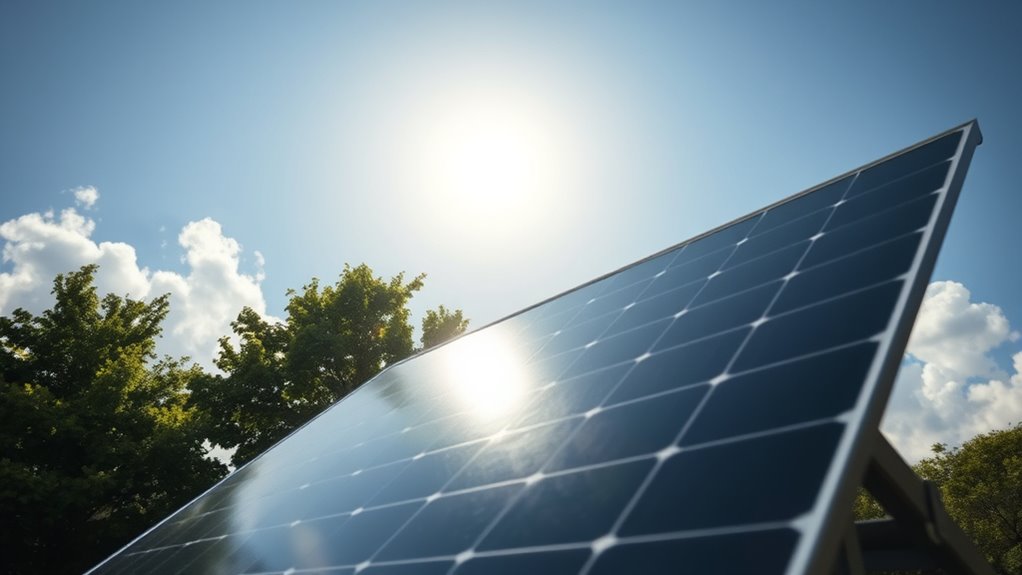
Although solar panels are designed to capture sunlight efficiently, several factors affect how much power they actually produce. You’ll notice that weather plays a big role—cloudy days or heavy rain reduce sunlight, lowering your panel’s output.
The angle and direction you install your panels also matter; south-facing panels tilted to match your latitude capture the most sun. Shade from trees, buildings, or debris can block sunlight and cut power drastically.
Dirt or dust buildup on panels further decreases efficiency, so regular cleaning helps maintain performance. Temperature impacts output too—panels usually work better in cooler conditions, as excessive heat can reduce their efficiency.
How Solar Panel Size and Efficiency Impact Power Output
When you choose a solar panel, its size and efficiency directly determine how much power it can generate. Larger panels capture more sunlight, producing more electricity. But efficiency tells you how well the panel converts that sunlight into usable power.
Both factors work together to impact output.
Consider these points:
- Panel Size – Bigger panels have a larger surface area to absorb sunlight.
- Efficiency Rate – Higher efficiency means more power from the same sunlight.
- Space Limitations – You might need smaller, more efficient panels if roof space is tight.
- Cost vs. Output – Efficient panels often cost more but deliver better performance in limited space.
Understanding Residential Solar Panel Power Ratings

Solar panel power ratings tell you how much electricity a panel can produce under ideal conditions, usually measured in watts (W). These ratings help you compare different panels and understand their potential output.
Most residential solar panels fall between 250W and 400W. The higher the wattage, the more power the panel can generate under perfect sunlight.
Here’s a quick look at common residential solar panel ratings:
| Panel Rating (Watts) | Typical Use Case |
|---|---|
| 250W | Smaller homes or limited space |
| 300W | Average-sized homes |
| 350W | Efficient panel for moderate needs |
| 375W | High-efficiency panels |
| 400W | Large homes or high energy needs |
Knowing these ratings helps you choose the right panel for your home’s energy goals. It’s all about matching the panel to what you actually need.
How to Estimate Your Solar Panel’s Real-World Energy Output
Knowing your panel’s wattage rating is a good starting point, but the actual energy you’ll get depends on several factors like sunlight availability, panel orientation, and local weather conditions.
To estimate your solar panel’s real-world output, consider these key steps:
- Calculate daily peak sunlight hours for your location.
- Adjust for panel angle and direction—south-facing panels capture more energy.
- Factor in system losses from wiring, inverter efficiency, and shading.
- Multiply the panel’s wattage by peak sunlight hours and efficiency rate.
How Weather and Seasonal Changes Affect Solar Panel Output
Although your solar panel’s wattage rating provides a baseline, its actual output can fluctuate considerably due to weather and seasonal changes. When clouds cover the sky, your panels receive less sunlight, cutting their power output.
Rain and snow reduce efficiency further by blocking sunlight and sometimes covering the panels. Temperature also plays a role; solar panels generally perform better in cooler weather, so extreme heat can lower their efficiency.
Seasonal shifts affect the sun’s angle and daylight duration, which impacts how much energy your panels capture each day. During winter, shorter days and the sun’s lower position reduce output, while longer summer days boost it.
Understanding these factors helps you set realistic expectations and optimize your solar energy system’s performance year-round. It’s good to keep these things in mind so you’re not caught off guard by the changes in your solar panel’s output.
How Location and Sunlight Hours Influence Solar Power Production
Where you place your panels and how many hours of sunlight they receive each day considerably impact the power they generate. Sunlight intensity and duration vary with location, affecting your solar panel’s efficiency.
If you live near the equator, you’ll get more consistent sunlight year-round compared to higher latitudes. Also, local terrain and shading from buildings or trees can reduce sunlight exposure.
To maximize power output, consider these factors:
- Latitude: Closer to the equator means longer sunlight hours.
- Seasonal Changes: Sunlight hours shift, affecting daily energy.
- Weather Patterns: Cloudy regions get less consistent sunlight.
- Placement: Avoid shade and orient panels toward the sun’s path.
Adjusting your setup based on location and sunlight hours helps you generate ideal solar power. It’s really worth taking the time to get it right!
Frequently Asked Questions
How Long Do Solar Panels Typically Last?
You can expect solar panels to last about 25 to 30 years. Over time, their efficiency slowly drops, but they’ll still produce power beyond that.
Regular maintenance helps you get the most out of them. It’s worth keeping an eye on their condition so they keep working well for you.
What Maintenance Do Solar Panels Require?
You’ll want to keep your solar panels sparkling like morning dew—clean off dirt and debris regularly. Check connections and shading, too.
And don’t forget to schedule professional inspections yearly. With simple care, your panels will shine and perform efficiently.
Can Solar Panels Work During Power Outages?
You can use solar panels during power outages only if you have a battery storage system or a backup generator.
Without storage, your panels shut down for safety, so they won’t power your home alone.
Basically, without a way to store energy, the system can’t keep your lights on when the grid goes down. It’s all about keeping things safe and stable.
How Much Do Solar Panels Cost to Install?
You might be surprised, but solar panel installation typically costs between $15,000 and $25,000. However, with incentives and tax credits, you’ll likely pay much less.
It’s definitely a smart, long-term investment you won’t regret. Plus, the savings on your energy bills add up over time!
Are There Any Government Incentives for Solar Panels?
Yes, you can take advantage of government incentives like tax credits, rebates, and grants that lower your solar panel costs. These programs really help make going solar more affordable.
Be sure to check out both local and federal programs to maximize your savings. It’s worth doing a little research so you get the best deals and make your solar investment pay off.
Conclusion
You might be surprised to learn that a typical residential solar panel produces about 250 to 400 watts under ideal conditions. This means, depending on size and efficiency, your panel can generate enough power to run several household appliances.
Remember, factors like weather, location, and sunlight hours all play a big role in your panel’s real-world output. These elements can cause your solar energy production to vary from day to day.
By understanding these factors, you can better estimate and maximize your solar energy production. Knowing how much power a solar panel can generate helps you plan your energy needs more effectively.
In short, the power a solar panel produces depends on its wattage, environmental conditions, and installation setup. With the right knowledge, you can optimize your solar panel’s output and enjoy the benefits of clean, renewable energy in your home.