
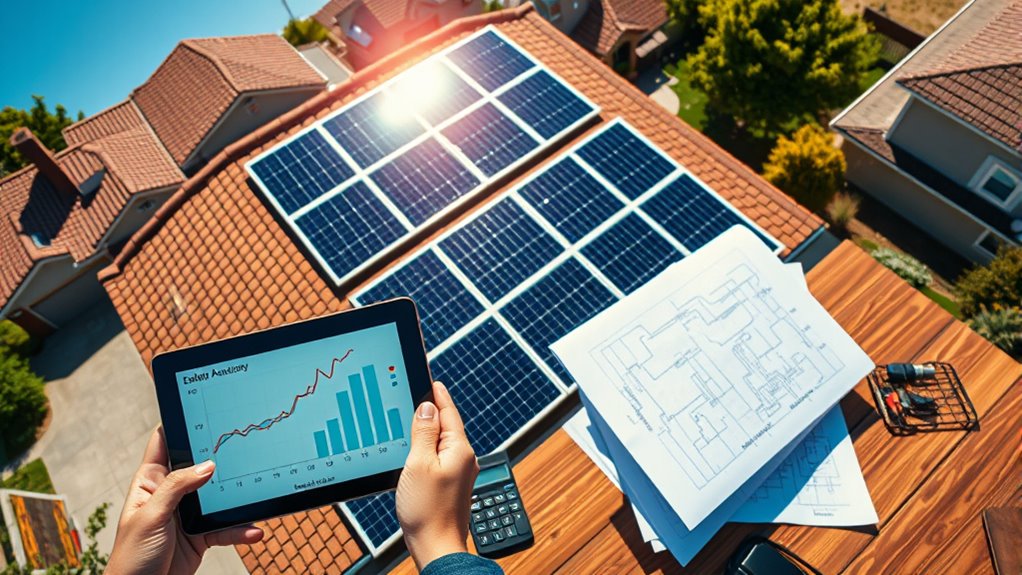
How to Calculate How Many Solar Panels Are Required to Power a House
To calculate how many solar panels you need to power your house, start by checking your past electricity bills to find out your average daily kWh usage. Knowing this helps you understand how much energy your home consumes on a typical day.
Next, find your area’s peak sunlight hours. This is important because it tells you how many hours per day your panels will produce their maximum power.
Divide your daily energy need by these peak sunlight hours to get the size of the solar system required.
Then, choose the wattage of the solar panels you plan to use. Divide the system size by the panel wattage to estimate how many panels you’ll need.
Don’t forget to consider other factors like roof space, efficiency losses, and seasonal changes. These can impact how well your system performs.
You’ll want to explore ways to optimize these factors to get the most out of your solar setup.
Key Takeaways
- Review your past electricity bills to determine your average daily energy consumption in kilowatt-hours (kWh). This gives you a clear idea of how much power you actually use.
- Find the average peak sunlight hours per day for your location. This helps estimate how much effective solar energy your panels can produce.
- Calculate the required system size by dividing your daily kWh usage by the peak sunlight hours. This tells you how big your solar setup needs to be.
- Pick your solar panel wattage next. Then, divide the system size by the panel wattage to figure out how many panels you’ll need.
- Don’t forget to consider roof space, shading, and efficiency losses. These factors can change the total number of panels you need for the best performance.
How to Calculate Your Home’s Daily Energy Use
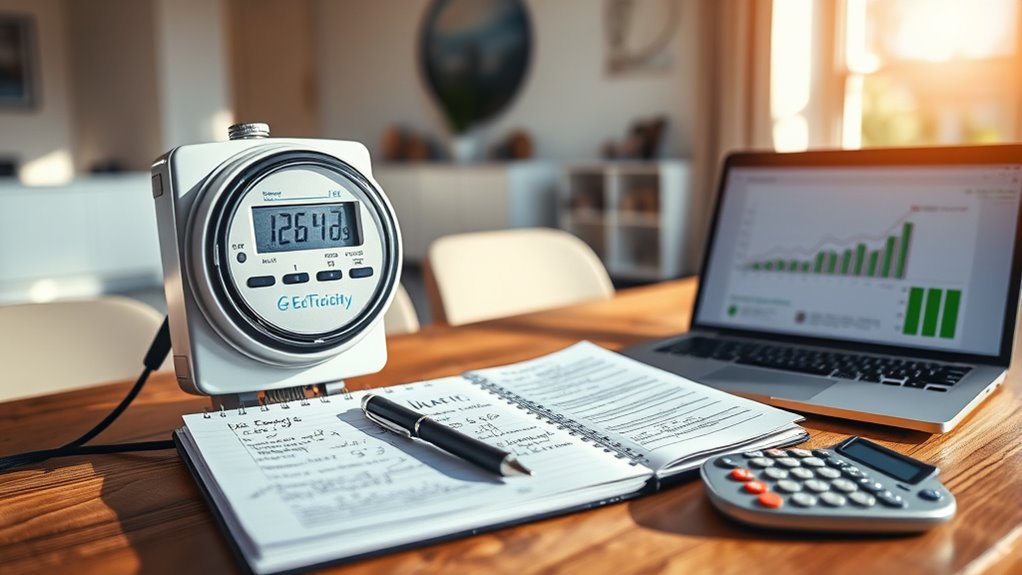
Before determining how many solar panels you need, you first have to figure out your home’s daily energy use. Start by checking your electricity bills for the past year.
Look for the total kilowatt-hours (kWh) used each month and note the average daily consumption by dividing the monthly kWh by the number of days in that month. This gives you a clear picture of your typical daily energy needs.
Don’t forget to take into account any seasonal variations, as your energy use might spike in summer or winter due to heating or cooling. Also, think about any new appliances or lifestyle changes that could affect your consumption.
Knowing your average daily energy use is essential because it sets the foundation for calculating the number of solar panels you’ll need to power your home efficiently.
Understanding Solar Panel Wattage and Output

To figure out how many solar panels you need, you first have to understand their wattage and how much energy they actually produce. Keep in mind that factors like sunlight hours and panel efficiency affect the total output.
Once you grasp these basics, you can calculate your daily power generation more accurately. It’s not as tricky as it sounds, really! Just take it step by step, and you’ll get there.
Solar Panel Wattage Basics
How much power can a solar panel actually produce? Solar panels are rated by their wattage, which tells you the maximum power output under ideal conditions. Most residential panels range between 250 and 400 watts.
This rating helps you estimate how much electricity each panel can generate. For example, a 300-watt panel can produce 300 watts of power at peak sunlight. However, wattage alone doesn’t determine your total energy needs; you’ll also consider how many hours of sunlight you get daily.
Understanding panel wattage basics lets you calculate how many panels you’ll need to meet your household’s energy consumption. Keep in mind, wattage ratings provide a standardized way to compare panels and plan your solar setup accurately.
Factors Affecting Energy Output
Knowing a panel’s wattage gives you a starting point, but the actual energy output depends on several factors. You’ll want to take into account these key elements to get an accurate estimate:
- Sunlight hours: More direct sunlight means higher output. So, the longer your panels soak up the sun, the better.
- Panel orientation and tilt: Proper positioning maximizes exposure. It’s all about catching those rays at the right angle.
- Temperature: Panels perform better in cooler conditions. When it’s too hot, their efficiency can drop.
- Shading: Even partial shadows can considerably reduce power. So, watch out for trees, buildings, or anything that might block the sun.
- Panel efficiency: Higher-efficiency panels convert more sunlight into electricity. That means you get more bang for your buck with better tech.
Calculating Daily Power Generation
Wondering how to translate solar panel wattage into actual daily energy production? Start by knowing your panel’s wattage rating, which tells you the maximum power it can produce under ideal conditions.
Then, consider the average number of peak sunlight hours your location receives daily. Multiply the panel wattage by these peak hours to estimate daily watt-hours generated.
For example, a 300-watt panel receiving 5 peak sunlight hours produces about 1,500 watt-hours (or 1.5 kWh) per day. Remember, this is a simplified calculation; factors like temperature, shading, and panel orientation can affect output.
How Sunlight Hours Affect Solar Panel Output
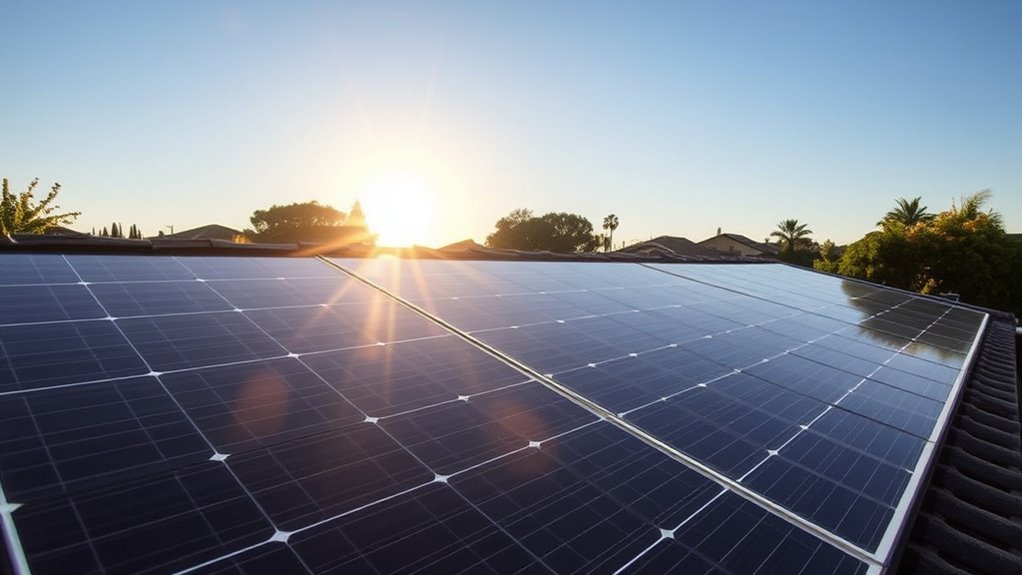
You’ll want to take into account peak sunlight hours when calculating your solar panel output since more sun means more energy.
Remember, sunlight varies with the seasons, affecting how much power your panels generate throughout the year.
Understanding these changes helps you size your system accurately. It’s all about matching your setup to the sunlight you actually get.
Peak Sunlight Hours
How much sunlight does your location actually receive each day? Peak sunlight hours represent the time when sunlight is strongest and solar panels generate maximum power.
Knowing this helps you estimate how many panels you need more accurately.
Here’s what you should consider about peak sunlight hours:
- They typically occur around midday when the sun is highest.
- Peak hours are not the total daylight hours but the period of ideal solar intensity.
- More peak hours mean more energy generated per panel.
- Locations closer to the equator usually have longer peak sunlight hours.
- Weather and shading can reduce effective peak sunlight hours.
Seasonal Sunlight Variations
Seasonal changes can considerably impact the number of sunlight hours your solar panels receive each day. During summer, longer days mean more sunlight, boosting your panels’ energy output.
Conversely, in winter, shorter days and lower sun angles reduce sunlight exposure, cutting power generation. You need to account for these fluctuations when calculating how many panels to install.
If you only base your system on peak summer sunlight, you might fall short during winter months. Check local solar insolation data to understand average daily sunlight hours throughout the year.
Calculating Solar Panel Count Based on Energy and Sunlight
Because sunlight varies by location and time, calculating the number of solar panels you need starts with understanding your energy consumption and available sunlight hours. First, check your monthly electricity usage on your utility bills to find your average daily consumption in kilowatt-hours (kWh).
Next, determine the average peak sunlight hours your location receives daily. Divide your daily energy use by these sunlight hours to find your required system size in kilowatts (kW).
Finally, consider the wattage of the solar panels you plan to use to calculate how many panels you’ll need.
- Review your average daily kWh usage
- Find your area’s average peak sunlight hours
- Calculate system size: daily kWh ÷ sunlight hours
- Choose panel wattage (e.g., 320W)
- Divide system size by panel wattage for panel count
Factoring in Roof Space Constraints for Panel Installation
Once you know how many solar panels you need based on your energy use and sunlight, the next step is to check if your roof can fit them all. Measure your available roof space, considering its shape, orientation, and any obstructions like chimneys or vents.
Remember, solar panels need some spacing for maintenance and airflow, so don’t plan for edge-to-edge coverage. Calculate the total panel area required by multiplying the number of panels by the size of one panel, typically around 17.5 square feet.
If your roof space is limited, you might have to reduce panel count or explore alternative mounting options like ground mounts. Making sure your roof can physically accommodate the panels helps you avoid surprises and plan a realistic, effective solar setup.
Adjusting Panel Count for Efficiency, Losses, and Choosing Your System
Although you’ve calculated how many panels your roof can hold, you’ll need to adjust that number to account for system efficiency and potential energy losses. Solar panels rarely operate at 100% efficiency due to shading, dirt, and temperature variations.
To get a realistic panel count, consider these factors:
- Inverter efficiency: Typically around 90-95%, affecting power conversion.
- Panel degradation: Panels lose efficiency over time, about 0.5% per year.
- Shading and soiling: Trees, debris, and dust reduce output.
- Temperature effects: High heat lowers panel performance.
- System design choices: String vs. microinverters impact overall efficiency.
Keep these in mind when planning your system — it’ll help you set more accurate expectations and get the most out of your solar setup.
Frequently Asked Questions
How Long Do Solar Panels Typically Last?
Solar panels typically last around 25 to 30 years, but you’ll find many still produce electricity beyond that.
Their efficiency may drop slightly over time, but with proper maintenance, they’ll serve you well for decades.
What Maintenance Do Solar Panels Require?
You’ll need to clean your solar panels occasionally to remove dirt and debris, check for shading issues, and inspect wiring for damage.
Regular maintenance guarantees they operate efficiently and last as long as possible.
It’s not too much work, and keeping an eye on things can save you from bigger problems down the line.
Are There Government Incentives for Installing Solar Panels?
Yes, you can often get government incentives like tax credits, rebates, or grants when you install solar panels. These perks help lower your upfront costs.
Can Solar Panels Work During Cloudy or Rainy Days?
Yes, solar panels still work during cloudy or rainy days, but they produce less energy. You’ll notice a drop in efficiency, yet they can still generate power as they use diffused sunlight, not just direct rays.
How Does Battery Storage Impact Solar Panel System Size?
Battery storage can massively reduce the number of solar panels you need because it stores excess energy for nighttime or cloudy days.
You won’t have to overbuild your system like you’re trying to power a small city!
It’s a smart way to make the most out of the energy your panels produce without adding extra panels just for backup.
Conclusion
Now that you know how to calculate your home’s energy needs and factor in sunlight, wattage, and roof space, you’re ready to choose the right number of solar panels.
Remember, “measure twice, cut once” applies here—accurate calculations save time and money.
By considering efficiency and potential losses, you’ll guarantee your system powers your home reliably.
Go solar confidently, knowing you’ve planned smartly for a brighter, greener future.
Choosing the right number of solar panels is key to maximizing your home’s solar power potential. When you calculate your energy consumption and account for sunlight availability and roof space, you set yourself up for success.
Taking into account panel efficiency and possible energy losses ensures your solar panel system delivers consistent power.
With careful planning, you can enjoy the benefits of renewable energy, reduce your electricity bills, and contribute to a sustainable environment.
So, get ready to power your home with solar panels and embrace a cleaner, greener lifestyle.




2 Comments