How You Can Prevent Power Loss in Solar Panels
You can prevent power loss in your solar panels by keeping them clean and trimming nearby trees to avoid shading. Ensuring proper installation with secure, corrosion-free electrical connections is also key to maintaining efficiency.
Regularly inspect your panels and clear away debris, snow, or dirt buildup. This helps maximize sunlight exposure and keeps your system running smoothly.
Monitoring your system’s performance lets you spot issues early and make timely repairs. Following these simple steps helps maintain peak efficiency.
And hey, exploring more tips can further boost your panels’ output throughout the year. It’s all about staying proactive to get the most from your solar investment!
Key Takeaways
– Regularly clean solar panels to remove dirt, dust, snow, and debris that block sunlight and reduce efficiency.
It might seem like a small thing, but keeping them clean really helps your panels perform their best.
– Trim nearby trees and vegetation to prevent shading and maintain optimal sunlight exposure.
Shaded panels just don’t work as well, so keeping the area clear is key.
– Ensure all electrical connections are secure, corrosion-free, and properly insulated to avoid energy loss.
Loose or corroded connections can sneakily drain your system’s power without you noticing.
– Perform routine inspections and monitor system performance to detect and address issues early.
Catching problems before they get worse saves you time and money in the long run.
– Adjust panel tilt seasonally and ensure proper installation at optimal angles for maximum sunlight capture.
A little tweak here and there can make a big difference in how much energy you get.
Common Causes of Power Loss in Solar Panels
Although solar panels are designed to capture sunlight efficiently, several factors can cause power loss and reduce their performance. You might not realize how shading from trees, buildings, or even dirt can block sunlight, cutting your panels’ output considerably.
Shading from trees, buildings, or dirt can significantly reduce your solar panels’ energy output.
Temperature also plays a role; when panels get too hot, their efficiency drops. So, installing them with good airflow helps a lot.
Additionally, wiring issues or faulty connections can lead to energy loss. You should regularly check your system’s electrical components to avoid this.
Over time, panels naturally degrade, but poor maintenance speeds this process up. By understanding these common causes—shading, heat, wiring problems, and degradation—you can better protect your investment and keep your solar panels running at their best.
How to Keep Solar Panels Clean for Maximum Efficiency
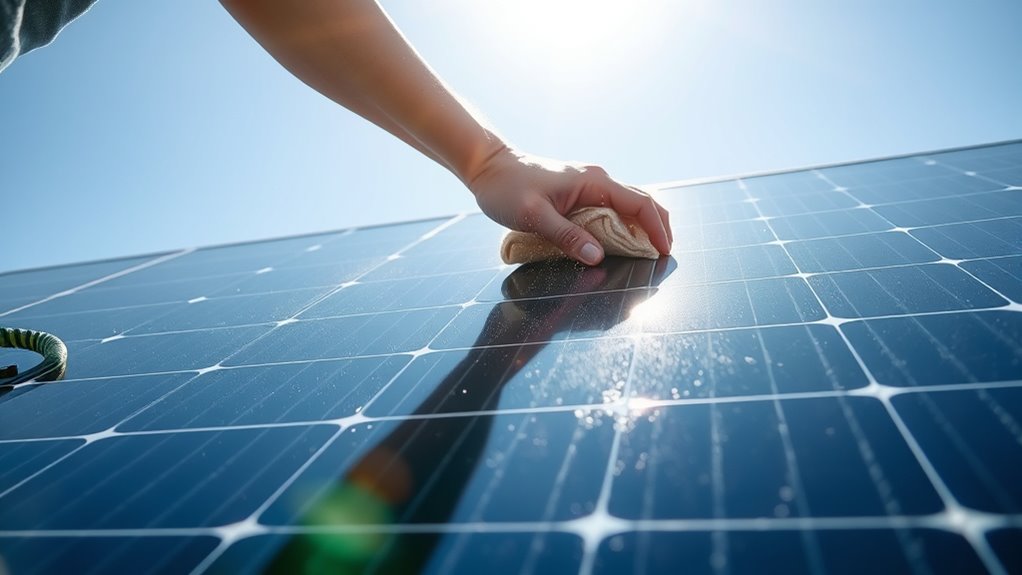
You’ll want to keep your solar panels clean to maintain their peak performance and avoid power loss. Using the right cleaning techniques and scheduling regular maintenance can make a big difference.
Let’s explore how often you should clean them and the best methods to do it safely and effectively.
Importance Of Regular Cleaning
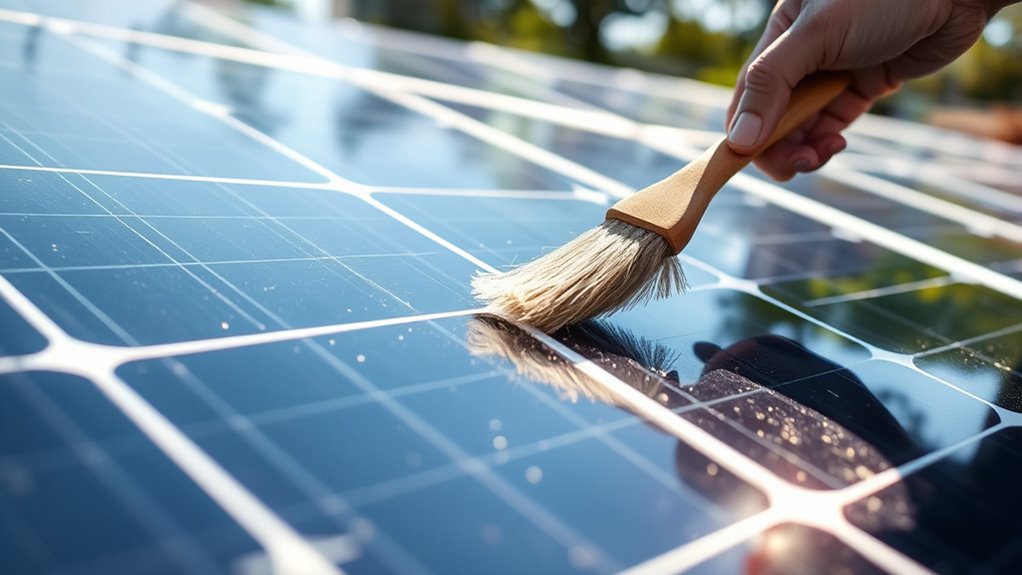
Regular cleaning plays a crucial role in maintaining your solar panels’ efficiency. Dirt, dust, bird droppings, and pollen can accumulate on the surface, blocking sunlight and reducing energy output.
If you neglect cleaning, your panels won’t perform at their best, and you’ll see a noticeable drop in power generation. By keeping your panels clean, you guarantee maximum sunlight absorption, which directly boosts their effectiveness.
Additionally, regular cleaning helps prevent long-term damage caused by grime buildup, extending your panels’ lifespan. Staying on top of cleaning also allows you to spot issues like cracks or shading early, saving you from costly repairs later.
Ultimately, a consistent cleaning routine helps you get the most from your solar investment. It’s a simple step that really pays off in the long run.
Best Cleaning Techniques
When you want to keep your solar panels operating at peak efficiency, choosing the right cleaning techniques is essential. You’ll want to avoid harsh chemicals and abrasive tools that can damage the surface.
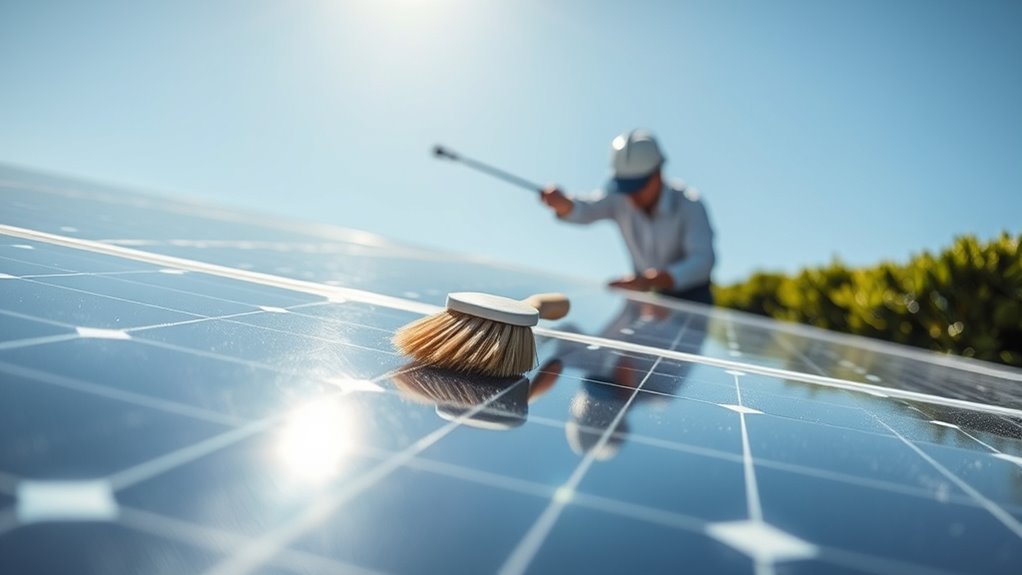
Instead, use soft brushes or sponges paired with mild soap and water. A hose with gentle water pressure can rinse dirt away without scratching.
For hard-to-reach panels, consider a telescoping cleaning kit designed for solar panels. Always clean during cooler parts of the day to prevent streaks.
| Technique | Tools Needed | Best For |
|---|---|---|
| Soft brush cleaning | Soft brush, mild soap | Light dust and pollen |
| Water rinsing | Hose with gentle spray | Loose dirt and debris |
| Sponge wash | Sponge, soapy water | Stubborn grime |
| Telescoping kit | Extendable pole, brush | High or angled panels |
| Avoid abrasive tools | None | Prevents panel damage |
Cleaning Frequency Recommendations
Although solar panels are designed to withstand various weather conditions, keeping them clean at appropriate intervals guarantees they perform at their best. You don’t want dirt, dust, or bird droppings to reduce their efficiency over time.
How often you clean them depends on your location and environment. Here are some cleaning frequency recommendations to help you maintain peak performance:
- Clean panels every 6 months in areas with low pollution and rainfall.
- Increase to every 3 months if you live near dusty roads or construction sites.
- Clean after heavy pollen seasons or storms that leave debris.
It’s a good idea to monitor panels monthly during dry, dusty summers. Also, always inspect after extended dry spells to catch buildup early. This way, you’ll keep your solar panels running smoothly without any hassle.
How Proper Installation Prevents Power Loss
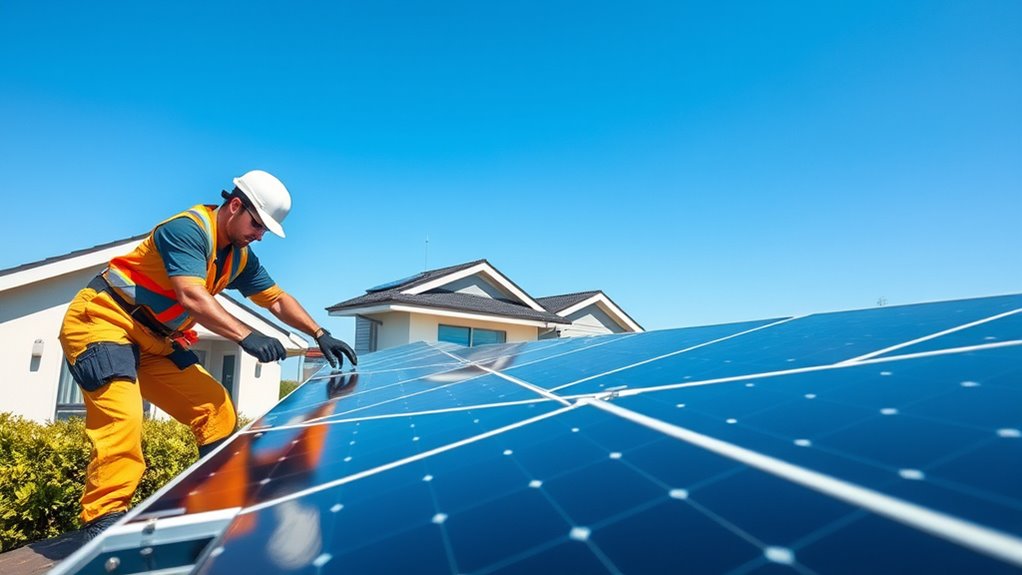
Since solar panels rely heavily on precise positioning and secure connections, proper installation plays a crucial role in preventing power loss. You need to guarantee panels are mounted at the ideal angle and direction to maximize sunlight exposure.
Proper installation ensures solar panels are precisely positioned to maximize sunlight and prevent power loss.
Secure mounting prevents movement that can disrupt connections or damage components. Make sure all electrical connections are tight and corrosion-free to maintain efficient current flow.
During installation, avoid shading from nearby objects by carefully selecting the site. Use high-quality materials and follow manufacturer guidelines to prevent issues like micro-cracks and loose wiring.
Proper grounding and weatherproofing also protect your system from environmental damage. By focusing on these installation details, you’ll help your solar panels operate at peak performance and reduce the risk of power loss over time.
How Shading and Temperature Affect Solar Panel Performance
In addition to proper installation, environmental factors like shading and temperature can substantially impact your solar panel’s efficiency. When your panels experience shading, even partial coverage can reduce power output dramatically.
High temperatures also decrease efficiency because solar cells perform best in cooler conditions.
To optimize performance, consider these points:
- Avoid placing panels near trees or structures that cast shadows during peak sunlight.
- Understand that even a small shaded spot can lower the output of the entire panel.
- Choose panels designed to tolerate higher temperatures if you live in a hot climate.
- Guarantee proper ventilation to help keep panels cool.
- Regularly trim nearby foliage that might grow and cause shading.
Easy Ways to Monitor Your Solar Panels’ Health
You can keep your solar panels working efficiently by regularly inspecting them for dirt, debris, or damage. Using monitoring software lets you track their performance in real-time and spot issues early.
Don’t forget to check electrical connections to guarantee everything’s secure and functioning properly. It’s a simple way to make sure your system keeps running smoothly!
Regular Visual Inspections
Although solar panels are designed to withstand various weather conditions, regular visual inspections can help you catch potential issues early before they reduce your system’s efficiency.
By routinely checking your panels, you’ll spot dirt buildup, cracks, or shading problems that might otherwise go unnoticed. Here are five easy steps you can take during your inspection:
- Look for debris like leaves or bird droppings covering the panels
- Check for visible cracks or damage to the glass surface
- Confirm mounting hardware is secure and not corroded
- Inspect wiring and connectors for signs of wear or loose connections
- Verify there’s no shading from new tree growth or nearby objects
These quick checks help maintain peak performance and prevent costly repairs down the line. So, it’s definitely worth taking a few minutes to give your panels a good once-over every now and then!
Use Monitoring Software
When you pair regular inspections with monitoring software, tracking your solar panels’ performance becomes effortless. This software provides real-time data on energy production, helping you spot drops in efficiency quickly.
You can access detailed reports on each panel’s output, identify underperforming units, and receive alerts for potential issues before they lead to significant power loss. Many monitoring platforms offer user-friendly apps or dashboards, so you can check your system’s health anytime, anywhere.
Check Electrical Connections
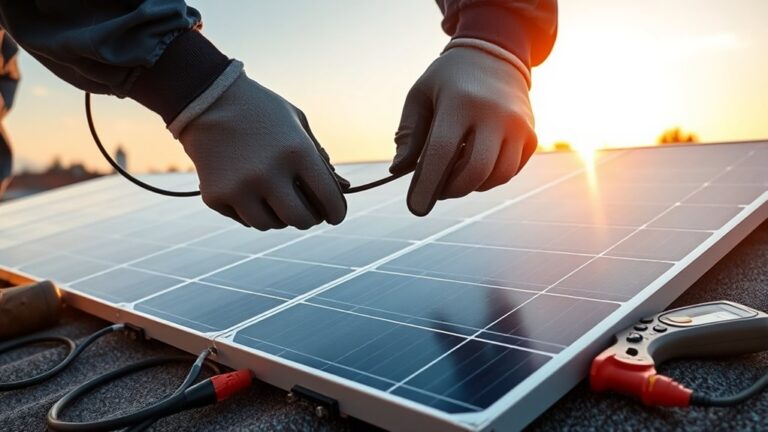
Monitoring software helps you catch issues early, but physical checks remain just as important to keep your solar panels running smoothly. One key step is inspecting your electrical connections regularly.
Loose or corroded connections can cause power drops or even system failures. So, here’s what you should do:
- Turn off your solar system before inspecting connections for safety.
- Check all wiring terminals and junction boxes for signs of corrosion or wear.
Make sure to tighten any loose nuts, bolts, or screws securing the connections. Also, look for frayed or damaged cables and replace them promptly.
Finally, verify connectors are properly seated and protected from moisture. Taking these steps will help keep your system running great!
Tips to Maintain Optimal Solar Panel Output Year-Round
To maintain ideal solar panel output year-round, you’ll need to perform routine care and adjustments that address changing weather and seasonal conditions. Regularly clean your panels to remove dust, leaves, and bird droppings, especially after storms or dry spells.
Also, don’t forget to trim nearby trees to prevent shading as they grow. It’s a simple step that can make a big difference.
Monitor your system’s performance monthly to catch any drops in efficiency early. That way, you can fix small issues before they become big problems.
In winter, clear snow buildup promptly so sunlight can reach the panels. If you can, adjust the tilt angle seasonally — steeper angles capture more low winter sun, while shallower angles work better in summer.
Finally, inspect for damage after severe weather and tighten any loose mounts. By staying proactive, you’ll keep your solar panels running efficiently and maximize your energy savings all year long.
Frequently Asked Questions
Can Snow Accumulation Permanently Damage Solar Panels?
Snow accumulation usually won’t permanently damage your solar panels, but heavy, persistent snow can stress the panels or mounting.
You should clear snow carefully to avoid damage and maintain ideal performance during winter months. It’s worth taking a little extra time to keep things safe and efficient.
How Do Bird Droppings Affect Solar Panel Efficiency?
Bird droppings block sunlight and reduce your solar panels’ efficiency considerably. You’ll want to clean them regularly to keep energy production high.
Plus, there’s the long-term damage to think about. The acidic residue in droppings can degrade the panel surface if left too long. So, staying on top of cleaning really pays off!
Are There Specific Solar Panel Brands Less Prone to Power Loss?
You’ll find brands like SunPower and LG Solar often experience less power loss due to better materials and technology. Choosing high-quality panels really makes a difference.
Plus, proper maintenance helps you keep efficiency high over time. It’s all about combining quality with good care to get the best performance.
Can Power Loss Occur Due to Inverter Issues?
Yes, inverter issues can steal your solar panel’s thunder. If your inverter falters or mismatches, it disrupts power flow, causing energy loss.
You’ll want to maintain and choose quality inverters to keep your system humming strong. Trust me, a good inverter makes all the difference.
How Does Humidity Influence Solar Panel Performance?
Humidity causes moisture to build up on your solar panels, which reduces sunlight absorption and lowers efficiency. It can also promote corrosion and electrical issues.
Conclusion
To keep your solar panels shining bright and powerful, you’ve got to stay on top of cleaning, installation, and monitoring. Think of your panels like a garden—they need regular care to bloom at their best.
By preventing shading, managing temperature, and watching for any signs of trouble, you’ll guarantee they deliver maximum energy all year long. It’s all about catching issues early before they affect performance.
With a little effort, you’ll turn the sun’s rays into a steady stream of clean power for your home. Remember, preventing power loss in solar panels means consistent maintenance and smart care. This ensures your investment keeps working efficiently, saving you money and helping the environment. So, stay proactive and enjoy the benefits of reliable, sustainable energy every day!