
Do Solar Panels Need Direct Sun to Maximize Efficiency?
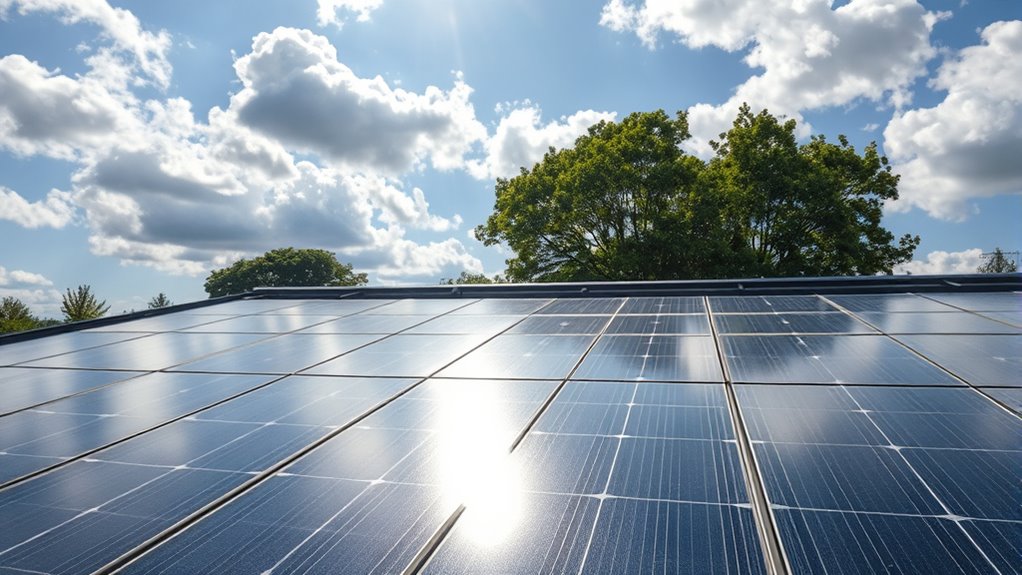
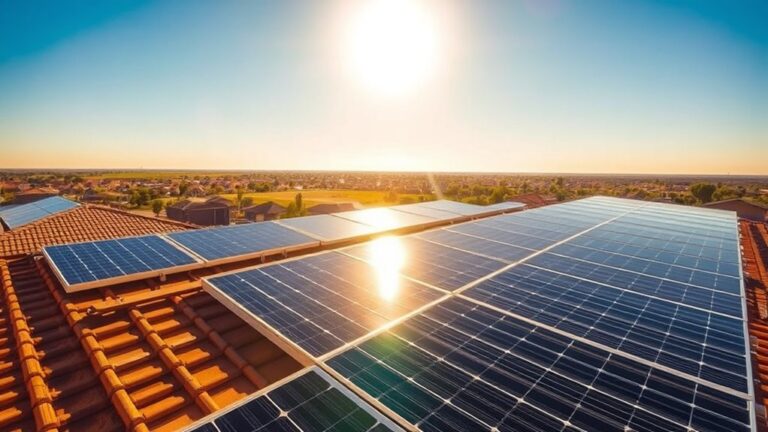
Yes, you need direct sunlight to get the most efficient energy from your solar panels. When sunlight hits the panels directly, more photons excite electrons, boosting electricity production. This direct sun exposure is key for maximizing your solar panel’s efficiency.
While solar panels still produce power on cloudy days, their output drops due to scattered light. Shade can also reduce efficiency and even damage panels. So, keeping your panels in a sunny spot without obstructions really matters.
You can improve performance with proper placement and maintenance. Regularly checking for shade and cleaning your panels can make a big difference. Keep exploring to discover how lighting and shade truly impact your solar system’s output.
Key Takeaways
- Solar panels achieve maximum efficiency under bright, direct, and unobstructed sunlight. Direct sunlight increases photon absorption, boosting electrical current and energy output.
- That said, panels still generate electricity on cloudy or diffused light days, but the efficiency drops a bit. So, while they work, it’s just not at full power.
- Partial shading can really hurt performance and might even damage the cells. That’s why it’s super important to avoid any shade on your panels.
- Also, keeping your panels clean, adjusting their tilt, and regular maintenance can help get the most out of them, even if you don’t have full sun all the time.
How Solar Panels Generate Electricity From Light
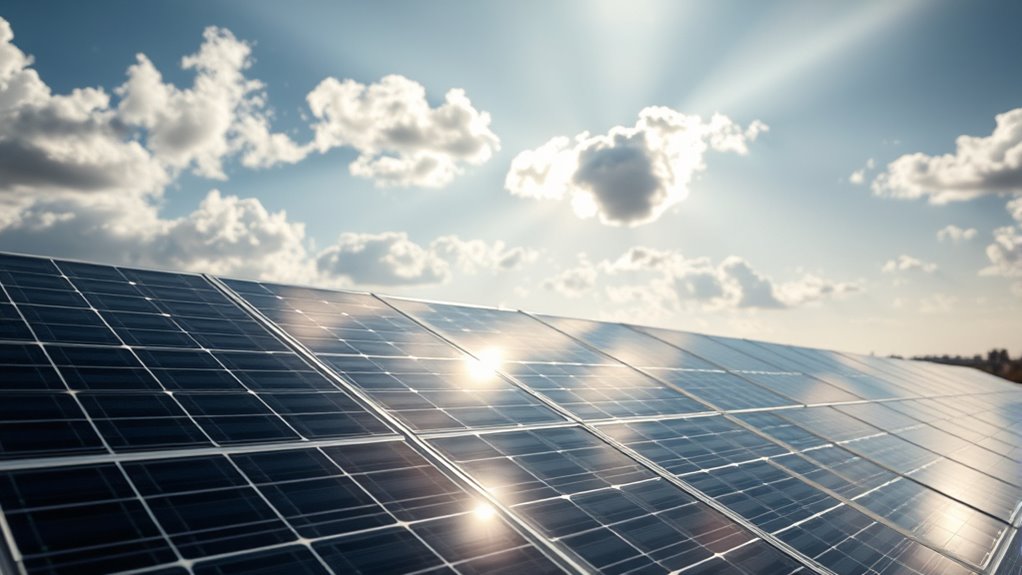
How exactly do solar panels turn sunlight into electricity? When sunlight hits the solar cells, it excites electrons in the semiconductor material, usually silicon. This excitement creates an electric field that pushes electrons to flow, generating direct current (DC) electricity.
You’ll find that each solar cell contains two layers of silicon, one positively charged and one negatively charged, forming this electric field. As sunlight continues to strike the panel, electrons move through a circuit, producing usable electricity.
An inverter then converts this DC electricity into alternating current (AC), which powers your home appliances. So, solar panels transform light energy directly into electrical energy through this process, allowing you to harness the sun’s power efficiently every time sunlight contacts the cells.
Do Solar Panels Need Direct Sunlight to Work Best?
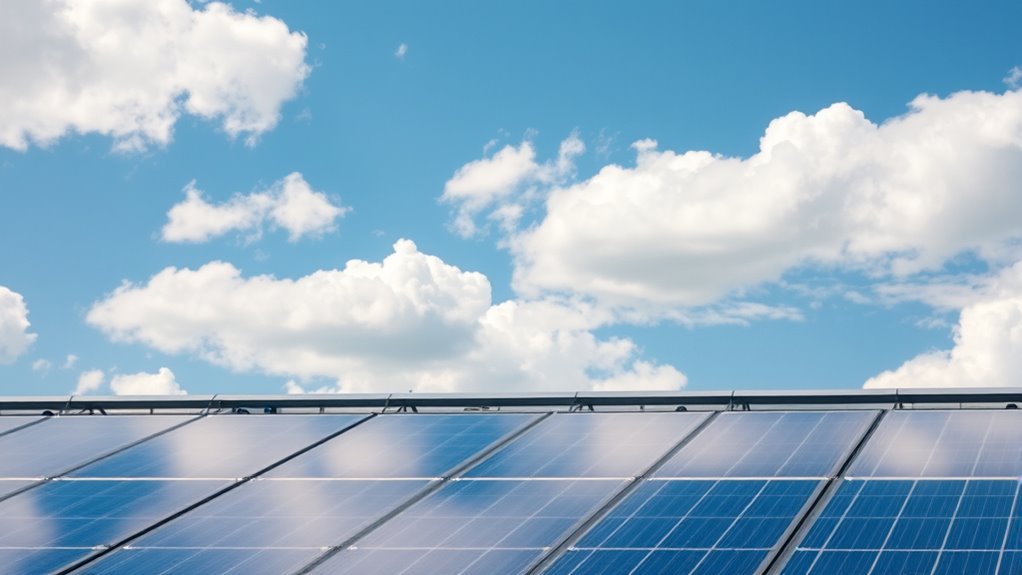
Why does direct sunlight matter for solar panels? It’s because solar panels convert sunlight into electricity most efficiently when they get direct, unobstructed sun.
Here’s why direct sunlight is key:
- Maximum Energy Capture: Direct sun provides the strongest light intensity, allowing panels to generate more electricity.
- Optimal Photon Absorption: More direct sunlight means more photons hitting the solar cells, which increases the current produced.
- Reduced Energy Loss: Indirect or diffused light lowers the panel’s voltage output, reducing overall efficiency.
While solar panels still work under cloudy or shaded conditions, direct sunlight ensures you get the best performance and fastest energy payback.
How Different Lighting Conditions Affect Solar Panel Efficiency
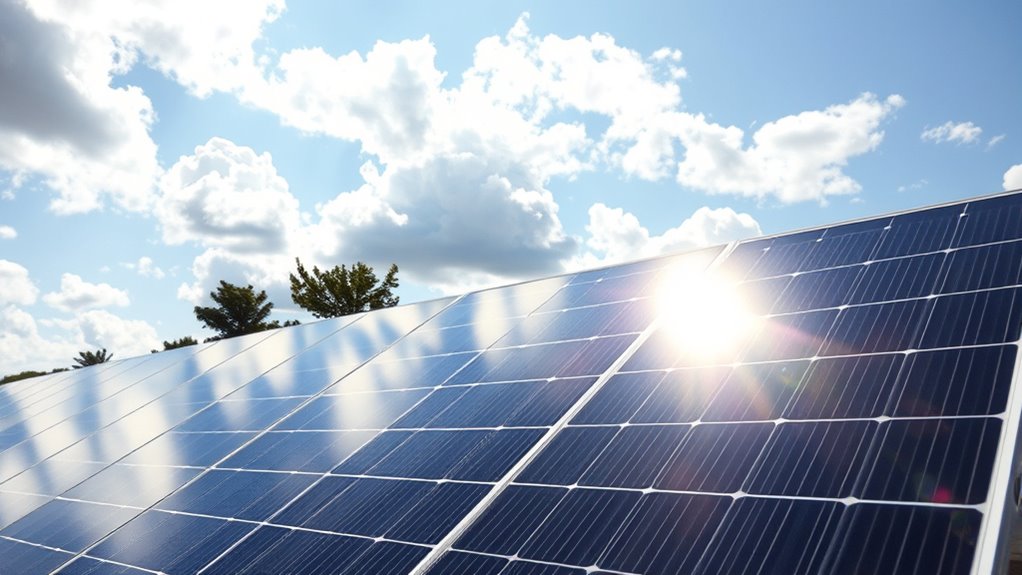
Wondering how different lighting conditions impact your solar panels’ efficiency? Your panels perform best under bright, direct sunlight, but they still generate power in diffused or overcast light—just at a reduced rate.
On cloudy days, scattered light reaches the panels from all directions, so they keep working, though less efficiently. Early morning and late afternoon light is less intense, so output drops compared to midday sun.
Artificial lighting, like street lamps, produces minimal electricity because it lacks the intensity and spectrum solar panels need. Understanding these variations helps you set realistic expectations for your system’s performance throughout the day and in varying weather.
How Shade Affects Solar Panel Performance
You might think a little shade won’t hurt, but even partial shade can considerably reduce your solar panel’s output.
Trees or nearby structures casting shadows can block sunlight and disrupt the flow of electricity.
Understanding how shade affects your system helps you position panels for the best performance.
Impact of Partial Shade
Although solar panels perform best under full sunlight, even partial shade can considerably reduce their efficiency. When a portion of your panel is shaded, it disrupts the flow of electricity, causing the entire system to produce less power.
This happens because panels are made of interconnected cells, and shading just one cell can drag down the output of the whole string. It’s kind of like the weakest link in a chain situation.
Here’s how partial shade impacts your solar panels:
- Hot spots develop, which can damage cells and reduce lifespan.
- Power drop occurs, sometimes by more than 50% depending on shade extent.
- Bypass diodes help minimize losses but can’t fully restore efficiency under shade.
Effects of Tree Coverage
When trees cast shadows over your solar panels, they can considerably reduce the system’s overall performance. Even a small amount of shade from branches or leaves can cause a significant drop in energy output because solar panels rely on consistent sunlight to operate efficiently.
The shaded cells produce less electricity, and in some cases, this can affect the entire panel or string of panels, depending on how your system is wired. You might notice lower power generation during certain times of the day when the sun moves behind the tree canopy.
To maximize your solar investment, it’s essential to monitor nearby tree growth and trim branches when necessary. Proper site assessment before installation can also help you avoid heavy tree coverage that will limit your panels’ potential.
Tips to Maximize Solar Panel Performance Without Full Sun
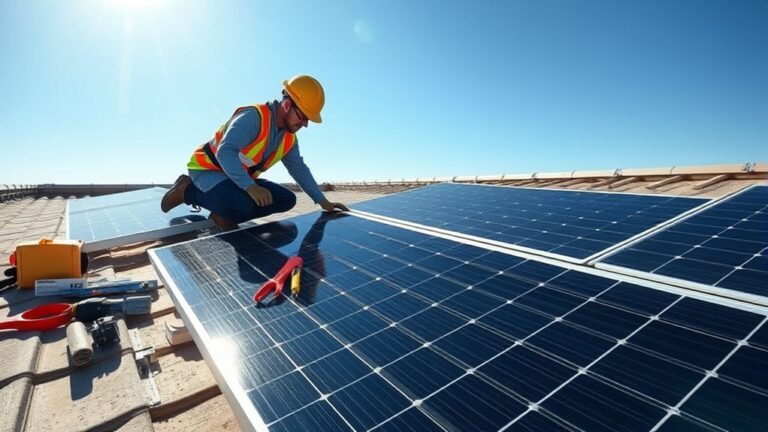
Even without full sun, you can boost your solar panels’ performance by optimizing their placement and maintenance. First, keep your panels clean—dust, dirt, and debris reduce their ability to absorb light effectively.
Second, angle your panels properly to capture the most available sunlight during the day, even if it’s indirect. Finally, monitor your system’s output regularly using a solar app or meter to spot any drops in efficiency early and address issues promptly.
- Clean panels regularly to remove dirt and maximize light absorption.
- Adjust the tilt to capture indirect sunlight better throughout the day.
- Track performance to detect and resolve inefficiencies quickly.
These steps help you get the most from your solar investment, even on cloudy days.
Choosing the Best Location for Your Solar Panels
Where you place your solar panels plays a crucial role in their efficiency. You want to install them where they’ll receive the most sunlight throughout the day, ideally on a south-facing roof if you’re in the northern hemisphere.
Avoid areas shaded by trees, buildings, or chimneys, as even partial shade can greatly reduce output. Consider the angle of your roof—panels tilted between 30 to 45 degrees usually capture sunlight best.
If roof space or orientation isn’t ideal, explore ground-mounted systems where you can control placement and tilt. Also, keep in mind local weather patterns and seasonal sun paths to maximize year-round exposure.
Frequently Asked Questions
How Long Do Solar Panels Typically Last?
You can expect solar panels to last about 25 to 30 years. They gradually lose efficiency over time, but with proper care, they’ll keep producing energy well beyond their warranty period.
It’s pretty impressive, right? Even after a couple of decades, your panels can still do their job and save you money. Just a little maintenance goes a long way!
What Maintenance Do Solar Panels Require?
Picture wiping a dusty window—just like that, you’ll clean your solar panels a few times yearly and check for debris or shading.
Occasionally, you’ll want a professional inspection to guarantee everything’s sparkling and working perfectly.
Are Solar Panels Recyclable?
Yes, you can recycle solar panels, but it’s a complex process. You’ll want to find specialized facilities that recover valuable materials like glass, silicon, and metals.
This helps reduce waste and promote sustainability effectively. It’s worth taking the extra step to keep those materials out of landfills and give them a second life.
Can Snow or Dust Damage Solar Panels?
Back in the days of knights, you’d worry about dragons; today, you should worry about snow and dust. They won’t destroy your solar panels but can reduce efficiency.
Do Solar Panels Increase Home Value?
Yes, solar panels can increase your home’s value by lowering energy costs and appealing to eco-conscious buyers.
You’ll likely recoup your investment faster and make your property more attractive in the real estate market. Plus, who doesn’t want a home that helps save the planet and saves money at the same time?
Conclusion
Solar panels don’t always need direct sunlight to work, but they do perform best when they get plenty of it. Remember, “every cloud has a silver lining”—even on cloudy or shaded days, your panels can still generate power, just less efficiently.
To get the most out of your system, place your panels where they’ll catch the most light and keep them clear of obstructions. With a little care, you’ll maximize your solar energy no matter the conditions.
In short, while direct sun helps solar panels reach peak efficiency, they don’t stop working without it. By optimizing placement and keeping panels unobstructed, you can boost energy production even on less sunny days. So, yes, direct sunlight matters, but your solar panels remain a reliable source of renewable energy rain or shine.

4 Comments