
Blog

  • How Do Solar Lights Have Maximum Performance Without Direct Sunlight?

    You can get your solar lights to perform well without direct sunlight by choosing ones with high-efficiency panels designed to capture diffuse and scattered light. Advanced materials and coatings help absorb more energy even on cloudy days.

    Pair that with quality batteries and smart power management to store energy and extend light time. Keeping panels clean and free from shade also boosts efficiency.

    If you want to make your solar lighting truly reliable year-round, there’s plenty more to explore. It’s all about combining the right technology with good maintenance.

  • Are Solar Panels Worth It in Arizona?

    Solar panels are definitely worth it in Arizona because the state’s abundant sunshine maximizes energy production and long-term savings. You can reduce your electricity bills by $50–$150 monthly, while upfront costs are lowered through state and federal incentives.

    Although challenges like dust and heat exist, durable panels and professional installation help maintain efficiency. Plus, you’ll benefit the environment and conserve water.

    If you want to know about costs, savings, and local conditions, keep exploring what’s involved. It’s a smart move to get all the details before making a decision.

  • Are Commercial Solar Panels Worth It: Calculating ROI

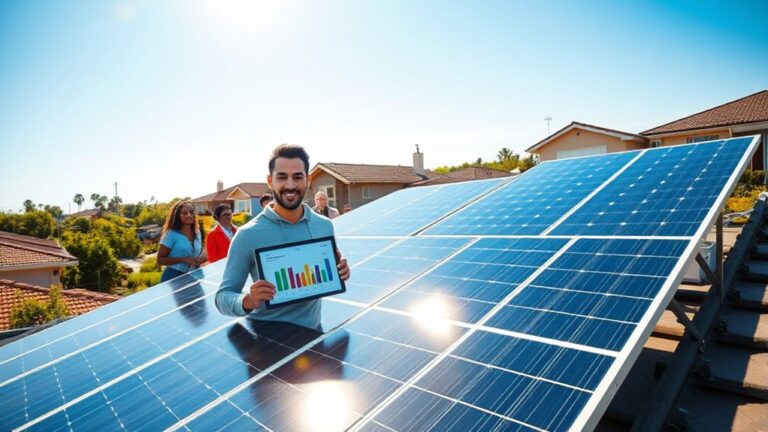
    You’ll find commercial solar panels worth it when you balance upfront costs, ongoing maintenance, and energy savings against available incentives. Installing panels involves significant initial investment, but federal and local rebates can reduce expenses and speed up your payback.

    Your ROI depends on your energy use, location, and system efficiency. With rising energy prices and long-term property use, solar can boost your bottom line while promoting sustainability.

    Keep exploring to understand all factors affecting your solar investment’s success. It’s definitely worth digging into the details before making the leap.

  • How Does a Solar Nail Work?

    You get solar nails by applying a special gel that hardens when exposed to sunlight or LED light. Tiny photo-initiators in the gel react to UV rays, curing the nails quickly while keeping them flexible and chip-resistant.

    Some solar nails even contain semiconductor materials that convert light into energy, powering a glow or small devices. They often include batteries to store extra energy for later use.

    Keep exploring to discover how they capture and use sunlight so efficiently. It’s pretty cool how something so small can do so much!

  • How to Use Solar Panels During a Power Outage in 7 Essential Steps

    First, check if your solar system supports outage power by verifying inverter and battery capabilities. Make sure your setup can actually work when the grid goes down.

    Prepare your battery storage to cover essential devices, ensuring it’s fully charged. You want to have enough juice to keep the important stuff running.

    Safely disconnect from the grid before the outage to prevent backfeeding. This step is crucial for your safety and that of utility workers.

    Prioritize powering critical appliances, then use your inverter or backup generator to maintain power. Focus on what really needs to stay on first.

    Monitor your solar output and battery levels regularly to avoid deep discharges. Keeping an eye on things helps you manage power better.

    After the outage, follow proper steps to safely restore power and reconnect to the grid. Don’t rush this part; safety comes first.

    Keep going to discover how to optimize these steps further. There’s always more you can do to make your system work smarter.

  • How to Test a Solar Panel in 10 Easy Steps

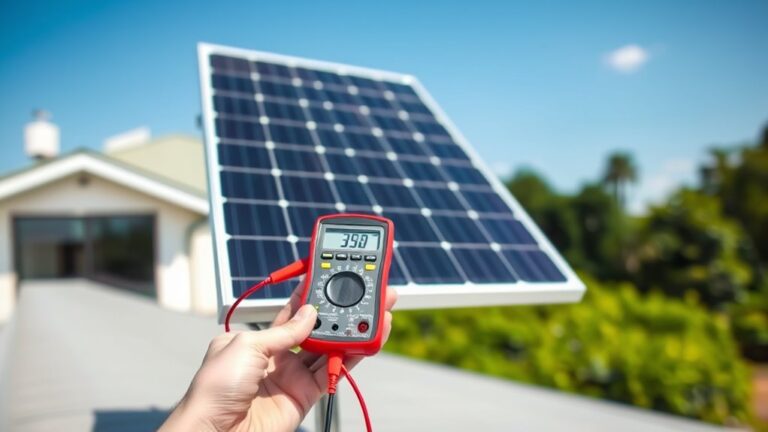
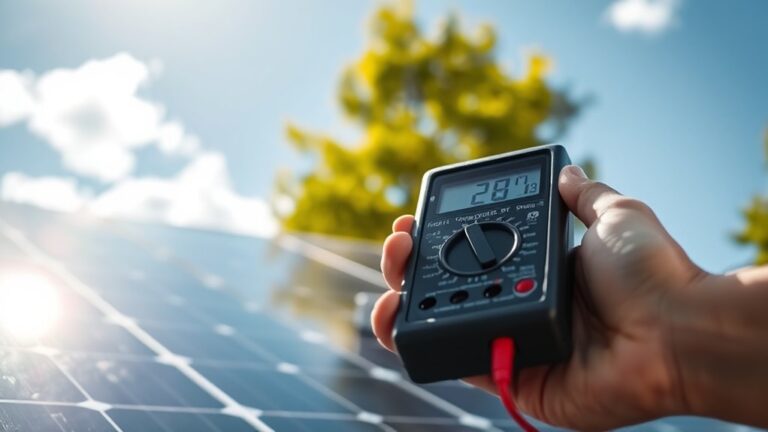
    To test your solar panel in 10 easy steps, start by gathering essential tools like a multimeter and solar power meter. Inspect the panel surface, frame, and wiring for damage or dirt.

    Measure the open-circuit voltage and short-circuit current under sunlight, then check voltage and current under load. Compare your readings with manufacturer specs to spot any issues.

    Finish by cleaning and tightening connections to maintain performance. Keep going to uncover tips on troubleshooting and boosting your panel’s efficiency.

  • How to Mount Solar Panels on Roof in 7 Easy Steps

    Start by inspecting your roof for damage, space, and ideal panel placement. Choose compatible panels and weather-resistant mounting kits.

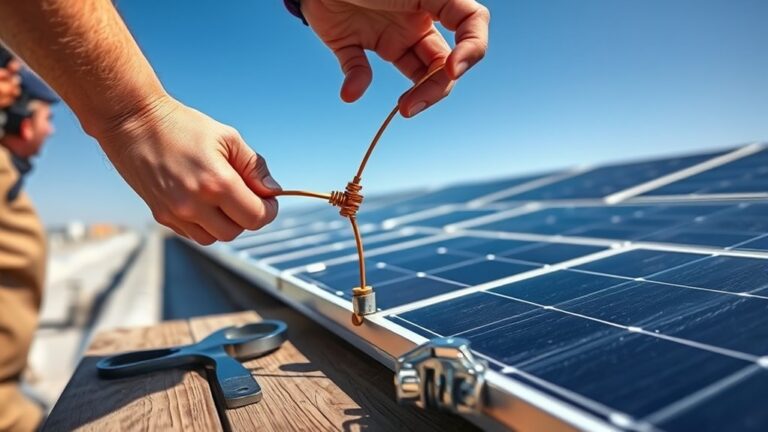
    Mark and drill precise mounting points, then slide flashing underneath to prevent leaks. Secure brackets firmly to roof rafters using lag bolts.

    Attach panels to the mounts, tightening clamps evenly. Connect wiring with correct polarity and weatherproof connectors, then test the system’s voltage and current output.

    Follow these steps closely, and you’ll be ready to explore more detailed installation tips next.

  • How to Get Out of a Solar Lease in 5 Easy Steps

    To get out of your solar lease in 5 easy steps, start by reviewing your contract to understand terms and fees. Next, consider transferring the lease to someone else or buying it out.

    Then, talk with your solar provider to clarify procedures and costs. Prepare your home and budget for any changeover expenses.

    Finally, finalize the lease termination and arrange for your energy switch. Keep following these steps to confidently manage your solar lease exit.

  • How Do You Clean Solar Light Panels in 10 Easy Steps?

    To clean your solar light panels in 10 easy steps, first check the weather and gather soft cloths, mild detergent, and safety tools.

    Turn off or unplug the panels, then gently remove loose dirt with a soft brush.

    Use a mild soap solution to wipe panels carefully. Rinse with clean water, and dry with a soft cloth to avoid streaks.

    Inspect for damage and schedule regular cleanings to maintain efficiency.

    Keep going, and you’ll find useful tips to protect and boost your panels’ performance.

  • How Long Do Solar Panel Batteries Last – Complete Guide

    You can expect your solar panel batteries to last between 5 and 15 years, depending on the type you choose and how you use them. Lead-acid batteries usually last around 5 to 7 years, while lithium-ion models can go 10 to 15 years with proper care.

    Environmental factors and how often you charge or discharge also affect lifespan. To get the most from your system, it’s important to recognize signs of wear and follow maintenance tips, which you’ll discover next.