How to Know if Solar Panels Are Working
You can tell your solar panels are working by tracking their daily energy output through the inverter’s display or a solar monitoring app. These tools give you real-time data on how much electricity your panels are producing. It’s a simple way to stay on top of your system’s performance every day.
Regularly check for drops in performance, unusual error codes, or physical damage like dirt or cracks that block sunlight. Even a little shading from trees or debris can affect output, so keep an eye on your panels.
Weather changes also play a role, so don’t be surprised if your numbers vary a bit.
If energy dips persist despite clear conditions, it might be time to seek expert help. Learning how to optimize and maintain your system effectively will keep your solar panels running smoothly for years to come.
Key Takeaways
- Check the inverter’s display for real-time power output, total energy produced, and system status indicators. It’s a quick way to see if everything’s running smoothly.
- Use solar monitoring apps to remotely track daily energy production and receive alerts for performance issues. These apps make keeping an eye on your system super convenient.
- Visually inspect panels for physical damage, dirt buildup, shading, or loose wiring that can reduce efficiency. A little maintenance can go a long way.
- Compare daily energy output on sunny days with expected system specifications to identify performance drops. This helps spot problems early before they get worse.
- Look for signs like sudden energy bill increases, flickering lights, or inverter error codes indicating potential problems. If you notice any of these, it’s worth investigating further.
How to Measure Your Solar Panels’ Daily Energy Output
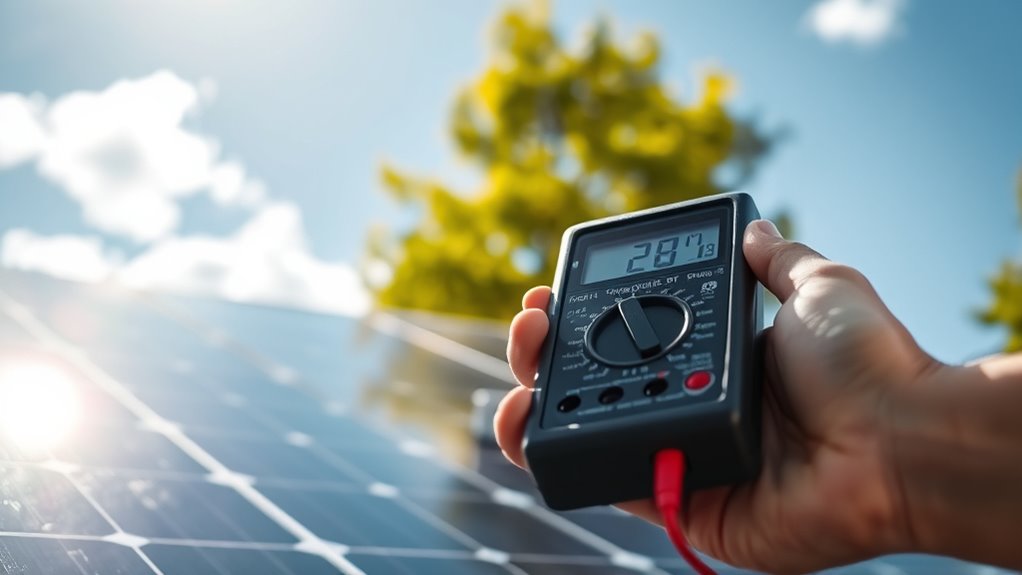
Before you can tell if your solar panels are working properly, you need to measure their daily energy output. Start by tracking how much electricity your system generates each day, typically measured in kilowatt-hours (kWh).
Check your inverter’s display, as it usually shows real-time and total energy produced. Record these numbers daily, especially on sunny days, to establish a baseline.
Compare your data against the expected output listed in your system’s specifications or installer documentation. Keep in mind that factors like weather, shading, and panel orientation affect production.
Tools That Make It Easy to Monitor Your Solar Panels
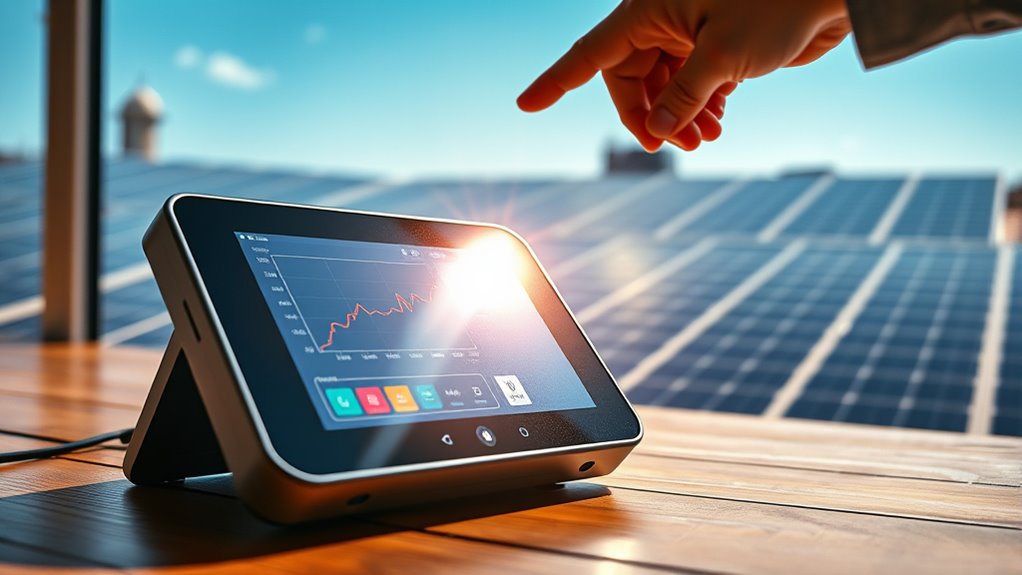
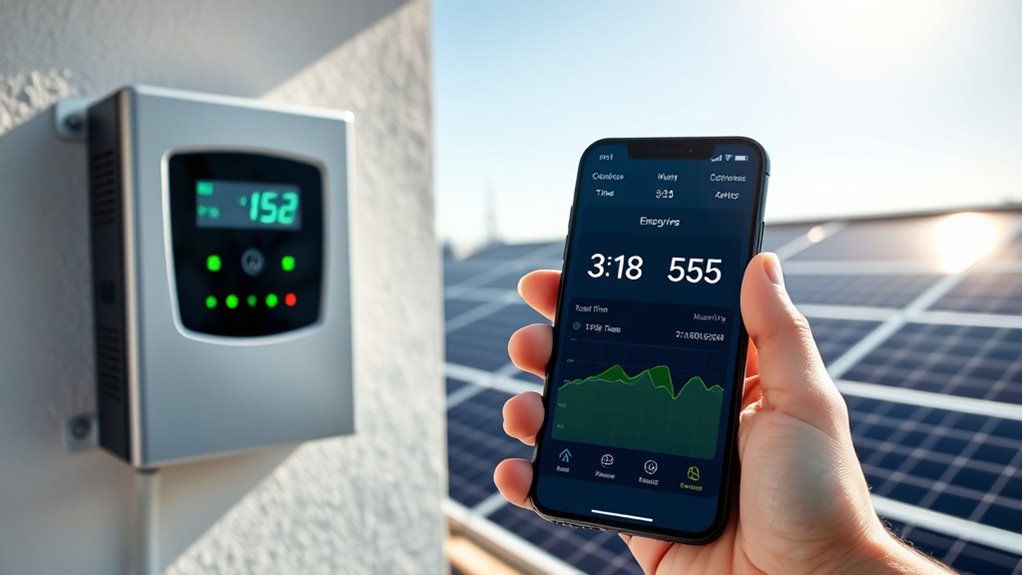
You can easily keep an eye on your solar panels with tools like solar monitoring apps and inverter display features. These tools let you track your system’s performance in real time, even when you’re away from home.
Using remote performance tracking, you’ll quickly spot any issues and guarantee your panels are working efficiently. It’s a simple way to make sure your investment keeps paying off without any hassle.
Solar Monitoring Apps
Although solar panels often operate quietly in the background, solar monitoring apps bring their performance right to your fingertips. They let you track energy production and spot issues as they happen.
These apps connect directly to your solar system, giving you instant updates and detailed insights. So, you won’t have to guess whether your panels are working efficiently or not.
Here’s what you can expect from solar monitoring apps:
- Real-time energy production data
- Alerts for system faults or drops in performance
- Historical performance reports to spot trends
- Easy access from your smartphone or tablet
Inverter Display Features
Solar monitoring apps provide a convenient way to keep an eye on your system remotely, but sometimes the quickest updates come straight from your inverter’s display. This built-in screen offers real-time data like current power output, total energy generated, and system status.
By glancing at the display, you can immediately spot if your solar panels are producing electricity or if there’s a fault. Many inverters also show error codes to help you troubleshoot issues quickly without needing extra tools.
Since the inverter is the heart of your solar setup, its display acts as a direct window into how well your system performs. Checking it regularly guarantees you stay informed and can address problems before they impact your energy savings.
Remote Performance Tracking
While checking the inverter display provides quick updates, remote performance tracking tools let you monitor your panels anytime, anywhere. These tools connect to your solar system and deliver real-time data straight to your smartphone or computer.
This means you don’t have to be physically present to guarantee your system functions at its best. With remote monitoring, you can quickly detect drops in energy production or other issues that need attention.
Here are four benefits of using remote performance tracking:
- Access real-time energy production data from anywhere.
- Receive instant alerts if your system underperforms.
- Track long-term performance trends to maximize efficiency.
- Share data easily with your solar installer for faster troubleshooting.
Remote tracking tools make managing your solar investment simple and effective. It’s a smart way to keep an eye on things without any hassle.
Common Signs Your Solar Panels Are Malfunctioning
If your energy bills suddenly spike or your system’s output drops noticeably, these could be clear signs that your panels aren’t working as they should. You might also notice physical damage like cracks, dirt buildup, or loose wiring, which can hinder performance.
Sudden energy bill spikes or visible panel damage often signal your solar system needs attention.
Shading from new trees or structures can reduce efficiency, so check for unexpected shadows. Flickering lights or frequent tripping of breakers could indicate electrical issues.
Additionally, if your inverter’s indicator lights show errors or are off, it’s a red flag. Keep an eye on your monitoring system for irregular drops or inconsistent data.
Catching these signs early helps you maintain your system’s efficiency and avoid costly repairs later on. It’s always better to stay ahead of any problems!
When Should You Call a Solar Panel Pro?
If you notice signs of panel malfunction or get alerts from your monitoring system, it’s time to take action. Don’t ignore persistent drops in energy output.
They often indicate deeper issues. Calling a solar panel pro can help diagnose and fix problems before they get worse.
Signs of Panel Malfunction
When your solar panels show unusual signs like a sudden drop in energy output or visible physical damage, you should consider calling a solar panel pro. Ignoring these signs can lead to bigger issues or costly repairs.
Here are common signs that indicate your panels might be malfunctioning:
- Cracks, chips, or discoloration on the panels’ surface
- Unexplained drops in energy production compared to usual levels
- Loose or damaged wiring and connections
- Frequent tripping of your inverter or circuit breaker
If you notice any of these, don’t wait. A professional can diagnose and fix the problem, ensuring your system runs efficiently and safely. Regular inspections help you avoid unexpected breakdowns.
Monitoring System Alerts
Although solar panels are designed to operate smoothly, your monitoring system can alert you to issues before they become serious. If you notice error messages, sudden drops in output, or connectivity problems in your monitoring app, it’s time to pay attention.
These alerts often signal wiring issues, inverter faults, or shading problems that need professional attention. Don’t ignore repeated warnings or unexplained shutdowns—calling a solar panel pro promptly can prevent costly damage and restore your system’s efficiency.
Additionally, if your monitoring system stops updating or shows inconsistent data, a technician can diagnose whether it’s a system glitch or a hardware problem. Trust your monitoring alerts as early warnings and act quickly to keep your solar investment functioning at its best.
Persistent Energy Drops
Several days of persistent energy drops signal a problem that requires professional attention. If you notice your solar panels consistently producing less power than usual, it’s time to call a solar panel pro. Don’t wait, as ongoing issues can reduce efficiency and cause further damage.
Here are four key signs you should reach out to a professional:
- Your system’s output drops markedly without weather-related causes.
- You see physical damage or debris on panels that you can’t safely clean.
- Monitoring systems show frequent or unexplained error codes.
- Your energy bills increase despite similar consumption patterns.
Addressing these issues quickly helps maintain your system’s performance and prolongs its lifespan. So, if something feels off, don’t hesitate to get it checked out!
How Weather and Shade Can Reduce Your Solar Panels’ Output
How much do weather and shade affect your solar panels’ performance? Quite a bit. Solar panels rely on sunlight, so cloudy days naturally reduce their output.
While they still generate power, the efficiency drops markedly compared to bright, sunny conditions. Shade is even more impactful. Even a small shadow from trees, buildings, or debris can block sunlight on parts of your panels, causing noticeable dips in energy production.
Because panels are connected in series, shaded cells can lower the output of the entire array. You might not realize how much shade affects overall performance unless you monitor your system carefully.
Understanding these factors helps you set realistic expectations and identify when your panels are underperforming due to environmental conditions rather than technical issues.
Easy Maintenance Tips for Solar Panels
Since weather and shade can impact your solar panels’ performance, keeping them clean and well-maintained can help maximize their efficiency. You don’t need to be an expert to care for your panels; simple steps go a long way.
Weather and shade affect solar panel performance, but simple care can keep them efficient and effective.
Here are four easy maintenance tips:
- Inspect your panels regularly for dirt, debris, or bird droppings. It’s a quick way to spot anything that might block sunlight.
- Clean them with water and a soft brush or cloth—avoid harsh chemicals. This keeps your panels working at their best without damage.
- Trim nearby trees to reduce shade and prevent debris buildup. A little pruning can make a big difference in how much energy you generate.
- Monitor your system’s output to catch performance drops early. That way, you can fix issues before they get worse.
Frequently Asked Questions
How Long Do Solar Panels Typically Last?
You can expect solar panels to last around 25 to 30 years. They’ll keep producing energy efficiently, but their output might slowly decrease over time.
Regular maintenance helps you get the most from them throughout their lifespan. So, it’s a good idea to check on them now and then to keep everything running smoothly.
Are Solar Panels Effective in Winter?
Solar panels are effective in winter, like a flashlight cutting through fog. They still generate electricity from sunlight, even on cloudy or snowy days.
You might see reduced output, but they keep working efficiently. So, don’t worry—they’re still a solid choice when the temperature drops!
Can Solar Panels Work During a Power Outage?
You can’t rely on solar panels during a power outage unless you have a battery storage system or an inverter that supports islanding.
Without these, your panels shut off for safety reasons automatically.
It’s basically a built-in feature to protect utility workers and your equipment.
Do Solar Panels Increase Home Value?
You might be surprised, but yes, solar panels usually increase your home’s value. Buyers love energy savings and eco-friendliness, so installing them can boost your property’s appeal and market price.
It’s a smart investment that pays off in the long run. Plus, who doesn’t want lower electric bills and a greener home?
What Is the Average Cost to Install Solar Panels?
You’ll typically pay between $15,000 and $25,000 to install solar panels, depending on system size, location, and incentives. Prices vary, but you can often lower costs with tax credits and local rebates.
It really depends on where you live and the kind of system you choose. Plus, there are usually some helpful incentives that can make the price easier on your wallet.
Conclusion
Keeping an eye on your solar panels’ performance doesn’t have to feel like a chore. By using simple tools and staying aware of subtle signs, you can guarantee your panels are quietly doing their job.
Remember, a little gentle upkeep and timely professional check-ups can keep your system humming along smoothly. With just a bit of care, your solar setup will continue to brighten your days—and your energy savings—without missing a beat.
Regularly checking your solar panels is key to ensuring they work efficiently. Watching for changes in energy output or any visible damage can help you catch issues early. This way, your solar panels stay in top shape, providing reliable, clean energy.
In the end, staying proactive with maintenance and monitoring is the best way to know if solar panels are working well. By doing so, you maximize your investment, enjoy consistent power generation, and contribute to a greener planet—all while keeping your energy bills low.