Blog

  • How Long Does It Take to Install Solar Panels?

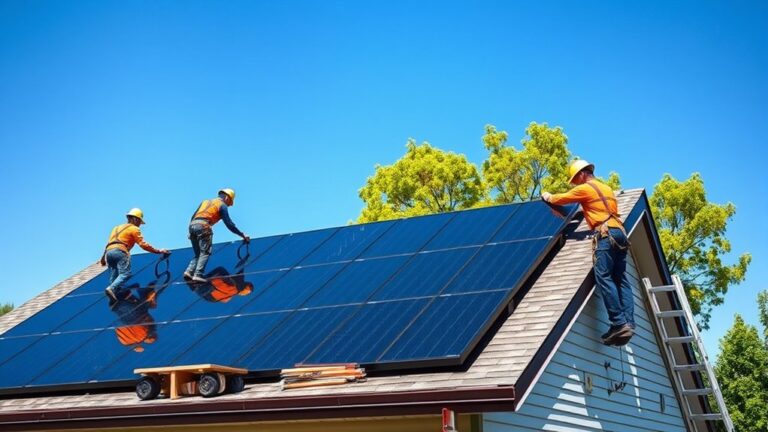
    You can usually get your solar panels installed within one to three days, with most residential jobs wrapping up quickly once the crew arrives. The exact time depends on your roof type, system size, and how prepared you are with permits and inspections.

    Complex roofs or larger systems might take longer, but proper planning helps keep things smooth. If you want to understand what affects your installation timeline and how to speed it up, there’s useful info ahead.
  • How Long Does a Solar Battery Last – A Complete Guide

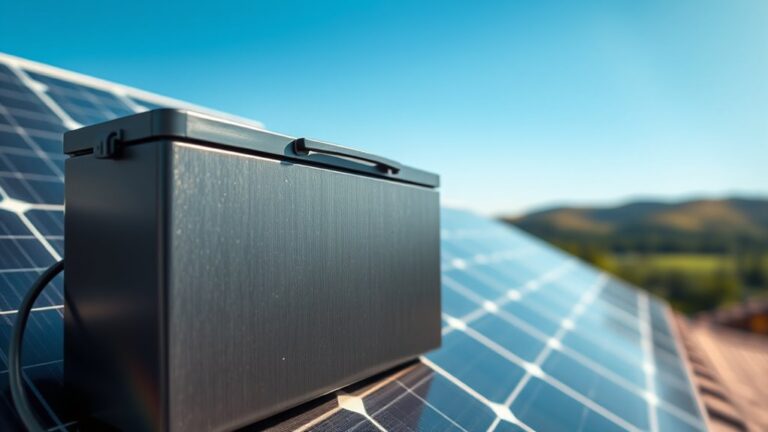
    You can expect your solar battery to last between 5 and 20 years, depending on the type you choose and how you use it. Lithium-ion batteries offer 10 to 15 years with high efficiency, while lead-acid ones last around 3 to 5 years.

    Factors like temperature, charge cycles, and maintenance play a big role in longevity. With proper care and monitoring, you can extend your battery’s life and performance.

    Keep exploring to understand how to maximize your solar battery’s potential. It’s worth the effort to get the most out of your investment!

  • 10 Facts About: How Heavy Are Solar Panels

    You’ll find typical residential solar panels weigh between 40 and 50 pounds, depending on size and materials like silicon, tempered glass, and aluminum frames. Smaller panels weigh around 20-25 pounds, while larger ones can reach up to 50 pounds.

    Frames and manufacturing choices also impact weight, affecting shipping and roof support needs. Lightweight options like thin-film panels offer easier handling.

    If you want to understand how size, material, and design affect solar panel weight, there’s plenty more worth exploring.

  • How to Hook Up Solar Panels in 3 Easy Steps

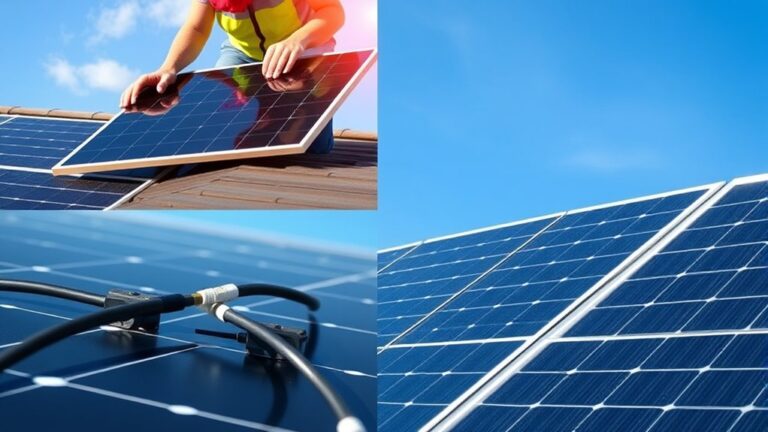
    To hook up your solar panels in three easy steps, first gather all materials and pick a sunny, stable spot to mount your panels safely.

    Next, wire your panels to the charge controller and battery, making sure to match polarity and secure all connections to avoid shorts.

    Finally, connect the solar system to your home’s electrical panel by installing a compatible breaker and following safety guidelines.

    Keep going to discover detailed tips for a smooth, efficient setup.

  • How Do I Know if My Solar Panels Are Working?

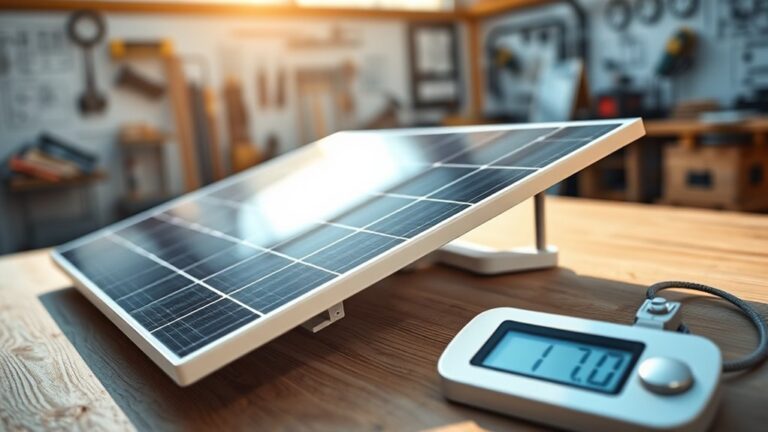
    You can tell your solar panels are working by regularly checking their energy output against expected levels based on the time of day and weather conditions. Peak production usually happens around midday, while cloudy days or dirt buildup can lower output.

    Keep an eye out for sudden drops or consistent underperformance. These might signal issues like dirt, shading, or damage.

    Keeping panels clean and trimming shaded areas helps maintain efficiency. If you want to guarantee maximum performance and know when to seek help, keep exploring these key signs.

  • 5 Ways Solar Panels Help the Environment

    You can help the environment by using solar panels, which cut greenhouse gas emissions since they don’t burn fossil fuels. They also reduce air and water pollution by avoiding harmful chemicals.

    Plus, solar panels save water and mineral resources because they don’t need water to produce energy or rely on mining. It’s a smart way to protect our planet’s resources.

    By replacing fossil fuels, they lower carbon footprints and support a cleaner planet. They even make smart use of land, preserving habitats while producing energy.

    Keep exploring to discover how these benefits work. You’ll see why solar panels are a great choice for a greener future!

  • How Does Solar Power Work at Night?

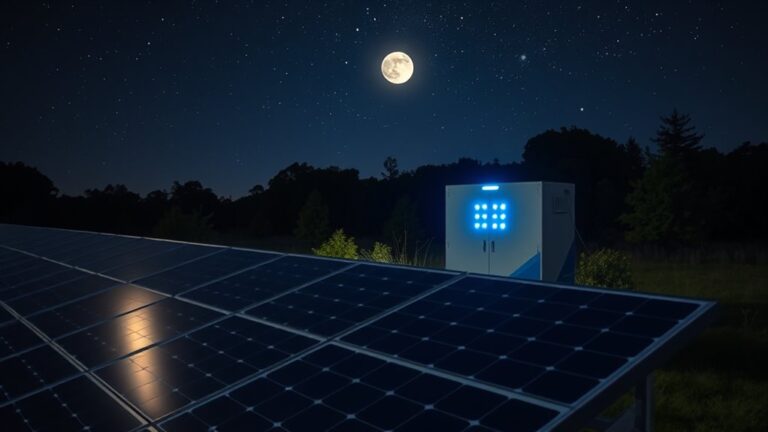
    You use solar power at night by relying on batteries that store the energy your panels generate during the day. These batteries keep electricity ready, and an inverter converts it from DC to AC so your home stays powered.

    If you’re connected to the grid, excess energy can feed into it for credits, which you can use after sunset. Backup systems like generators may also help.

    Keep exploring to discover how these technologies work together for reliable nighttime solar power.

  • Does a Solar Panel Need Direct Sunlight to Optimize Performance?

    You don’t need direct sunlight for your solar panels to work, though full sun does maximize their performance. Panels start producing electricity with daylight, even under clouds or shade, thanks to diffused light.

    While cloudy days or shading reduce output, your system remains effective. Factors like sun angle, day length, and panel positioning also affect energy generation.

    Understanding these helps you get the most from your solar setup and reveals how panels perform beyond just bright sunlight. It’s pretty cool how they keep working even when the sun isn’t shining at its best!

  • Do Solar Panels Give Off Radiation?

    You don’t have to worry about solar panels giving off harmful radiation because they only emit very low levels of non-ionizing electromagnetic fields, similar to your household electronics. They don’t produce dangerous ionizing radiation like X-rays or gamma rays.

    The small electromagnetic fields they do emit are safe and far below harmful limits. If you want to understand how this compares to other devices and the safety standards in place, keep exploring the details behind solar panel radiation.

  • Do Solar Panels Emit Any Radiation?

    You don’t need to worry—solar panels don’t emit harmful radiation. They produce only very low levels of safe, non-ionizing electromagnetic energy, far below international safety limits.

    This radiation is much weaker than what everyday devices like phones or microwaves give off. Solar panels operate safely without posing risks to you, your pets, or the environment.

    If you want to understand how they work and compare to other electronics, there’s more useful info ahead.