10 Facts About: How Heavy Are Solar Panels
You’ll find typical residential solar panels weigh between 40 and 50 pounds, depending on size and materials like silicon, tempered glass, and aluminum frames.
Smaller panels usually weigh around 20-25 pounds, while larger ones can reach up to 50 pounds.
The weight can vary quite a bit because of different frame types and manufacturing choices. This also impacts shipping costs and what kind of roof support you might need.
If you’re looking for something lighter, thin-film panels are a great option since they offer easier handling and installation.
So, if you want to understand how size, material, and design affect solar panel weight, there’s plenty more worth exploring. It’s pretty interesting once you dive into the details!
Key Takeaways
- Typical residential solar panels weigh between 40 to 50 pounds depending on size and materials used.
- Small panels (~36-cell) weigh about 20-25 lbs, medium (~60-cell) 38-45 lbs, and large (~72-cell) around 45-50 lbs.
- Crystalline silicon panels weigh roughly 15–20 pounds per square foot due to dense silicon and tempered glass components.
- Aluminum frames add weight but provide durability; thicker frames increase panel weight while slimmer designs reduce it.
- Lightweight and flexible solar panels use advanced materials, significantly reducing weight for easier handling and installation.
- These options are great if you need something easier to carry or install on tricky rooftops.
How Much Does a Typical Solar Panel Weigh?
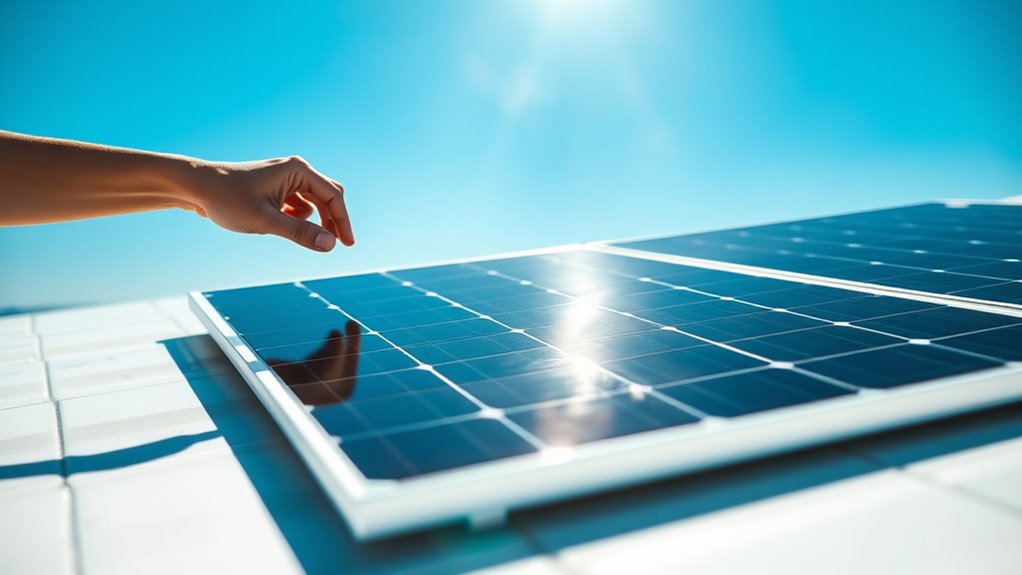
Although solar panels come in various sizes and types, a typical residential solar panel weighs between 40 and 50 pounds. When you’re planning your solar installation, knowing this weight helps you assess roof support and handling needs.
Each panel usually measures around 65 inches by 39 inches, which balances manageable weight with sufficient surface area to capture sunlight efficiently. You’ll find that commercial panels tend to be heavier due to their larger size, but residential panels stay within this range to confirm safe and practical installation.
Keep in mind, the weight you handle isn’t just a number—it affects transportation, mounting, and overall system design. Understanding this will help you make informed decisions about your solar setup.
What Materials Affect a Solar Panel’s Weight?
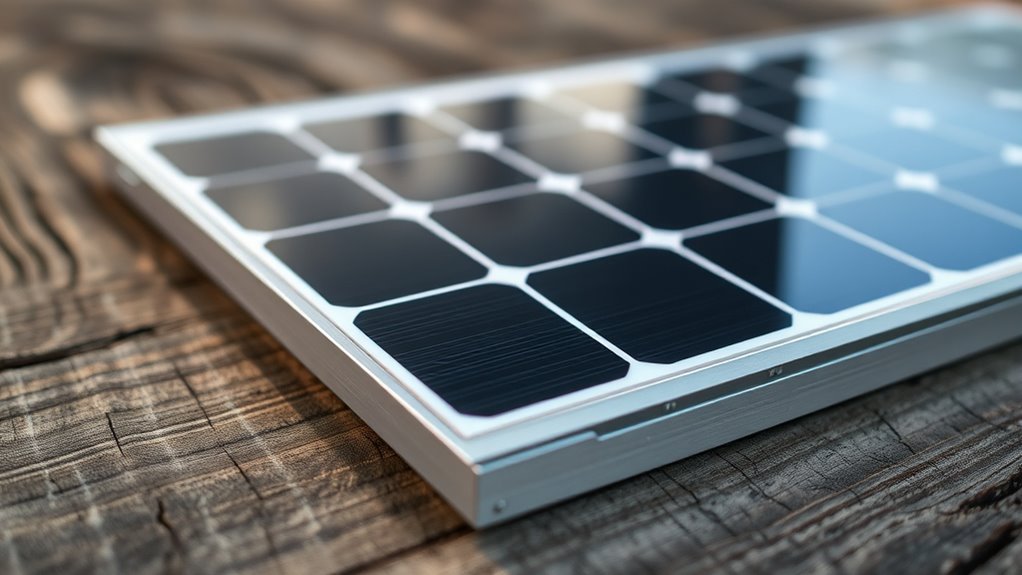
Because different materials have unique densities and thicknesses, they directly influence how much a solar panel weighs. When you look inside a panel, the main components are silicon cells, glass, and a backing material.
Silicon, being dense, adds significant weight, especially in thicker wafers. The glass layer protects the cells but also adds heft; tempered glass is common because it balances durability with weight.
Silicon’s density and tempered glass combine to provide strength while significantly influencing solar panel weight.
Beneath the cells, the backing sheet—often made from polymers—keeps everything sealed and lightweight. You’ll also find encapsulant layers like EVA, which are light but essential for durability.
Each material’s thickness and density contribute to the total weight, so even small changes can shift the panel’s mass noticeably. Understanding these materials helps you appreciate why solar panels vary in weight across models.
How Do Solar Panel Frames Affect Overall Panel Weight?
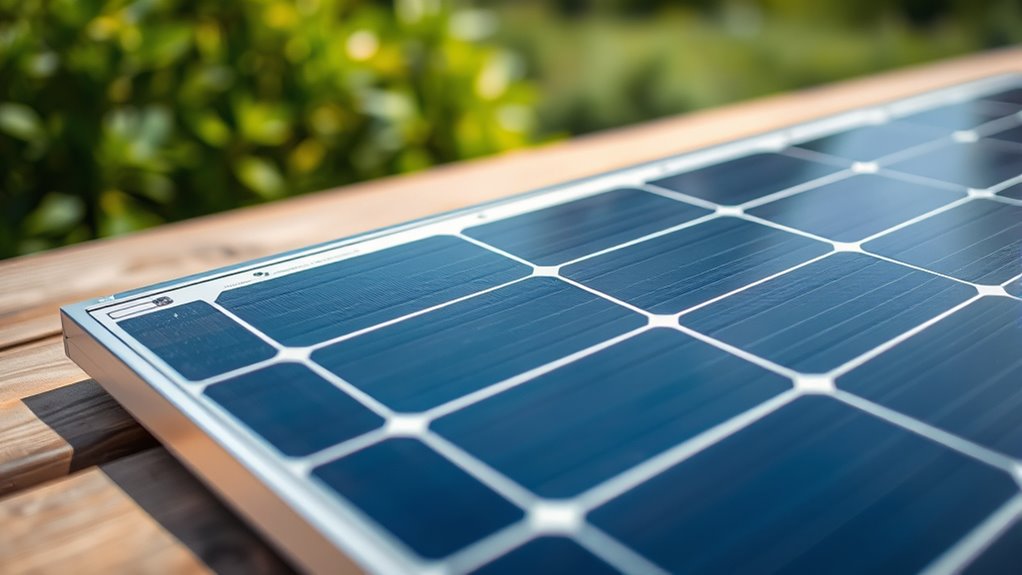
When you consider the overall weight of a solar panel, the frame plays a crucial role in adding both strength and mass. Frames are typically made from aluminum, which balances durability and lightness, but heavier materials like steel can also be used for added robustness.
The thickness and design of the frame directly influence the panel’s total weight. If you choose a thicker or reinforced frame to withstand harsh weather, expect the panel to weigh more. Conversely, slimmer frames reduce weight but might compromise durability.
Since the frame supports the solar cells and protects edges, you can’t ignore its impact on transportation, installation, and mounting requirements. Understanding how frame materials and construction affect weight helps you select panels that best fit your structural and handling needs.
How Do Different Solar Panel Sizes Compare in Weight?
Frames add noticeable weight to solar panels, but the panel size itself also plays a significant role in determining overall weight. As you compare panels, larger sizes naturally weigh more due to increased materials like glass, cells, and backing.
For example, a typical 60-cell panel weighs less than a 72-cell panel, reflecting size differences. Understanding these variations helps you plan better for installation and support structures.
| Panel Size | Approx. Dimensions (inches) | Weight (pounds) |
|---|---|---|
| Small (36-cell) | 39 x 26 | 20-25 |
| Medium (60-cell) | 65 x 39 | 38-45 |
| Large (72-cell) | 78 x 39 | 45-50 |
Knowing these weights helps you choose panels that fit your setup without surprises. It’s always good to be prepared!
How Does Solar Panel Weight Impact Shipping and Handling?
Although solar panels vary in size and weight, these factors directly affect how they’re shipped and handled. When you’re dealing with heavier panels, shipping costs can rise because carriers charge based on weight and volume.
You’ll also need specialized packaging to protect heavier panels from damage during transit, which adds to the expense. Handling heavier panels requires more care, too—you might need extra personnel or equipment to move them safely, reducing the risk of injury or product damage.
Shipping times can increase if logistics teams have to account for these challenges. By understanding how weight impacts these aspects, you can plan better, avoid unexpected costs, and guarantee your solar panels arrive in perfect condition, ready for installation.
Why Does Solar Panel Weight Matter for Roof Installation?
Because your roof has to support the weight of solar panels safely, it’s really important to know how heavy they are before you get started with installation.
If the panels are too heavy, they could put a lot of strain on your roof structure. That might cause damage or lead to expensive repairs down the line. So, you want to find out how much extra load the panels will add and how that weight spreads out over your roofing material.
Here’s a quick look at common roof types and their typical weight limits compared to average solar panel weights:
| Roof Type | Max Load Capacity (lbs/sq ft) |
|---|---|
| Asphalt Shingles | 20 |
| Metal Roofs | 40 |
| Tile Roofs | 25 |
| Flat Roofs | 30 |
| Wooden Shingles | 15 |
Making sure the panel weight matches your roof’s capacity is key to a safe and long-lasting installation.
How Can You Assess if Your Roof Supports Solar Panel Weight?
To find out if your roof can handle the weight of solar panels, you’ll need to evaluate its current condition and structure carefully. Start by inspecting your roof for any damage or signs of wear.
Next, check the age and material of your roof, since some materials hold weight better than others. It’s also a good idea to review your home’s building plans to understand the roof’s load capacity.
You might want to consult a structural engineer to get a professional assessment. They can give you a clearer picture of what your roof can handle.
Finally, consider any local building codes or regulations that could impact installation. These rules might affect how and where you can put your solar panels.
- Inspect roof for damage or wear
- Identify roof material and age
- Review original building load capacity
- Consult a structural engineer
- Check local building codes and regulations
How Does Solar Panel Weight Affect Installation Costs?
Once you know your roof can support the weight of solar panels, the next step is understanding how that weight influences installation costs. Heavier panels often require sturdier mounting equipment and additional labor, which can increase expenses.
You might need reinforced roof structures or specialized hardware to handle the load safely. This means more materials and time, both adding to the overall cost.
Additionally, heavier panels can slow down the installation process, leading to higher labor fees. On the other hand, lighter panels typically make installation quicker and less complex, potentially lowering costs.
How Does Solar Panel Weight Differ Between Thin-Film and Crystalline Panels?
Although both thin-film and crystalline solar panels serve the same purpose, their weight differences can considerably impact your installation decisions. Thin-film panels are much lighter because they use a flexible, lightweight material layered on glass or metal.
Crystalline panels, made from solid silicon wafers, are denser and heavier. Understanding these differences helps you choose the right panel based on roof strength, ease of installation, and transportation.
- Thin-film panels weigh around 7–15 pounds per square foot
- Crystalline panels weigh approximately 15–20 pounds per square foot
- Thin-film panels are easier to handle and install due to lower weight
- Crystalline panels provide higher efficiency but add more load
Roof structural limits may favor thin-film panels for lighter weight. So, choosing wisely balances performance and practical installation concerns.
What Future Trends Could Reduce Solar Panel Weight?
You’ll see solar panels get lighter as manufacturers use innovative lightweight materials and flexible panel technology more often. Advances in manufacturing processes also help reduce weight without sacrificing durability.
Let’s explore how these trends could change the future of solar panels. It’s pretty exciting to think about how much lighter and more efficient they might become!
Lightweight Materials Innovation
As solar technology advances, material scientists are developing innovative lightweight components that can notably reduce the weight of solar panels. You’ll find these new materials not only cut down on heavy glass and metal but also enhance durability and efficiency.
By embracing these innovations, you can expect lighter panels that are easier to transport and install, making solar power more accessible.
Here’s what you should watch for in lightweight materials innovation:
- Use of ultra-thin tempered glass alternatives
- Incorporation of carbon fiber-reinforced polymers
- Development of advanced polymer encapsulants
- Adoption of lightweight aluminum alloys for frames
- Exploration of aerogel-based insulation layers
These trends are shaping the future, helping you get solar panels that are both strong and notably lighter.
Flexible Panel Technology
When you explore flexible panel technology, you’ll find a promising way to cut solar panel weight considerably. These panels use thin-film materials deposited on lightweight, bendable substrates like plastic or metal foil, making them much lighter than traditional glass-based panels.
Because they’re flexible, you can install them on curved or irregular surfaces, expanding your options beyond rigid roofs. This flexibility also reduces the need for heavy mounting hardware, further decreasing overall system weight.
While flexible panels currently offer lower efficiency than conventional ones, ongoing research aims to close that gap. As these technologies advance, you’ll likely see even lighter, more efficient solar panels that are easier to transport and install.
That means solar power will become more accessible in diverse settings and applications. Pretty exciting, right?
Improved Manufacturing Processes
Although flexible panels have made strides in reducing weight, improved manufacturing processes promise even greater breakthroughs. You’ll see innovations that streamline production while using lighter materials without sacrificing durability or efficiency.
These advancements focus on refining how panels are assembled and the materials chosen. Ultimately, this makes solar panels lighter and easier to install.
Here are some trends you can expect to reduce solar panel weight:
- Use of advanced thin-film deposition techniques
- Integration of lightweight composite materials
- Enhanced automated assembly lines for precision
- Development of nano-engineered coatings to replace heavy glass
- Adoption of recyclable, lighter backsheet materials
Frequently Asked Questions
How Does Solar Panel Weight Influence Energy Efficiency?
Solar panel weight doesn’t directly affect energy efficiency. But heavier panels might need sturdier mounts, which can influence installation.
You’ll want to focus more on panel quality, design, and positioning to maximize energy output. Weight itself isn’t the main factor here.
Can Solar Panel Weight Affect Warranty or Durability?
You might think solar panels weigh as much as a car, but their weight can actually impact warranty and durability.
Heavier panels often mean sturdier builds, so you’ll likely get longer-lasting, more reliable protection. Makes sense, right?
Do Heavier Solar Panels Require Special Mounting Equipment?
Yes, heavier solar panels often need special mounting equipment to support their weight securely. You’ll want to make certain your roof or structure can handle the load and that the mounts are rated for the panel’s specific weight.
It’s really important to double-check this because not all mounting systems are designed for heavier panels. Using the right mounts helps keep everything safe and stable over time.
How Does Panel Weight Impact Recycling Processes?
Heavier solar panels make recycling tougher because you’ll need stronger equipment to handle their weight safely. You’ll also spend more energy and time breaking them down, which can increase overall recycling costs and complexity.
It’s not just about the weight itself. The extra effort can slow down the whole process and make it less efficient. So, when panels are heavier, recycling them becomes a bigger challenge overall.
Are There Weight Restrictions for Portable Solar Panels?
When hiking with your portable solar panel, you’ll find many models weigh under 10 pounds, meeting weight restrictions for easy carry.
For example, a 5-pound panel lets you power devices without feeling overburdened on trails. It’s all about keeping your pack light and your energy flowing.
Conclusion
As you stand beneath the gleaming surface of your solar panels, imagine the subtle weight they carry—each pound a silent partner in capturing sunlight. Understanding their heft helps you plan wisely, from roof strength to installation costs.
Whether framed in sturdy aluminum or crafted thin and light, these panels balance strength and efficiency. It’s pretty cool how something that feels so solid can still be designed to maximize energy capture.
By grasping their weight, you’re not just investing in energy—you’re supporting a future where every ray counts. Knowing how heavy solar panels are helps you make smart decisions about installation and ensures your roof can handle the load.
In the end, the weight of solar panels is more than just a number. It’s part of creating a sustainable, efficient energy system that effortlessly powers your world. So, understanding panel weight means supporting long-lasting solar power for your home or business.