How Long Does a Solar Battery Last – A Complete Guide
You can expect your solar battery to last between 5 and 20 years, depending on the type you choose and how you use it. Solar battery lifespan varies a lot, so it’s important to pick the right one for your needs.
Lithium-ion batteries offer 10 to 15 years with high efficiency, while lead-acid ones last around 3 to 5 years.
Factors like temperature, charge cycles, and maintenance play a big role in longevity. Taking care of your battery can really make a difference.
With proper care and monitoring, you can extend your battery’s life and performance.
Keep exploring to understand how to maximize your solar battery’s potential. Learning more about usage and upkeep will help you get the most out of your investment.
Key Takeaways
- Solar batteries typically last between 5 to 15 years, varying by type and usage conditions.
- Lithium-ion batteries offer a lifespan of 10–15 years with high efficiency and 2000–5000 cycles at 80% DoD.
- Extreme temperatures, deep discharges, and fast charge rates reduce battery longevity significantly.
- Regular maintenance, proper charging, and temperature control help extend battery life and performance.
- Signs of failure include rapid discharge, overheating, physical damage, and decreased backup time.
- When you notice these signs, it’s time to consider a replacement to keep your system running smoothly.
How Long Do Solar Batteries Typically Last?
Solar batteries typically last between 5 to 15 years, depending on the type and how you use them. You’ll notice that factors like charging cycles, temperature, and maintenance impact their lifespan.
If you regularly drain your battery completely or expose it to extreme heat, you’ll shorten its life. On the other hand, partial discharges and moderate temperatures help extend durability.
You can expect lead-acid batteries to last about 5 to 7 years, while lithium-ion options often reach 10 years or more with proper care. Keep in mind that over time, your battery’s capacity will gradually decrease, so its performance won’t be as strong as when new.
Which Solar Battery Types Last the Longest?
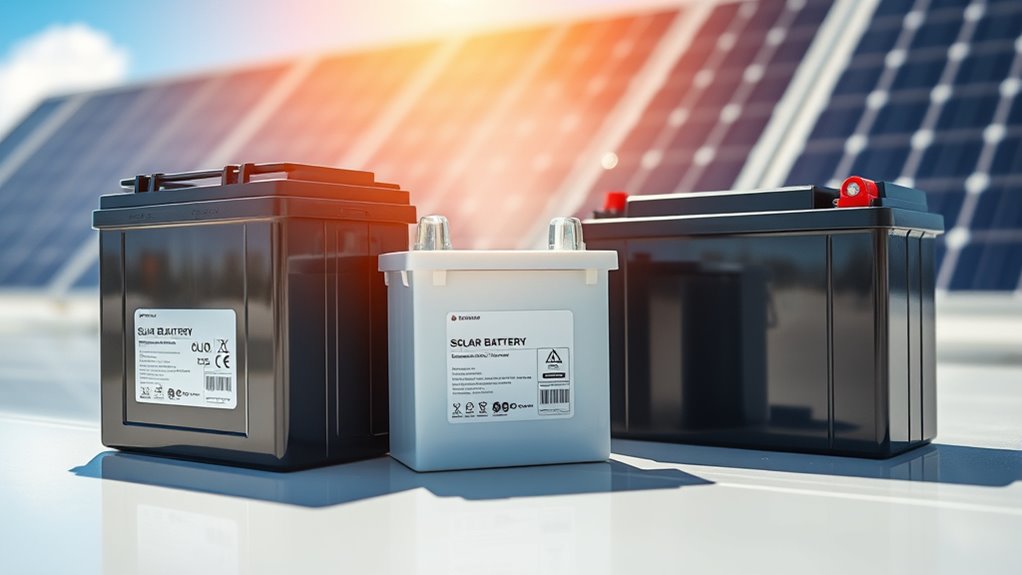
You’ll want to know which solar battery types hold up the longest to get the best value. Lithium-ion batteries offer impressive lifespans, making them a popular choice for many.
Lead-acid batteries are known for their durability on a budget. They might not last as long as lithium-ion, but they get the job done without breaking the bank.
Flow batteries, though less common, provide exceptional longevity for certain applications. They might be worth considering if you need something built to last.
Lithium-Ion Battery Lifespan
Among the various types of batteries available, lithium-ion batteries stand out for their durability and efficiency. If you choose lithium-ion for your solar setup, expect a lifespan of 10 to 15 years, depending on usage and maintenance.
These batteries handle high discharge rates well and maintain capacity over many cycles. That’s what makes them ideal for long-term energy storage.
Here’s a quick comparison of key lithium-ion lifespan factors:
| Factor | Typical Range |
|---|---|
| Lifespan (years) | 10 – 15 |
| Cycle Life | 2000 – 5000 cycles |
| Depth of Discharge | 80% |
| Efficiency | 90% – 95% |
Lead-Acid Battery Durability
Lead-acid batteries have been a reliable choice for energy storage for over a century, thanks to their affordability and robust design. If you opt for lead-acid, expect a lifespan of about 3 to 5 years with regular use.
Their durability depends heavily on how well you maintain them—keeping them fully charged and avoiding deep discharges will extend their life. While they don’t last as long as lithium-ion batteries, lead-acid types handle high current loads well and are easier to recycle.
You’ll find two main types: flooded and sealed (AGM or gel), with sealed versions requiring less maintenance. Overall, lead-acid batteries offer a cost-effective solution, but if you want longer lifespan and better efficiency, you might want to contemplate other options.
Flow Battery Longevity
Although flow batteries are less common in residential solar setups, they offer impressive longevity compared to traditional options. You’ll find that flow batteries can last 10 to 20 years or more with minimal capacity loss because their energy storage relies on liquid electrolytes instead of solid electrodes.
This design reduces degradation and allows you to cycle them thousands of times without significant wear. Plus, flow batteries can be easily scaled and maintained, which adds to their lifespan benefits.
If you want a solar battery that lasts long and handles frequent, deep discharges well, flow batteries are worth considering. While their upfront cost might be higher, their durability and low maintenance can make them a smart investment for long-term solar energy storage.
What Factors Affect Solar Battery Lifespan?
You’ll notice that temperature plays a big role in how long your solar battery lasts. Too much heat or cold can shorten its lifespan considerably.
Plus, the number of charge cycles your battery goes through also impacts its overall durability. So, keeping an eye on both can really help you get the most out of your battery.
Temperature Effects
When temperatures soar or plunge, your solar battery’s performance and lifespan can take a hit. High heat speeds up chemical reactions inside the battery, causing it to degrade faster and lose capacity over time.
On the other hand, extreme cold can slow down these reactions, reducing your battery’s ability to deliver power efficiently. You’ll notice diminished performance in freezing weather, but it’s generally less damaging than constant heat exposure.
To protect your battery, keep it in a temperature-controlled environment when possible. Avoid placing it in direct sunlight or uninsulated areas exposed to frost.
Charge Cycle Impact
How often you charge and discharge your solar battery plays an essential role in determining its lifespan. Each full charge-discharge cycle slightly reduces the battery’s capacity, so managing these cycles is crucial.
Here are key factors that impact your battery’s lifespan related to charge cycles:
- Depth of Discharge (DoD): The deeper you drain the battery, the fewer cycles it will provide. So, try not to let it run completely down too often.
- Charge Rate: Fast charging can cause heat buildup, which damages the battery over time. Taking it slow can help your battery last longer.
- Discharge Rate: High discharge rates really stress the battery, reducing its longevity. It’s better to avoid heavy loads whenever possible.
- Partial Cycling: Frequent partial charges and discharges are actually less harmful than complete cycles. So topping up your battery now and then can be a good thing.
How Can You Maintain Your Solar Battery for Longer Life?
Although solar batteries are designed for durability, proper maintenance plays an essential role in extending their lifespan. You should regularly monitor the battery’s voltage and state of charge to prevent deep discharges, which can damage the cells.
Keep the battery clean and dry, making sure the terminals are corrosion-free by wiping them with a dry cloth. If needed, you can also apply a protective spray to keep things in good shape.
Regularly clean and dry your battery terminals to prevent corrosion and maintain optimal performance.
Avoid exposing your battery to extreme temperatures, since both heat and cold can reduce efficiency and lifespan. Also, make sure your battery is charged correctly—neither overcharged nor undercharged—by using a compatible charge controller.
Finally, schedule routine inspections to catch any issues early. By following these steps, you’ll maximize your solar battery’s performance and enjoy reliable energy storage for years.
What Are the Signs Your Solar Battery Needs Replacement?
If your solar battery isn’t holding a charge like it used to, it’s a clear sign it might be time for a replacement. You’ll want to watch for these warning signs to avoid unexpected power loss.
- Rapid Discharge: Your battery drains faster than usual, even with normal usage.
- Reduced Capacity: It stores less energy, causing shorter backup times.
- Frequent Overheating: The battery gets unusually hot during charging or discharging.
- Physical Damage: Swelling, corrosion, or leaks appear on the battery casing.
Noticing any of these signs means your solar battery is struggling. It won’t perform reliably much longer.
What Should You Expect When Replacing a Solar Battery?
When replacing a solar battery, you can expect a process that involves selecting the right type, safely removing the old unit, and installing the new one with proper care. First, you’ll need to choose a battery compatible with your system’s voltage and capacity requirements.
Next, disconnect the old battery, making sure to follow all safety precautions to avoid any electrical hazards. Then, carefully remove the old unit and get the mounting area ready for the new battery.
When installing the replacement, connect it securely, paying attention to the correct polarity and making sure all connections are tight. Finally, test the system to ensure the new battery is working properly.
If you’re not sure about any step, it’s a good idea to hire a professional. That way, you can guarantee a safe and efficient replacement without any stress.
Frequently Asked Questions
How Do Solar Batteries Impact Overall Home Energy Efficiency?
Solar batteries boost your home’s energy efficiency by storing excess solar power for later use, reducing reliance on the grid. You’ll save money, lower energy waste, and enjoy consistent power during outages or peak demand times.
It’s pretty convenient, right? You get to keep the energy you generate instead of losing it. Plus, when the grid is down or super busy, your home stays powered up without any hassle.
Are Solar Batteries Safe to Install Indoors?
Yes, you can safely install solar batteries indoors if you guarantee proper ventilation and follow manufacturer guidelines. Just avoid placing them near heat sources or flammable materials.
Also, make sure a certified professional handles the installation. That way, everything will be set up correctly and safely.
Can Solar Batteries Be Recycled After Use?
Yes, you can recycle solar batteries after use. Many contain valuable materials like lithium and lead that can be recovered.
What Is the Average Cost of Solar Battery Installation?
You’ll typically pay between $7,000 and $15,000 for solar battery installation, depending on capacity and brand. Costs vary, but you can expect savings over time as you store and use your own solar energy efficiently.
It might sound like a lot upfront, but think of it as an investment. Over time, those savings can really add up!
Do Solar Batteries Work During Power Outages?
Like a lighthouse in a storm, solar batteries keep shining during power outages. You’ll have backup energy stored to power essentials, as long as your system’s designed for off-grid use and properly connected to your home.
It’s pretty handy, right? Just make sure your setup can handle it, and you’re good to go!
Conclusion
Understanding how long your solar battery lasts helps you plan better for energy savings. For example, imagine Sarah, who chose a lithium-ion battery and maintained it well—her system lasted over 10 years with minimal issues.
By knowing the type, factors affecting lifespan, and maintenance tips, you can prolong your battery’s life and know when it’s time to replace it. Taking these steps guarantees your solar investment keeps powering your home efficiently for years.
Keeping your solar battery in good shape means you get the most out of your energy storage system. Regular maintenance and understanding battery types can extend the lifespan significantly. So, whether you have a lithium-ion or another type, staying informed about your solar battery’s longevity ensures you maximize your energy savings and get the best return on your investment.